

The battle between the Motorola Razr+ and the Nothing Phone 2 is one of the most talked-about smartphone comparisons in 2024. Both devices are unique in their own way, targeting users who want more than just a basic phone. The Razr+ brings back the iconic flip design with a modern twist, while the Nothing Phone 2 aims to stand out with its transparent look and innovative interface. If you’re choosing between these two, it’s important to understand how they differ in design, features, performance, and value.
This article will give you a clear and detailed comparison. We’ll dive into the specs, camera quality, battery life, software experience, and real-world usability. You’ll also see data tables and practical examples to help you decide which phone suits you best.

36% off Today’s Exclusive Deals
Limited-time Exclusive Deals. Check current discount on Amazon.
Check Price on Amazon As an Amazon Associate I earn from qualifying purchases.Whether you’re a tech enthusiast or just want a reliable phone, this guide will make things simple and easy to understand.
Design And Build Quality
The first thing you notice about any phone is its look and feel. Both the Motorola Razr+ and Nothing Phone 2 break away from the usual rectangle design. Let’s see how they compare.
Motorola Razr+: The Modern Flip
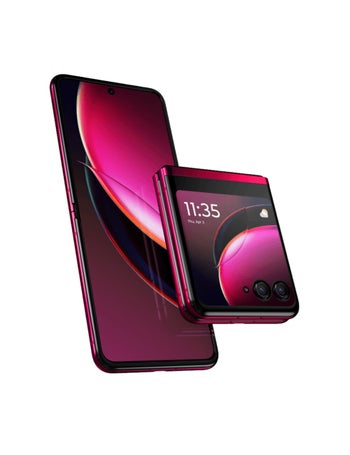
The Razr+ revives the classic flip phone design, but with a fully flexible screen. When closed, the phone is compact and easy to carry. Open it up, and you get a full-size OLED display. The outer screen allows quick access to notifications, music, and even some apps.
The hinge feels sturdy, and Motorola claims it can last for more than 400,000 folds—much higher than most competitors.
The back has a smooth finish, and the body is mostly aluminum. The phone feels premium in hand. The Razr+ is also thinner than most foldables, making it easy to slip into a pocket. The foldable screen is protected by ultra-thin glass and a special polymer layer.
Nothing Phone 2: Transparent Minimalism
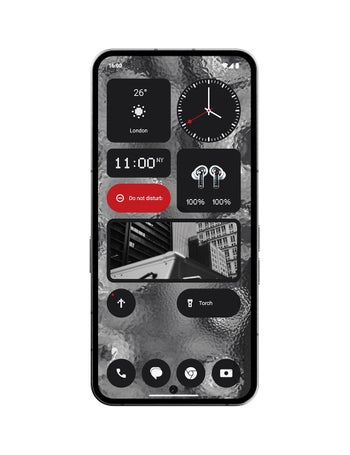
The Nothing Phone 2 is instantly recognizable because of its transparent back. You can see the inner circuits, which is both stylish and futuristic. The LED “Glyph Interface” on the back lights up for calls, notifications, and charging status. This feature is not just for looks—it helps users see alerts without picking up the phone.
The phone uses Gorilla Glass for both front and back, with an aluminum frame. It feels solid and well-built. The design is flat and wide, making it comfortable to hold. Nothing’s minimalist approach means fewer distractions, and the phone avoids bright branding or flashy colors.
Side-by-side Look
Here’s a quick comparison of their physical specs:
| Feature | Motorola Razr+ | Nothing Phone 2 |
|---|---|---|
| Dimensions | Open: 170.8 x 74 x 7 mm Closed: 88.4 x 74 x 15 mm |
159.2 x 75.8 x 8.6 mm |
| Weight | 188 g | 201 g |
| Material | Aluminum, glass, polymer | Aluminum, Gorilla Glass |
| Special Features | Flip design, large outer display | Transparent back, Glyph lights |
Non-obvious Insight
One thing many buyers miss: the Razr+’s flip design isn’t just about nostalgia. It helps protect the main screen when not in use, reducing scratches. The Nothing Phone 2’s Glyph lights can be customized for specific contacts, making it a silent notification tool.
Display Quality
A phone’s screen is where you spend most of your time. Both devices offer high-quality displays, but the experience is quite different.
Motorola Razr+: Dual Displays
The Razr+ features two screens:
- Main Display: 6.9-inch Foldable OLED, 2640 x 1080 pixels, 165Hz refresh rate
- Outer Display: 3.6-inch OLED, 1066 x 1056 pixels, 144Hz refresh rate
The foldable main screen is bright and sharp, with vibrant colors. The high refresh rate makes scrolling and animations super smooth. The outer display is surprisingly useful—it’s big enough to check emails, reply to texts, and even run some apps.
Nothing Phone 2: Standard Flagship Display
The Nothing Phone 2 offers:
- 6.7-inch OLED, 2412 x 1080 pixels, 120Hz refresh rate
This screen is flat, edge-to-edge, and very bright (up to 1000 nits). It’s great for watching videos, gaming, and reading. The touch response is fast, and the color accuracy is top-notch.
Display Comparison
Let’s see the key specs side-by-side:
| Display Feature | Motorola Razr+ | Nothing Phone 2 |
|---|---|---|
| Main Screen Size | 6.9 inches | 6.7 inches |
| Resolution | 2640 x 1080 | 2412 x 1080 |
| Refresh Rate | 165Hz | 120Hz |
| Outer Display | 3.6 inches (OLED) | None |
| Brightness | 1400 nits | 1000 nits |
Practical Usage
The Razr+ outer display is handy for quick tasks, but the main screen is slightly taller. The Nothing Phone 2’s screen is easier for watching videos, since it’s flat and more standard in shape.
Non-obvious Insight
The Razr+’s foldable screen is more prone to reflections and fingerprints. Many users don’t realize that the crease in the middle can be visible in bright light, though it doesn’t affect touch response. The Nothing Phone 2’s screen is easier to clean and less likely to show smudges.
Performance And Hardware
A phone’s power determines how fast apps run, how smooth games feel, and how well multitasking works. Here’s how these two phones stack up.
Motorola Razr+: Flagship Chipset
The Razr+ uses the Snapdragon 8+ Gen 1 processor. This is one of the best chips from Qualcomm, used in many top-tier phones in 2023-2024.
- RAM: 8GB or 12GB
- Storage: 256GB or 512GB (non-expandable)
- GPU: Adreno 730
This hardware delivers fast performance. You can run multiple apps, play demanding games, and use the camera without lag. The Razr+ also has 5G support, Wi-Fi 6E, and Bluetooth 5. 3.
Nothing Phone 2: Balanced Power
The Nothing Phone 2 features the Snapdragon 8+ Gen 1 as well. It’s paired with:
- RAM: 8GB or 12GB
- Storage: 128GB, 256GB, or 512GB (non-expandable)
- GPU: Adreno 730
Performance is almost identical to Razr+, since they use the same chip. It’s fast, smooth, and reliable. The phone supports 5G, Wi-Fi 6, and Bluetooth 5. 3.
Hardware Comparison
Here’s a quick look at the specs:
| Feature | Motorola Razr+ | Nothing Phone 2 |
|---|---|---|
| Processor | Snapdragon 8+ Gen 1 | Snapdragon 8+ Gen 1 |
| RAM Options | 8GB / 12GB | 8GB / 12GB |
| Storage Options | 256GB / 512GB | 128GB / 256GB / 512GB |
| Expandable Storage | No | No |
| GPU | Adreno 730 | Adreno 730 |
Real-world Performance
Both phones handle heavy apps, games, and multitasking well. You won’t notice much difference in speed. The Razr+ tends to get warmer during long gaming sessions, mainly because the foldable screen traps heat.
Non-obvious Insight
Most buyers focus only on RAM and processor. But internal storage speed matters too. Both phones use UFS 3. 1 storage, which means fast app loading and quick file transfers. However, the Razr+’s foldable design makes cooling less effective, so it may throttle performance faster under sustained load.
Camera Features And Quality
Cameras are a big factor for many buyers. Both phones try to offer flagship-level photo and video quality, but their approaches are different.
Motorola Razr+: Dual Camera Setup
The Razr+ has:
- Main Camera: 12MP, f/1.5, OIS
- Ultra-Wide: 13MP, f/2.2
- Front Camera: 32MP, f/2.4 (inside)
Photos are bright and colorful. The main camera has good low-light performance, thanks to a wide aperture. The ultra-wide lens is nice for landscapes or group shots. The front camera is high-resolution, ideal for selfies and video calls.
Video recording goes up to 4K at 60fps. The outer screen lets you use the main camera for selfies, which means better quality than most front-facing cameras.
Nothing Phone 2: Dual Camera Simplicity
Nothing Phone 2’s cameras:
- Main Camera: 50MP, f/1.9, OIS
- Ultra-Wide: 50MP, f/2.2
- Front Camera: 32MP, f/2.0
The main camera uses a larger sensor for sharper photos. Ultra-wide shots are detailed, and color accuracy is good. The front camera is great for selfies, but lacks advanced autofocus.
Video recording supports 4K at 60fps, with good stabilization. The Glyph lights can be used as a fill light for photos, which is a clever touch.
Camera Comparison
Here’s a quick breakdown:
| Camera Feature | Motorola Razr+ | Nothing Phone 2 |
|---|---|---|
| Main Camera | 12MP, f/1.5, OIS | 50MP, f/1.9, OIS |
| Ultra-Wide | 13MP, f/2.2 | 50MP, f/2.2 |
| Front Camera | 32MP, f/2.4 | 32MP, f/2.0 |
| Video | 4K 60fps | 4K 60fps |
| Special Features | Use main camera for selfies via outer screen | Glyph lights as fill light |
Photo Quality And Examples
- Razr+ photos are good in daylight, with natural colors. Low-light shots are decent, but some noise appears.
- Nothing Phone 2’s photos are sharper, especially in daylight. Ultra-wide shots are less distorted. Night mode is strong, but can sometimes over-brighten scenes.
Non-obvious Insight
The Razr+’s ability to use the main camera for selfies is a big plus. Most people don’t realize this gives much better selfie quality. The Nothing Phone 2’s Glyph lights help reduce shadows in close-up shots, making it useful for quick portraits in dark rooms.
Battery Life And Charging
A phone is only as good as its battery. Let’s see how these phones perform in daily use.
Motorola Razr+: Compact Battery
The Razr+ has:
- Battery: 3800mAh
- Charging: 30W wired, 5W wireless
Because of its foldable design, the battery is smaller. Real-world usage gives about 6–7 hours of screen time. Charging is fast, but wireless charging is slow.
Nothing Phone 2: Bigger Battery
Nothing Phone 2 features:
- Battery: 4700mAh
- Charging: 45W wired, 15W wireless
It lasts longer, with 8–9 hours of screen time. Charging is faster both wired and wireless. The phone supports reverse wireless charging for earbuds and other devices.
Battery Comparison
| Feature | Motorola Razr+ | Nothing Phone 2 |
|---|---|---|
| Battery Size | 3800mAh | 4700mAh |
| Wired Charging | 30W | 45W |
| Wireless Charging | 5W | 15W |
| Reverse Charging | No | Yes |
| Screen-on Time | 6–7 hours | 8–9 hours |
Practical Example
If you use your phone for social media, email, and light gaming, the Razr+ should last a full day. For heavier use or long video calls, you might need to charge by evening. The Nothing Phone 2 can easily last a day and a half, even with lots of photos and streaming.
Non-obvious Insight
Foldable phones usually have smaller batteries due to space limits. Many buyers don’t realize that the Razr+’s battery drains faster if you use the outer screen a lot. The Nothing Phone 2’s reverse charging is handy for topping up wireless earbuds.
Software Experience
Software makes a huge difference in daily use. Both phones use Android, but the experience is not the same.
Motorola Razr+: Clean Android With Customizations
The Razr+ runs on Android 13, with Motorola’s lightweight customizations. The interface is close to stock Android, which means less bloatware and faster updates. Motorola adds some unique features:
- Moto Actions: Gesture controls (shake for flashlight, twist for camera)
- App continuity: Apps switch smoothly between main and outer screens
- Ready For: Connects to PC for file transfers and screen mirroring
The outer display has its own interface, letting you run selected apps without opening the phone.
Nothing Phone 2: Nothing Os
Nothing Phone 2 uses Nothing OS 2.0 (based on Android 13). The software is minimalist, with only essential apps. The interface is unique:
- Glyph Interface: Customize LED alerts for contacts, apps, timers
- Quick Settings: Simple, clean toggles for Wi-Fi, Bluetooth, etc.
- Widgets: Stylish widgets for weather, calendar, and battery
Nothing OS is fast, smooth, and less cluttered. The company promises three years of major updates and four years of security patches.
Software Comparison
- Razr+ is ideal for users who want a simple, fast interface with useful gestures.
- Nothing Phone 2 is for those who like customization and visual alerts.
Non-obvious Insight
Motorola’s “Ready For” feature is underrated—it allows you to use your phone as a desktop PC. Few buyers realize the Razr+ can run apps on a TV or monitor, making it good for presentations. Nothing OS’s Glyph lights are not just visual—they can be programmed for silent alerts, which is perfect for meetings.
Extra Features And Unique Selling Points
Every phone has something special that sets it apart. Let’s look at what makes each device unique.
Motorola Razr+: Flip Nostalgia And Outer Display
- Flip design: Standout form factor for calls, selfies, and pocketability
- Outer display: Use main camera for selfies, quick access to apps
- Moto Actions: Useful gestures not found on many other phones
The Razr+ is great for people who want a compact phone that feels different from everything else.
Nothing Phone 2: Glyph Lights And Transparency
- Glyph Interface: Customizable LED lights for notifications, calls, and charging
- Transparent back: Unique look, shows internal components
- Reverse wireless charging: Power up accessories on the go
Nothing Phone 2 appeals to those who like to express their style and want visual cues without picking up their phone.
Non-obvious Insight
The Razr+’s outer display can be used for navigation while biking or walking, without opening the phone. The Nothing Phone 2’s Glyph lights can be set as a countdown timer for cooking or workouts.
Price And Value For Money
Price is often the deciding factor. Let’s see what you get for your money.
Motorola Razr+
- Launch price: $999 (8GB/256GB)
- Higher variants: Up to $1099 (12GB/512GB)
You pay for the foldable screen and premium build. It’s expensive, but offers a unique experience.
Nothing Phone 2
- Launch price: $599 (8GB/128GB)
- Higher variants: Up to $799 (12GB/512GB)
It’s more affordable, with similar performance and camera quality.
Price Comparison
| Model | Price (USD) | RAM/Storage |
|---|---|---|
| Motorola Razr+ (Base) | $999 | 8GB/256GB |
| Motorola Razr+ (High) | $1099 | 12GB/512GB |
| Nothing Phone 2 (Base) | $599 | 8GB/128GB |
| Nothing Phone 2 (High) | $799 | 12GB/512GB |
Non-obvious Insight
Foldable phones like Razr+ tend to drop in price after a few months. The Nothing Phone 2 holds its value better, due to limited supply and unique design.
Real-world Usability
Specs and features are important, but real-world experience matters most.
Motorola Razr+: Who Should Buy
- Ideal for users who want a compact phone, love the flip design, and need a handy outer screen.
- Good for people who take lots of selfies or want a phone that stands out.
- Not the best for heavy gaming or all-day battery life.
Nothing Phone 2: Who Should Buy
- Perfect for those who like minimal design, visual alerts, and reliable battery life.
- Good for users who want flagship performance at a lower price.
- Not the best for people who want expandable storage.
Practical Example
If you travel a lot, the Razr+ fits in small pockets and is easy to use with one hand. If you work in an office or attend meetings, the Nothing Phone 2’s Glyph lights help you stay updated without disturbing others.
Non-obvious Insight
The Razr+ is less likely to break if dropped when closed, since the screen is protected. The Nothing Phone 2’s flat design makes it easier to use with car mounts or stands.
Pros And Cons Summary
Let’s wrap up the main advantages and disadvantages of each phone.
Motorola Razr+
Pros:
- Unique flip design
- Dual screens for multitasking
- Premium build
- Use main camera for selfies
Cons:
- Smaller battery
- Visible crease on screen
- Higher price
Nothing Phone 2
Pros:
- Stylish transparent design
- Glyph lights for notifications
- Long battery life
- Affordable price
Cons:
- No expandable storage
- No outer screen
- Less unique camera features

Final Verdict
Choosing between the Motorola Razr+ and Nothing Phone 2 depends on your priorities. If you want a phone that feels special, fits easily in your pocket, and offers a nostalgic flip experience, the Razr+ is hard to beat. If you prefer a modern look, reliable battery, and visual notifications, the Nothing Phone 2 is a smart choice.
Both phones deliver strong performance, high-quality cameras, and clean software. The Razr+ stands out for its foldable screen and compact design, while the Nothing Phone 2 wins on price and battery life. For most users, the Nothing Phone 2 offers better value, but the Razr+ is perfect for those who want something different.
For more details on specs, you can visit Wikipedia.
Frequently Asked Questions
What Makes The Motorola Razr+ Unique Compared To Other Phones?
The flip design is the main feature. Unlike typical smartphones, the Razr+ folds in half, making it much smaller in your pocket. The outer screen is big enough to check messages and run apps without opening the phone. Using the main camera for selfies is another benefit.
How Does The Nothing Phone 2’s Glyph Interface Work?
The Glyph Interface uses LED lights on the back for notifications, calls, and charging. You can set different light patterns for contacts and apps. It’s useful for silent alerts, like in meetings or when your phone is face-down.
Which Phone Has Better Battery Life?
The Nothing Phone 2 has a larger battery (4700mAh) and lasts longer than the Razr+ (3800mAh). You get about 8–9 hours of screen time with Nothing Phone 2, compared to 6–7 hours with Razr+. Charging is also faster on Nothing Phone 2.
Are Both Phones Good For Taking Selfies?
Yes, but the Razr+ is better for selfies. You can use the main camera for selfies with the outer display, so photos are sharper and brighter. The Nothing Phone 2 has a good front camera, but it doesn’t match the Razr+ for selfie quality.
Which Phone Is More Durable?
The Razr+ is more durable when closed, because the screen is protected. However, the foldable screen can show a crease over time. The Nothing Phone 2 uses Gorilla Glass, which is strong but can crack if dropped. Both phones have strong frames, but the Razr+ is safer when closed.
Motorola Razr+ and Nothing Phone 2 are both excellent, but your choice should depend on design, battery, and price preferences. With this guide, you’ll be able to make a confident decision.

