

Poker is more than just a card game; it’s a social experience where the table itself sets the stage. Whether in a casino, a home game, or a club, the feel of the table can change how you play, focus, and enjoy the night. But what really makes a high-quality poker table stand out? The answer lies in the materials. Each layer, from the inside core to the outer rails, is chosen for a reason. If you’re thinking about buying, building, or just understanding what makes a great poker table, it’s important to know what’s inside and why it matters.
Core Structure: What’s Under The Surface
The core is the main foundation of any poker table. It gives the table its strength, weight, and shape. The right core material means your table won’t warp, wobble, or fall apart after a few games.

36% off Today’s Exclusive Deals
Limited-time Exclusive Deals. Check current discount on Amazon.
Check Price on Amazon As an Amazon Associate I earn from qualifying purchases.Plywood
Plywood is the gold standard for poker table cores, especially in high-end models. It’s made by gluing thin layers of wood together, which makes it very strong and less likely to bend. Plywood handles heavy use and resists moisture better than many other woods. Most quality tables use ¾-inch thick plywood for the main surface.
Mdf (medium-density Fiberboard)
Some tables use MDF instead. MDF is smooth and cheap, but it’s not as strong as plywood. It can swell if it gets wet, which is a risk if drinks spill. Still, some mid-range tables use MDF because it’s easy to cut and shape.
Particle Board
Particle board is the lowest quality option. It’s heavy but weak, and it can break down quickly if handled roughly or exposed to moisture. You’ll rarely see particle board in professional or casino-level tables.
Comparison: Common Core Materials
| Material | Strength | Moisture Resistance | Cost |
|---|---|---|---|
| Plywood | High | Good | Moderate |
| MDF | Medium | Poor | Low |
| Particle Board | Low | Very Poor | Very Low |
Insight: Many beginners think MDF is “just as good” as plywood, but over time, even small spills can destroy an MDF-based table.
Playing Surface: Where The Action Happens
The top of the table is what players see and touch the most. A good playing surface is smooth, even, and helps cards slide easily.
Casino-grade Speed Cloth
The best tables use casino-grade speed cloth. This is a polyester fabric woven with Teflon or similar materials. It’s water-resistant, so spills don’t soak in right away. The cards glide smoothly, and chips don’t get caught.
Suited Speed Cloth
This is similar to casino-grade but has a repeating card suit pattern woven in. It’s stylish, durable, and easy to clean. Some home tables use suited speed cloth for a touch of personality.
Velveteen Or Felt
Standard felt is soft and has a classic look, but it wears out faster. Cheap felt can pill or develop grooves, which ruins the card slide. Velveteen is softer and a bit more durable, but still not as long-lasting as speed cloth.
Custom Graphics And Logos
High-end tables may use printed cloth with custom graphics, casino branding, or even LED features. These are printed on polyester blends to keep durability and speed.
Quick Comparison: Playing Surface Fabrics
| Fabric Type | Durability | Water Resistance | Card Slide |
|---|---|---|---|
| Casino-Grade Speed Cloth | Excellent | High | Very Smooth |
| Suited Speed Cloth | Very Good | High | Smooth |
| Felt/Velveteen | Low–Medium | Poor | Medium |
Non-obvious insight: Many home tables use felt because it’s cheap, but seasoned players often replace it with speed cloth within a year for better game quality.

Padding: Comfort For Hours
Beneath the playing fabric is a hidden layer: padding. This makes the table soft to the touch, so chips don’t bounce and cards are easy to pick up.
Closed-cell Foam
Top tables use closed-cell foam, usually about ¼ inch thick. It’s dense, holds its shape, and doesn’t absorb spills. This padding protects both the table and your wrists during long sessions.
Open-cell Foam
Some cheaper tables use open-cell foam. It’s softer but soaks up liquids and loses shape over time. Open-cell foam can become uneven, making the table surface lumpy.
No Padding
Some low-end tables or DIY builds skip padding to save money. This makes the table harder and less enjoyable for long games.
Important tip: The right foam thickness is key. Too thin, and it feels hard. Too thick, and chips tip over.
Rail: The Table’s Outer Edge
The rail is the padded outer ring where players rest their arms. It’s also a key style point and adds comfort. Good rails are both soft and sturdy.
High-density Foam
Professional tables use high-density foam for the rail, about 1–2 inches thick. This foam bounces back after pressure and doesn’t flatten easily.
Vinyl Upholstery
Most rails are covered in vinyl. Quality vinyl looks like leather but is easier to clean and resists stains. Some luxury tables use marine-grade vinyl, which is even tougher and water-resistant.
Leather
Genuine leather is rare due to cost but gives a premium look and feel. It’s used in some custom or high-roller tables.
Wood Accent
Some rails feature hardwood trim for style and added weight. Woods like oak or mahogany are common, but they’re paired with padding for comfort.
Quick Comparison: Rail Cover Options
| Material | Comfort | Durability | Maintenance |
|---|---|---|---|
| Vinyl | High | Very Good | Easy |
| Leather | Excellent | Good | Moderate |
| Wood Accent | Medium | Very Good | Moderate |
Practical note: Vinyl is the smart choice for most home games. It’s comfortable and survives spilled drinks, food, and heavy use.
Legs And Frame: Keeping Things Solid
A poker table is only as strong as its frame and legs. Stability is crucial—nobody wants a table that shakes when you lean in for a big bet.
Solid Hardwood
High-end tables use hardwood like oak, maple, or mahogany for the legs and inner frame. Hardwood is strong, attractive, and resistant to dents.
Metal Frames
Some casino tables use steel frames for extra strength. Metal legs are common in foldable or portable tables because they balance weight and durability.
Engineered Wood
Lower-priced tables may use engineered woods or MDF for the frame. These are less sturdy and more likely to wobble over time.
Non-obvious insight: The connection points between the frame and legs matter as much as the material. Poorly joined legs can make even the best materials useless.
Cup Holders And Accessories
The little extras also matter. Cup holders are often made from stainless steel, brass, or durable plastics. Stainless steel is the best for resisting rust and spills. Some tables have chip trays, USB chargers, or built-in shufflers. High-end tables integrate these features with the same attention to durability and style.
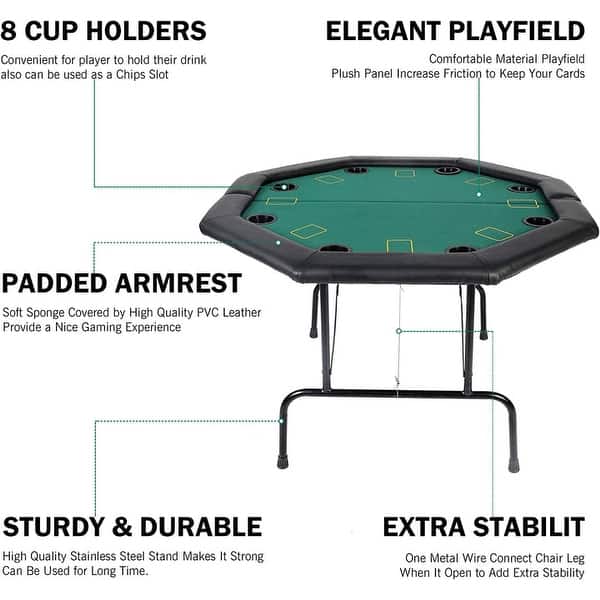
Casino Vs. Home Poker Table Materials
The difference between casino and home poker tables isn’t just price or brand—it’s also in the materials.
- Casino tables use only the best: Solid plywood cores, casino-grade speed cloth, high-density foam, and marine vinyl rails. They’re built to last through years of heavy play and cleaning.
- Home tables often cut costs in hidden areas, like thinner foam, MDF cores, or basic felt. Some high-end home tables use full casino specs but expect to pay more.
Pro tip: If you want a table that feels like a real casino, focus on the core, playing surface, and rail materials first.
Environmental And Health Considerations
Some poker table materials can release VOCs (volatile organic compounds), especially cheaper foams and glues. For those sensitive to chemicals, look for tables made with low-VOC adhesives and certified foams.
Sustainable options are becoming more popular, such as recycled wood cores or eco-friendly vinyls. These options are better for the planet and safe for indoor air quality.
What Really Matters When Choosing Materials
If you’re buying or building a table, ask yourself:
- How often will you use the table? More use means you need stronger materials.
- Will you host food and drinks? Go for water-resistant cloth and rails.
- Do you want easy cleaning? Speed cloth and vinyl wipe down quickly.
- Are you moving the table often? Metal frames and lighter woods are easier to transport.
Common mistake: Many buyers focus only on looks. A beautiful table with cheap materials won’t last or feel good to play on.
Maintenance And Longevity
High-quality materials mean less maintenance, but no table is indestructible. Here’s how to keep your table in top shape:
- Clean spills fast: Even water-resistant cloth can stain if left wet.
- Vacuum the surface: Remove dust and crumbs to keep cards sliding smoothly.
- Condition vinyl or leather rails: Use the right cleaners to prevent cracking.
- Check the frame and legs: Tighten bolts and screws regularly.
A well-built table with proper care can last 10 years or more—even longer if you avoid direct sunlight and keep it dry.

Frequently Asked Questions
What’s The Best Material For A Poker Table Playing Surface?
Casino-grade speed cloth is the top choice. It’s water-resistant, smooth for cards, and holds up to years of play. It’s used in most professional poker rooms.
Can I Replace Felt With Speed Cloth On My Table?
Yes, many people upgrade their tables by removing old felt and installing speed cloth. Make sure the padding underneath is still in good condition for best results.
Is Leather Worth The Extra Cost For The Rail?
Leather feels premium but requires careful cleaning and costs much more. High-quality vinyl often gives the same comfort and lasts longer for most home players.
How Thick Should The Padding Be Under The Playing Surface?
A good poker table uses ¼ inch closed-cell foam under the cloth. This thickness makes it comfortable to pick up cards and keeps chips from bouncing.
Where Can I Find More Details About Poker Table Designs?
For more technical details, design tips, and examples, visit the Wikipedia page on poker tables.
A high-quality poker table is more than just a piece of furniture—it’s the heart of the game. By understanding what materials go into each layer, you’ll appreciate every hand played and know how to spot (or build) a table that’s made to last.
Whether you play for pennies or pride, the right table elevates the game for everyone.

