

Negotiating your salary can feel intimidating, but it is one of the most important skills you can learn for your career. Whether you are starting a new job, seeking a raise, or changing roles, how you handle this conversation can affect your income for years.
Many people, especially non-native English speakers, worry about asking for more money. They fear rejection, conflict, or saying the wrong thing. However, with the right approach and knowledge, you can negotiate your salary confidently and professionally.

36% off Today’s Exclusive Deals
Limited-time Exclusive Deals. Check current discount on Amazon.
Check Price on Amazon As an Amazon Associate I earn from qualifying purchases.This guide will walk you through every step of the process, from research to final agreement. You will learn how to prepare, what to say, and how to handle tricky situations. We will also cover mistakes to avoid and answer common questions about salary negotiation.
If you want to earn what you deserve and grow your career, keep reading.
Why Salary Negotiation Matters
Many employees accept the first offer without question. But studies show that negotiating salary can have a big impact over time. For example, if you negotiate $5,000 more at the start of your career, with average raises, you could earn over $600,000 more during 40 years of work.
Negotiation is not just about money. It shows confidence and professionalism. Employers expect candidates to negotiate and often start with a lower offer, leaving room for discussion. If you say yes too quickly, you might miss out on benefits, bonuses, or better working conditions.
Preparing For Salary Negotiation
Good preparation is the key to a successful negotiation. Here’s what you should do before you start any salary discussion.
Research Market Rates
Know the average pay for your role, experience, and location. Use websites like Glassdoor, Payscale, and LinkedIn Salary. Look for:
- The typical range for your position
- Differences by city or company size
- Extra benefits offered
If possible, talk to people in your industry. Real stories give insight that data cannot.
Understand Your Value
List your skills, achievements, and experiences. What makes you special? Maybe you have rare certifications, speak multiple languages, or have led successful projects. Employers pay more for people who can solve their problems or bring unique value.
Set Your Target And Walk-away Point
Decide on three numbers:
- Ideal salary (what you hope for)
- Acceptable salary (you will say yes, but it’s not perfect)
- Minimum salary (if the offer is lower, you will politely decline)
Knowing these numbers stops you from accepting too little or asking for too much.
Prepare Your Materials
Have a short, clear explanation for why you deserve your target salary. Use numbers and examples. Bring documents if you can—like performance reviews, certifications, or a list of achievements.
Practice Your Conversation
Practice your main points with a friend, mentor, or alone in front of a mirror. This helps you sound confident and avoid nervous mistakes.
:max_bytes(150000):strip_icc()/salary-negotiation-tips-how-to-get-a-better-offer-2063439-final-98a2eb6672294a8b822ec9bbe889e9ce.png)
When And How To Start The Negotiation
Timing is important. Start salary discussions after you get a job offer, not during early interviews. Once the employer decides you are the right person, you have more power.
If asked about salary expectations early, try to delay. You can say:
- “I’d like to learn more about the role before discussing salary.”
- “I’m flexible, and I’d like to understand the complete compensation package.”
When you get an offer, thank them first. Then, ask for time to review it. This shows respect and gives you time to prepare your negotiation points.
Key Salary Negotiation Strategies
Let’s look at the main methods that help you negotiate better.
1. Anchor High, But Reasonably
When asked for your expected salary, start near the top of your researched range. This is called anchoring. For example, if the range is $60,000–$75,000, you might say, “Based on my research and experience, I believe $72,000 is fair.” Anchoring high gives you space to negotiate down, if needed.
2. Focus On Value, Not Just Money
Explain why you deserve more. Don’t just say you want a higher salary. Show your value with examples:
- “I’ve managed projects that saved my last company $50,000 per year.”
- “I have five years of experience in this technology, which is rare in this market.”
This shifts the conversation from cost to investment.
3. Consider The Whole Package
Salary is just one part of compensation. Other important parts include:
- Bonuses
- Health insurance
- Retirement plans
- Paid vacation
- Remote work
- Professional development
If the company cannot increase salary, ask for more in these areas.
4. Use Data And Comparisons
Show data to support your request. You might say:
- “According to Payscale, the average for this role in New York is $68,000.”
- “Most companies offer at least three weeks of vacation for this position.”
Data makes your case stronger and less personal.
5. Stay Positive And Professional
Never threaten to leave or become upset if you don’t get what you want. Stay polite and focused on finding a win-win solution.
Common Salary Negotiation Mistakes
Even smart professionals make mistakes that cost them money. Here are errors to avoid:
Accepting The First Offer Too Quickly
Employers usually offer less than their maximum. If you accept right away, you might miss out on more.
Focusing Only On Salary
Some benefits, like stock options or flexible hours, can be worth thousands per year. Don’t ignore the complete package.
Revealing Your Bottom Line
Never tell the employer your minimum salary early in the discussion. If you do, you lose your negotiation power.
Not Practicing
If you are not used to talking about money, you might feel nervous. Practice helps you stay calm and clear.
Forgetting To Get Offers In Writing
Always ask for the final offer in an email or letter before you agree. This prevents confusion or problems later.
Real-world Example: Negotiation Outcome Comparison
Here’s how negotiation can change your pay over time.
| Scenario | Starting Salary | Annual Raise (5%) | Total After 5 Years |
|---|---|---|---|
| No Negotiation | $50,000 | $2,500 | $276,281 |
| Negotiated +10% | $55,000 | $2,750 | $303,909 |
Just a $5,000 increase leads to over $27,000 more in five years, without changing jobs.
Handling Difficult Salary Questions
Sometimes, employers ask tough questions. Here’s how to answer some common ones.
“what Is Your Current Salary?”
In some places, it is illegal to ask. You can respond:
- “I prefer to focus on the value I’ll bring to this role, rather than my current salary.”
“what Is Your Salary Expectation?”
Use your research:
- “Based on my research and experience, I believe a fair range is $68,000 to $75,000.”
“we Don’t Have The Budget.”
Ask about non-salary benefits:
- “I understand. Are there other benefits or a signing bonus available?”
Negotiating Salary As A Non-native English Speaker
Many people worry about language barriers. Here are some tips:
- Prepare simple, clear phrases in advance.
- Focus on facts and data, not emotions.
- Ask for time to think if you don’t understand a question.
- Bring written notes to meetings.
Employers respect effort and professionalism. Clear communication is more important than perfect English.
Negotiation For Remote And International Jobs
With remote work and global hiring, salary negotiation can be different.
- Research salaries for your role both in the company’s country and your country.
- Be ready to discuss currency, taxes, and benefits.
- Ask about cost-of-living adjustments or support for remote work tools.
Remote workers sometimes get less pay, but more flexibility. Decide what matters most to you.
What To Do If The Offer Is Too Low
If the employer cannot meet your minimum, you have choices:
- Negotiate other benefits (more vacation, remote days, training budget).
- Ask for a review in six months, with a chance to adjust your salary.
- Thank them and decline politely if the offer does not meet your needs.
It is better to wait for the right job than accept too little and feel unhappy.
When To Accept The Offer
Once you and the employer agree on pay and benefits, ask for the final offer in writing. Read it carefully. Check for:
- Salary and payment schedule
- Bonuses or commissions
- Benefits and insurance
- Vacation and sick leave
- Start date and work location
If everything matches your agreement, you can accept with confidence.
Two Common Negotiation Scenarios
Let’s look at how a salary negotiation might sound.
Scenario 1: New Job Offer
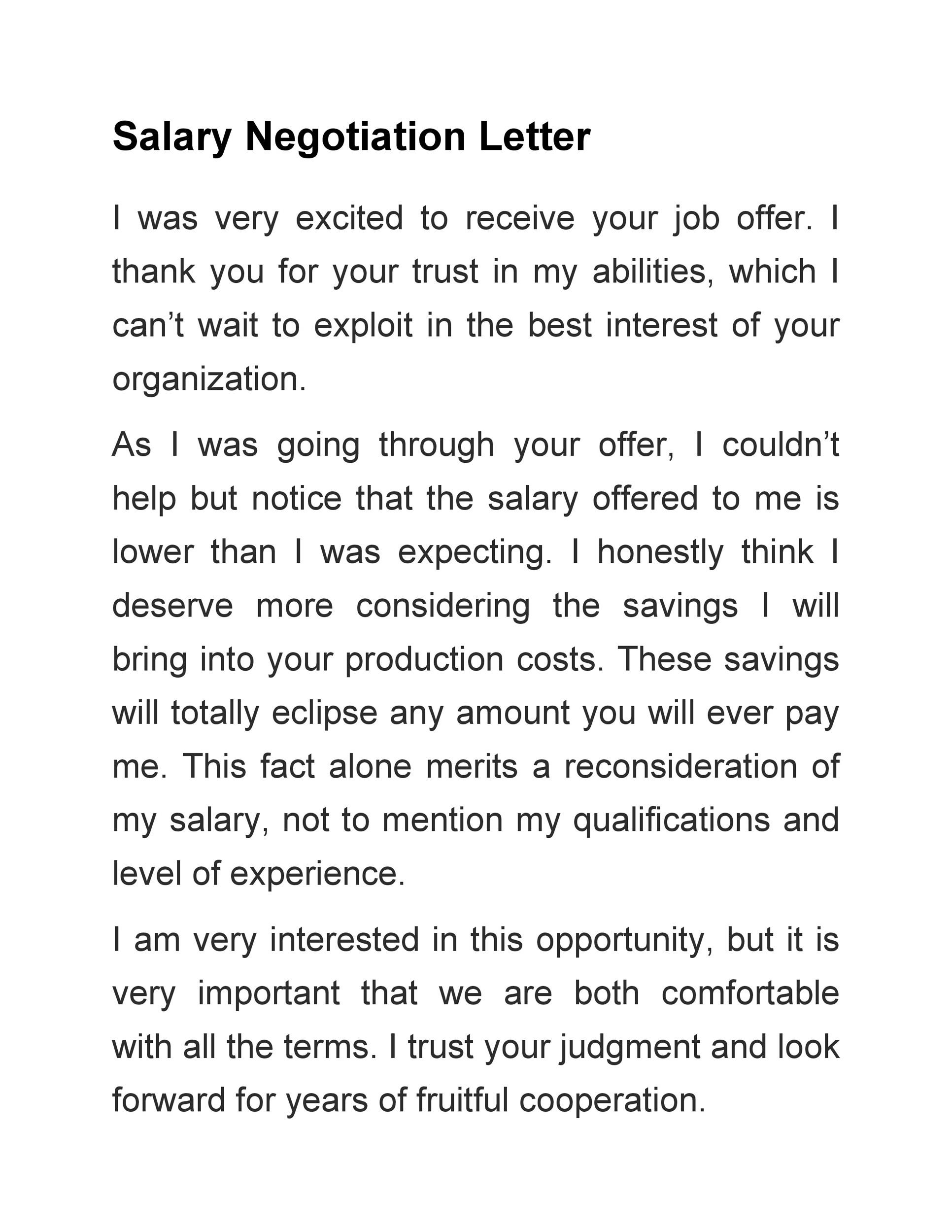
Employer: “We’re excited to have you. The salary is $60,000. Do you accept?”
You: “Thank you for the offer. Based on my experience and the market rate, I was hoping for $68,000. Is there flexibility?”
Employer: “We can go up to $65,000, but not higher.”
You: “I appreciate your flexibility. If you can add a $2,000 signing bonus, I’m happy to accept.”
Scenario 2: Asking For A Raise
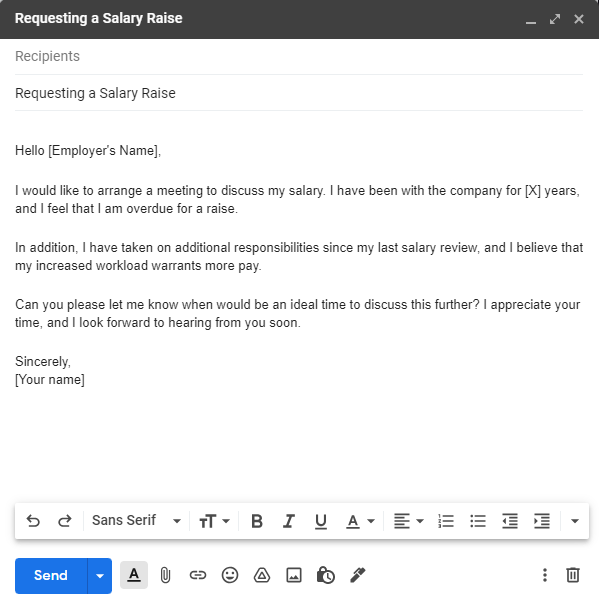
You: “I wanted to discuss my compensation. I’ve taken on new responsibilities and completed two major projects this year. Based on my results and market data, I believe a raise to $75,000 is fair. Can we discuss it?”
Manager: “I need to check with HR, but I appreciate your work and will get back to you.”
How Salary Negotiation Varies By Industry
Salary negotiation can look different depending on your job. Here is a quick comparison.
| Industry | Negotiation Flexibility | Typical Benefits | Notes |
|---|---|---|---|
| Technology | High | Stock options, remote work | Strong demand for talent |
| Healthcare | Medium | Bonuses, education support | Structured pay scales |
| Education | Low | Retirement plans | Fixed salary bands |
| Finance | Medium-High | Bonuses, insurance | Bonus negotiation is common |
If you are in a field with low flexibility, focus on benefits or future raise plans.
Non-obvious Insights For Negotiation Success
Many guides miss these advanced ideas:
- Negotiate before you need the money. If you wait until you are desperate, you lose power. Start talks when you are performing well, not when you are unhappy or need a new job quickly.
- Ask for feedback during negotiation. If the employer says no, ask, “What would make me eligible for a higher salary in the future?” This shows you care about growth and helps you plan your next steps.
- Review your offer every year. Don’t wait for your employer to bring up raises. Set a yearly reminder to review your pay and performance.
- Be ready to walk away. If the offer does not meet your needs, it’s okay to say no. This confidence can sometimes lead employers to improve their offer.
Steps To Follow After Negotiating
After you agree on terms:
- Get the offer in writing.
- Double-check all details.
- Thank the employer for their flexibility and time.
- Start your new role with confidence.
If you did not get everything you wanted, remember: you have set a strong foundation for future talks.
Useful Phrases For Salary Negotiation
Here are some phrases you can use:
- “Based on my research, a typical range for this role is…”
- “Is there flexibility in the offer?”
- “Can we discuss the full benefits package?”
- “I appreciate the offer. Is there room for a signing bonus?”
- “What is the promotion and raise process here?”
You do not need complicated words—simple, clear language works best.
Digital Tools And Resources For Salary Research
Knowing where to find reliable data helps your case. Some top resources are:
- Glassdoor
- Payscale
- LinkedIn Salary
- Bureau of Labor Statistics (U.S. BLS)
These sites show average salaries, benefits, and company reviews. Remember to check the date and location of the data.
Table: Comparing Salary And Benefits Offers
Here’s how two job offers might look side by side.
| Offer Detail | Company A | Company B |
|---|---|---|
| Base Salary | $65,000 | $60,000 |
| Health Insurance | Yes | Yes |
| Vacation | 3 weeks | 4 weeks |
| Remote Work | No | Yes |
| Bonus | $2,000 | $5,000 |
Look beyond salary—other benefits might be more valuable for your lifestyle.
Frequently Asked Questions
How Do I Answer If Asked About My Salary Expectations?
Give a researched range, not a single number. For example: “Based on market data and my experience, I believe $68,000 to $75,000 is fair.” This shows you are flexible but informed.
What If The Employer Says The Offer Is Non-negotiable?
Ask if other benefits are flexible, such as vacation days, remote work, or a signing bonus. If nothing can change and the offer is below your minimum, it’s okay to decline.
How Do I Negotiate Salary For A Remote Job In Another Country?
Research salaries in both your country and the company’s. Discuss taxes, currency, and cost-of-living. Ask about support for home office expenses.
Is It Okay To Negotiate Salary For An Internship Or Entry-level Job?
Yes, but be realistic. Focus on learning opportunities, growth, and benefits if the salary is fixed. You can ask for a review after six months.
What Should I Do If I Feel Nervous About Negotiating?
Practice your main points out loud. Write down key facts. Remember: negotiation is normal and expected. Being polite and prepared is more important than speaking perfect English.
Negotiating salary can change your career and financial future. With good preparation, clear communication, and a focus on value, you can earn what you deserve. Even if you do not get everything you ask for, you will learn a valuable skill for life.
Start practicing today—your future self will thank you.

