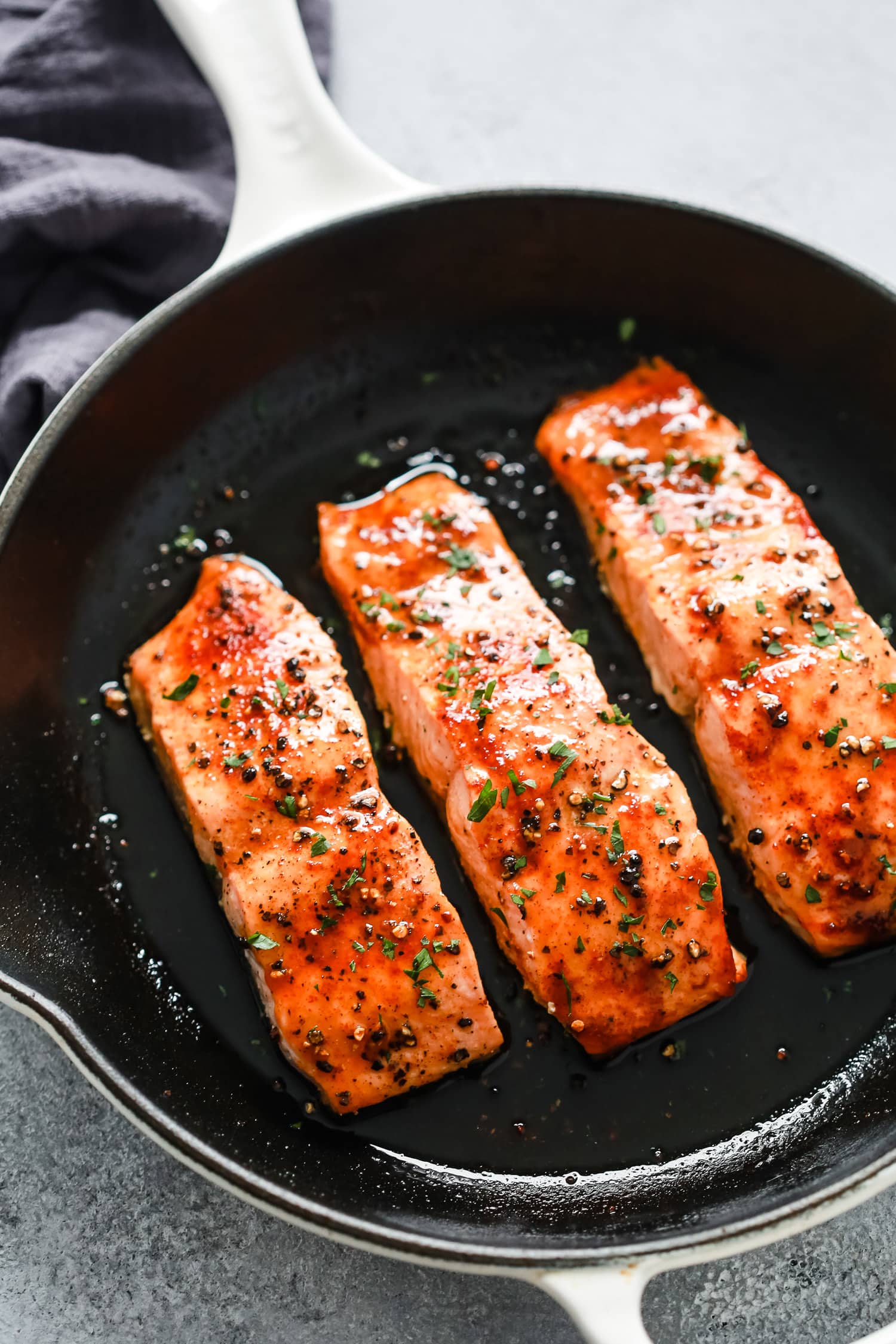
Cooking salmon at home can be a game-changer for your meals. This fish is not only healthy but also surprisingly easy to prepare in many ways. Whether you want something quick for a weeknight or an impressive dish for guests, salmon offers flexibility.
But to get the best flavor and texture, you need to know a few important details. Many people worry about overcooking, undercooking, or not choosing the right method. In this guide, you’ll learn practical steps, common mistakes, and useful tips for every main way to cook salmon.

36% off Today’s Exclusive Deals
Limited-time Exclusive Deals. Check current discount on Amazon.
Check Price on Amazon As an Amazon Associate I earn from qualifying purchases.You’ll also find clear answers to common questions. By the end, you’ll know how to cook salmon with confidence and get the most from this delicious fish.
Why Salmon Is A Favorite Choice
Salmon is a top pick for both new and experienced cooks. It stands out for its rich flavor, tender texture, and high nutritional value. A 3-ounce serving of cooked Atlantic salmon has about 175 calories, 10 grams of fat (most of it healthy omega-3), and 19 grams of protein. The omega-3 fatty acids in salmon are good for heart health and brain function. Wild-caught varieties like sockeye and king salmon are especially prized for their taste and deep color, but even farmed salmon is a solid choice if you buy from reputable sources.
Salmon’s versatility means you can bake, grill, pan-sear, poach, or steam it. Each method brings out different flavors and textures. Plus, salmon cooks quickly, so you can have dinner ready in under 30 minutes.
Picking The Best Salmon
A great meal starts with good ingredients. Salmon comes in several types, each with unique qualities. Here’s how they compare:
| Type | Flavor | Texture | Color | Best Use |
|---|---|---|---|---|
| Atlantic (farmed) | Mild, slightly buttery | Soft, moist | Pale pink | Baking, pan-searing |
| King (Chinook) | Rich, full | Very tender | Deep pink | Grilling, roasting |
| Coho | Delicate, less oily | Medium-firm | Bright orange | Baking, poaching |
| Sockeye | Strong, bold | Firm | Vivid red | Grilling, broiling |
| Pink | Mild, light | Soft | Light pink | Poaching, salads |
When buying salmon, look for firm, moist flesh with a fresh, mild smell. Avoid fish with a strong “fishy” odor or brown spots. For fillets, the color should be even, not faded or patchy. Frozen salmon is also a good option, especially if you live far from the coast.
Many frozen fillets are flash-frozen at sea, locking in freshness.
Prepping Salmon For Cooking
Before cooking, a few simple steps will make a big difference:
- Remove bones: Run your fingers over the fillet to check for pin bones. Use tweezers to pull them out gently.
- Pat dry: Use paper towels to blot moisture from the surface. This helps get a crisp crust when searing or roasting.
- Season well: At minimum, use salt and pepper. For more flavor, add lemon zest, herbs (like dill or parsley), garlic, or a spice rub.
- Bring to room temperature: Let salmon sit out for 10–15 minutes before cooking. This ensures even cooking.
If you want crispy skin, leave it on during cooking. If you prefer skinless salmon, ask your fishmonger to remove it or do it yourself with a sharp knife.
Top Methods To Cook Salmon
There are many ways to cook salmon. Each gives a different result. Here are the most popular methods, with step-by-step instructions.
Pan-searing Salmon
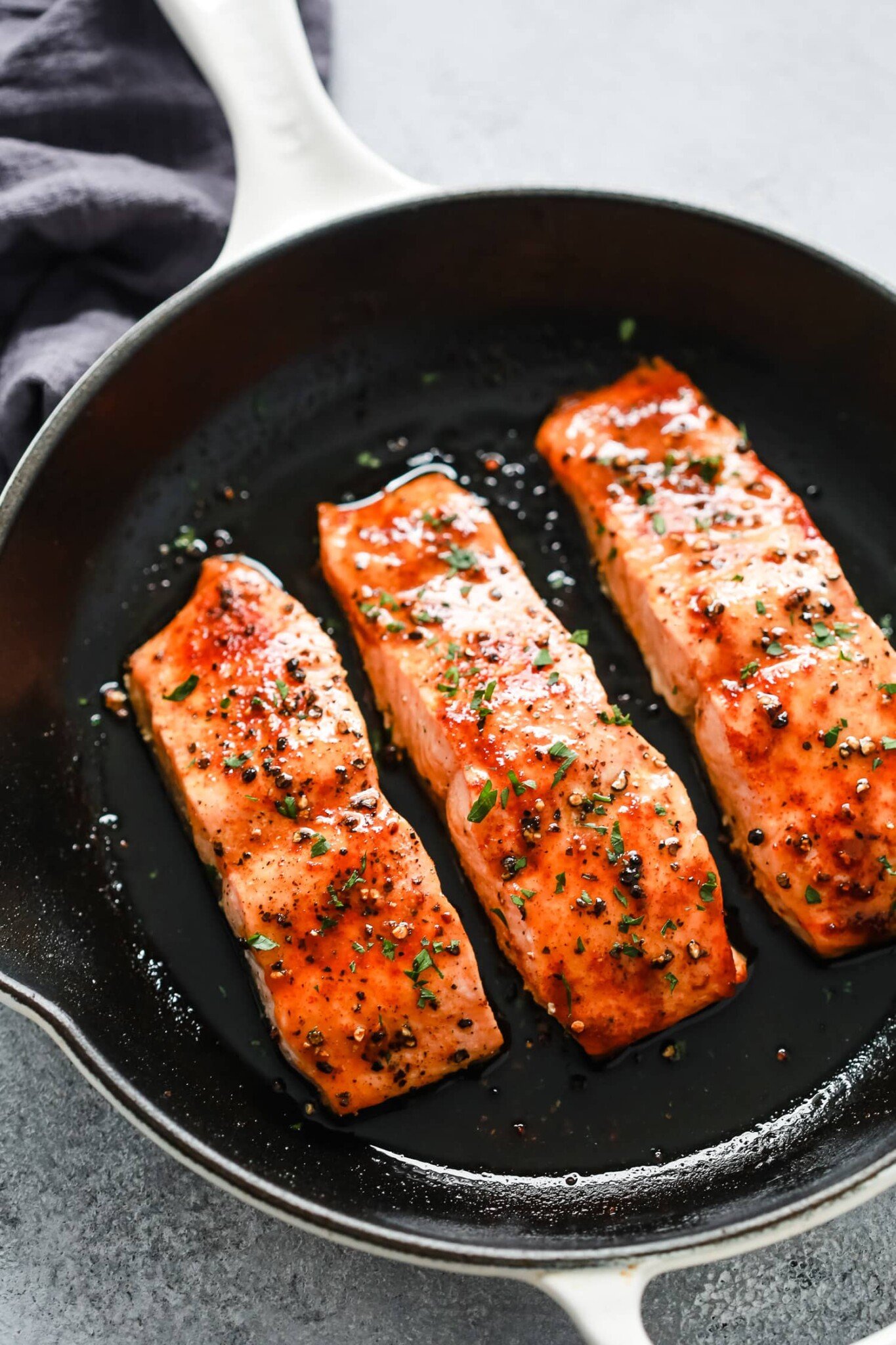
Pan-searing creates a golden, crispy crust and moist inside. It’s ideal for fillets with the skin on.
What you need:
- 2 salmon fillets (about 6 oz each)
- Salt and pepper
- 1–2 tablespoons oil (olive or canola)
Steps:
- Season both sides of the fillets with salt and pepper.
- Heat oil in a non-stick or stainless steel skillet over medium-high heat.
- Place the salmon skin-side down in the hot pan. Press gently with a spatula for 10 seconds to prevent curling.
- Cook without moving for 4–5 minutes. The skin should be crisp and the fish will look cooked halfway up.
- Flip and cook another 2–4 minutes, depending on thickness. The flesh should be opaque and flake easily with a fork.
- Remove from the pan and let rest for 2 minutes.
Tip: Don’t overcrowd the pan. Cook in batches if needed.
Baking Salmon
Baking is easy and hands-off. It’s great for cooking several pieces at once.
What you need:
- 2–4 salmon fillets
- Salt, pepper, and your favorite seasoning
- Lemon slices
- 1 tablespoon olive oil
Steps:
- Preheat oven to 400°F (200°C).
- Line a baking sheet with parchment paper or foil.
- Arrange salmon fillets on the sheet. Brush with oil, sprinkle with seasoning, and lay lemon slices on top.
- Bake for 12–15 minutes. Thicker pieces may need up to 18 minutes.
- Salmon is done when it flakes easily and is just opaque in the center.
Tip: For extra moisture, cover with foil for the first 8 minutes.
Grilling Salmon
Grilled salmon has a smoky flavor and beautiful grill marks. It’s perfect for summer meals.
What you need:
- 2 salmon steaks or fillets (with skin)
- Salt, pepper, and olive oil
Steps:
- Preheat grill to medium-high (400°F/200°C).
- Brush salmon and grill grates with oil.
- Place salmon skin-side down. Close lid and grill for 4–5 minutes.
- Flip gently with a wide spatula. Grill another 3–4 minutes.
- Remove and let rest.
Tip: For fillets, use a grill basket to avoid sticking.
Broiling Salmon
Broiling cooks salmon quickly under high heat, similar to grilling, but indoors.
What you need:
- 2 salmon fillets
- Salt, pepper, oil, and seasonings
Steps:
- Set oven rack 6 inches from broiler. Preheat broiler.
- Place salmon on a foil-lined pan.
- Brush with oil and season.
- Broil for 6–8 minutes. Check for doneness at the thickest part.
Tip: Watch closely—broilers cook fast and can burn food easily.
Poaching Salmon
Poaching gives salmon a silky, tender texture. It’s gentle and works well for salads or cold dishes.
What you need:
- 2 salmon fillets
- 2 cups water or broth
- Lemon slices, herbs (optional)
Steps:
- Add water or broth to a skillet. Bring to a gentle simmer (not boiling).
- Add lemon and herbs if you like.
- Slide salmon into liquid. Simmer gently for 8–10 minutes.
- Remove with a slotted spoon.
Tip: The liquid should never boil, or the fish can become tough.
Steaming Salmon
Steaming keeps salmon moist and highlights its natural flavor.
What you need:
- 2 salmon fillets
- Salt, pepper, herbs
- A steamer basket
Steps:
- Fill a pot with 1 inch of water. Bring to a simmer.
- Season salmon. Place in steamer basket above the water.
- Cover and steam for 6–8 minutes.
Tip: Add aromatics (like ginger or dill) to the water for more flavor.
How Long To Cook Salmon
Cooking time depends on thickness and method. Salmon is done at an internal temperature of 125–130°F (52–54°C) for medium, or 145°F (63°C) for well-done (USDA recommendation). Use a food thermometer for best results.
Here’s a comparison of typical cooking times:
| Method | Fillet Thickness | Time (approx.) |
|---|---|---|
| Pan-searing | 1 inch | 7–9 min |
| Baking (400°F) | 1 inch | 12–15 min |
| Grilling | 1 inch | 7–9 min |
| Broiling | 1 inch | 6–8 min |
| Poaching | 1 inch | 8–10 min |
| Steaming | 1 inch | 6–8 min |
Non-obvious tip: Salmon continues to cook after you take it off the heat. For juicy, moist fish, remove it when it’s just turning opaque and still a little translucent in the center. Rest for 2–3 minutes before serving.
Marinades, Rubs, And Sauces
Salmon’s rich taste means you don’t need much to make it shine. Still, the right marinade or sauce can take it to the next level.
Simple Marinades
Marinate salmon for 15–30 minutes before cooking. Here are two easy options:
- Lemon Herb: 2 tablespoons olive oil, juice of 1 lemon, 1 clove garlic (minced), 1 tablespoon chopped dill or parsley, salt, and pepper.
- Soy Ginger: 2 tablespoons soy sauce, 1 tablespoon honey or brown sugar, 1 teaspoon grated ginger, 1 teaspoon sesame oil.
Tip: Don’t marinate salmon too long—acidic ingredients can make the texture mushy.
Quick Rubs
If you’re short on time, use a dry rub just before cooking:
- Cajun: 1 teaspoon paprika, 1/2 teaspoon garlic powder, 1/2 teaspoon cayenne, 1/2 teaspoon dried thyme.
- Maple Pepper: 1 tablespoon brown sugar, 1/2 teaspoon black pepper, 1/2 teaspoon salt.
Easy Sauces
A good sauce can complement cooked salmon:
- Dill Yogurt: Mix 1/2 cup Greek yogurt with 1 tablespoon chopped dill, 1 teaspoon lemon juice, and a pinch of salt.
- Mustard Cream: Blend 2 tablespoons Dijon mustard with 1 tablespoon cream or sour cream, 1 teaspoon honey, and a squeeze of lemon.
Common Mistakes To Avoid
Even experienced cooks sometimes make these errors:
- Overcooking: Salmon is best when it’s moist and just cooked through. Err on the side of undercooking—it will keep cooking as it rests.
- Not drying the fish: Extra moisture makes it hard to get crispy skin or a good sear.
- Cooking straight from the fridge: Cold salmon cooks unevenly. Let it sit out for 10–15 minutes.
- Sticking to the pan or grill: Always preheat and oil your pan or grill grates before adding the fish.
- Using too much marinade: Acidic marinades can break down salmon’s texture quickly—30 minutes is enough.
Serving Ideas And Pairings
Salmon is delicious on its own, but sides and garnishes can turn it into a full meal. Here are some classic pairings:
- Rice or quinoa for a filling base
- Roasted vegetables like asparagus, carrots, or Brussels sprouts
- Simple salads with greens, cucumber, and a lemon vinaigrette
- Potatoes—mashed, roasted, or boiled
- Salsas made with mango, avocado, or tomato
Non-obvious tip: Try flaking leftover cooked salmon into salads, pasta, or even breakfast omelets for a quick protein boost.
How To Store And Reheat Salmon
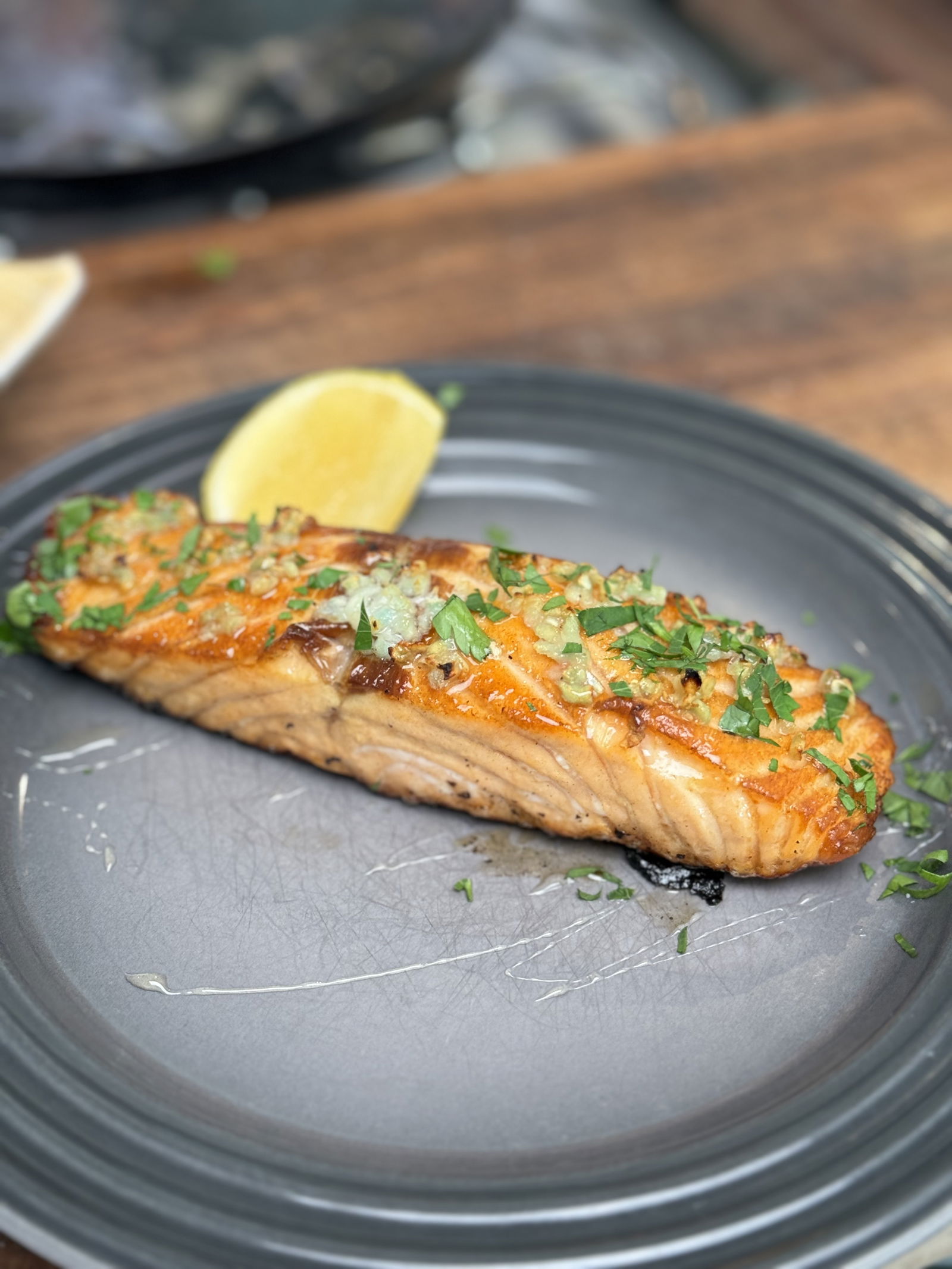
If you have leftovers, store salmon in an airtight container in the fridge for up to 3 days. For best taste, eat it cold or gently reheat.
To reheat:
- Place salmon on a plate. Cover with a damp paper towel.
- Microwave on low (50% power) for 30-second bursts until just warm.
- Or, warm in a 275°F oven for 10–12 minutes.
Tip: Avoid high heat, which can dry out the fish.
Comparing Salmon To Other Fish
How does salmon stack up against other popular fish? Here’s a quick look:
| Fish | Calories (3 oz) | Protein (g) | Omega-3 (g) | Typical Cooking Time |
|---|---|---|---|---|
| Salmon (Atlantic) | 175 | 19 | 1.8 | 8–15 min |
| Tuna (Yellowfin) | 110 | 24 | 0.2 | 6–10 min |
| Cod | 70 | 16 | 0.1 | 8–12 min |
| Tilapia | 110 | 23 | 0.1 | 7–10 min |
Salmon has the highest omega-3 content, making it an especially good choice for heart health.
Health And Safety Tips
Salmon is generally safe to eat, but keep these points in mind:
- Mercury levels: Salmon is low in mercury compared to some fish like swordfish or king mackerel.
- Parasites: Cooking salmon to 145°F (63°C) kills any possible parasites. If you want to eat raw or lightly cured salmon (like in sushi), always use “sushi-grade” fish from a trusted supplier.
- Allergies: Fish allergies are common. If serving guests, ask in advance.
For more on seafood safety, see the FDA’s guidance.
Frequently Asked Questions
How Do I Know When Salmon Is Fully Cooked?
Salmon is done when the flesh turns opaque and flakes easily with a fork. For the most accurate check, use a thermometer: look for 125–130°F for medium, or 145°F for well-done. The fish should still be moist inside.
Can I Cook Salmon From Frozen?
Yes, you can bake or steam salmon directly from frozen. Add about 5–7 minutes to the normal cooking time. Do not pan-sear or grill frozen salmon, as the outside may burn before the inside cooks.
What’s The Best Way To Get Crispy Salmon Skin?
Dry the skin thoroughly, season with salt, and cook skin-side down in hot oil without moving the fish for several minutes. Press gently with a spatula at the start to keep the skin flat.
How Long Can I Keep Cooked Salmon In The Fridge?
Cooked salmon lasts up to 3 days in the refrigerator. Store it in an airtight container. Eat leftovers cold or reheat gently to keep the texture soft.
Is Wild-caught Salmon Better Than Farmed?
Wild-caught salmon usually has a stronger flavor, firmer texture, and more natural color. Farmed salmon is milder and more widely available. Both are healthy, but wild salmon can be higher in omega-3 fats and lower in contaminants.
Cooking salmon at home is simple once you know the basics. The key is to start with quality fish, use the right method for your taste, and avoid overcooking. Try different flavors and sides to keep things interesting. With a little practice, you’ll discover just how easy and rewarding it is to make salmon a regular part of your meals.