

Setting up a home gym is a smart decision for anyone who values convenience, privacy, and control over their own fitness routine. Whether you’re a busy professional, a parent who can’t find time for the gym, or just someone who prefers to work out alone, a home gym can change your life.
But making a gym at home is not as simple as buying a few weights. It requires careful planning, smart choices, and a clear understanding of your goals. In this article, you’ll learn exactly how to set up a home gym that suits your space, budget, and personal needs—without wasting money or ending up with unused equipment.

36% off Today’s Exclusive Deals
Limited-time Exclusive Deals. Check current discount on Amazon.
Check Price on Amazon As an Amazon Associate I earn from qualifying purchases.Why Build A Home Gym?
A home gym gives you freedom and flexibility. You can work out any time, avoid crowded gyms, and save on monthly fees. Over the long term, a home gym can also be more cost-effective. The time you save on travel adds up, and you can customize your equipment to fit your preferences.
For many, the biggest benefit is consistency. When the gym is just steps away, you’re more likely to stick to your fitness plan. This regularity leads to better results—whether your goal is weight loss, muscle gain, or improved health.
Planning Your Home Gym: Start With Your Goals
Before you buy anything, get clear about what you want to achieve. Your goals will decide everything else: what equipment you need, how much space you’ll use, and how much you’ll spend.
- Weight loss: Focus on cardio options like a treadmill, stationary bike, or jump rope.
- Muscle building: Prioritize free weights, resistance bands, and possibly a bench or squat rack.
- General fitness: Mix cardio and strength tools, such as dumbbells, a mat, and a stability ball.
- Sports training: Consider specialty gear, like agility ladders or a punching bag.
- Mobility/flexibility: Yoga mats, foam rollers, and stretching bands are key.
Write down your main goal and keep it visible as you plan your gym. It’s easy to get distracted by flashy gear or deals, but your goal should shape every decision.

Choosing The Right Space
You don’t need a huge area to set up a home gym. What matters most is that the space is safe, comfortable, and motivating. Here’s how to pick the right spot:
- Spare bedroom or office: Private and easy to control lighting and temperature.
- Garage or basement: Larger equipment fits here, but make sure the floor is stable and humidity is not a problem.
- Living room corner: For small setups, a foldable mat and a few weights can work.
- Backyard or patio: Good for outdoor training, but weather can limit use.
Measure the space before buying anything. Most people overestimate how much room they have. Allow at least 6×6 feet for basic workouts, plus extra for machines like treadmills.
Non-obvious tip: Check the ceiling height. For jumping, pull-ups, or overhead presses, you’ll need more vertical space than you might think.
Flooring: Protecting Your Home And Body
The right flooring protects both your joints and your home. Dropping weights on a hardwood floor, for example, can cause costly damage. Thin carpets can bunch up and be unsafe.
Best Home Gym Flooring Options
| Material | Pros | Cons | Best For |
|---|---|---|---|
| Rubber Mats | Durable, shock-absorbing, easy to clean | Can smell at first, heavier | Weightlifting, all-purpose |
| Foam Tiles | Lightweight, affordable, soft | Less durable, compresses over time | Yoga, stretching, light workouts |
| Carpet | Comfortable, already installed in many rooms | Hard to clean, can slip | Bodyweight exercises |
| Concrete (uncovered) | Strong, stable | Very hard, cold, can hurt joints | Garage gyms (with mats on top) |
Rubber mats are the most popular choice because they protect your floor and provide good grip. If you’re on a tight budget, start with a small area mat and expand as needed.
Essential Equipment For Any Home Gym
You don’t need to buy everything at once. Start with core essentials, then add more as you discover what you use most. Here’s a guide to what most home gyms should include:
Cardio Equipment
- Jump rope: Cheap, small, and burns calories fast.
- Treadmill: Great for walking and running, but takes up space.
- Stationary bike: Lower impact on joints.
- Rowing machine: Full-body workout and compact options available.
Strength Training Tools
- Dumbbells: Adjustable sets save space and money.
- Kettlebells: Good for strength and cardio together.
- Resistance bands: Versatile and portable.
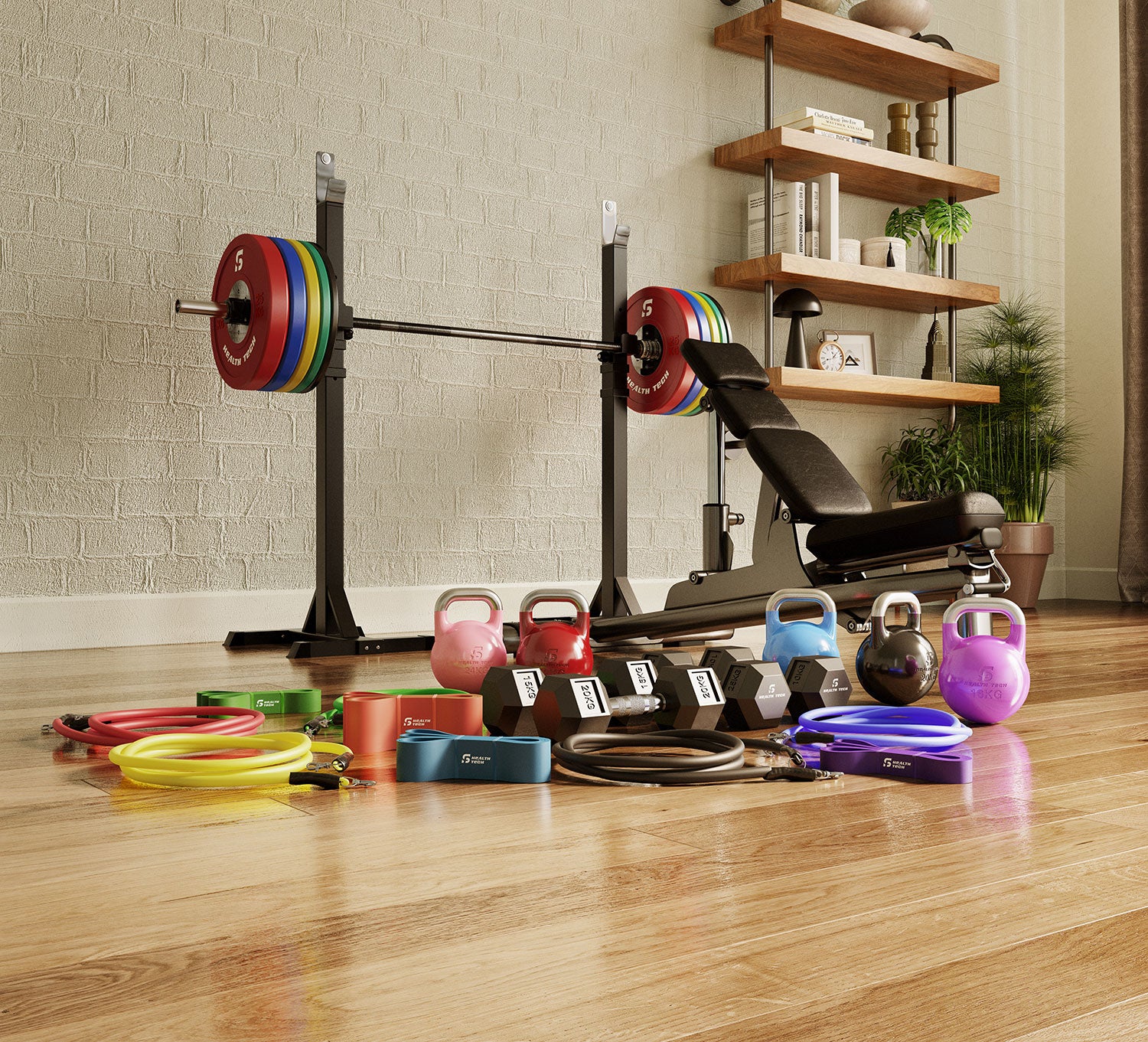
- Barbell and weight plates: For serious strength training.
- Bench: Adjustable benches are most flexible.
Other Useful Equipment
- Yoga mat: Not just for yoga—good for stretching and core work.
- Pull-up bar: Can fit in a doorway or mount to a wall.
- Foam roller: Helps with recovery and flexibility.
- Medicine ball: Adds variety to strength and cardio workouts.
Non-obvious insight: Buy items you’ll actually use, not just what you see in fitness ads. Many people buy large machines only to find they prefer bodyweight workouts or free weights.
Budgeting For Your Home Gym
You don’t need to spend thousands of dollars. Most people can build a functional gym for $200–$1,000, depending on their goals. Here’s a breakdown of costs for common setups:
| Setup Type | Sample Equipment | Estimated Cost |
|---|---|---|
| Basic (Bodyweight) | Mat, resistance bands, jump rope | $70–$150 |
| Standard (Dumbbells + Cardio) | Adjustable dumbbells, mat, bike/treadmill | $400–$1,200 |
| Advanced (Barbell Set + Rack) | Barbell, plates, bench, rack, mat | $900–$2,500 |
Used equipment can save you 30–50%. Many people buy new gear, then sell it barely used. Always check local listings and test before buying.
Creating A Motivating Environment
A home gym is more than just equipment. The right environment can boost your energy and help you stay consistent.
- Lighting: Natural light is best, but bright LED lights can work in basements or garages.
- Mirrors: Help check form and make the space feel larger.
- Music: A small speaker or headphones can make workouts more enjoyable.
- Storage: Use shelves, racks, or bins to keep things organized.
- Decor: Posters, plants, or a whiteboard for tracking progress can help you stay motivated.
Small detail that matters: Keep your gym clean and clutter-free. A messy space makes workouts feel harder and less enjoyable.
Safety And Maintenance
Home gyms can be safer than public gyms, but you still need to take precautions.
- Secure equipment: Make sure racks, bars, and pull-up bars are properly installed.
- Check floors: Mats shouldn’t slip or bunch up.
- Clean regularly: Sweat and dust can build up fast.
- Inspect for wear: Check bands and cables for cracks, and replace them as needed.
If you have children, use locks or store heavy items out of reach. Accidents can happen even in a home environment.
Organizing Your Workout Routine
A home gym makes it easier to exercise, but you need a plan to see results. Without structure, it’s easy to skip workouts or repeat the same exercises without progress.
Building A Simple Weekly Plan
- Pick days: Choose 3–5 days a week for workouts.
- Mix workouts: Combine cardio, strength, and flexibility.
- Track progress: Write down exercises, sets, and reps, or use a fitness app.
- Adjust as you go: Add weight, change routines, or try new equipment to avoid plateaus.
Sample 4-day plan:
- Day 1: Full-body strength (dumbbells, squats, push-ups)
- Day 2: Cardio (jump rope, treadmill)
- Day 3: Rest or active recovery (stretching, yoga)
- Day 4: Upper body (pull-ups, rows, presses)
- Day 5: Cardio + core (bike, planks)
Making The Most Of Small Spaces
Many people think they need a large room for a home gym, but you can do a lot in a small area.
- Foldable benches and mats can be stored under a bed or in a closet.
- Wall-mounted racks free up floor space.
- Stackable weights are easy to hide when not in use.
- Multi-use equipment (like resistance bands) can replace several machines.
Experience-based tip: Use vertical space for storage. Hooks and shelves can hold bands, towels, and even mats.
Smart Tech And Apps For Home Gyms
Technology can make home workouts more effective and fun. Here’s how you can use smart devices and apps:
- Fitness trackers: Monitor heart rate, calories, and progress.
- Workout apps: Offer guided routines and motivation (Nike Training Club, Fitbod, etc. ).
- Streaming workouts: YouTube, Peloton, and other services bring trainers to your home.
- Smart equipment: Some treadmills and bikes come with screens and online classes.
Insight: Don’t get distracted by too many gadgets. Focus on tools that match your goals and actually help you stay consistent.
Mistakes To Avoid When Setting Up A Home Gym
Many beginners make the same errors when starting. Here are key mistakes to watch for:
- Buying too much equipment: Start small and add more only if you need it.
- Ignoring safety: Unstable setups can lead to injuries.
- Skipping warm-up/cool-down: Increases risk of strains.
- Not tracking progress: Without a log, it’s hard to see improvement or stay motivated.
- Poor ventilation: A stuffy gym makes workouts unpleasant—consider a fan or open window.
Practical insight: Choose quality over quantity. One sturdy bench is better than five low-quality gadgets.

Upgrading Your Home Gym Over Time
As your fitness improves, you may want to expand your gym. Here’s how to do it wisely:
- Add new equipment only after you’ve mastered your current gear.
- Invest in modular pieces that can grow with your needs (for example, a rack that can hold a barbell, pull-up bar, and bands).
- Improve the environment before buying more machines. Better lighting, mirrors, or a sound system can boost motivation.
- Consider friends or family: If others use the gym, add variety (like a second mat or light dumbbells).
Remember, a home gym is a long-term investment. Take your time and build it to last.
Comparing Home Gym Vs. Gym Membership
It’s normal to wonder if a home gym is really a better choice than a regular gym. Here’s a quick comparison:
| Factor | Home Gym | Commercial Gym |
|---|---|---|
| Cost (per year) | $200–$1,500 (one-time, then low maintenance) | $400–$1,500 (recurring) |
| Convenience | Anytime access, no travel | Depends on location/hours |
| Equipment variety | Limited by budget/space | Wide range, advanced machines |
| Privacy | High | Low/Medium |
| Motivation/Community | Self-driven | Group classes, trainers |
Key takeaway: Home gyms are unbeatable for convenience and long-term savings, but commercial gyms offer more variety and social motivation. Some people use both, depending on their needs.
Where To Buy Home Gym Equipment
You have many options for buying quality equipment:
- Local sporting goods stores: Let you try before you buy.
- Online retailers: Amazon, Rogue Fitness, Walmart, and Dick’s Sporting Goods have a wide range.
- Second-hand markets: Facebook Marketplace, Craigslist, or local classifieds.
- Specialty retailers: For advanced or custom equipment.
Pro tip: Check return policies and warranties. Good equipment should last years, but it’s important to know your options if something breaks.
For more in-depth guides and reviews, the CDC’s Physical Activity Basics is a trusted resource.
Frequently Asked Questions
What Is The Minimum Space Needed For A Home Gym?
You can start a basic home gym in as little as 6×6 feet. This is enough for bodyweight exercises, a mat, and a few free weights. Larger equipment like treadmills or racks need more space, so measure carefully before buying.
How Much Should I Spend On A Home Gym?
Most people spend between $200 and $1,000 for a solid starter gym. Focus on essentials first, then add more as you discover what you use most. Buying used equipment can stretch your budget further.
What Equipment Should I Buy First?
Start with multi-use items like dumbbells, resistance bands, and a mat. These cover most exercises and don’t take up much space. Add cardio machines or benches if you have extra room and budget.
Can I Build Muscle With Just A Home Gym?
Yes, it’s possible to build significant muscle at home, especially with free weights, resistance bands, and a pull-up bar. Consistency, progressive overload, and good nutrition matter more than fancy equipment.
How Do I Stay Motivated In A Home Gym?
Set clear goals, track your progress, and keep your space organized and inspiring. Use music, apps, or online classes for variety. Sometimes, inviting a friend or family member to join you can boost motivation.
Building a home gym is a powerful investment in your health and well-being. Take your time, start simple, and focus on consistency. With a little planning and smart choices, you’ll have everything you need to succeed—right at home.

