When you first buy a massage gun, you might expect just a powerful device in a box. But most massage guns come with a set of attachments. These are not simple extras—they are the tools that let you target different muscles, body parts, and even problems like soreness or knots. Choosing the right attachment can make the difference between a relaxing session and one that doesn’t quite work. However, many people are unsure what each attachment does, or how to use them properly. This guide explains all the main massage gun attachments, what they do, and how to use them for the best results. Whether you are an athlete, someone with chronic pain, or just want to relax after a long day, understanding these attachments can help you get the most from your massage gun.
Why Attachments Matter In Massage Guns
Massage guns have changed the way people recover from workouts, manage pain, or simply relieve tension. But the attachments are what make these tools flexible. Each attachment is made to focus on a certain muscle group or issue. Some are soft, some are hard; some target large muscles, others reach into small or tricky spots. Without these, the massage gun is limited.
Attachments also help avoid injury. For example, using a big, hard attachment on a sensitive area could cause bruising or more pain. The right attachment gives a safer, more effective massage. People often miss this detail and use the wrong head for the wrong muscle, which leads to less relief and sometimes discomfort.
Common Types Of Massage Gun Attachments
Most massage guns come with four to six attachments. High-end models may offer as many as ten or more. Here are the main types you’ll see, what they look like, and their best uses.
1. Ball Attachment
The ball head is usually made from foam or rubber. It’s round and soft to the touch. This is the most common attachment, and for a good reason.
- Best for: Large muscle groups like the quads, hamstrings, glutes, and back.
- Why use it: The soft surface spreads the force, making it comfortable for most users. It works well for both beginners and experienced users.
- Tip: Use the ball head for warm-ups, cool-downs, or general muscle relaxation.
2. Flat Head Attachment
The flat head is a smooth, wide attachment. Some are made of hard plastic, others are covered with silicone for a softer touch.
- Best for: Medium to large muscle groups, like chest, back, and thighs.
- Why use it: The shape allows for even pressure, so it’s good for those who want a deeper massage without sharp pain. It helps break up muscle knots.
- Tip: Move slowly over the muscle, and don’t press too hard. Let the gun do the work.
3. Bullet Head Attachment
The bullet attachment is narrow and pointed, looking a bit like a cone.
- Best for: Targeting specific points, like trigger points, knots, or deep tissue areas.
- Why use it: The tip reaches deep into muscles, making it ideal for stubborn knots or areas that are hard to reach with larger heads.
- Tip: Use short bursts and avoid bony areas, as the bullet head can be intense.
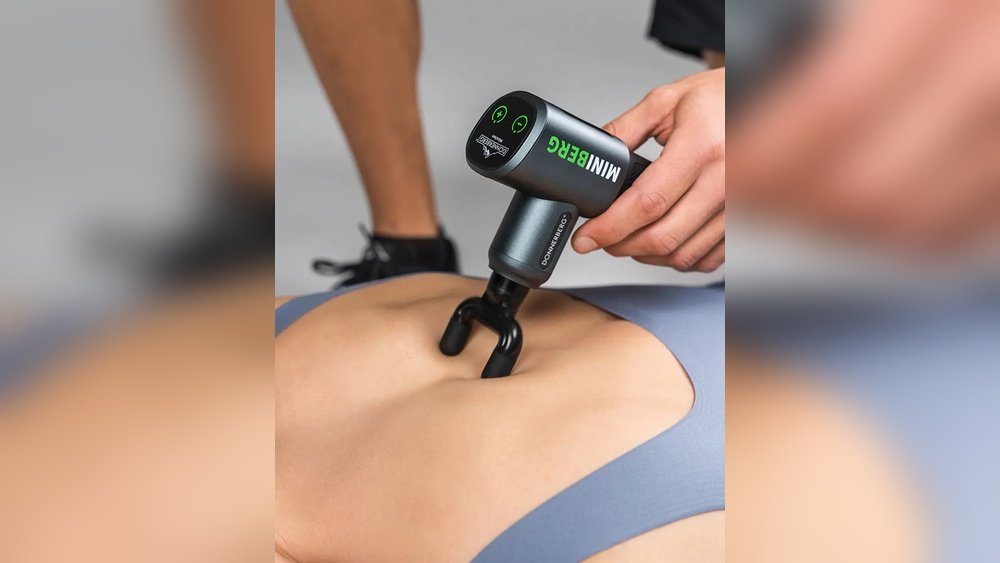
4. Fork (u-shaped) Attachment
The fork head has two prongs, like a tuning fork.
- Best for: Areas around the spine, neck, and Achilles tendon.
- Why use it: The prongs sit on either side of the bone, massaging muscles without hitting bones directly. It’s popular for the upper and lower back.
- Tip: Never use directly on the spine. Guide the prongs along muscles next to it.
5. Cushion Head Attachment
The cushion head is soft and often covered with foam or silicone. It compresses easily when pressed against the skin.
- Best for: Sensitive areas, tender muscles, and people new to massage guns.
- Why use it: It absorbs some of the gun’s force, giving a gentler massage. Great for painful or recovering muscles.
- Tip: Start with this attachment if you’re worried about soreness.
6. Wedge Head Attachment
The wedge head is flat but angled, often looking like a scraper.
- Best for: Shoulder blades, IT bands, and along the sides of the body.
- Why use it: The edge helps “scrape” out lactic acid and flush fluids. It’s also useful for stretching muscles.
- Tip: Move parallel to the muscle, not across it.
7. Shovel Or Paddle Head Attachment
The shovel head is broad and flat, sometimes with a curve.
- Best for: Large, flat muscles like the back or thighs.
- Why use it: It covers more area, making it good for fast, light massages. Also used for warming up before exercise.
- Tip: Glide it over the muscle in long strokes.
8. Thumb Head Attachment
The thumb head looks like a small, rounded thumb.
- Best for: Trigger point therapy, soles of feet, and hands.
- Why use it: It mimics a real thumb, making it great for pressure points. Popular for plantar fasciitis.
- Tip: Use gentle pressure and short sessions.
9. Air Cushion Or Soft Air Head
The air cushion head is filled with air or a very soft material.
- Best for: Extremely sensitive areas, injuries, or bony spots.
- Why use it: It’s the softest attachment, reducing impact for people with injuries or low pain tolerance.
- Tip: Ideal for first-time users or post-injury recovery.
10. Spade Head Attachment
The spade head is shaped like a small shovel but is more focused than the paddle.
- Best for: Shoulder blades, lower back, and IT band.
- Why use it: The edge targets muscle lines and attachments, similar to scraping therapy.
- Tip: Use along the length of the muscle, not across.

Less Common But Useful Attachments
Some brands offer unique attachments that serve special needs. These may not be included in every massage gun set, but they can be very helpful.
11. Arc Head
The arc head curves outward and fits the shape of large muscles.
- Best for: Thighs, calves, and shoulders.
- Why use it: Covers a wide area and fits the body’s curves, giving even pressure.
- Tip: Good for quick warm-ups.
12. Spiral Head
The spiral head has a twisted, narrow shape.
- Best for: Deep tissue, forearms, or small muscle groups.
- Why use it: The spiral design helps move fluids and reach tricky spots.
- Tip: Use with care; can be intense on sensitive areas.
13. Metal Head Attachment
The metal head is usually made from stainless steel or another metal.
- Best for: Applying gels or oils, or for very firm massage.
- Why use it: Metal is easy to clean, and glides smoothly with lotions. It gives a cool sensation, which can reduce swelling.
- Tip: Clean after every use to avoid skin irritation.
14. Heated Head Attachment
The heated head can warm up as you use it.
- Best for: Tight, stiff muscles, or areas with poor blood flow.
- Why use it: Heat relaxes muscles further and increases blood flow.
- Tip: Not all massage guns support this—check before buying.
15. Cooling Head Attachment
The cooling head stays cold during use.
- Best for: Swollen or inflamed areas.
- Why use it: Cold reduces swelling and soothes pain, especially after intense workouts.
- Tip: Not common, but useful for athletes or injury recovery.
What To Consider When Choosing Attachments
Not every attachment will suit every person. Here’s how to decide which ones to use.
Muscle Size And Location
- Large muscle groups (quads, glutes, back): Use ball, flat, or paddle heads.
- Small or tricky areas (feet, hands, neck): Bullet, thumb, or cushion heads work best.
- Near bones (spine, shoulders): Fork or U-shaped heads prevent direct bone contact.
Sensitivity And Pain Level
- Sensitive muscles: Air cushion, soft, or foam heads prevent bruising.
- Tough, tight muscles: Bullet, metal, or flat heads can dig deeper.
Purpose Of Massage
- Warm-up: Paddle, arc, or ball heads for light, broad massages.
- Recovery: Flat, bullet, or thumb heads for deeper, focused work.
- Relaxation: Cushion or air heads for gentle treatment.
Material And Hygiene
Some attachments are made with hygienic materials like metal or silicone. These are easy to clean and safe for sharing. Foam heads can absorb sweat and oils, so clean them often.
Compatibility
Not all attachments fit every massage gun. Some brands use a universal size, but others don’t. Check before buying extra heads.
Example Comparison: Ball Vs. Bullet Vs. Fork Attachments
Let’s compare three common attachments to see how they differ in use:
| Attachment | Best For | Intensity | Common Mistake |
|---|---|---|---|
| Ball Head | Large muscles (quads, back) | Gentle to medium | Using on small joints or bones |
| Bullet Head | Trigger points, knots | High | Pressing too hard, causing pain |
| Fork Head | Spine, neck, Achilles | Medium | Using directly on bone |
How To Use Massage Gun Attachments Safely
Proper use of attachments is key for safety and results. Follow these steps:
- Choose the right attachment for the muscle or issue.
- Start on the lowest speed setting. Increase only if comfortable.
- Glide the head slowly over the muscle, don’t hold it in one spot.
- Avoid bony areas and joints unless using the correct attachment (like a fork head).
- Limit sessions to 1-2 minutes per muscle group.
- Clean attachments after each use, especially if sharing.
Practical Example
If your calves are sore after running, use the ball or arc head. Start with low speed, glide up and down the calf for one minute. For a knot, switch to the bullet head and gently press on the spot for 10 seconds.
Real-world Uses: Who Benefits From Each Attachment?
- Athletes: Use bullet, flat, and wedge heads for deep tissue work and recovery.
- Office workers: Prefer cushion, air, or ball heads for daily tension and relaxation.
- Seniors: Gentle attachments like air cushion or foam heads are safest.
- People with injuries: Use only soft or air cushion heads, and consult a doctor.
Two Non-obvious Insights Beginners Miss
- Attachment shape changes intensity more than speed. Many people try to adjust pain or pressure by changing the speed of the massage gun. In fact, switching to a softer or smaller head can make a bigger difference in comfort and effectiveness.
- You can mix attachments in one session. It’s okay—and often better—to start with a broad attachment for warming up, then switch to a bullet or thumb head for tight spots, and finish with a cushion head to cool down. Most beginners stick to one head for the whole session, missing the benefits of mixing.
Common Mistakes When Using Attachments
- Using a hard head on sensitive areas: This can cause pain or bruising.
- Ignoring cleaning: Sweat, oils, and bacteria can build up, especially on foam heads.
- Pressing too hard: Let the massage gun do the work. Too much pressure can damage tissue.
- Skipping instructions: Every massage gun has slightly different attachments. Read the manual for best results.
Attachment Selection For Special Needs
Some users have unique needs. Here’s how to choose wisely:
For Chronic Pain
People with chronic pain should avoid hard or pointed attachments. Use air cushion or soft foam heads. Always start slow, and stop if pain increases.
For Pre-workout Warm-up
Use broad heads like ball or paddle attachments. Move quickly over large muscles to increase blood flow.
For Deep Tissue Release
Switch to bullet, thumb, or wedge heads. Focus only on tight spots, and limit time to prevent soreness.

Attachment Maintenance And Care
Keeping attachments clean and in good shape is important for health and long life.
- Wash with mild soap and water. For foam, use a damp cloth instead.
- Dry fully before storing.
- Store in a cool, dry place. Many massage guns come with a carrying case.
- Check for cracks or damage before use.
Poor care can lead to skin irritation or even infection, especially with shared devices.
Massage Gun Attachment Comparison By Muscle Group
Here’s a simple guide for which attachments work best for each area:
| Muscle/Area | Recommended Attachments | Attachment to Avoid |
|---|---|---|
| Quads/Glutes | Ball, Paddle, Flat | Bullet |
| Back | Ball, Fork, Paddle | Bullet |
| Neck/Spine | Fork, Cushion, Air | Ball, Bullet |
| Feet/Hands | Thumb, Bullet, Cushion | Flat, Paddle |
How Many Attachments Do You Really Need?
Most people only use 2-4 attachments regularly. More isn’t always better. If you’re a professional athlete or therapist, a larger set may help. For home use, a ball, flat, bullet, and fork head will cover nearly every need.
When To Replace Attachments
- Visible wear or cracks
- Loss of firmness (for foam or cushion heads)
- Difficult to clean or smells bad
- Attachment doesn’t fit tightly
Most attachments last 6-12 months with regular use. Metal and hard plastic heads may last longer.
Latest Innovations In Massage Gun Attachments
Some brands are now making heated heads, cooling heads, and heads with LED light therapy for extra benefits. Others use special materials like copper or antibacterial silicone to reduce germs.
For more about innovations and safe use, you can check Healthline’s guide.
Frequently Asked Questions
What Is The Best Massage Gun Attachment For Back Pain?
The fork head is best for back pain because it can massage muscles along the spine without hitting the bones. The ball head also works well for large back muscles.
Can I Use Massage Gun Attachments On My Neck?
Yes, but use only soft or cushion heads and never use a bullet or hard head. Move gently and avoid the front of the neck.
How Do I Clean Massage Gun Attachments?
Clean with mild soap and water for silicone or plastic heads. Use a damp cloth for foam. Always dry fully before storing.
How Many Attachments Should I Use In One Session?
It’s safe to use 2-3 attachments in one session. Start with a broad head for warming up, then a focused head for tight spots, and finish with a cushion head for relaxation.
Are All Massage Gun Attachments Universal?
No, not all attachments fit every massage gun. Many brands have their own sizes. Always check compatibility before buying extras.
Understanding what attachments come with massage guns—and how to use them—can greatly improve your massage experience. With the right knowledge, you can target every muscle, reduce pain, and get more value from your device. Take time to match the attachment to your needs, and your body will thank you.
:max_bytes(150000):strip_icc()/011223-Massage-Gun-Attachments-Lead-0cfd84c81a9e4cf7991525bee354aeb2.jpg)