If you are serious about cold therapy, choosing the right size ice bath tub is a decision that will shape your experience. It’s not just about comfort—the size impacts safety, effectiveness, and practicality. With so many options on the market, it’s easy to feel lost.
Should you pick a compact tub for quick dips, or invest in a full-size unit for maximum immersion? In this article, you’ll learn how to match your needs, goals, and space to the perfect ice bath size.
Let’s break down everything you need to know before buying your own ice bath tub.
Why Size Matters For Ice Bath Tubs
When you think of an ice bath, you might picture a professional athlete in a huge tub. But size is not just about “bigger is better.” The right size offers:
- Full-body immersion for effective cold therapy
- Comfortable positioning so you’re not cramped or awkward
- Safety — enough room to move but not so much that you risk slipping under
- Efficiency in how much ice and water you need to cool the bath
Too small, and you might only dip your legs. Too big, and you waste water, ice, and energy. Size also affects how easy it is to drain, clean, and store your tub.
Non-obvious insight: Many beginners underestimate how much being even slightly cramped can increase discomfort, making the cold therapy feel much harder. On the other hand, a tub that’s too large can dilute the cold, requiring much more ice to reach the target temperature.
Key Factors That Determine The Right Size
1. Your Height And Body Size
The most important factor is your own body size. You want a tub that fits your height and allows you to submerge at least up to your shoulders.
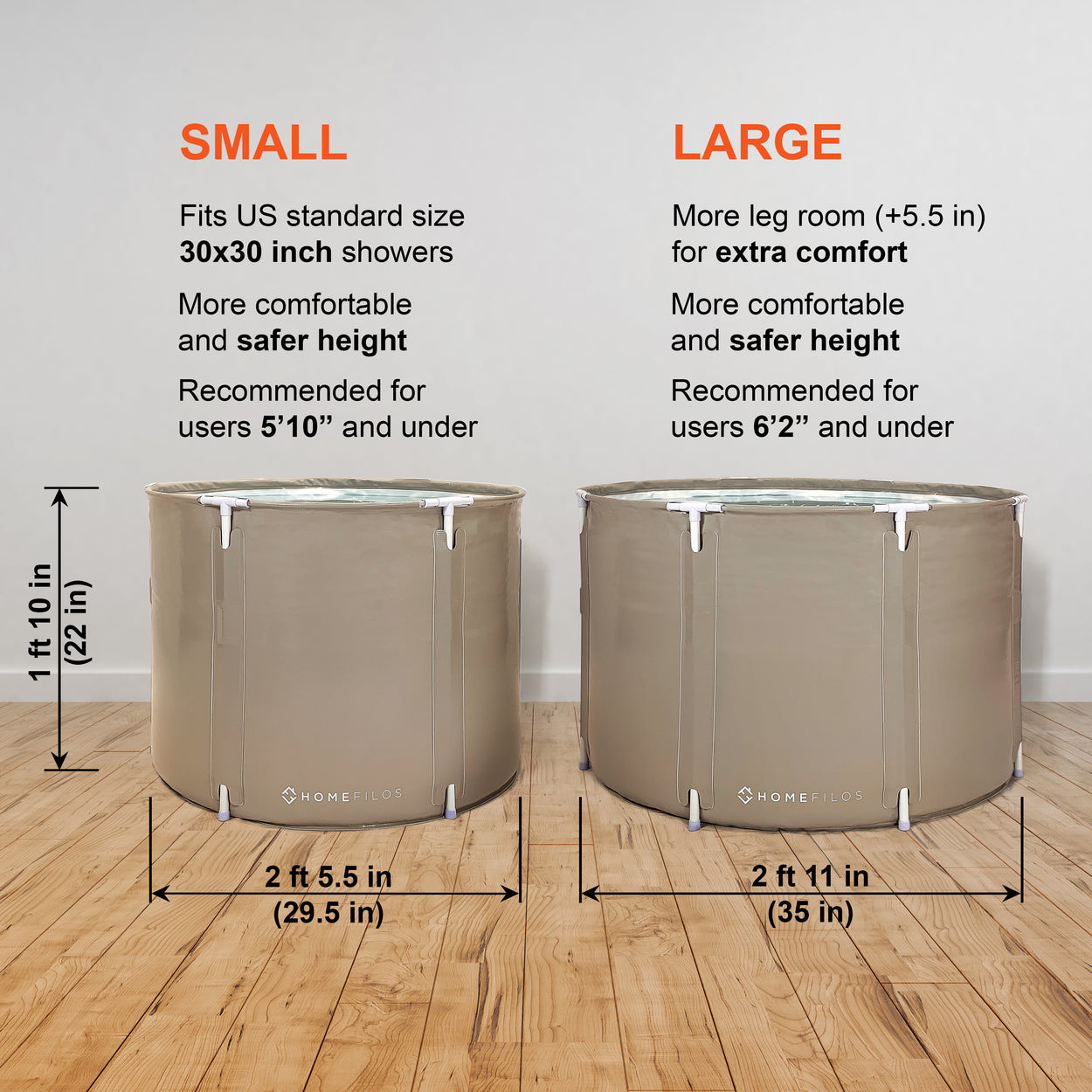
- If you’re under 5’7″ (170 cm), a tub 28-32 inches long is usually enough.
- If you’re 5’8″ to 6’2″ (173-188 cm), aim for 33-42 inches in length.
- Over 6’2″? Consider tubs 43 inches or longer.
Width also matters. A minimum of 24 inches lets you sit comfortably, while 30 inches gives more space to move your arms.
Depth should be at least 24 inches to cover your torso, but 28-30 inches is better for full immersion.
2. Type Of Use
How you plan to use the tub affects what size you should get.
- Quick recovery dips: A smaller tub works if you only need to soak your legs or lower body.
- Full-body cold therapy: Go for a deeper, longer tub to cover your shoulders and neck.
- Shared use: If more than one person will use the tub (not at the same time), pick a size that fits the tallest user.
3. Available Space
Measure your bathroom, backyard, or gym area before choosing. Even the best tub is useless if it doesn’t fit your space.
- For small bathrooms, inflatable or foldable tubs around 28-34 inches are ideal.
- Outdoor setups can handle larger tubs, but still check for access and storage.
4. Water And Ice Requirements
A bigger tub means more water and ice. This directly impacts cost and setup time.
- A 35-gallon tub needs about 30 lbs (13 kg) of ice for a basic cold plunge.
- A 100-gallon tub could require 90 lbs (41 kg) or more.
If you don’t have access to lots of ice or want to minimize prep time, choose a moderate size.
5. Portability
If you plan to move or store your tub, smaller and lighter models are easier. Heavy-duty tubs are best for permanent setups.
Key tip: Some people buy large tubs, only to realize they rarely use them because setup is too much work.
Standard Ice Bath Tub Sizes Explained
Ice bath tubs come in several standard sizes. Below is a quick comparison of common tub dimensions and who they fit best:
| Size Category | Typical Dimensions (L x W x D) | Fits Best For | Water Volume |
|---|---|---|---|
| Small | 28″ x 24″ x 24″ | People under 5’7″ | 30-40 gallons |
| Medium | 36″ x 28″ x 26″ | 5’8″ to 6’2″ | 50-70 gallons |
| Large | 42″+ x 30″ x 28″ | Over 6’2″ or athletes | 80-100+ gallons |
Non-obvious insight: The listed dimensions are the outside measurements. The actual inside space can be up to 2 inches smaller, so check the internal size before buying.
Matching Tub Size To Your Goals
For Athletes And Serious Users
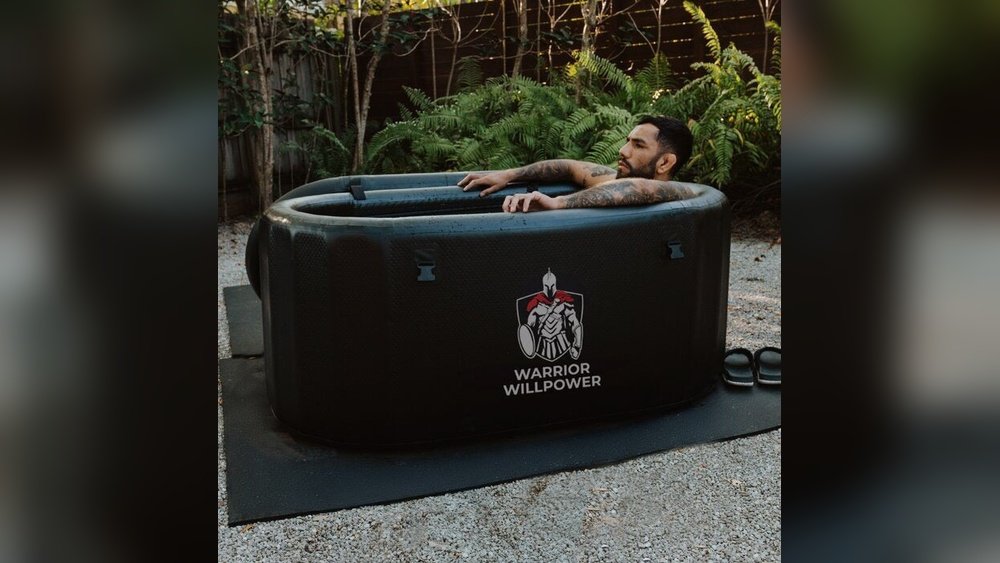
If you’re training hard and want full-body cold immersion, choose a tub that allows you to sit with your knees bent and water covering your shoulders. Many elite athletes use tubs at least 40 inches long and 28 inches deep.
Example: An Olympic-size ice bath tub is around 44″ x 30″ x 30″, holding 100+ gallons of water.
For Home Recovery And Wellness
If you want to use the tub after a workout or for general wellness, a medium size (36″ x 28″ x 26″) is usually enough. This size fits most adults and is easier to fill and clean.
For Leg And Foot Recovery
If your focus is on feet, ankles, or shins (e. g. , for running injuries), a small tub (28″ x 24″ x 24″) is enough. These tubs use less ice and can fit almost anywhere.

Comparing Different Tub Types And Sizes
You’ll find many types of ice bath tubs, each with different sizing considerations.
| Type | Main Features | Best Size Range | Best For |
|---|---|---|---|
| Inflatable | Lightweight, portable, easy to store | 28-36″ long | Home use, travel |
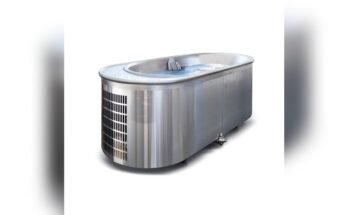
| Hard Plastic | Durable, easy to clean, fixed shape | 33-42″ long | Regular use, gyms |
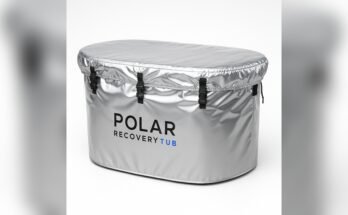
| Stock Tank | Very large, heavy, permanent | 48″+ long | Multiple users, outdoor setups |
| Portable Collapsible | Folds flat, easy to move | 28-36″ long | Apartment, small spaces |
Pro tip: Collapsible tubs are a great choice if you want to try ice baths without committing to a heavy, expensive tub.
How To Measure For A Perfect Fit
Before you buy, you need to check two things:
- Your body measurements: Sit down with your knees bent to the position you’ll use in the tub. Measure from your back to your knees for length, and from your feet to your shoulders for depth.
- Your available space: Leave at least 6 inches (15 cm) on all sides for getting in and out, and space for draining the tub.
Example: If you measure 36 inches from your back to your knees, look for a tub at least 38 inches long.
Real-world Examples
Case 1: Home User With Limited Space
Maria lives in a small apartment. She is 5’5″ and wants to use an ice bath after running. She chooses a collapsible tub, 30″ x 24″ x 24″. It fits in her shower, uses only 35 gallons of water, and takes 10 minutes to fill.
Case 2: Tall Athlete
James is 6’4″ and trains for triathlons. He invests in a 44″ x 30″ x 28″ plastic tub, which he keeps outdoors. He can fully submerge, and the tub holds 95 gallons of water—enough for deep cold therapy.
Case 3: Shared Family Use
A family wants to use one tub for different members. They buy a 40″ x 28″ x 26″ inflatable model. It’s big enough for their tallest person (6’1″), but still fits on their patio.
Ice And Water Efficiency By Tub Size
The size of your tub affects how much ice and water you need. Here’s a quick guide:
| Tub Size | Water Needed | Ice Needed (to reach 50°F/10°C) |
|---|---|---|
| Small (30 gal) | ~114 liters | 15-20 kg (33-44 lbs) |
| Medium (60 gal) | ~227 liters | 25-35 kg (55-77 lbs) |
| Large (100 gal) | ~378 liters | 40-50 kg (88-110 lbs) |
Important tip: Water temperature, ambient temperature, and how fast you enter all affect how much ice you really need. For frequent use, a medium tub is often most efficient.

Mistakes To Avoid When Choosing Tub Size
- Ignoring comfort: If you can’t sit comfortably, you won’t use your tub as much.
- Not measuring space: Many tubs look smaller online. Always check your space with a measuring tape.
- Overestimating your needs: Bigger tubs use more ice and water, making them harder to use regularly.
- Not considering storage: Where will you keep the tub when not in use? Large tubs can be difficult to store.
- Forgetting about drainage: Ensure the tub fits near a drain or can be emptied easily.
How To Choose If You’re Unsure
Still not sure which size is right? Here are some quick rules:
- If you’re under 5’7″, and just want to soak your lower body, go small (28-32″ long).
- If you want full-body immersion and are between 5’8″ and 6’2″, choose medium (36-42″ long).
- If you’re over 6’2″, or want a very spacious tub, go large (42″+ long).
- For families or shared users, pick the size for the tallest person.
- Limited space or frequent storage? Select a collapsible or inflatable tub.
Insider advice: If you are on the edge between two sizes, go one size larger. Most people regret buying a tub that’s too small, but rarely wish for a smaller one.
Frequently Asked Questions
What Is The Minimum Size For An Effective Ice Bath Tub?
A tub should be at least 24 inches deep and 28 inches long for most adults to get an effective cold plunge. This allows you to cover your torso and legs, which is enough for most recovery needs.
Can I Use A Regular Bathtub As An Ice Bath Tub?
Yes, you can use a regular bathtub, but most standard tubs are only 14-20 inches deep. This usually means only your lower body gets fully cold. For full-body immersion, a dedicated ice bath tub is better.
How Much Ice Do I Need For A Home Ice Bath?
For a small tub (30 gallons), you need about 15-20 kg (33-44 lbs) of ice to drop the water to cold therapy temperatures (50°F/10°C). For a medium tub, 25-35 kg (55-77 lbs) is typical.
Is It Better To Get A Bigger Tub For Future Use?
It depends. Bigger tubs offer more comfort and flexibility, but they need more ice and water, and require more space. If you plan to use the tub often, or share it, a larger size can be a good investment.
Where Can I Find Reliable Data On Cold Therapy And Tub Sizes?
You can find well-researched information at the Wikipedia page on cold water immersion, which covers the science and practical aspects of ice baths.
Final Thoughts
Choosing the right size ice bath tub is about more than just measurements. It’s about matching your body, your goals, and your space to a tub you’ll actually use. Take the time to measure, consider how often you’ll use it, and think about setup and storage. For most people, a medium-sized tub strikes the best balance between comfort and practicality. If you’re taller, go bigger. If you need portability, choose a collapsible model.
Remember, the best ice bath tub is one that fits your life, not just your body. With the right size, cold therapy becomes a powerful, repeatable part of your recovery routine—helping you feel better, train harder, and recover faster.