

The world of smartphones is always changing, but two brands stand out in 2024: Samsung and Asus. Their latest flagships, the Samsung Galaxy Z Flip 7 and the Asus Zenfone 11 Ultra, offer two very different visions for what a top-tier phone should be. One folds, fits in your pocket, and turns heads. The other delivers classic power, endurance, and features for serious users. If you’re thinking about buying one, or just want to understand which is better for your needs, this in-depth comparison will help you decide.
Both phones are packed with the latest technology. But which one is right for you? Let’s break down the differences, strengths, and weaknesses—across seven key areas—so you can make an informed choice.

36% off Today’s Exclusive Deals
Limited-time Exclusive Deals. Check current discount on Amazon.
Check Price on Amazon As an Amazon Associate I earn from qualifying purchases.Design And Build Quality
Design is more than looks—it affects how you use your phone every day. Here, Samsung and Asus take very different paths.
Samsung Galaxy Z Flip 7: Foldable Fashion
The Galaxy Z Flip 7 is a foldable phone, and that changes everything. Closed, it’s almost a perfect square, small enough to fit in small pockets or bags. Open it, and you get a tall, elegant 6.7-inch screen. Samsung’s hinge is now in its seventh generation, so it feels smooth and sturdy, with less visible crease than before.
The build is premium: Gorilla Glass Victus 2 on the outside and an improved flexible display inside. The aluminum frame has a soft matte finish that resists fingerprints. It’s water-resistant (IPX8), but unlike some slab phones, it’s not dustproof—something to remember if you work or play in dusty places.
The Flip 7 comes in bold colors—lavender, graphite, cream, and mint. Its compactness makes it feel unique and playful, and people will notice when you flip it open.
Asus Zenfone 11 Ultra: Classic Strength
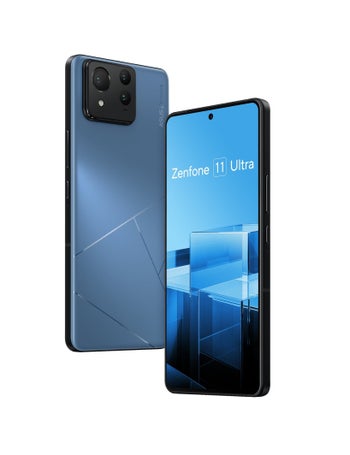
The Zenfone 11 Ultra is a more traditional phone. It’s solid, with a 6.78-inch flat AMOLED screen and a slim bezel. The back is textured glass, providing good grip, and the aluminum frame feels tough. Asus focused on durability and ergonomics, so the phone feels balanced, not too heavy, and it fits well in one hand.
It’s rated IP68 for water and dust resistance—better than the Flip 7. This makes it a safer pick for outdoor use or rough environments.
Colors are more muted: obsidian black, sky blue, and sandstone white. There’s no folding trick here, but the design is timeless and professional.
Comparing Form And Function
Each phone’s design offers a different experience:
- Flip 7 is for those who want something compact, modern, and fun.
- Zenfone 11 Ultra is for users who value reliability, grip, and traditional style.
The Flip 7’s hinge is better than ever, but some people may worry about long-term durability. The Zenfone 11 Ultra is built for years of hard use.
Display Quality
Screens are where we spend most of our time on smartphones. Both phones aim for the best, but each has strengths.
Galaxy Z Flip 7: Flexible And Bright
The Flip 7’s main display is a 6.7-inch Dynamic AMOLED 2X, with a resolution of 2640 x 1080. It folds in half, but Samsung’s new hinge reduces the crease, making it less distracting. The refresh rate is 120Hz, so everything feels smooth. Samsung claims up to 1,800 nits of peak brightness—great for outdoor use.
The outer display (cover screen) is now 3. 5 inches, much larger than before. You can check notifications, use widgets, and even reply to messages without opening the phone. It’s a real productivity boost.
Zenfone 11 Ultra: Large And Vivid
The Zenfone 11 Ultra’s screen is a 6.78-inch AMOLED panel, flat and uninterrupted. The resolution is 2400 x 1080, and the refresh rate goes up to a blazing 144Hz (for supported games and apps), making it one of the smoothest screens available. Peak brightness is around 2,500 nits—noticeably brighter than the Flip 7 in direct sunlight.
Color accuracy is excellent, with strong contrast and deep blacks. HDR10+ support means movies and games look fantastic.
Display Comparison Table
Here’s a quick side-by-side look at the two screens:
| Feature | Galaxy Z Flip 7 | Zenfone 11 Ultra |
|---|---|---|
| Main Display Size | 6.7-inch (foldable) | 6.78-inch (flat) |
| Resolution | 2640 x 1080 | 2400 x 1080 |
| Refresh Rate | 120Hz | 144Hz |
| Peak Brightness | 1,800 nits | 2,500 nits |
| Outer Display | 3.5-inch | None |
Non-obvious Insights
- The Flip 7’s outer display is a huge time saver for quick tasks.
- Zenfone’s ultra-bright screen can be a game-changer if you use your phone in sunlight often.

Performance And Hardware
Raw power matters for gaming, multitasking, and future-proofing. Both phones use top-tier chips, but there are differences.
Chipsets
- Galaxy Z Flip 7: Uses the Qualcomm Snapdragon 8 Gen 3, paired with 8GB or 12GB of RAM, depending on region.
- Zenfone 11 Ultra: Also runs the Snapdragon 8 Gen 3, but offers up to 16GB RAM, making it a better choice for heavy multitaskers.
Storage
- Flip 7: 256GB or 512GB (no microSD slot).
- Zenfone 11 Ultra: 256GB, 512GB, or 1TB (also no microSD).
Gaming And Heat
Both phones handle modern games well. However, the Zenfone 11 Ultra has a larger vapor chamber for cooling, so it runs cooler during long gaming sessions. The Flip 7’s compact design means it can get warm faster, especially when folded.
Real-world Speed
Day-to-day, both are fast: apps open instantly, multitasking is smooth, and even demanding games run at high settings. The Zenfone 11 Ultra’s extra RAM might help with future software updates and more demanding apps.
Performance Comparison Table
| Feature | Galaxy Z Flip 7 | Zenfone 11 Ultra |
|---|---|---|
| Processor | Snapdragon 8 Gen 3 | Snapdragon 8 Gen 3 |
| RAM | 8GB / 12GB | 12GB / 16GB |
| Storage Options | 256GB / 512GB | 256GB / 512GB / 1TB |
| Expandable Storage | No | No |
| Cooling | Standard | Advanced vapor chamber |
Non-obvious Insight
- For most users, the performance difference is invisible—but heavy gamers or power users may prefer the Zenfone’s better cooling and higher RAM options.
Camera Systems
Smartphone cameras have become as important as the phone itself. Both these flagships offer impressive setups, but with different strengths.
Galaxy Z Flip 7: Creative Folding Photography
The Flip 7 has a dual rear camera system:
- Main Camera: 50MP, f/1.8, OIS (optical image stabilization)
- Ultra-wide: 12MP, f/2.2
What makes the Flip 7 unique is how you can use the folding design for creative shots. For example, you can set it on a table half-open, using it as its own tripod for low-light photos or group selfies. The cover display lets you preview selfies with the rear camera—so you get higher-quality self-portraits.
Video goes up to 4K at 60fps, with good stabilization. In low light, Samsung’s software helps brighten shots, though detail is sometimes lost compared to competitors.
Zenfone 11 Ultra: Versatile Triple Setup
The Zenfone 11 Ultra features a triple camera system:
- Main Camera: 200MP, f/1.6, OIS
- Ultra-wide: 13MP, f/2.0
- Telephoto: 32MP, 3x optical zoom
Asus puts a big focus on detail and versatility. The 200MP main sensor uses pixel-binning for sharp, low-noise photos, even at night. The telephoto lens is rare at this price and size—great for portraits and distant subjects.
Video also goes up to 8K at 24fps or 4K at 60fps. Video stabilization is solid, and there’s a special mode for action shots.
Camera Comparison Table
| Feature | Galaxy Z Flip 7 | Zenfone 11 Ultra |
|---|---|---|
| Main Camera | 50MP | 200MP |
| Ultra-wide | 12MP | 13MP |
| Telephoto | None | 32MP (3x zoom) |
| Max Video | 4K @ 60fps | 8K @ 24fps |
Non-obvious Insights
- The Flip 7’s folding mode is amazing for hands-free selfies, vlogging, or time-lapse, something flat phones can’t do.
- Zenfone’s zoom camera is a big advantage for travel, events, or wildlife photos.
Battery Life And Charging
How long your phone lasts matters as much as how fast it is. Here, the two phones have very different approaches.
Galaxy Z Flip 7: Compact Battery
The Flip 7 has a 3,700 mAh battery. Because of the folding design, there’s less space for a large battery. Samsung’s software is efficient, and with moderate use, the phone lasts a full day. But heavy users—gaming, lots of camera use, or long video calls—may find themselves needing a top-up by evening.
Charging is 25W wired and 15W wireless. It takes about 70 minutes to fully recharge.
Zenfone 11 Ultra: All-day Power
Asus fits a 5,500 mAh battery into the Zenfone 11 Ultra—a huge size for a flagship. This means even heavy users can expect over a day and a half between charges. Light users might get two days.
Charging is 65W wired (full charge in under 40 minutes) and 15W wireless. There’s also reverse wireless charging to top up headphones or another phone.
Real-world Usage
- Flip 7: All-day for light/medium users, but power users may need to recharge in the afternoon.
- Zenfone 11 Ultra: Rarely worries about battery, even for gamers and photographers.
Non-obvious Insight
- The Flip 7’s battery can feel limiting if you use the phone open for long periods (watching movies, gaming).
- Zenfone’s battery life is among the best in any flagship, making it a top choice for travelers or people often away from a charger.
Software And Unique Features
It’s not just hardware—software features can change how you use your phone.
Galaxy Z Flip 7: One Ui And Flex Mode
Samsung’s One UI 6.1 (based on Android 14) is refined, fast, and full of helpful extras. Flex Mode is unique—when you fold the phone halfway, apps adjust their layout. For example, YouTube puts the video on the top half and controls on the bottom.
Samsung offers four years of Android updates and five years of security patches—a strong promise for long-term use.
Multitasking is smart: you can run two apps side by side, drag-and-drop files, or reply to messages on the cover screen. Samsung’s ecosystem also means easy pairing with Galaxy Buds, watches, and tablets.
Zenfone 11 Ultra: Zenui And Power Tools
Asus runs ZenUI 11 over Android 14. It’s close to stock Android, but with smart extras: game mode, performance tuning, and battery care features. Asus promises three years of Android updates and four years of security patches.
There’s a special “One-handed Mode” for the big screen, advanced audio features, and AI-powered call noise reduction. The Zenfone also supports WiFi 7 and fast Bluetooth 5. 3.
Unique Software Features
- Flip 7: Flex Mode, cover screen widgets, Samsung DeX (desktop mode), secure folder.
- Zenfone 11 Ultra: Advanced game mode, customizable UI, audio wizard, AI translation, battery health features.
Non-obvious Insight
- The Flip 7’s cover display isn’t just for notifications—you can use maps, music, and even some third-party apps without opening the phone.
- Zenfone’s “battery care” lets you limit max charge to 80% or 90% to extend battery lifespan, a feature power users often overlook.
Price And Value
Flagship phones are expensive, but the value you get can be very different.
Galaxy Z Flip 7
- Starts at around $1,099 for 256GB, $1,199 for 512GB.
- Foldable design is unique, so you’re paying a premium for innovation.
- Trade-in deals, bundles with Galaxy Buds, and other promotions are common.
Zenfone 11 Ultra
- Starts at $899 for 256GB, $999 for 512GB, $1,199 for 1TB.
- Price is lower than many rivals for similar hardware.
- Asus sometimes offers early-bird bonuses (free case, earbuds).
Long-term Value
Both phones hold value well, but foldables like the Flip 7 can drop faster in resale value, partly due to concerns about hinge durability. Zenfone’s classic design may appeal to more people as a used phone.
Non-obvious Insight
- The Flip 7’s higher price isn’t just about specs—it’s about the wow factor and compactness.
- Zenfone 11 Ultra offers more hardware per dollar, especially if you need a big battery or top camera.
User Experience And Everyday Use
All the specs in the world mean little if a phone isn’t pleasant to use every day.
Flip 7: Fun, Flexible, Sometimes Frustrating
People love the Flip 7’s compactness—no more giant phone bulging in your pocket. Flipping it open feels cool, and the cover screen is genuinely useful. For people who take lots of selfies or want a phone that doubles as a conversation starter, it’s unmatched.
However, the battery can be a weak point, and some apps are still not perfectly optimized for the folding screen. The crease is less visible, but still there.
Zenfone 11 Ultra: Reliable, Powerful, No Surprises
The Zenfone 11 Ultra is a safe bet for power users, gamers, and anyone who wants things to just work. The screen is bright, the battery lasts, and the cameras are versatile. The phone is big, but one-handed mode helps.
No folding tricks, but also no worries about hinge issues.
Practical Tips
- If you travel a lot, the Zenfone’s long battery and durability may save you stress.
- If you want something different, and love taking creative photos, the Flip 7 is one of a kind.
Frequently Asked Questions
What Are The Biggest Differences Between Galaxy Z Flip 7 And Zenfone 11 Ultra?
The Flip 7 is a foldable phone with a compact design and a unique cover screen, while the Zenfone 11 Ultra has a classic, flat design with a bigger battery and a triple camera system (including telephoto). The Flip 7 is more about style and flexibility; the Zenfone is about power, endurance, and value.
Which Phone Has Better Cameras Overall?
The Zenfone 11 Ultra has a more advanced camera system, especially for zoom and low-light photography, thanks to its 200MP main sensor and 32MP telephoto lens. The Flip 7’s cameras are good, but its main advantage is creative shooting using its folding design.
How Durable Are These Phones?
The Zenfone 11 Ultra is rated IP68, so it’s safe from water and dust. The Flip 7 is IPX8 (water-resistant but not dust-resistant). Samsung’s hinge is strong, but foldables can be more delicate over time compared to classic phones.

Which Phone Is Better For Gaming And Heavy Multitasking?
The Zenfone 11 Ultra has more RAM (up to 16GB) and better cooling, making it the better choice for gaming and multitasking. The Flip 7 is fast, but it can get warm during long sessions.
Where Can I Learn More About Foldable Phone Durability?
For detailed information, check the Wikipedia page on foldable smartphones for research and real-world reports.
Choosing between the Samsung Galaxy Z Flip 7 and the Asus Zenfone 11 Ultra comes down to what matters most to you: style and compactness, or power and endurance. Both are excellent in their own way. Take time to consider how you use your phone every day—your best fit might surprise you.

