

Boiling eggs seems simple, but doing it well is an art. Many people want perfect boiled eggs—firm but not rubbery whites, creamy yolks, and shells that peel easily. Yet, even experienced cooks can end up with gray rings, cracked shells, or eggs that are hard to peel. If you want to master the best way to boil eggs, this guide will help you achieve consistent results every time. You’ll learn the science, techniques, timing, and tips that make a real difference.
Why Boil Eggs?
Boiled eggs are a classic food around the world. They fit almost any meal—breakfast, salads, snacks, or sandwiches. People love them for their:

36% off Today’s Exclusive Deals
Limited-time Exclusive Deals. Check current discount on Amazon.
Check Price on Amazon As an Amazon Associate I earn from qualifying purchases.- High protein content (about 6 grams per large egg)
- Portability—easy to take anywhere
- Low cost compared to many protein sources
- Versatility in recipes
You can enjoy them as soft-boiled, medium-boiled, or hard-boiled. Each style suits different tastes and dishes.
Choosing The Right Eggs
The quality of your boiled eggs starts with the eggs you use. Here’s what to keep in mind:
- Freshness matters: Very fresh eggs are best for frying or poaching, but for boiling, eggs that are 7–10 days old peel more easily. As eggs age, the pH of the white rises, shrinking the bond to the shell.
- Egg size: Large eggs are standard for most recipes. If you use extra-large or jumbo eggs, adjust cooking times by 1–2 minutes.
- Shell color: Brown and white eggs taste the same. Choose based on availability and preference.
How To Check Freshness
If you’re unsure about egg freshness, try the water test:
- Fill a bowl with water.
- Place the egg gently in the water.
- Sinks and lays flat: Fresh.
- Sinks but stands upright: Older, but usable for boiling.
- Floats: Bad—do not use.
Equipment You’ll Need
You don’t need special tools to boil eggs, but these items make the process easier and more precise:
- Saucepan or pot: Deep enough to cover eggs with at least one inch of water.
- Slotted spoon or tongs: For easy removal.
- Timer or phone: For accurate cooking.
- Bowl of ice water: For quick cooling.
- Lid for the pot: Helps control temperature and speed up boiling.
Some people use egg steamers or Instant Pots for precise results. However, the classic stovetop method is reliable and works in any kitchen.
The Science Of Boiling Eggs
When you boil an egg, both the egg white (albumen) and egg yolk change. Here’s how:
- Egg white: Starts setting at about 140°F (60°C) and becomes firm at 180°F (82°C).
- Egg yolk: Begins to thicken around 150°F (65°C) and sets at 170°F (77°C).
If you cook eggs too long or at too high a temperature, you may see a greenish-gray ring around the yolk. This is harmless but signals overcooking. It happens when iron from the yolk reacts with sulfur from the white.
Step-by-step: How To Boil Eggs
Let’s break down the process for perfect boiled eggs.
1. Place Eggs In A Pot
Put eggs in a single layer at the bottom of your pot. This prevents them from bumping and cracking.
2. Add Cold Water
Cover the eggs with cold tap water. The water should be at least one inch above the eggs. Starting with cold water helps cook the eggs evenly.
3. Heat To Boiling
Put the pot on the stove. Heat over medium-high until the water reaches a rolling boil (big, steady bubbles). Do not walk away—the water can go from simmering to boiling quickly.
4. Turn Off Heat And Cover
Once the water boils, turn off the heat and cover the pot with a lid. Leave the pot on the hot burner. The eggs will finish cooking in the hot water.
5. Set A Timer
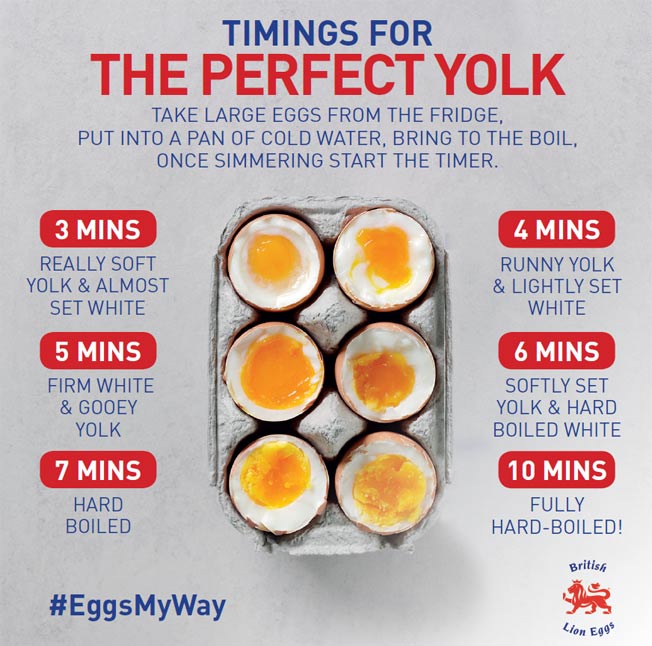
Timing depends on how you like your eggs:
- Soft-boiled: 4–6 minutes
- Medium-boiled: 7–9 minutes
- Hard-boiled: 10–12 minutes
Use a timer for accuracy. Undercooking or overcooking by just a minute can change the texture.
6. Cool In Ice Water
When the timer goes off, use a slotted spoon to transfer the eggs to a bowl of ice water. Leave them for at least 5 minutes. This stops the cooking and makes peeling easier.
7. Peel And Enjoy
Tap each egg gently on the counter, then roll it to crack the shell all over. Start peeling from the wider end, where there’s usually an air pocket.
Timing Guide For Boiled Eggs
Boiling time affects the texture and use of your eggs. Here’s a helpful comparison:
| Boiling Time (minutes) | Yolk Texture | Best Use |
|---|---|---|
| 4–5 | Very runny | Ramen, toast soldiers |
| 6–7 | Soft, jammy | Salads, breakfast |
| 8–9 | Creamy, slightly firm | Snacks, lunchboxes |
| 10–12 | Firm, fully set | Deviled eggs, egg salad |
Tip: If you want eggs with yolks that are just set but not chalky, use 9 minutes as your starting point.
Peeling Tips: How To Make It Easy
Many people find peeling boiled eggs difficult. Here’s how to make it easier:
- Use older eggs: Shells stick more to fresh eggs.
- Cool rapidly: Ice water helps the membrane contract, separating from the shell.
- Crack all over: Roll the egg to make many small cracks.
- Peel under water: Running water can help remove tiny shell bits.
Some cooks add a spoonful of baking soda to the water. This raises the pH and can make peeling easier, but results can vary.
Common Mistakes And How To Avoid Them
Even experienced cooks make errors. Here are mistakes to watch for:
- Boiling too rapidly: This can crack shells or toughen whites. Use gentle simmering.
- Skipping the ice bath: Eggs keep cooking unless cooled quickly.
- Using eggs straight from the fridge: Cold eggs can crack in hot water. Let them sit at room temperature for 10–15 minutes if possible.
- Peeling too soon: Let eggs cool fully before peeling.
Soft-boiled Vs. Hard-boiled: What’s The Difference?
People often wonder about the difference between soft-boiled and hard-boiled eggs. The main difference is in the yolk texture and ideal uses. Here’s a quick look:
| Type | Cooking Time | Yolk Texture | Common Uses |
|---|---|---|---|
| Soft-Boiled | 4–7 min | Runny to jammy | Ramen, breakfast |
| Hard-Boiled | 10–12 min | Fully set | Salads, deviled eggs |
Soft-boiled eggs are perfect for dishes where you want a runny yolk. Hard-boiled eggs are best for recipes where you need a firm yolk that holds its shape.
Advanced Tips For Perfect Boiled Eggs
Once you master the basics, you can try these expert tips:
- Prick the wide end: Use a clean pin to poke a tiny hole in the wide end before boiling. This can help prevent cracking and make peeling easier.
- Add vinegar to water: A splash of vinegar helps if shells crack, as it keeps whites from leaking.
- Steam instead of boil: Steaming eggs above boiling water for 12–14 minutes produces eggs that are very easy to peel. This works especially well for very fresh eggs.
- Shake gently to check doneness: After cooling, spin the egg on a flat surface. Hard-boiled eggs spin smoothly; soft-boiled wobble.
Storing Boiled Eggs Safely
Boiled eggs are convenient, but safety is important.
- In the shell: Store in the refrigerator for up to 1 week.
- Peeled eggs: Keep in a sealed container with a damp paper towel to prevent drying, and eat within 3–4 days.
Mark the date on your container to avoid confusion. If an egg smells off, discard it.
Refrigeration Facts
A study by the USDA shows that hard-boiled eggs can stay safe for about one week in the fridge. Leaving eggs at room temperature for more than two hours increases the risk of bacteria.
How Boiled Eggs Fit Into Your Diet
Eggs are full of high-quality protein, vitamins (like B12 and D), and minerals (like iron and selenium). For most people, eating 1–2 boiled eggs per day fits a healthy diet.
- Calories per large hard-boiled egg: About 70
- Fat: 5 grams (mostly healthy fats)
- Carbs: Less than 1 gram
Eggs have a bad reputation for cholesterol, but recent research shows most people can eat eggs regularly without raising heart disease risk. If you have special health needs, check with your doctor.
Creative Ways To Enjoy Boiled Eggs
Bored with plain boiled eggs? Try these ideas:
- Egg salad: Mix chopped eggs with mayonnaise, mustard, celery, and herbs.
- Deviled eggs: Halve eggs, mash yolks with mayo and spices, pipe back in.
- Ramen topping: Add soft-boiled eggs to noodle soups.
- Salad addition: Slice over green salads or potato salad.
- Egg sandwich: Mash with avocado or cheese between bread.
Boiling Eggs For A Crowd
Need lots of boiled eggs for a party or meal prep? Here’s how to do it efficiently:
- Use a large pot with space for all eggs in a single layer.
- Add water and eggs before turning on heat.
- For 12–24 eggs, add 2–3 minutes to each step.
- Use a slotted spoon to move eggs in and out safely.

Troubleshooting: Solving Boiling Problems
If things go wrong, you can often fix them:
- Cracked shells: Eat these eggs first; they spoil faster.
- Green yolk ring: Lower the cooking time or cool eggs faster.
- Rubbery whites: Use a gentler simmer and shorter time.
- Hard-to-peel shells: Try older eggs, or steam instead of boil.
How Boiled Eggs Are Used Around The World
Different countries have their own styles and traditions:
- Japan: Ramen eggs (ajitsuke tamago) are marinated in soy sauce.
- UK: Soft-boiled eggs served with toast “soldiers.”
- India: Hard-boiled eggs in spicy curries.
- France: “Oeufs mayonnaise”—eggs topped with creamy sauce.
Boiled eggs are also used in Cobb salads (USA), Scotch eggs (UK), and Nicoise salad (France).
Myths About Boiling Eggs
Some common beliefs about boiling eggs are not true. Let’s clear them up:
- Myth: You must add salt to water to prevent cracking.
- Fact: Salt does little to prevent cracks; a gentle simmer is more important.
- Myth: Only fresh eggs are best for boiling.
- Fact: Older eggs peel more easily.
- Myth: Fast boiling cooks eggs better.
- Fact: Rapid boiling toughens whites and can crack shells.
Comparing Boiling, Steaming, And Baking Eggs
You might hear about other ways to cook eggs. Here’s a comparison:
| Method | Time | Peeling Ease | Texture |
|---|---|---|---|
| Boiling | 10–12 min | Good (with older eggs) | Classic |
| Steaming | 12–14 min | Very easy | Tender |
| Baking (oven) | 30 min | Easy | Dryer yolk |
Most people choose boiling for convenience and tradition. Steaming is a great option if you want eggs that peel perfectly every time.
Non-obvious Insights For Boiling Eggs
Many guides miss these practical tips:
- Altitude changes everything: At higher altitudes, water boils at a lower temperature. Eggs may need extra time. If you live above 3,000 feet (900 meters), add 1–2 minutes to your usual cooking time.
- Egg size affects results: Most instructions use large eggs. For small eggs, subtract 1 minute; for extra-large, add 1–2 minutes. Always adjust to avoid undercooked or overcooked eggs.
- Don’t store peeled eggs in water: Some people keep peeled eggs in water, but this can lead to off flavors and faster spoilage. Use a sealed container instead.
Frequently Asked Questions
How Long Do Boiled Eggs Last In The Fridge?
Boiled eggs with shells can last up to one week in the refrigerator. Peeled eggs should be eaten within 3–4 days for best quality.
Why Do My Boiled Eggs Have A Green Ring Around The Yolk?
A green ring forms when eggs are overcooked or not cooled quickly. Iron from the yolk reacts with sulfur from the white. To avoid this, reduce cooking time and always use an ice bath after boiling.
Is It Safe To Eat Eggs That Crack During Boiling?
Yes, as long as you cook them fully and eat them soon after. Cracked eggs can spoil faster, so refrigerate and use them first.
What’s The Best Way To Peel A Stubborn Boiled Egg?
Use older eggs, cool them in ice water, and crack the shell all over before peeling. Peeling under running water can help remove tiny bits of shell stuck to the egg.
Can I Boil Eggs In Advance For Meal Prep?
Absolutely. Boiled eggs are great for meal prep. Store unpeeled eggs in the fridge for up to a week, or peeled eggs in a sealed container for 3–4 days.
Boiling eggs is simple once you understand the details. With these steps and tips, you’ll have eggs that are just right for breakfast, salads, snacks, and more. Try different methods, adjust for your taste, and enjoy this versatile food. For more detailed information on egg safety and nutrition, you can visit the USDA Food Safety and Inspection Service.
Boiled eggs are a kitchen basic that never go out of style. With practice, you’ll make them perfectly every time—just the way you like.


