

Installing a wakeboard tower can change your boating experience in big ways. Suddenly, you can pull riders higher, store boards neatly, and even add speakers for music. But many boat owners worry—how hard is it to install a wakeboard tower yourself? Is it a job for professionals only, or can anyone with basic tools get it done? The truth: with careful planning, patience, and the right steps, most people can install a wakeboard tower at home.
This guide walks you through every stage—from choosing the right tower for your boat, to the final tightening of bolts and checks. You’ll find practical advice, common mistakes to avoid, and real-world examples. Whether your boat is new or old, fiberglass or aluminum, you’ll learn how to make your wakeboard tower solid and safe.

36% off Today’s Exclusive Deals
Limited-time Exclusive Deals. Check current discount on Amazon.
Check Price on Amazon As an Amazon Associate I earn from qualifying purchases.By the end, you’ll feel confident about doing the job yourself, saving money, and making your boat ready for fun.
Why Install A Wakeboard Tower?
If you enjoy wakeboarding, adding a tower is more than just a cool upgrade. It offers clear benefits:
- Higher tow point: Riders get more lift, making jumps easier.
- Storage: Towers hold boards, freeing up deck space.
- Accessories: Easy to add speakers, lights, or bimini tops.
Some statistics show the impact: according to the National Marine Manufacturers Association, boats with towers are 30% more likely to be used for wakeboarding and related sports. Towers also increase resale value for many boats.
Choosing The Right Wakeboard Tower
Selecting the correct tower is the first step. Not all towers fit every boat. The main factors you should consider:
- Boat Size and Beam: Measure your boat’s length and width (beam). Most towers are adjustable, but always check the specs.
- Tower Material: Most towers are made of aluminum (lightweight, rust-resistant) or stainless steel (stronger, but heavier).
- Mounting Type: Some towers mount to the deck, others to the side. Deck-mount towers spread force better, but side-mount is easier for narrow boats.
- Foldability: If you store your boat in a garage, a folding tower is a must.
- Accessory Options: Make sure the tower supports racks, speakers, and lights.
Here’s a quick comparison of common tower types:
| Feature | Aluminum Tower | Stainless Steel Tower |
|---|---|---|
| Weight | Light | Heavy |
| Corrosion Resistance | High | High |
| Strength | Good | Excellent |
| Cost | Lower | Higher |
Non-obvious insight: Boats with curved windshields or unusual hull shapes may need custom brackets. Always check for compatibility before buying.
Tools And Materials Needed
You don’t need professional equipment, but having the right tools makes the job easier:
- Cordless drill (with bits for fiberglass and metal)
- Socket set and wrenches
- Tape measure
- Masking tape
- Marker or pencil
- Screwdriver
- Marine-grade silicone sealant
- Backing plates (often included with tower kits)
- Vacuum cleaner (for cleanup)
- Safety goggles and gloves
Most kits come with mounting hardware, but double-check before you begin.
Preparing Your Boat
Preparation is key for a safe and neat installation. Here’s what you should do before starting:
- Clean the deck area: Dirt and debris can affect sealant and mounting.
- Remove obstacles: Take off any canvas tops or accessories in the way.
- Inspect hull and deck: Look for cracks or soft spots—these areas can’t support a tower.
- Check access: Make sure you can reach both sides of the mounting area (inside and outside).
Beginner tip: Use masking tape to outline possible mounting positions. This helps you visualize and avoids mistakes.
Planning Tower Placement
Where you mount your tower affects performance and safety. The right placement:
- Spreads force evenly across the hull
- Keeps the tow point centered
- Avoids blocking walkways or seating
Most towers are installed midway between the windshield and the rear seat. Avoid mounting too far forward (can cause instability) or too far back (can block access).
Here’s an example of placement guidelines:
| Boat Length | Recommended Tower Position | Notes |
|---|---|---|
| 16-18 ft | About 40-45% from bow | Balance weight and access |
| 19-22 ft | About 35-40% from bow | More room for riders |
| 23+ ft | About 30-35% from bow | Spread force, avoid seating |
Non-obvious insight: Avoid mounting on areas with hidden wires or fuel lines. Use a stud finder or check underdeck access.
Marking And Checking Mounting Points
After planning, mark the exact mounting locations:
- Use a tape measure for symmetry.
- Mark with a pencil or masking tape.
- Double-check measurements—mistakes can be costly.
Before drilling, check underneath each location. Make sure you can add a backing plate, and there’s no wiring or plumbing.
Practical example: Some boats have foam-filled hulls—drilling into these areas can cause water leaks. Always check first.
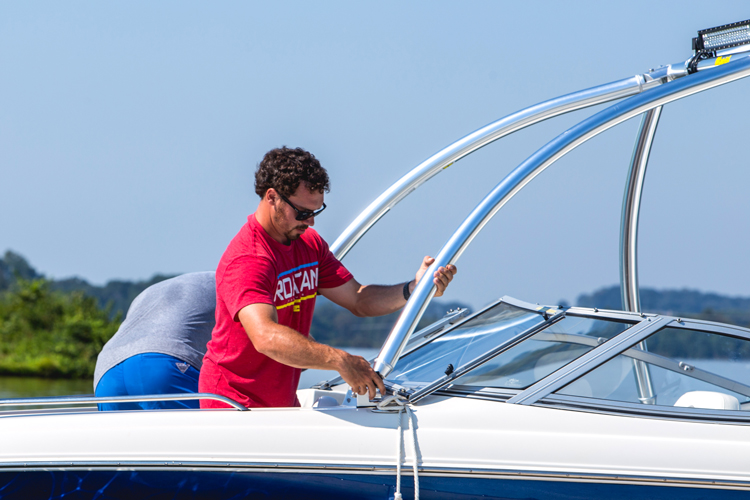
Drilling The Mounting Holes
Drilling is the step most people fear. But with patience, it’s safe:
- Start with a small pilot hole (1/8 inch).
- Increase to final size using the correct bit (usually 1/2 inch).
- Use slow speed—too fast can crack fiberglass.
- Vacuum dust immediately.
Common mistake: Not taping the area before drilling—this can cause chips. Always cover with masking tape first.
Installing Backing Plates
Backing plates spread the load, preventing damage. Most tower kits include them:
- Place the backing plate under the deck, aligned with the mounting hole.
- If you can’t reach inside, use a flexible plate or add extra washers.
- Apply marine-grade sealant around holes.
Tip: Stainless steel plates are best for strength. Plastic plates can flex and fail over time.
Mounting The Tower
Now you can attach the tower:
- Align the base with the holes.
- Insert bolts from outside, threading into backing plate.
- Tighten by hand first, then use a wrench.
- Check alignment—tower should stand upright.
Do not fully tighten bolts until the tower is assembled. You may need to adjust later.
Beginner mistake: Over-tightening bolts before alignment—can cause stress cracks.
Assembling The Tower
Most towers come in 2-4 pieces. Follow the manual:
- Assemble main bars and crossbars.
- Check for correct spacing and height.
- Tighten all bolts evenly.
If your tower folds, check the hinge mechanism. Make sure it operates smoothly.
Practical tip: Have a friend help. Towers are heavy and awkward to handle alone.
Attaching Accessories
Once the tower is mounted, you can add accessories:
- Board racks: Slide onto tower arms, secure with bolts.
- Speakers: Attach brackets, run wires safely.
- Bimini top: Fit to crossbars, check for shade coverage.
Safety note: Wires for speakers or lights should be run inside the tubing if possible—this protects them from water.
Sealing And Waterproofing
Water can enter through mounting holes. Seal all points:
- Apply marine-grade silicone around bolts and plates.
- Smooth with a finger for neat finish.
- Allow to dry for 24 hours.
Waterproofing is critical—neglecting it can cause rot or corrosion.
Testing The Tower
Before using the tower, test for strength and movement:
- Pull on the tower from different angles.
- Check for flex or wobble.
- Inspect all bolts—tighten as needed.
Take your boat for a short ride. Watch for vibrations or noises. If you see movement, re-tighten or reinforce mounting points.
Example: Some aluminum towers flex more than steel. This is normal, but too much movement means poor installation.
Final Safety Checks
Before your first wakeboarding trip:
- Check all bolts after one hour of use.
- Inspect for leaks inside the hull.
- Make sure accessories are tight.
Beginner insight: Tower bolts can loosen after the first few uses due to vibration. Always check and tighten.
Cost And Time Estimates
Installing a wakeboard tower yourself saves money. Here are typical numbers:
- Tower kit: $600–$2,500 (quality varies)
- Tools and materials: $50–$150 (if you don’t own them)
- Installation time: 4–8 hours (two people, average boat)
Professional installation can cost $500–$1,000. Doing it yourself is cheaper, but requires patience.
Common Mistakes And How To Avoid Them
Even careful installers make errors. Here are the most frequent:
- Wrong placement: Leads to instability or blocked walkways. Always measure and plan.
- Skipping backing plates: Causes deck cracks. Always use proper backing.
- Not sealing holes: Water leaks, rot. Seal everything thoroughly.
- Over-tightening bolts: Can damage fiberglass. Tighten gently, then check after use.
- Ignoring wiring: Speaker wires left exposed can short out. Run wires inside tubing.
Experience-based insight: Take photos at every stage. If you need to fix something later, you’ll know where wires and bolts are located.

Real-world Example: Installing On A 20-foot Bowrider
Let’s walk through a practical example.
- Boat: 20-foot fiberglass bowrider
- Tower: Aluminum, folding, deck-mount
Steps followed:
- Measured beam—7 feet. Checked tower adjustability.
- Cleaned deck, marked mounting points 40% from bow.
- Taped drill points, checked for wires below.
- Drilled pilot holes, then final holes.
- Installed stainless backing plates with sealant.
- Mounted base, assembled tower with friend’s help.
- Attached board racks and bimini.
- Sealed all bolts, allowed to dry.
- Tested tower strength, tightened bolts after first ride.
Result: Solid, safe installation. No leaks, no cracks. Accessories fit well. Riders reported better lift and smoother pulls.
Comparing Diy Vs Professional Installation
Is professional installation worth it? Here’s a comparison:
| Aspect | DIY Installation | Professional Installation |
|---|---|---|
| Cost | $650–$2,650 | $1,150–$3,500 |
| Time | 4–8 hours | 1–2 days |
| Skill Needed | Basic tools, patience | None (handled by experts) |
| Warranty | Usually kit only | Often includes labor warranty |
| Customization | Full control | Limited by installer’s options |
Most boat owners with basic skills can install a tower. If your boat is unusual, or you want a factory look, professionals may be better.
Maintenance After Installation
A wakeboard tower needs regular checks:
- Inspect bolts monthly—tighten if loose.
- Clean tower with mild soap and water.
- Check accessories for wear.
- Lubricate folding joints if needed.
Saltwater boats need more frequent cleaning. Aluminum towers can stain—use a non-abrasive cleaner.
Tip: Keep a log of checks and repairs. This helps with resale and safety.
Upgrading And Customizing Your Tower
Once your tower is installed, you can upgrade over time:
- Add new racks for more boards.
- Install speakers for music.
- Mount lights for night rides.
- Swap bimini tops for more shade.
Most towers accept standard accessories. Check your tower’s diameter and compatibility.
Beginner insight: Don’t overload the tower. Too many accessories can strain mounting points.

Safety Tips For Wakeboarding With A Tower
A tower makes wakeboarding safer and more fun, but you need to use it wisely:
- Always use a strong tow rope (rated for wakeboarding).
- Don’t pull multiple riders unless tower allows.
- Check all fittings before every ride.
- Teach riders to avoid tower hardware during jumps.
According to the Water Sports Industry Association, tower-related accidents are rare, but usually caused by poor installation or overloading.
Frequently Asked Questions
How Long Does It Take To Install A Wakeboard Tower?
Most installations take 4–8 hours with two people. Some boats or towers may take longer if access is limited.
Can I Install A Wakeboard Tower On Any Boat?
Not every boat is compatible. You need a strong deck, enough width, and clear mounting areas. Always check with the tower manufacturer.
Is Drilling Into Fiberglass Safe?
Yes, if you use the right tools and technique. Always tape the area, drill slowly, and use backing plates to prevent cracks.
How Do I Waterproof Mounting Holes?
Use marine-grade silicone sealant around all bolts and holes. This keeps water out and prevents rot.
Will Installing A Tower Void My Boat’s Warranty?
It can, especially if you damage the hull. Check your warranty terms before installing. Some manufacturers approve certain towers.
For more details, visit the Water Sports Industry Association.
Installing a wakeboard tower is a big project, but it’s also rewarding. With careful planning and the right steps, you’ll improve your boat and your wakeboarding experience. Take your time, follow this guide, and enjoy the results—your boat will be ready for adventure.

