

How Long Is Snooze Time On Anjank Alarm Clock?
Waking up on time can feel like a daily battle. For many, the snooze button is both a friend and a secret enemy. If you own an Anjank alarm clock or are thinking about buying one, you might wonder, “How long is snooze time on an Anjank alarm clock?” This question matters more than you might think. The snooze feature affects your morning routine, your mood, and even how well you function during the day. But the answer is not always simple. Let’s take a closer look at the Anjank alarm clock snooze time, how it works, and what it means for your mornings.
What Is Snooze Time?
The snooze time is the period between when your alarm rings and when it rings again after you press the snooze button. Most people use the snooze button to get a few extra minutes of rest. The snooze interval can help you transition from sleep to wakefulness, but if it’s too long or too short, it can affect your day.

36% off Today’s Exclusive Deals
Limited-time Exclusive Deals. Check current discount on Amazon.
Check Price on Amazon As an Amazon Associate I earn from qualifying purchases.Many alarm clocks come with a fixed snooze time, such as 5, 9, or 10 minutes. However, some modern clocks—including several Anjank models—let you adjust this interval. A customizable snooze time can help you match the alarm’s behavior to your personal sleep habits.
Anjank Alarm Clock Snooze Time: The Basics
Most Anjank alarm clocks have a default snooze time of 9 minutes. This means that when you press snooze, the alarm will pause for 9 minutes before ringing again. This time is not random—9 minutes has a long tradition in alarm clock design, partly due to mechanical limitations in early clocks and partly because it’s enough time to feel like a real break but not enough to enter a full sleep cycle.
But not all Anjank alarm clocks are the same. Some models offer adjustable snooze time, letting you choose how many extra minutes you get. Here’s a quick overview of common Anjank models and their snooze features:
| Model | Default Snooze Time | Adjustable? |
|---|---|---|
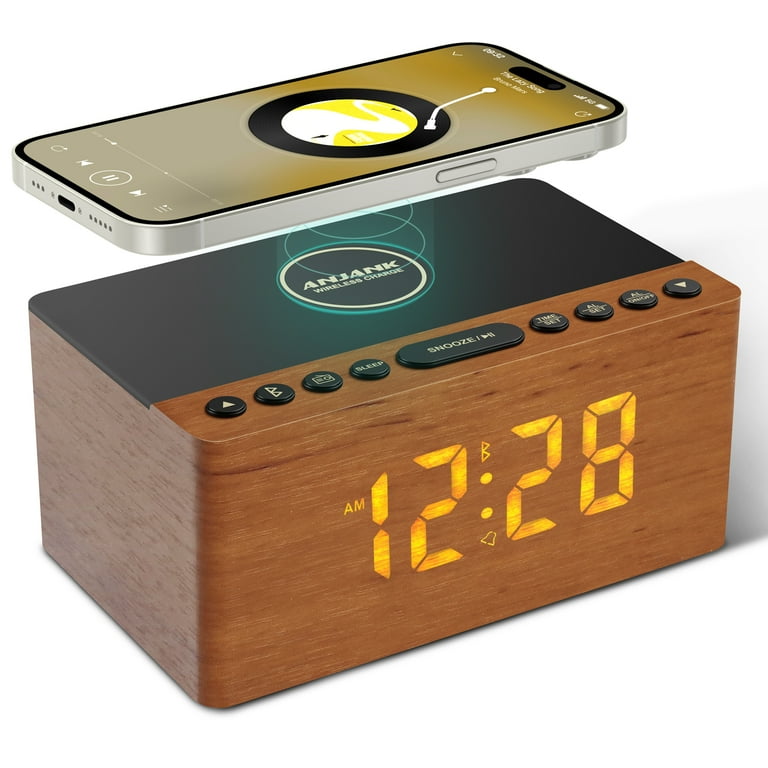
| ANJANK Wooden Digital Alarm Clock | 9 minutes | No |
| ANJANK Small Alarm Clock Radio | 9 minutes | Yes (5-60 min) |
| ANJANK Projection Alarm Clock | 9 minutes | No |
| ANJANK Large Display Alarm Clock | 9 minutes | Yes (5-30 min) |
As you can see, the standard snooze time for most Anjank clocks is 9 minutes, but some allow you to change it. This is important for anyone who wants to control their wake-up routine more closely.
How To Adjust Snooze Time On Anjank Alarm Clocks
If your Anjank alarm clock supports adjustable snooze time, changing the interval is usually simple. While the exact steps can vary by model, the process often looks like this:
- Enter alarm settings: Press and hold the ‘Alarm’ or ‘Set’ button.
- Navigate to snooze settings: Use the ‘Up’ or ‘Down’ buttons to find the snooze option.
- Choose your snooze time: Select a snooze duration (often between 5 and 60 minutes).
- Confirm your choice: Press ‘Set’ or ‘Enter’ to save.
Always check your model’s manual, as button names and steps can differ. If you lost your manual, you can often find a digital copy on the Anjank official website or on popular retail pages.
Example: Adjusting Snooze On The Anjank Small Alarm Clock Radio
Suppose you own the ANJANK Small Alarm Clock Radio. Here’s how you might adjust the snooze:
- Press and hold the ‘ALARM’ button until you enter setting mode.
- Use the ‘+’ or ‘-’ buttons to navigate to the snooze setting.
- Press ‘ALARM’ again to select the snooze interval.
- Adjust using ‘+’ or ‘-’ (e.g., pick 5, 10, 15, … up to 60 minutes).
- Press ‘ALARM’ to confirm.
This flexibility is great for people who want a longer or shorter snooze period. But remember, not all models offer this feature.
Why 9 Minutes? The History Behind Snooze Intervals
You might wonder, “Why 9 minutes? ” The answer goes back to the days of mechanical alarm clocks. Designers found that 9 minutes was the easiest interval to build with gears. It was also just enough time to feel helpful, but not so long that you’d fall back into deep sleep.
Even with digital clocks, the 9-minute snooze is now a tradition. Many people are used to this interval and feel it’s just right—not too short, not too long.

How Does Snooze Time Affect Your Sleep?
The snooze function can help you wake up gently, but it has side effects. If you press snooze too many times, you might end up feeling groggy or even more tired. This is called sleep inertia—the foggy feeling when you wake up, especially if you interrupt deep sleep.
Here’s what happens:
- When you hit snooze, you drift back into light sleep.
- The alarm wakes you again, often during a sleep cycle.
- Repeating this can make you feel worse, not better.
Experts recommend setting your alarm for the latest possible time you can wake up—so you get continuous sleep, rather than broken sleep with snooze interruptions.
Comparing Anjank To Other Alarm Clocks
How does Anjank compare to other brands? Let’s look at some common snooze intervals:
| Brand | Default Snooze Time | Adjustable? |
|---|---|---|
| Anjank | 9 minutes | Some models |
| Philips | 9 minutes | Some models |
| Sony | 10 minutes | Rarely |
| Emerson | 9 minutes | No |
| iHome | 9 minutes | Yes |
As you can see, 9 minutes is common among many brands. However, Anjank stands out by offering adjustable options on some models, which is not always available with other brands.
Benefits Of Adjustable Snooze Time
Having control over the snooze interval gives you more power over your wake-up routine. Here’s why adjustable snooze can be a real advantage:
- Personalization: Choose a snooze time that fits your morning habits.
- Less Grogginess: Set a shorter snooze to avoid falling into deep sleep.
- More Control: Some people need just 5 minutes; others prefer 15 or more.
- Better for Shared Spaces: If you share a room, a shorter snooze disturbs others less.
But remember, using snooze too much can make mornings harder, not easier.
Common Mistakes With Snooze Functions
Many people believe the snooze button is harmless. But there are a few traps to avoid:
- Relying on snooze as your main alarm: You might think you’ll wake up “eventually,” but repeated snooze use can actually make you late.
- Setting multiple alarms: Using several alarms and snoozes can fragment your sleep, leading to more tiredness.
- Not adjusting the snooze: If your model allows for customization, set a snooze interval that actually helps, rather than using the default without thought.
- Ignoring the manual: Many users miss adjustable features because they don’t read the instructions.
- Not testing before use: Try the snooze function before you rely on it for an important day.
Practical Tips For Using Snooze On Anjank Alarm Clocks
To make the most of your Anjank alarm clock’s snooze feature, consider these tips:
- Try different intervals: If your model is adjustable, experiment with 5, 7, or 10 minutes to see what feels best.
- Limit total snooze time: Don’t allow yourself to snooze more than once or twice.
- Place the clock away from your bed: This makes it harder to hit snooze without thinking.
- Use other features: Many Anjank clocks have radio, USB charging, or night lights—features that can make mornings easier.
- Stay consistent: Use the same snooze routine every day to help your body adjust.
Many users find that after a few weeks, they don’t need the snooze at all. Waking up becomes a habit.
Real-life User Experiences
Feedback from Anjank alarm clock owners shows a mix of opinions about snooze time:
- Some love the 9-minute snooze and find it’s the perfect length.
- Others wish for a shorter snooze, especially if they’re heavy sleepers.
- Adjustable models get high marks for flexibility.
- A few users complain that the snooze button is too easy to press in the dark, leading to accidental oversleeping.
One user wrote, “I set my snooze to 7 minutes on the Anjank Small Alarm Clock Radio. It’s just enough time to wake up slowly, but not enough to fall back asleep deeply. ”
Another said, “I wish my Anjank Wooden Clock had a shorter snooze. Nine minutes feels too long for me, but otherwise, it works well. ”
This shows that the ideal snooze time is a personal choice. If you haven’t tried adjusting your snooze, it’s worth exploring.

Where To Find More Details
For the most accurate information about your specific Anjank model, check the printed manual or visit the Anjank official user manuals page. Manuals list exact snooze intervals, button names, and step-by-step instructions for setting alarms and snooze times.
If you’re shopping for an Anjank alarm clock, look for product pages that mention snooze settings, or read customer reviews for real-world experiences.
Frequently Asked Questions
How Do I Know If My Anjank Clock Has Adjustable Snooze Time?
Check your clock’s manual or product description. Adjustable snooze time is usually mentioned as a feature. If you don’t have the manual, search for your model name on the Anjank website.
Can I Change The Snooze Time On All Anjank Alarm Clocks?
No, not all Anjank models offer adjustable snooze time. Some have a fixed 9-minute interval, while others let you choose. Models like the Small Alarm Clock Radio and Large Display Alarm Clock usually allow adjustments.
What Happens If I Keep Pressing Snooze?
If you keep pressing snooze, you might feel more tired due to broken sleep cycles. This is called sleep inertia. It’s better to set your alarm for the latest time you need to get up and avoid repeated snoozing.
Is 9 Minutes The Best Snooze Time?
Nine minutes is traditional and works for many people. However, the best snooze interval depends on your personal needs. Try different intervals if your clock allows it to find what helps you wake up feeling best.
Where Can I Get A Replacement Manual For My Anjank Alarm Clock?
You can download replacement manuals from the Anjank official website. Search for your model and follow the instructions for setting alarms and snooze time.
The snooze feature on an Anjank alarm clock is more important than many realize. Whether your model has a fixed 9-minute snooze or lets you choose your interval, understanding how it works can make mornings smoother. Take time to adjust your settings, use the snooze wisely, and you may find yourself waking up more refreshed and ready for the day.

