

Staying active is important for health, but many people struggle to find exercise routines that fit their lifestyle. The exercise bike is a smart solution. It’s easy to use, safe for most ages, and suitable for beginners or experienced athletes. Whether your goal is to lose weight, increase endurance, or simply stay fit, learning how to use an exercise bike correctly can help you reach your goals faster and avoid common mistakes. In this article, you’ll discover practical tips for getting started, making the most of each session, and maximizing benefits from your exercise bike workouts.
Choosing The Right Exercise Bike
Before you begin, it’s important to pick the right type of exercise bike. There are three main kinds: upright bikes, recumbent bikes, and indoor cycling bikes (often called spin bikes). Each has unique features and suits different needs.

36% off Today’s Exclusive Deals
Limited-time Exclusive Deals. Check current discount on Amazon.
Check Price on Amazon As an Amazon Associate I earn from qualifying purchases.| Type | Best For | Key Features |
|---|---|---|
| Upright Bike | General fitness, small spaces | Vertical seat, pedals under you, basic console |
| Recumbent Bike | Low-impact, seniors, back support | Reclined seat, wider base, support for back |
| Indoor Cycling Bike | High intensity, athletes | Adjustable seat/handlebars, heavy flywheel, resistance knob |
Upright bikes are most common in homes and gyms. They take up little space and offer a balanced workout. Recumbent bikes are ideal if you want more comfort and support, especially for your back. Indoor cycling bikes provide a tougher workout for those who want to push themselves.
When choosing, consider your fitness level, comfort, available space, and budget. Also, check for features like adjustable seats, digital displays, heart rate monitors, and preset workout programs. Beginners often overlook seat height and handlebar adjustments, which can make a big difference in comfort and safety.
Setting Up Your Exercise Bike
Setting up your bike correctly prevents injury and improves workout quality. Many people skip this step, but it’s essential.
Adjusting The Seat
Start by adjusting the seat height. When you sit on the bike, place your heel on the pedal at its lowest point. Your leg should be almost straight, but with a slight bend in the knee. This prevents strain and allows proper movement.
- If your knee is too bent, raise the seat.
- If your leg is fully locked out, lower the seat.
Next, set the seat position (forward or backward). Your knee should be directly above the pedal when the pedal is in the forward position. This alignment protects your knees.
Handlebar Position
Set the handlebars so you can reach them comfortably. For upright and recumbent bikes, keep your back straight and shoulders relaxed. If you’re using an indoor cycling bike, you may want handlebars slightly higher for comfort, or lower for a more intense workout.
Pedal Straps
Use the pedal straps if available. They keep your feet secure and help you pedal smoothly. Make sure they’re snug but not too tight.
Console Settings
Most bikes have a digital console. Set up your weight, age, and workout preferences for accurate feedback. If the bike connects to apps or heart rate monitors, follow the instructions to sync them.

Getting Started: Basic Exercise Bike Workouts
Now you’re ready to ride. If you’re new, start with simple workouts to build endurance and confidence.
Warm Up
Always warm up for 5-10 minutes at low resistance. This prepares your muscles and reduces injury risk.
Beginner Workout Example
- 5 minutes warm-up at low resistance
- 10 minutes steady pace at moderate resistance
- 5 minutes cool-down at low resistance
Total Time: 20 Minutes
Start with two or three sessions per week. Gradually increase duration and resistance as you get stronger.
Tracking Progress
Use the bike’s console to track distance, time, calories burned, and heart rate. Write these down after each workout. Tracking helps you see improvement and stay motivated.
Understanding Resistance And Intensity
Exercise bikes let you adjust resistance to make workouts harder or easier. Resistance simulates going uphill or cycling against wind.
Resistance Levels
Most bikes have a resistance knob or digital buttons. Start low if you’re a beginner. Increase resistance as you get comfortable.
| Resistance Level | Feeling | Recommended For |
|---|---|---|
| Low | Easy pedaling, little effort | Warm-up, beginners, recovery |
| Medium | Steady effort, mild challenge | Endurance, fitness building |
| High | Hard pedaling, strong effort | Interval training, strength, advanced users |
Finding Your Intensity
Aim for a pace where you can talk but not sing. If you’re too breathless to speak, lower resistance or slow down. Use the Rate of Perceived Exertion (RPE) scale (1-10):
- 1-3: Easy, light activity
- 4-6: Moderate, can talk comfortably
- 7-9: Hard, can say short phrases
- 10: Maximum effort
For most workouts, stay between 4 and 7.
Advanced Exercise Bike Workouts
Once you’re comfortable, try advanced workouts to challenge yourself and avoid boredom.
Interval Training
Intervals mix short periods of high intensity with rest or low intensity.
Example:
- 2 minutes warm-up
- 1 minute high resistance, fast pedaling
- 2 minutes low resistance, slow pedaling
- Repeat for 20-30 minutes
Intervals boost calorie burn and improve fitness faster than steady cycling.
Hill Simulation
Simulate hills by increasing resistance for a set period.
- 5 minutes easy pedaling
- 3 minutes high resistance (“uphill”)
- 2 minutes low resistance (“downhill”)
- Repeat
Hill workouts build strength and endurance.
Long Endurance Rides
If you want to train for events or improve stamina, ride for 45-60 minutes at moderate resistance. Keep a steady pace and focus on breathing.
Correct Form And Safety Tips
Good form prevents injury and makes workouts more effective. Many beginners make small mistakes that can cause discomfort or lower results.
Posture
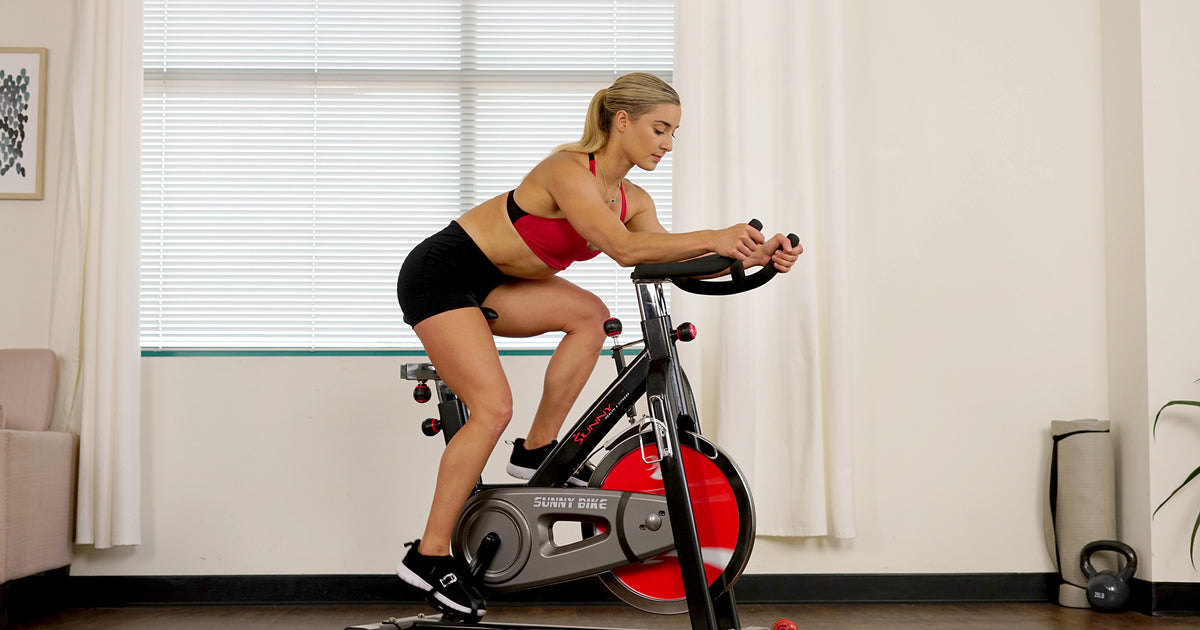
- Keep your back straight, shoulders relaxed.
- Don’t hunch over handlebars.
- Engage your core muscles for stability.
Pedaling Technique
- Push down and pull up smoothly.
- Don’t let your heels drop; keep feet parallel to the pedals.
- Use pedal straps or cages if available.
Hydration And Clothing
Drink water before, during, and after riding. Wear comfortable clothes and shoes with stiff soles for support.
Common Mistakes
- Seat too low or high causes knee pain.
- Using only toes to pedal leads to foot cramps.
- Leaning too much on handlebars strains wrists.
- Skipping warm-ups increases injury risk.
One non-obvious tip: Take breaks during longer rides. Even short pauses help muscles recover and reduce fatigue.
Tracking Progress And Setting Goals
Measuring your progress keeps you motivated. Many bikes have digital displays that show distance, speed, calories, and heart rate.
Setting Goals
Set clear, realistic goals, such as:
- Ride 30 minutes without stopping
- Increase resistance every week
- Burn 200 calories per session
Write your goals down. Review them every month.
Using Fitness Apps
Many bikes connect to fitness apps. These apps track your workouts, show graphs, and give reminders. They can also sync with your phone or smartwatch.
Comparing Results
Review your stats weekly. Check improvements in distance, time, and calories burned. If you’re not improving, try new workouts or increase resistance.
Benefits Of Using An Exercise Bike
Exercise bikes offer many health benefits. Some are obvious, but others are often missed.
- Low-impact exercise: Protects joints, suitable for most people.
- Cardiovascular health: Improves heart and lung function.
- Weight loss: Burns calories effectively.
- Muscle tone: Strengthens legs, glutes, and core.
- Stress relief: Releases endorphins, reduces anxiety.
A study by the American College of Sports Medicine found that cycling at moderate intensity for 30 minutes can burn 210–310 calories, depending on weight and speed.
One less-known benefit: Exercise bikes help improve balance and coordination. Recumbent bikes, in particular, are useful for rehabilitation after injury.
How Often Should You Use An Exercise Bike?
Frequency depends on your goals and fitness level.
- Beginners: 2-3 times per week, 20-30 minutes per session
- Intermediate: 3-5 times per week, 30-45 minutes per session
- Advanced: 5-6 times per week, 45-60 minutes per session
Rest days are important. Muscles need time to recover. If you feel soreness or fatigue, take a day off.
Comparing Exercise Bikes To Other Cardio Machines
Exercise bikes are often compared to treadmills, ellipticals, and rowing machines. Each has pros and cons.
| Machine | Impact on Joints | Calories Burned (30 min) | Space Needed |
|---|---|---|---|
| Exercise Bike | Low | 210–310 | Small to medium |
| Treadmill | Medium to high | 250–400 | Medium to large |
| Elliptical | Low | 270–400 | Medium |
| Rowing Machine | Low | 220–320 | Medium |
Exercise bikes are safer for people with knee or hip problems. Treadmills burn more calories but can stress joints. Ellipticals are a good mix, while rowing machines work both upper and lower body.
Making Exercise Bike Workouts Fun
Consistency is easier when workouts are enjoyable.
- Listen to music or podcasts while riding.
- Try virtual cycling apps or scenic routes.
- Join online challenges or group rides.
- Change your routine often to avoid boredom.
One insight: Try “micro workouts” — short rides (10–15 minutes) during the day. These add up and keep you active even when busy.
Practical Tips For Better Results
Some tips are obvious, but others are often missed.
- Stay consistent: Schedule workouts like appointments.
- Mix resistance levels: Don’t always ride at the same level.
- Stretch after riding: Prevents stiffness and helps recovery.
- Check bike maintenance: Loose bolts or worn pedals can cause injury.
- Monitor heart rate: Aim for 60–80% of your maximum for best results.
A simple calculation for maximum heart rate: 220 minus your age. Target heart rate zones are helpful for fat burning and endurance.
Special Considerations: Seniors, Rehab, And Weight Loss
Seniors
Recumbent bikes are best for seniors. They offer support and reduce fall risk. Start with short sessions and low resistance.
Rehabilitation
Exercise bikes are used in rehab for knee, hip, and back injuries. Always follow your doctor’s advice. Focus on gentle movements and increase resistance slowly.
Weight Loss
For weight loss, combine cycling with healthy eating. Aim for 3–5 sessions per week, 30–45 minutes each. Increase intensity as you get fitter.
Frequently Asked Questions
How Long Should I Use An Exercise Bike Each Day?
Most experts recommend 20–30 minutes per day for beginners. If your goal is weight loss, aim for 30–45 minutes. Listen to your body and increase time gradually.
Can Exercise Bikes Help With Knee Pain?
Yes, exercise bikes are low-impact and often used for knee rehabilitation. Adjust the seat and resistance to avoid strain. If pain continues, consult a doctor.
What Is The Best Resistance Level To Start With?
Start with low resistance. As you get stronger, increase resistance slowly. The right level allows you to pedal smoothly without pain.
Is It Better To Use An Upright Or Recumbent Bike?
Both are effective. Upright bikes offer a more intense workout and take less space. Recumbent bikes are more comfortable and safer for people with back or joint issues.
Can I Use An Exercise Bike Every Day?
Yes, if you feel good and have no soreness. For best results, take 1–2 rest days per week. Rest lets muscles recover and prevents injury.
Using an exercise bike is a practical way to improve your health, lose weight, and stay active. With the right setup, routine, and mindset, you’ll enjoy safer, more effective workouts. If you want deeper guidance or research-backed advice, you can check resources like the CDC Physical Activity Guidelines. Remember: progress comes with patience, consistency, and smart adjustments. Now you’re ready to make the most of your exercise bike and enjoy the benefits for years to come.


