

Paddling a canoe is a skill that can change your outdoor experience. Whether you are exploring a quiet lake, traveling down a river, or fishing in a hidden spot, knowing how to paddle well makes your adventure safer and more fun.
Many people think canoeing is simple—just grab a paddle and go. But good technique, safety, and understanding how the canoe works are important for both beginners and experienced paddlers. This guide will help you learn everything you need to paddle a canoe confidently.

36% off Today’s Exclusive Deals
Limited-time Exclusive Deals. Check current discount on Amazon.
Check Price on Amazon As an Amazon Associate I earn from qualifying purchases.You’ll find practical advice, step-by-step instructions, and tips that most beginners miss.
Choosing The Right Canoe And Paddle
Before you get on the water, you need the right equipment. The canoe and paddle you select will affect your comfort, speed, and control.
Types Of Canoes
Canoes come in different shapes and sizes. Here are the main types:
- Recreational canoes: Best for calm lakes and slow rivers. They are stable and easy to use, perfect for beginners.
- Touring canoes: Designed for longer trips and larger bodies of water. They are narrower, faster, and can carry more gear.
- Whitewater canoes: Built for rough waters, with a shorter and more robust design for maneuverability.
Canoe Material Comparison
The material of the canoe impacts weight, durability, and cost. Here’s a simple comparison:
| Material | Weight | Durability | Cost |
|---|---|---|---|
| Aluminum | Heavy | Very durable | Medium |
| Fiberglass | Medium | Moderate | Medium-High |
| Plastic (Polyethylene) | Heavy | Good | Low |
| Kevlar | Very light | Good | High |
Selecting A Paddle
The right paddle makes a big difference. A paddle that’s too short or too long will make paddling harder. The standard way to choose is:
- Sit upright and place the paddle vertically beside you.
- The handle should reach your chin or nose.
Most paddles are made of wood, aluminum, or fiberglass. Wood paddles are traditional and feel good, but aluminum and fiberglass are lighter and require less care.
Life Jackets And Safety Gear
Always wear a life jacket (PFD—Personal Flotation Device). Choose one made for paddling, as it allows more arm movement. Other safety items include:
- Whistle
- Waterproof bag for valuables
- First aid kit
- Rope for towing or rescue
Getting Ready: Canoe Setup And Boarding
Proper setup is important before you start paddling. Beginners often overlook these steps, but they matter for safety and performance.
Adjusting The Seat And Footrests
If your canoe has adjustable seats or footrests, set them for comfort. Your knees should be slightly bent and your back straight. This position helps you paddle longer and prevents fatigue.
Loading The Canoe
Balance is key. Put heavier items in the middle. If two people are paddling, the heavier person usually sits in the back (stern) for better control.
Boarding The Canoe Safely
Many accidents happen when getting in or out. Here’s how to do it safely:
- Place the canoe parallel to the shore.
- Hold the sides (gunwales) for balance.
- Step in one foot at a time, keeping your weight low.
- Sit down immediately—don’t stand.
If you’re with a partner, the person at the front (bow) boards first.

Basic Canoe Paddling Techniques
Learning to paddle correctly will make your trip smoother and reduce effort. There are three main strokes every paddler should know.
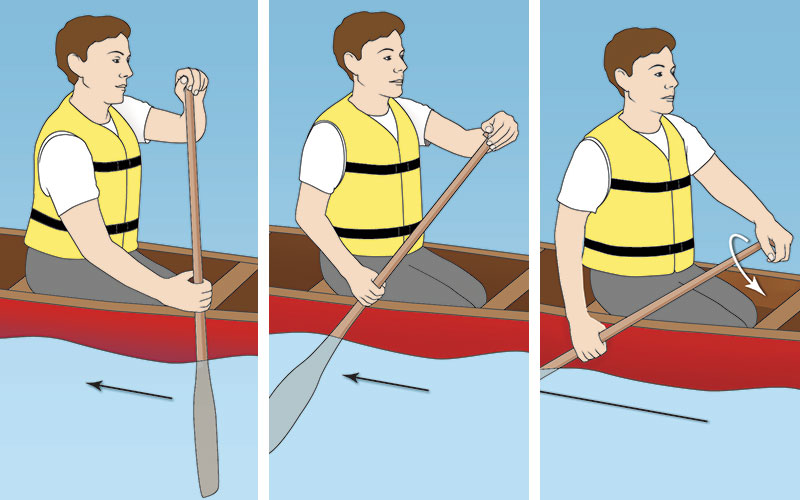
The Forward Stroke
This is the main stroke for moving straight ahead.
- Hold the paddle with one hand on the top (grip) and one near the blade.
- Dip the blade into the water near your feet.
- Pull the paddle back alongside the canoe, keeping it vertical.
- Remove the blade when it reaches your hip.
Tip: Rotate your torso, not just your arms, for more power and less fatigue.
The Backward Stroke
Used to slow down or reverse.
- Place the blade behind you and push it forward toward your feet.
- Keep the paddle close to the canoe’s side.
The J-stroke
Keeps the canoe straight, especially when paddling solo.
- Start with a forward stroke.
- As the paddle nears your hip, turn the blade outward in a “J” shape.
- This corrects the canoe’s direction.
The Sweep Stroke
For turning the canoe.
- Reach out with the paddle blade as far as possible.
- Sweep it in a wide arc from the front to the back.
- The wider the sweep, the faster the turn.
Comparison Of Canoe Strokes
| Stroke | Main Purpose | Difficulty | Used By |
|---|---|---|---|
| Forward | Move straight | Easy | All paddlers |
| Backward | Slow/Reverse | Easy | All paddlers |
| J-Stroke | Steer solo | Medium | Solo paddlers |
| Sweep | Turn | Easy | All paddlers |
Advanced Paddling Skills
Once you master the basics, you can learn advanced skills to improve your control and efficiency.
Switching Sides
If you paddle on one side for too long, you’ll get tired and the canoe may start to turn. Switch sides every few minutes. To do this:
- Stop paddling.
- Move the paddle to the other side.
- Adjust your grip—top hand becomes the bottom hand and vice versa.
Using The Draw Stroke
This stroke is for moving the canoe sideways.
- Reach out and place the paddle in the water away from the canoe.
- Pull the paddle straight toward you.
- Useful for avoiding obstacles or docking.
The Pry Stroke
Pushes the canoe away from an object.
- Place the paddle close to the canoe.
- Push the blade outward, away from the canoe.
Tandem Paddling: Working Together
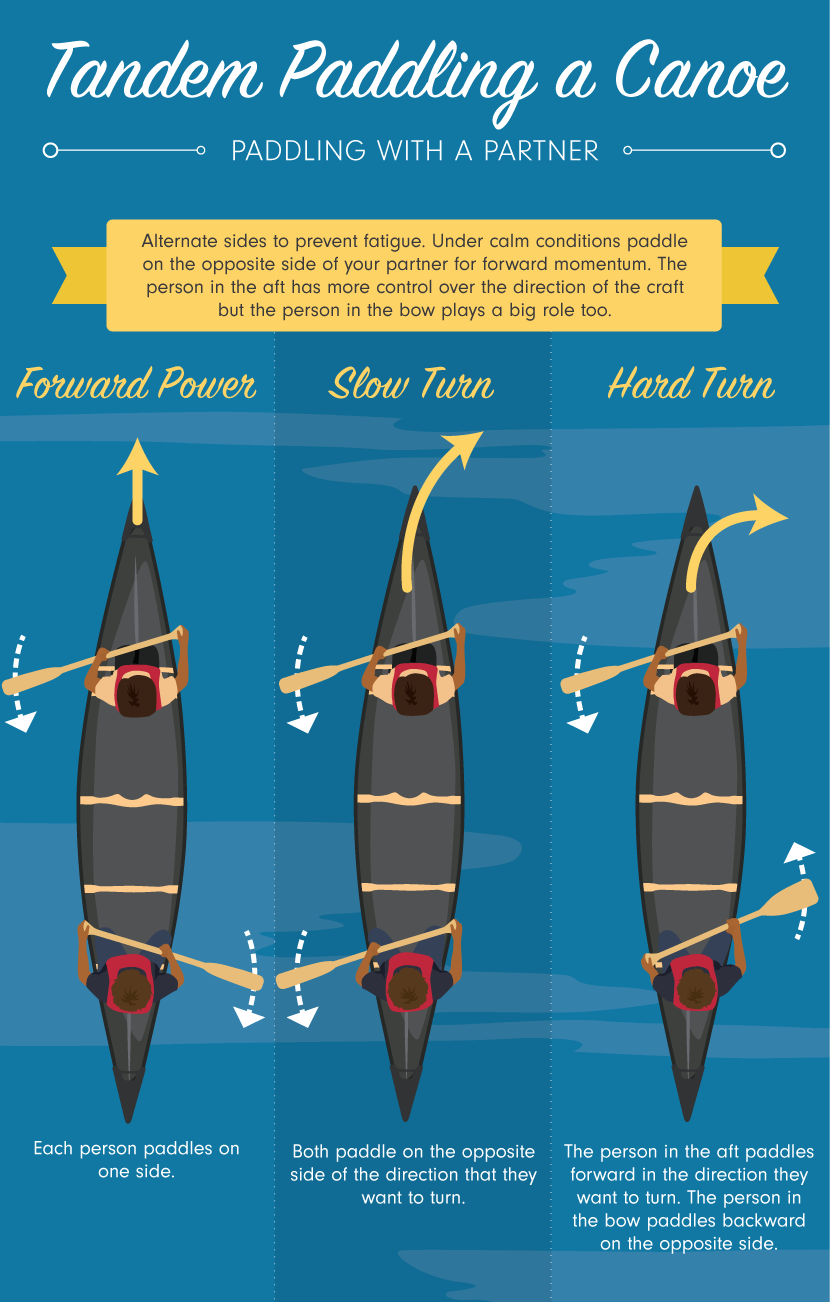
When two people paddle, teamwork matters. The person in the back (stern) steers, while the front (bow) sets the pace. Use clear signals and communicate often.
Non-obvious tip: The stern paddler can correct the course using subtle J-strokes, while the bow paddler focuses on power and rhythm.
Solo Paddling
Solo paddling is challenging but rewarding. Sit in the middle or slightly behind the center. Use the J-stroke to keep straight. If the wind is strong, kneel instead of sitting for better balance.
Steering And Maneuvering Your Canoe
Steering is more than just paddling. You need to know how to handle wind, current, and obstacles.
Turning The Canoe
To turn left, paddle on the right side using sweep strokes. To turn right, paddle on the left. The stern paddler can use a rudder stroke—holding the paddle in the water behind the canoe to steer.
Handling Wind And Currents
Wind can push your canoe off course. If possible, paddle into the wind rather than with it. In rivers, currents make steering harder. Use short, strong strokes and keep your paddle in the water as much as possible.
Avoiding Obstacles
Look ahead and plan your path. If you need to change direction quickly, use a combination of sweep and draw strokes. Don’t wait until the last second.
Safety Tips For Canoeing
Canoeing is generally safe, but accidents can happen. Follow these tips:
- Always wear a life jacket.
- Check the weather before you paddle.
- Don’t overload your canoe.
- Carry a whistle and first aid kit.
- Stay close to shore if you’re a beginner.
- Avoid paddling alone unless you are experienced.
- Know how to swim—basic swimming skills are essential.
- Learn how to recover from a capsize (flip).
Insight: Most beginners forget to check local rules about canoeing. Some areas require permits or have restrictions on where you can paddle.
Common Mistakes Beginners Make
Learning from others’ mistakes can save you time and trouble.
- Poor paddle grip: Holding the paddle incorrectly makes paddling inefficient and tiring.
- Unbalanced loading: Putting too much weight at one end makes the canoe unstable.
- Ignoring weather: Sudden storms or wind can turn a pleasant trip into a dangerous one.
- Standing in the canoe: This increases the risk of capsizing.
- Not practicing recovery: Many people don’t know what to do if the canoe flips.
Non-obvious tip: Many beginners pull the paddle straight up at the end of a stroke, splashing water and losing momentum. Instead, slice the paddle out sideways for smoother paddling.
Canoe Maintenance And Storage
Taking care of your canoe will make it last longer and perform better.
Cleaning Your Canoe
Rinse your canoe with fresh water after every trip, especially if you paddle in saltwater. Use mild soap for tough stains. Dry the canoe before storing to prevent mold.
Checking For Damage
Inspect the canoe for cracks, dents, or holes. Small cracks can be fixed with repair kits. If you notice serious damage, ask a professional for help.
Storing Your Canoe
Keep your canoe in a cool, dry place. Store it upside down on racks to prevent warping. If you leave it outside, cover it to protect from sun and rain.
Paddle Care
Wood paddles need oiling. Aluminum and fiberglass paddles should be checked for dents or loose parts. Always dry paddles before storage.
Planning Your Canoe Trip
A well-planned trip is safer and more enjoyable. Here are important steps:
- Choose your route: Look for calm waters if you’re a beginner. Avoid strong currents and rapids.
- Check the weather: Cancel your trip if storms or strong winds are expected.
- Pack essentials: Water, snacks, sunscreen, hat, map, phone, and basic repair kit.
- Tell someone your plan: Let a friend or family member know where you’ll be paddling and when you expect to return.
Packing Checklist Comparison
Here’s a quick look at what to pack for short vs. long trips:
| Item | Short Trip | Long Trip |
|---|---|---|
| Water | 1 bottle | Multiple bottles or purifier |
| Snacks | Energy bar | Full meal, snacks |
| Sunscreen | Required | Required |
| Map | Optional | Required |
| Repair kit | Optional | Required |
| First aid kit | Required | Required |
Insight: Many beginners skip packing a small waterproof bag for valuables. This is a simple but essential item.
Environmental Responsibility
Canoeing lets you enjoy nature up close. It’s important to protect the environment.
- Do not disturb wildlife.
- Avoid paddling through reeds or shallow areas where fish spawn.
- Take all your trash home.
- Use biodegradable soap if you clean gear outdoors.
Following these steps keeps waterways clean and enjoyable for everyone.
Frequently Asked Questions
How Do I Paddle A Canoe Straight?
To paddle straight, use the forward stroke and add a J-stroke at the end. The J-stroke corrects the canoe’s direction. If you are paddling with a partner, the stern paddler should use small steering strokes to keep the canoe on course.
What Should I Do If My Canoe Capsizes?
Stay calm. Hold onto your canoe—it floats. If you’re close to shore, swim and pull the canoe with you. If you need to re-enter, flip the canoe upright, climb back in from the side, and paddle to safety. Practice this technique in shallow water before your trip.
Is It Better To Sit Or Kneel While Paddling?
Both positions work. Sitting is more comfortable for long trips. Kneeling gives better balance and control, especially in rough water. Many experienced paddlers switch between sitting and kneeling depending on conditions.
How Can I Improve My Paddling Speed?
Use your torso, not just your arms, for power. Keep your paddle vertical during strokes. Practice switching sides smoothly. For longer trips, use a lighter paddle and maintain a steady rhythm.
Where Can I Learn More About Canoeing Safety And Techniques?
You can find reliable information on the Canoeing Wikipedia page. Local paddling clubs and outdoor centers also offer lessons and safety courses.
Learning how to paddle a canoe is more than just moving through water. It’s about technique, safety, teamwork, and respect for nature. With the skills and tips in this guide, you can enjoy canoeing with confidence—whether you’re gliding across a calm lake or navigating a winding river.
Remember, every trip is a chance to improve and discover new places. Paddle smart, stay safe, and enjoy the journey.

