

Changing a tire is a basic skill that every driver should know. Flat tires can happen anywhere—on a busy highway, in a quiet neighborhood, or even in your own driveway. While it might feel intimidating the first time, with the right steps and some confidence, you can change a tire quickly and safely.
This guide breaks down the entire process, from preparation to finishing touches. Whether you’re a complete beginner or just need a refresher, you’ll find everything you need to handle a flat tire like a pro.

36% off Today’s Exclusive Deals
Limited-time Exclusive Deals. Check current discount on Amazon.
Check Price on Amazon As an Amazon Associate I earn from qualifying purchases.Why Knowing How To Change A Tire Matters
Many drivers rely on roadside assistance or their smartphones when they have a flat tire. But what if you’re out of cell service? Or what if help will take hours? Self-reliance is key. According to the AAA, over 4 million roadside tire issues are reported each year in the US. Waiting for help can be stressful, risky, and time-consuming. Changing a tire yourself can save time, money, and even your safety—especially if you’re stranded in an unfamiliar area.
An often-overlooked detail: Many new cars come with tire repair kits instead of spare tires. It’s important to check what your car provides before you need it. If you have a spare, knowing how to use it properly gives you control in an emergency.
Essential Tools And Equipment
Before you face a real flat tire, make sure you have the following tools in your car. Missing equipment is a common surprise for new drivers.
| Item | Purpose | Where to Find |
|---|---|---|
| Spare tire (inflated) | Replaces the flat tire | Usually in trunk or under car |
| Car jack | Lifts the car off the ground | With the spare or tool kit |
| Lug wrench (tire iron) | Removes and tightens lug nuts | With the jack |
| Wheel wedges/chocks | Prevents car from rolling | Optional, buy separately |
| Flashlight | Improves visibility at night | Glove box |
| Reflective vest/triangle | Increases safety | Emergency kit |
| Gloves | Keeps hands clean and safe | Tool kit or glove box |
Some cars include all these items, but not all. Check your own car today—don’t wait until you’re on the side of the road.
Insight: Many compact or luxury vehicles have a “space-saver” or “donut” spare tire. These are not meant for long distances or high speeds. Always check your owner’s manual for your spare’s limits.
Preparing To Change A Tire
Safety always comes first. Before you start, follow these steps to protect yourself and your vehicle.
1. Find A Safe Location
Pull over to a flat, stable area—never stop on a curve or hill if possible. If you’re on a busy road, aim for the shoulder or a parking lot.
2. Turn On Hazard Lights
Make your car visible to other drivers, especially at night or in bad weather.
3. Apply The Parking Brake
This helps prevent your car from rolling while you work.
4. Use Wheel Wedges/chocks
Place these in front of and behind the tires opposite the flat. For example, if your front tire is flat, block the rear tires.
5. Set Up Safety Gear
Put on a reflective vest and place warning triangles if you have them, especially if you’re on the roadside.
Extra Tip: If you’re on a soft surface (like mud or grass), the jack might sink. In this case, look for a piece of wood or a sturdy, flat object to place under the jack.
Step-by-step Guide To Changing A Tire
Now, let’s walk through the process. Take your time—rushing increases the risk of mistakes.
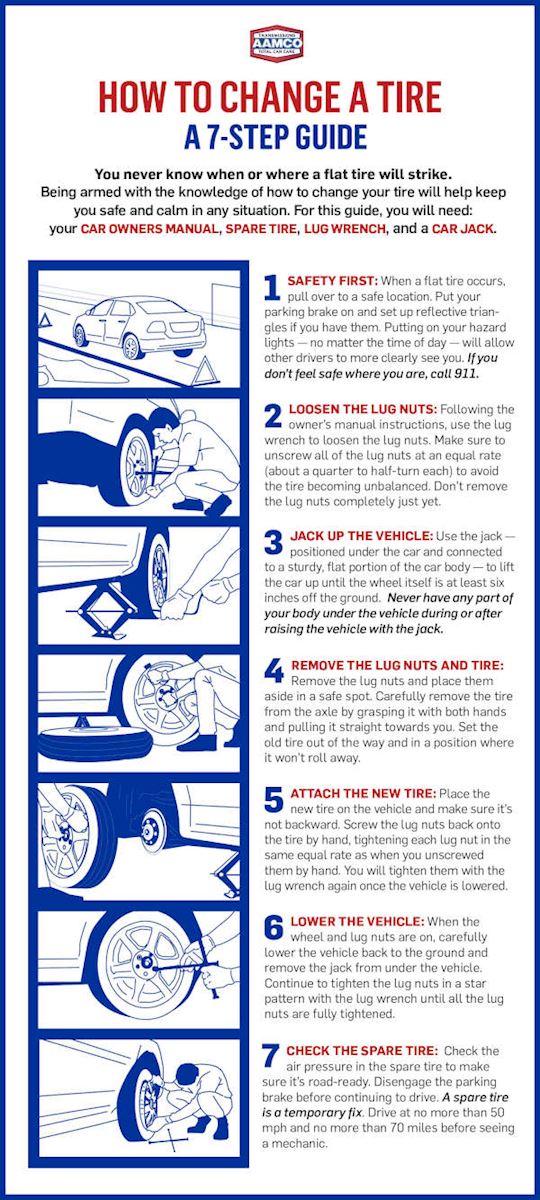
1. Remove The Hubcap Or Wheel Cover
If your car’s wheels have a hubcap (the decorative cover), gently pry it off using the flat end of your lug wrench. Some cars require the hubcap to be removed before you can access the lug nuts; others do not.
2. Loosen The Lug Nuts
Use the lug wrench to turn each lug nut counterclockwise (lefty-loosey). Do not remove them yet—just break the resistance. This step is easier while the tire is still on the ground. If the nuts are tight, try using your foot for extra force, but be careful not to slip.
Common mistake: Trying to loosen lug nuts after the car is jacked up. This can cause the tire to spin or the car to fall.
3. Position The Jack And Lift The Vehicle
Check your owner’s manual for the correct jack point—this is usually a reinforced metal area under the frame near the tire you’re changing.
- Place the jack securely.
- Raise the car slowly until the flat tire is about six inches off the ground.
- Never put any part of your body under the car while it’s raised.
Insight: Cars can slip off jacks, especially if the ground is uneven. Double-check stability before continuing.
4. Remove The Lug Nuts And Flat Tire
Now, fully unscrew the loosened lug nuts. Keep them in a safe spot—they’re easy to lose.
- Gently pull the flat tire straight toward you to remove it.
- If it’s stuck, hit the rubber side with your palm or gently kick the tire’s edge.
5. Mount The Spare Tire
Align the holes in your spare tire with the wheel studs. Push the tire onto the hub until it’s snug against the car.
6. Replace And Tighten Lug Nuts By Hand
Screw the lug nuts back on by hand. Tighten them as much as possible, but don’t use the wrench yet.
7. Lower The Car And Tighten Lug Nuts
Carefully lower the car with the jack until the tire just touches the ground (it’s stable but not fully bearing the car’s weight).
- Now, use the wrench to tighten the lug nuts in a star pattern. This means tighten one nut, then the one opposite it, and so on. This ensures even pressure.
When all nuts are tight, lower the car completely and remove the jack.
- Give each nut a final strong pull with the wrench. They should be very tight, but don’t over-tighten.
8. Replace The Hubcap And Store Your Tools
Put the hubcap back on if it fits with the spare. Pack away your tools, jack, and flat tire.
9. Check The Spare Tire Pressure
If you have a tire pressure gauge, check the spare’s pressure. Most “donut” spares require 60 psi, but check your manual.
Critical: Spare tires are usually for short-term use. Drive to a tire repair shop as soon as possible.
Practical Tips For A Smooth Tire Change
- Practice at Home: Try changing your tire in your driveway. You’ll learn where tools are stored and get comfortable with the process.
- Inspect Your Spare Regularly: Many drivers discover their spare is flat only when they need it. Check its pressure every few months.
- Keep Your Tools Organized: After use, make sure everything is put back correctly. Missing a single lug nut or wrench can cause big problems next time.
- Use the Right Jack Point: Using the wrong spot can bend your car or even cause the jack to slip.
- Wear Gloves: They improve grip and keep your hands clean, especially if you need to work in mud or rain.
Comparing Different Types Of Spare Tires
Not all spares are the same. Here’s a look at the main types you might find in your car:
| Type | Size | Distance/Speed Limit | Common in |
|---|---|---|---|
| Full-size spare | Same as regular tire | No limit | Trucks, SUVs, older sedans |
| Space-saver (donut) | Smaller, lightweight | About 50 miles / 50 mph | Modern sedans, compacts |
| Run-flat tire | Standard size, reinforced | 50-100 miles / 50 mph | Some luxury cars |
| Tire repair kit | N/A | Temporary sealant only | Hybrids, electric vehicles |
Important: Run-flat tires may allow you to drive after a puncture, but they’re not repairable after large damage.
What To Do After Installing The Spare Tire
You’re not done once the spare is on. Here’s what you should do next:
1. Clean Up
Make sure you didn’t leave any tools or parts behind.
2. Drive Carefully
Spare tires, especially donuts, handle differently. Avoid sharp turns and sudden braking.
3. Go To A Repair Shop Soon
Have your flat tire repaired or replaced as soon as possible. Driving long-term on a spare can damage your car and is unsafe.
4. Check Tire Pressure
If you didn’t have a gauge before, ask the repair shop to check the pressure for you.
5. Inspect The Flat Tire
Sometimes a flat can be repaired (like with a nail), but sidewall damage usually means replacement.
Pro tip: After about 25 miles, stop and re-tighten the lug nuts. Sometimes, after the car is driven, they can become loose.
Common Mistakes And How To Avoid Them
Changing a tire isn’t complicated, but these mistakes can turn a simple job into a dangerous one.
- Not securing the car: Skipping the parking brake or wheel chocks can lead to the car rolling.
- Using the wrong jack point: This can bend your car or cause the jack to slip.
- Losing lug nuts: They’re small and easy to misplace—always keep them together in a visible spot.
- Not tightening lug nuts enough: Loose nuts can cause the wheel to wobble or even come off.
- Driving too fast on a spare: Most spares are for short-term, low-speed use only.
- Forgetting to check the spare tire: Many people don’t realize their spare is flat or missing until they need it.
When You Should Not Change A Tire Yourself
While self-reliance is important, sometimes it’s best to wait for professional help. Don’t attempt a tire change if:
- You’re on a busy highway with fast-moving traffic.
- The ground is unstable (mud, sand, steep hill).
- You’re physically unable to lift the tools or tire.
- You don’t have the right tools or a spare.
In these cases, call for roadside assistance. Your safety is always more important than speed.
Flat Tire Prevention: Reduce Your Risk
No one can prevent all flat tires, but smart habits can reduce your chances.
- Check Tire Pressure Monthly: Under-inflated tires are more likely to fail. Use a gauge, not just your eyes.
- Rotate Tires Regularly: This helps them wear evenly and last longer.
- Avoid Road Hazards: Watch for debris, potholes, and construction zones.
- Replace Worn Tires: Bald tires are more likely to go flat. Check tread depth with a penny—if you see Lincoln’s head, it’s time for new tires.
- Don’t Overload Your Car: Too much weight stresses tires and increases the chance of a blowout.
Did you know? According to the National Highway Traffic Safety Administration, tire-related crashes cause about 33,000 injuries each year in the US. Regular checks can make a big difference.
Real-life Example: Changing A Tire On The Road
Imagine this scenario: You’re driving home at night, and you hear a thumping noise. The car starts to pull to one side. You pull over and see a flat tire.
- You turn on your hazard lights and move as far off the road as possible.
- You put on a reflective vest and set out triangles behind your car.
- You grab your jack, wrench, and spare from the trunk.
- You follow the steps above, staying calm and methodical.
- Within 20 minutes, you’re back on the road, heading to the nearest repair shop.
Key lesson: Preparation and knowledge turn a stressful event into a manageable one.
Essential Tire Change Data At A Glance
Here’s a quick look at average tire change times and distances you can drive on a spare:
| Task | Average Time | Spare Tire Type | Max Distance | Max Speed |
|---|---|---|---|---|
| Changing a tire | 15-30 minutes | Donut (space-saver) | 50 miles | 50 mph |
| Changing a tire | 15-30 minutes | Full-size | Unlimited | As regular tire |
| Run-flat drive | N/A | Run-flat | 50-100 miles | 50 mph |
Additional Resources
If you want more in-depth information on tire safety, check out the official NHTSA Tire Safety page.
Frequently Asked Questions
What If I Don’t Have A Spare Tire?
Many modern cars come with a tire repair kit instead of a spare. These kits include sealant and an air compressor to temporarily fix small punctures. However, they don’t work for large holes or sidewall damage. It’s wise to check your car’s equipment and consider buying a spare if you travel long distances.
Can I Drive On A Flat Tire To The Repair Shop?
No. Driving even a short distance on a completely flat tire can ruin the tire, damage your wheel, and affect your car’s suspension. Always install a spare or use a repair kit before driving.
How Often Should I Check My Spare Tire?
You should check the spare tire pressure every few months, especially before long trips. Many people forget about the spare until it’s needed, only to find it flat.
Is It Safe To Use A “donut” Spare For A Long Trip?
No. Donut spares are for temporary use only—usually up to 50 miles and under 50 mph. They have less grip and are not as strong as normal tires. Replace or repair your main tire as soon as possible.
What Should I Do If I Feel Unsafe Changing A Tire?
If you’re in a dangerous location or feel uncomfortable, stay in your car with the doors locked and call for roadside assistance. Use hazard lights and make your vehicle visible to others, but never risk your safety.
Changing a tire is a skill that can save you time, money, and stress. With the right tools and knowledge, you’ll be prepared for the unexpected—and you’ll have peace of mind every time you drive.

