

Cooking rice seems simple, but many people end up with sticky, undercooked, or mushy grains. Whether you are new to cooking or want to improve your skills, learning how to cook rice properly makes a big difference in your meals.
Rice is a staple food in many cultures. It’s affordable, easy to find, and pairs well with many dishes. From stir-fry to curries, rice is used worldwide. There are many ways to cook rice, and each method has its strengths and common mistakes.

36% off Today’s Exclusive Deals
Limited-time Exclusive Deals. Check current discount on Amazon.
Check Price on Amazon As an Amazon Associate I earn from qualifying purchases.This guide shows you how to cook rice perfectly every time, including tips, tools, and tricks that even beginners often miss.
Understanding Rice Types
Before cooking, it’s important to know which rice variety you have. Each type cooks differently, so using the right method helps you get the best results.
Common Rice Types
- Long-grain rice – Examples: Basmati, Jasmine. These grains are longer and stay separate after cooking. Ideal for pilaf or fried rice.
- Medium-grain rice – Examples: Arborio, Calrose. These grains are plumper and stick together more. Good for risotto and sushi.
- Short-grain rice – Example: Sushi rice. These grains are round and sticky, best for sushi or rice puddings.
- Brown rice – Has the outer bran layer, making it healthier and chewier. Needs more water and longer cooking.
Comparison Of Popular Rice Varieties
Here is a table showing key differences between common rice types:
| Type | Length | Texture After Cooking | Cooking Time | Common Uses |
|---|---|---|---|---|
| Basmati | Long | Fluffy, separate | 15-20 min | Indian dishes |
| Jasmine | Long | Soft, slightly sticky | 12-18 min | Thai food |
| Arborio | Medium | Creamy, sticky | 18-25 min | Risotto |
| Sushi rice | Short | Sticky | 15-20 min | Sushi |
| Brown rice | Varies | Chewy | 35-45 min | Healthy bowls |
Choosing the right rice is the first step. For most dishes, long-grain rice is the easiest to cook and doesn’t clump together.
Tools And Equipment For Cooking Rice
You don’t need fancy gadgets, but some tools can make the process easier or give better results.
Basic Tools
- Pot with lid – For stovetop cooking.
- Measuring cups – To measure rice and water correctly.
- Fine mesh strainer – Useful for rinsing rice.
- Rice cooker – Automatic, easy, and consistent.
- Fork – For fluffing cooked rice.
Stovetop Vs Rice Cooker
Let’s see how stovetop and rice cooker methods compare:
| Method | Ease of Use | Consistency | Cleanup | Common Mistakes |
|---|---|---|---|---|
| Stovetop | Medium | Varies | More | Burning, undercooking |
| Rice Cooker | Easy | High | Less | Too much water |
A rice cooker is ideal for beginners. It’s almost foolproof if you follow the instructions.

Rinsing And Soaking Rice
Most people skip rinsing rice, but it’s a key step. Rinsing removes extra starch that can make rice sticky or gummy.
How To Rinse Rice
- Place rice in a bowl or strainer.
- Add cold water.
- Swirl rice with your fingers.
- Drain water and repeat until water runs clear (usually 2–3 times).
Soaking is optional, but helps rice cook evenly and faster, especially for Basmati and brown rice. Soak rice for 20–30 minutes before cooking.
Measuring Rice And Water
Getting the ratio right is essential. Too little water and rice is hard; too much and it’s mushy.
Standard Rice-to-water Ratios
- White long-grain rice: 1 cup rice to 1.5–2 cups water
- Medium/short-grain rice: 1 cup rice to 1.25–1.5 cups water
- Brown rice: 1 cup rice to 2.5 cups water
Here’s a quick reference:
| Type | Rice (cups) | Water (cups) |
|---|---|---|
| White long-grain | 1 | 1.5–2 |
| Medium/short-grain | 1 | 1.25–1.5 |
| Brown rice | 1 | 2.5 |
Always measure rice and water with the same cup for accuracy. Avoid guessing—small mistakes can lead to big differences.
Step-by-step: Cooking Rice On The Stovetop
Cooking rice on the stove gives you control. Follow these steps for perfect rice.
- Rinse rice until water is clear.
- Soak if needed (optional).
- Place rice and water in a pot.
- Add salt (about 1/2 teaspoon per cup of rice), if desired.
- Bring to a boil over medium-high heat.
- When boiling, reduce heat to low and cover tightly.
- Simmer for:
- White rice: 15–18 minutes
- Brown rice: 35–45 minutes
- Turn off heat and let rice rest for 10 minutes (keep covered).
- Use a fork to fluff rice before serving.
Practical Tips For Stovetop Cooking
- Don’t lift the lid while rice is cooking—steam escapes and rice won’t cook evenly.
- If rice sticks to the bottom, your heat is too high.
- Letting rice rest after cooking helps grains firm up and makes fluffing easier.
Using A Rice Cooker
A rice cooker is the easiest method for beginners and busy cooks. Most modern rice cookers have clear instructions and automatic shutoff.
Steps For Rice Cooker
- Rinse rice well.
- Place rice and water in the cooker.
- Close lid and press start.
- Wait for cooker to finish (indicator light or beep).
- Let rice sit for 5–10 minutes before fluffing.
Rice cookers often have lines inside the pot for measuring water. Use these marks—they are tested for that model.
Non-obvious Insight
Many people don’t realize rice cookers can cook other grains (like quinoa), steam vegetables, or even make porridge. If you have a rice cooker, explore its settings.
Microwave Cooking
Microwave cooking is fast, but needs care. It’s best for small portions.
Steps For Microwave Rice
- Rinse rice as usual.
- Combine rice and water in a microwave-safe bowl.
- Cover loosely (use a plate or microwave-safe lid).
- Microwave on high for 10–12 minutes.
- Let sit for 5 minutes before fluffing.
Microwave cooking can lead to uneven results. Stir halfway for better texture.
Instant Pot And Pressure Cooker
For those with an Instant Pot or pressure cooker, rice cooks quickly and turns out fluffy.
Steps For Instant Pot
- Rinse rice.
- Add rice and water (follow standard ratios).
- Use “Rice” or “Pressure Cook” setting.
- Cook for:
- White rice: 3–5 minutes
- Brown rice: 20–25 minutes
- Let pressure release naturally for 10 minutes.
Pressure cookers are great for large batches and save time.
Common Mistakes And How To Avoid Them
Even experienced cooks make mistakes. Here are problems and solutions:
- Too sticky or mushy rice – Too much water or not rinsing enough.
- Burnt rice – Heat was too high or lid not tight.
- Undercooked rice – Not enough water or cooking time too short.
- Rice stuck to pot – Use nonstick or add a teaspoon of oil.
Two Insights Beginners Miss
- Most home cooks don’t let rice rest after cooking. This step makes a big difference—rice absorbs steam and becomes fluffy.
- Adjust water for your climate. In dry climates, rice needs a bit more water.
Cooking Brown Rice And Other Whole Grains
Brown rice and other whole grains need more water and time. They are healthier because they have more fiber and vitamins.
Steps For Brown Rice
- Rinse and soak for 30 minutes (optional but recommended).
- Use 1 cup rice to 2.5 cups water.
- Cook for 35–45 minutes (stovetop) or 20–25 minutes (pressure cooker).
- Let rest for 10 minutes.
Brown rice can taste nutty and chewy. Try mixing it with white rice if you’re not used to the texture.
:max_bytes(150000):strip_icc()/bake-perfectly-cooked-oven-rice-995968-FINAL-d3c62bef307e41bfba1a0893d5a432d1.png)
Flavoring And Adding Ingredients
Rice is a blank canvas. You can add flavor during or after cooking.
Ways To Add Flavor
- Use broth instead of water.
- Add a bay leaf, cinnamon stick, or cardamom pod.
- Mix in vegetables or herbs after cooking.
- Fry rice with onions and garlic before adding water (for pilaf).
Example: Simple Rice Pilaf
For a basic pilaf:
- Heat 1 tablespoon oil or butter in the pot.
- Add 1 cup rice, stir for 2 minutes.
- Add 2 cups broth, salt, and spices.
- Cook as usual.
Storing And Reheating Rice
Cooked rice can be stored for later use, but needs care.
Storage Tips
- Cool rice quickly and store in airtight containers.
- Refrigerate within 2 hours.
- Use within 3–4 days.
Reheating Rice
- Add a splash of water to rice before reheating.
- Microwave or use stovetop with low heat.
- Avoid reheating rice multiple times (risk of bacteria).
Rice For Different Dishes
Rice is used in many recipes. You can adjust cooking methods for these dishes.
Fried Rice
- Use leftover, chilled rice.
- Cook rice with less water so grains are firm.
- Stir-fry with vegetables, eggs, and sauces.
Sushi Rice
- Use short-grain rice.
- Add rice vinegar, sugar, and salt after cooking.
- Mix gently to avoid breaking grains.
Risotto
- Use Arborio or Carnaroli rice.
- Add broth slowly while stirring.
- Cook until creamy, not dry.
Nutritional Facts
Rice is a good source of carbohydrates and some vitamins. Brown rice has more fiber, magnesium, and B vitamins than white rice.
- 1 cup cooked white rice: ~205 calories, 0.4g fat, 4.2g protein, 45g carbs
- 1 cup cooked brown rice: ~215 calories, 1.8g fat, 5g protein, 45g carbs
Adding vegetables or beans boosts nutrition.
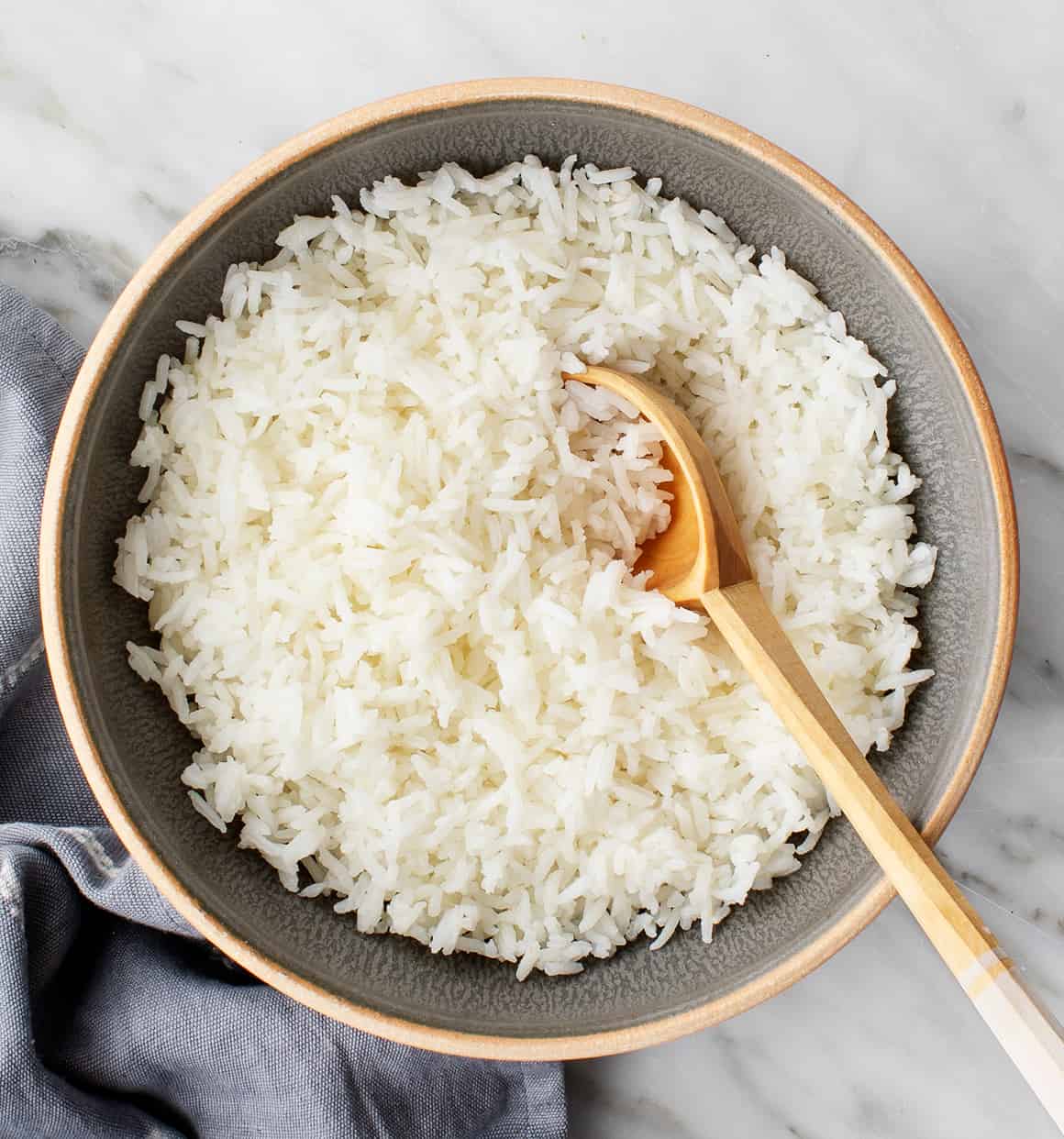
Troubleshooting: Fixing Bad Rice
If your rice is not perfect, you can often fix it.
- Too dry: Add a few tablespoons of hot water, cover, and let steam for 5 minutes.
- Too wet: Spread rice on a tray and let air dry for a few minutes. Or cook uncovered for 2–3 minutes.
- Burnt layer: Carefully remove good rice and discard burnt part.
Cooking Rice For Large Groups
Cooking rice for many people needs planning.
- Use a large pot or rice cooker.
- Keep ratio: 1 cup rice = 3–4 servings.
- For 10 people, cook 3 cups rice and 6 cups water.
Large batches need more time to come to a boil. Stir once before covering.
Rice Around The World
Rice is central to many cuisines:
- India: Basmati rice in biryani and pulao.
- Japan: Sushi rice and onigiri.
- China: Fried rice and congee.
- Italy: Risotto with Arborio rice.
- USA: Rice in jambalaya and Cajun dishes.
Each culture has its own cooking traditions.
How To Choose The Best Rice
When buying rice, check:
- Type: Match to recipe (long-grain for pilaf, short-grain for sushi).
- Quality: Look for uniform grains, no broken pieces.
- Packaging: Airtight, undamaged bags.
- Price: Higher quality often costs more, but taste and texture improve.
Avoid rice with strong smell or discoloration.
Frequently Asked Questions
How Much Rice Should I Cook Per Person?
A good rule is 1/2 cup (uncooked) rice per person. This gives about 1 cup cooked rice, which is enough for most meals.
Why Does My Rice Turn Out Sticky?
Rice turns sticky if you use too much water, don’t rinse it, or use short-grain rice for recipes meant for long-grain. Stick to the correct ratio and rinse rice well.
Can I Freeze Cooked Rice?
Yes, cooked rice freezes well. Cool rice completely, pack in airtight containers, and freeze up to 3 months. To use, thaw and reheat with a splash of water.
Is Rice Healthy?
Rice is a good energy source. Brown rice is healthier because it has more fiber, vitamins, and minerals. White rice is easier to digest and cooks faster. Balance rice with vegetables and protein for a healthy meal.
What Is The Best Way To Cook Rice For Fried Rice?
Use day-old rice stored in the fridge. Cook rice with less water so grains are firm, then chill before frying. This prevents sogginess and gives the best texture.
Cooking rice well is a basic but essential skill. Once you master it, you can create many delicious meals. The key is to choose the right rice, measure carefully, rinse, and follow the correct steps for your method. Don’t skip letting rice rest after cooking—it’s one of the most important steps that beginners often miss. Whether you use a pot, rice cooker, microwave, or Instant Pot, each method has its advantages. Try different types and methods to find what works best for you. For more detailed tips and rice recipes, visit Allrecipes. With practice and attention, you’ll enjoy perfect rice every time.

