

Washing your car may seem simple, but doing it right takes attention to detail, patience, and the right techniques. A clean car not only looks great—it protects your paint, keeps value high, and even makes driving more enjoyable. Many people make small mistakes that lead to scratches or water spots.
By following a smart, step-by-step method, you can make your car shine like new and avoid common damage. In this guide, you’ll discover how to wash a car safely and effectively, whether you’re a first-timer or just want better results.

36% off Today’s Exclusive Deals
Limited-time Exclusive Deals. Check current discount on Amazon.
Check Price on Amazon As an Amazon Associate I earn from qualifying purchases.Why Regular Car Washing Matters
Washing your car is about much more than just looks. Dirt, dust, bird droppings, and road salt can all damage paintwork. Over time, these can cause scratches, stains, or even rust. In fact, a study by the International Carwash Association found that regular washing helps maintain paint quality for up to 50% longer.
Clean cars are also safer—dirt on windows and headlights can reduce visibility, especially at night or in bad weather.
A well-maintained car keeps its value. According to Kelley Blue Book, vehicles with regular cleaning and care can sell for 10-20% more than neglected ones. So, washing your car isn’t just a chore—it’s an investment.
Essential Equipment And Products
Having the right tools makes washing easier and reduces risk of scratches. Here’s what you’ll need:
- Two buckets (one for wash water, one for rinse)
- Car wash soap (never use dish soap, as it removes wax and dries paint)
- Wash mitt (soft microfiber or lamb’s wool)
- Grit guard (optional but helps trap dirt)
- Wheel cleaner and brush
- Drying towels (large microfiber is best)
- Detailing brushes (for small crevices)
- Glass cleaner (for windows)
- Wax or sealant (for extra protection)
- Hose with spray nozzle or pressure washer (gentle setting)
Product Comparison: Car Wash Soap Vs. Dish Soap
Many beginners think all soap is the same. Here’s why car wash soap is better:
| Feature | Car Wash Soap | Dish Soap |
|---|---|---|
| Paint Safety | Safe for paint | Can strip wax, dry paint |
| Lubrication | High (reduces scratches) | Low |
| Residue | Rinses clean | May leave film |
Insight: Using dish soap just once can remove months of wax, leaving your paint exposed.
Preparing Your Car And Workspace
Washing in direct sunlight is a common mistake. The sun heats your car’s surface, causing water and soap to dry quickly, which leads to water spots and streaks. Instead, park your car in the shade or wash early in the morning or evening.
Check that all windows are closed, and remove items like roof racks or antennas if possible. Gather your tools nearby to avoid searching mid-wash. Place your buckets close but out of your walking path to prevent spills.
Quick Checklist Before You Start
- Park in shade
- Close all windows and doors
- Remove personal items from the car’s exterior
- Set up buckets, mitts, towels, and products
The Two-bucket Method: How It Works
The two-bucket method is popular among car enthusiasts because it prevents scratching. Here’s how it goes:
- One bucket holds clean, soapy water.
- The other holds plain water for rinsing your mitt.
- After washing each section, rinse the mitt in the plain water, then reload with soap.
This method removes dirt from the mitt so you don’t rub grit back onto the car.
Example: Washing Without Two Buckets
If you use only one bucket, the mitt fills with dirt. When you dip back into the soap, you’re rubbing that same grit across your paint, increasing swirl marks.
Step-by-step: Washing Your Car
Washing should always go from top to bottom, as the lower areas are the dirtiest.
1. Rinse The Car
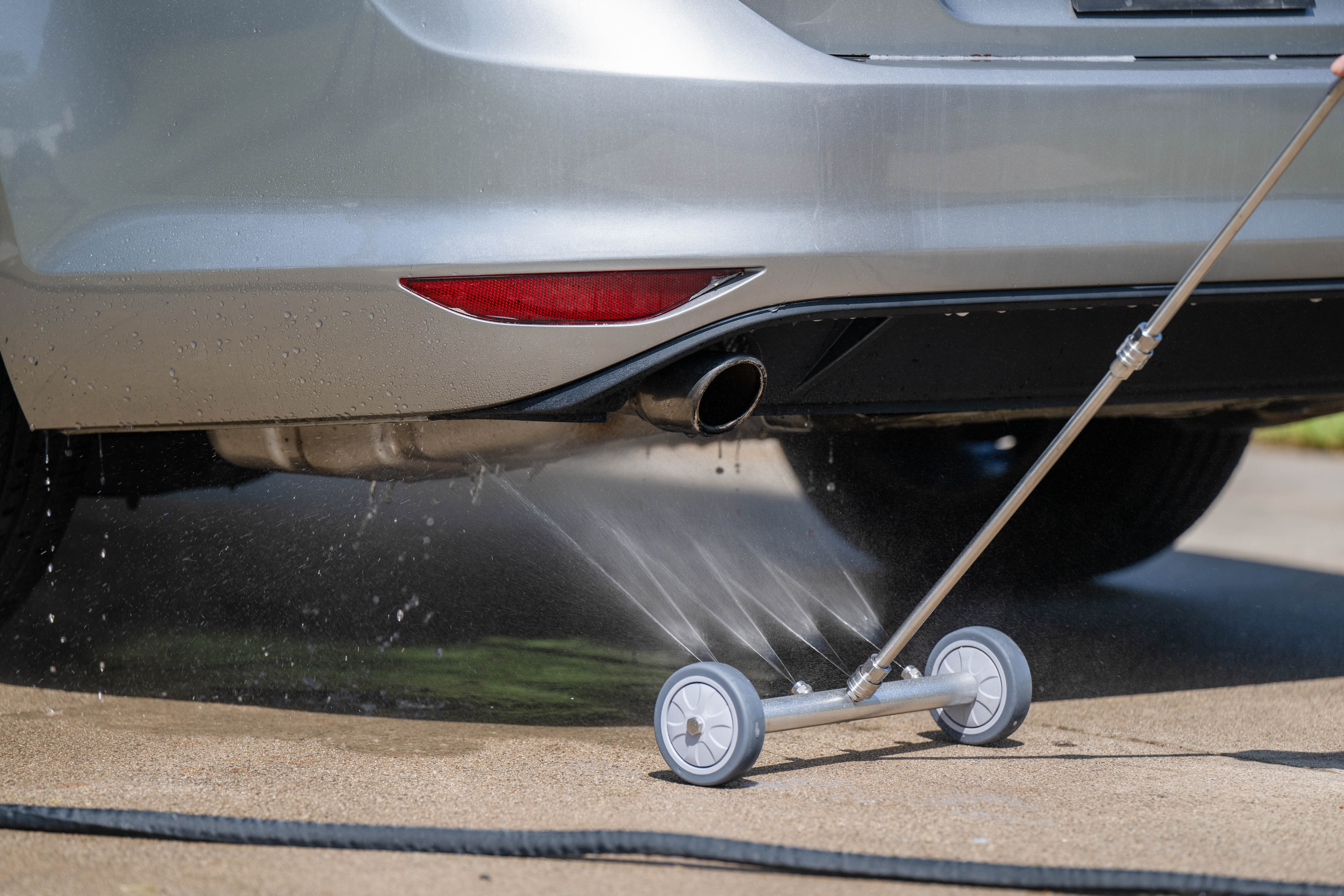
Use a hose or pressure washer on a gentle setting to remove loose dirt and debris. Start at the roof and work down. Pay special attention to wheel wells and lower panels. This step prevents you from dragging dirt across the paint during washing.
2. Clean The Wheels And Tires
Wheels collect brake dust, tar, and road grime. Clean them first, so you don’t splash dirt onto a clean car later.
- Spray wheel cleaner generously on the wheels and tires.
- Use a soft brush to scrub the surface and spokes.
- Rinse thoroughly.
- Don’t use the same mitt for wheels and paint—keep them separate.
Pro tip: If you wait until last, dirty water may drip onto freshly washed panels.
3. Wash The Car Body
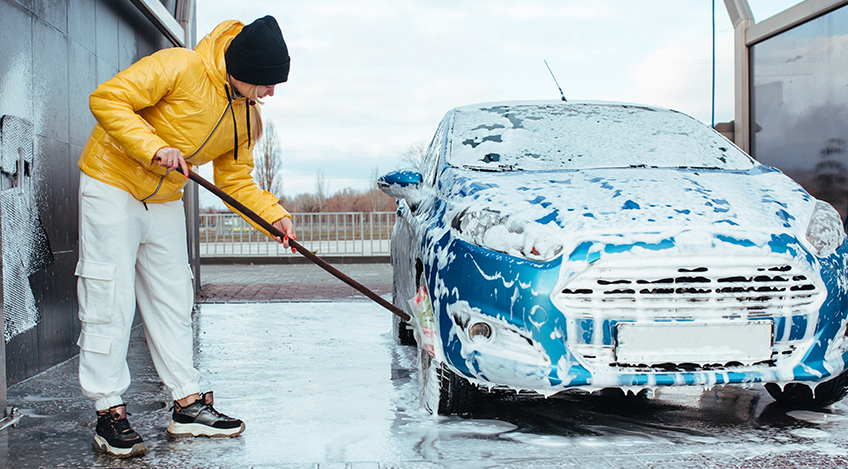
Dip your mitt in the soapy water, then wash the car in straight lines (not circles). Start with the roof, then move to windows, hood, trunk, doors, and finally, lower panels. Rinse the mitt in the clean water bucket after each section.
Work in small areas—one panel at a time—so soap doesn’t dry before you rinse.
4. Rinse Thoroughly
After washing each section or when the whole car is soapy, rinse from the top down. Make sure to remove all soap, as leftover residue can cause spots.
5. Dry The Car
Use large, clean microfiber towels to dry. Pat or gently drag towels across the surface—never rub hard. Drying prevents water spots, especially in hard water areas. For best results, use two towels: one for the first pass, one for any remaining moisture.
Non-obvious tip: Even “spot-free” rinses can leave marks if you let water air-dry in the sun.
Cleaning Windows And Mirrors
Glass needs special care. Use a dedicated glass cleaner and a clean microfiber cloth. Wipe in two directions—horizontal on the outside, vertical on the inside—so you can spot any missed areas easily.
Don’t forget side mirrors, rearview mirrors, and even sunroofs. Avoid ammonia-based cleaners, as they can damage window tint.
Detailing: Trims, Emblems, And Small Spaces
Small details make a big difference. Use soft detailing brushes or old toothbrushes to clean badges, emblems, and around window seals. Spray cleaner onto the brush, not directly on the car, to avoid streaks.
Hidden dirt often collects around door handles, gas caps, and trunk seams. Open these areas and wipe them down.
Waxing And Paint Protection
Waxing adds shine and protects paint from UV rays, rain, and pollution. There are two main types:
- Liquid or paste wax: Offers a deep shine and lasts up to 6 months.
- Spray wax: Quick to apply, lasts 1-2 months.
Apply wax in the shade, using a foam applicator. Work in small sections. Let it haze, then buff off with a clean microfiber towel.
Car Wax Comparison
Here’s how different types of wax compare for durability and shine:
| Wax Type | Shine | Protection | Ease of Use |
|---|---|---|---|
| Paste Wax | Very High | Up to 6 months | Moderate |
| Liquid Wax | High | 3-5 months | Easy |
| Spray Wax | Moderate | 1-2 months | Very Easy |
Insight: Many people skip waxing, but even spray wax after each wash can make water bead and reduce future cleaning time.
Cleaning The Interior
A clean exterior is great, but the inside matters, too. Here’s a quick breakdown:
- Remove trash and personal items from seats and floors.
- Vacuum carpets, mats, and seats using a brush attachment.
- Wipe down surfaces (dashboard, door panels, center console) with a damp microfiber cloth.
- Clean inside windows with glass cleaner.
- Condition leather if your car has leather seats, using a dedicated product.
Non-obvious tip: Move seats all the way forward and back to reach hidden dirt.
Drying And Final Touches
After washing, a few final steps make your car look its best:
- Check for drips around mirrors, emblems, and trim. Dry these with a small towel.
- Dress tires with a tire shine product for a fresh look.
- Inspect for missed spots—walk around the car in good light.
Pro tip: Small crevices can hide water. Open and close doors, trunk, and hood to release trapped moisture.
Common Mistakes To Avoid
Even careful washers make errors. Here are mistakes and how to avoid them:
- Using dish soap—strips wax and damages paint.
- Washing in direct sunlight—causes water spots.
- Using dirty towels or mitts—can scratch surfaces.
- Not rinsing wheels first—spreads brake dust onto paint.
- Letting soap dry on paint—leaves streaks.
- Skipping drying—leads to water spots.
- Washing in circles—increases swirl marks.
A small change in routine can save your car’s finish.
How Often Should You Wash Your Car?
There’s no one-size-fits-all answer. Most experts suggest washing every two weeks. If you drive in areas with lots of dust, salt, or pollution, weekly washing is better. After road trips, snowstorms, or heavy rain, wash as soon as possible.
In winter, wash more often to remove road salt, which is highly corrosive. In dry or dusty climates, frequent washing prevents scratches from fine grit.
When To Use A Professional Car Wash
Hand washing gives the best results, but sometimes, professional car washes are more practical. Automatic “touchless” washes are less likely to scratch paint than older brush systems. However, commercial washes may not clean details as well as hand washing.
If you lack time, space, or tools, a professional wash is better than skipping washing altogether. Look for facilities that use high-quality products and soft materials.
For more on different wash methods, the Wikipedia car wash page has helpful info on automatic versus hand washing.
Environmental Tips For Washing Your Car
Washing a car at home uses about 100-150 gallons of water per wash, while commercial car washes use only 40-60 gallons, often recycling water. To reduce your impact:
- Wash on grass or gravel, not concrete, so water soaks in and doesn’t enter drains.
- Use biodegradable soaps.
- Turn off the hose when not rinsing.
Insight: Never pour wash water into storm drains, as it pollutes local streams.
Troubleshooting: Dealing With Tough Stains
Some stains need extra care:
- Bird droppings: Remove ASAP—they’re acidic and etch paint. Soak with a damp towel, then wipe gently.
- Tree sap: Use a bug and tar remover or rubbing alcohol. Avoid harsh scrubbing.
- Tar or road paint: Specialized removers work best. Test on a small area first.
- Water spots: Vinegar-water mix (1:1) can help remove minerals.
If stains persist, consult a detailer rather than risk damaging your paint.
Seasonal Car Washing Tips
Summer
- Wash early or late to avoid heat.
- Bugs and tar are common—remove quickly.
Winter
- Wash often to remove salt.
- Dry thoroughly to prevent frozen doors and locks.
Rainy Season
- Dirt and road oil splash up more—wash as soon as possible after heavy rain.
Adjust your routine to your climate for the best results.
Caring For Your Tools And Products
Good tools last longer if you care for them:
- Wash mitts and towels after every use. Machine wash with mild detergent, no fabric softener.
- Air-dry microfiber towels to avoid static.
- Store products in a cool, dry place.
Old or dirty towels can scratch paint, so replace them when worn.
Quick Reference: Car Wash Steps
For easy recall, here’s the full process:
- Park in shade, prep tools.
- Rinse car, wheels first.
- Clean wheels and tires.
- Wash car top to bottom using two-bucket method.
- Rinse thoroughly.
- Dry with microfiber towels.
- Clean windows, mirrors, details.
- Apply wax or sealant.
- Finish with tire dressing and a final inspection.

Frequently Asked Questions
How Can I Avoid Swirl Marks When Washing?
Use a two-bucket method and a soft microfiber mitt. Always wash in straight lines, rinse your mitt often, and avoid circular motions. Dry with clean, plush towels and never use the same towel for wheels and paint.
Is It Safe To Use A Pressure Washer?
Yes, but keep the pressure under 1500 psi and use a wide-angle spray tip. Hold the nozzle at least 12 inches from the paint to prevent damage. Avoid blasting directly at seals, emblems, or damaged paint.
What’s The Best Way To Clean Bird Droppings Or Tree Sap?
Soak the spot with a damp microfiber towel for a few minutes, then gently wipe. For tough sap, use a tar remover or rubbing alcohol, but always test a small area first. Wash and wax the area afterward for protection.
How Can I Tell If My Car Needs Waxing?
After washing, splash water on the paint. If water beads up, wax is still protecting the surface. If water sheets or forms large flat areas, it’s time to reapply wax or sealant for best protection.
Can I Wash My Car With Hard Water?
You can, but hard water can leave spots. Wash in the shade, work quickly, and dry immediately with microfiber towels. Using filtered or softened water for the final rinse can help reduce spotting.
A proper car wash makes your vehicle look better, last longer, and reflect your pride as an owner. With the right products and a little know-how, you’ll enjoy a sparkling finish—and protect your investment for years to come.

