

When your GE front load washer starts acting up, life can get frustrating. Dirty clothes pile up fast, and you may worry about costly repairs. But before you call a professional, there’s a lot you can do yourself. This guide walks you through common GE washer problems, clear troubleshooting steps, and practical tips. You’ll learn how to solve issues like leaks, error codes, and spinning failures—plus discover insights most beginners overlook. Even if English isn’t your first language, this article uses simple words and short sentences to help you fix your washer confidently.
Common Issues With Ge Front Load Washers
Many people experience similar problems with their GE front load washer. Understanding the most frequent issues is the first step toward solving them.

36% off Today’s Exclusive Deals
Limited-time Exclusive Deals. Check current discount on Amazon.
Check Price on Amazon As an Amazon Associate I earn from qualifying purchases.Washer Won’t Start
If your washer doesn’t start, check these basics:
- Make sure it’s plugged in and the outlet works.
- Confirm the door is closed tightly.
- Look for error codes on the display.
Sometimes, the child lock feature prevents starting. If you see a lock symbol, press and hold the lock button for three seconds.
Washer Leaks Water
Leaks are often caused by simple mistakes:
- The door gasket (rubber seal) may be dirty or damaged.
- Hoses might be loose, cracked, or blocked.
- The detergent drawer can overflow if you use too much soap.
Check these areas and clean the seal with a soft cloth. If you spot damage, replace the gasket or hose.
Washer Won’t Spin
When your washer won’t spin, it could be:
- The load is too small or too big.
- Clothes are unevenly distributed.
- The drain filter is clogged.
Try rearranging clothes, or remove some items if the drum is overloaded. Clean the drain filter, usually found at the bottom front of the washer.
Washer Won’t Drain
A washer that won’t drain is a frequent headache. Causes include:
- Clogged drain hose or pump filter.
- Kinked or blocked drain hose.
- Faulty drain pump.
Clear the hose and filter. Straighten the hose if it’s bent. If the pump is noisy or doesn’t run, it may need replacing.
Washer Makes Loud Noises
Loud noises can mean:
- Loose objects inside the drum (coins, buttons).
- The washer isn’t level on the floor.
- Worn bearings or shock absorbers.
Remove any objects and adjust the washer feet. If the noise continues, check for worn parts.
Error Codes And What They Mean
GE washers display error codes to help you find the problem. Here are the most common codes and their meanings:
| Error Code | Meaning | Possible Solution |
|---|---|---|
| E22 | Drain problem | Clean drain filter, check hose |
| E23 | Drain pump issue | Check pump, replace if faulty |
| E41 | Door not locked | Close door firmly, check lock |
| E10 | Water not filling | Check water supply, hose |
| E13 | Water leak detected | Inspect hoses and gasket |
| F03 | Heating problem | Check heater, wiring |
If you see a code not listed here, check your user manual or GE’s official website.
Step-by-step Troubleshooting Guide
Fixing your washer doesn’t have to be complicated. Let’s break down each main issue and how to solve it.
Washer Won’t Start
- Power check: Make sure the plug is secure. Test another device in the outlet.
- Door check: Push the door until you hear a click.
- Control lock: If the controls are locked, hold the lock button for three seconds.
- Error codes: Note any codes and check their meaning.
- Circuit breaker: If nothing works, check your home’s circuit breaker.
Washer Leaks Water
- Door seal: Wipe the gasket clean. Look for cracks.
- Hoses: Inspect both inlet and drain hoses for leaks.
- Detergent drawer: Use less detergent if you see suds overflowing.
- Washer level: Adjust the feet so the washer sits flat.
Washer Won’t Spin
- Load balance: Rearrange or remove clothes for even weight.
- Drain filter: Open the filter cover and clean out debris.
- Spin cycle settings: Choose the correct cycle for your load.
- Error codes: Check for codes related to spinning.
Washer Won’t Drain
- Drain hose: Remove hose, flush with water to clear blockages.
- Pump filter: Open the filter and clean it.
- Pump noise: If the pump buzzes but doesn’t drain, it may need replacement.
- Error codes: See if E22 or E23 appears.
Washer Makes Loud Noises
- Empty drum: Remove loose items.
- Level washer: Adjust feet with a wrench.
- Inspect bearings: If you hear grinding, bearings may be worn.
- Shock absorbers: Look for leaks or damage underneath.
Tips For Preventing Washer Problems
Preventing issues saves time and money. Here are practical ways to keep your washer running smoothly:
- Clean the door gasket weekly to prevent mold and leaks.
- Use only HE (High-Efficiency) detergent—too much soap causes problems.
- Don’t overload the drum; follow manufacturer’s load limits.
- Run a self-clean cycle monthly to remove buildup.
- Check hoses every three months for cracks or leaks.
- Leave the door open after washing to let it dry.
Most beginners forget to clean the drain filter. This simple task prevents drainage and spinning issues.
How To Clean The Drain Pump Filter
Many GE front load washers have a filter in front, near the bottom. Cleaning it is easy and solves many problems.
- Turn off and unplug the washer.
- Open the filter cover (usually a small door).
- Place a towel under the filter—some water will spill.
- Unscrew the filter and remove debris (coins, lint, etc. ).
- Rinse the filter with water.
- Screw the filter back in and close the cover.
Do this every one to two months, especially if you wash pet bedding or sandy clothes.
How To Fix Washer Door Issues
Sometimes, the washer door won’t lock or unlock. This can stop cycles or cause error codes.
Door Won’t Lock
- Make sure nothing blocks the door (clothes, socks).
- Push firmly until the lock clicks.
- Inspect the latch for damage.
If the lock mechanism is broken, replacement is often needed.
Door Won’t Unlock
- Wait five minutes after the cycle ends—locks can stay engaged.
- Try unplugging the washer for one minute.
- If water remains inside, drain manually using the filter.
Never force the door open. If it still won’t unlock, contact GE support.

Comparing Ge Front Load Washer Models
Not all GE front load washers are the same. Let’s compare three popular models for troubleshooting:
| Model | Error Code Display | Drain Pump Access | Self-Clean Cycle | Load Capacity |
|---|---|---|---|---|
| GFW550SSNWW | Digital display | Front filter | Yes | 4.8 cu ft |
| GFW650SSNWW | Touchscreen | Front filter | Yes | 5.0 cu ft |
| GFW148SSMWW | LED codes | Rear access | No | 2.4 cu ft |
If your model has rear filter access, cleaning may take longer. Always check your user manual for details.
How To Reset Your Ge Front Load Washer
Resetting your washer can fix many minor issues, such as control problems or stuck cycles.
- Unplug the washer for one minute.
- Plug it back in.
- Open and close the door firmly.
- Select a wash cycle and press start.
Some models have a reset button—check your manual. If the problem persists, try resetting again or call GE support.
Troubleshooting Detergent And Soap Issues
Using the wrong detergent or too much soap causes leaks, odor, and error codes.
- Always use HE detergent for front load washers.
- Measure detergent carefully—too much creates suds and leaks.
- Clean the detergent drawer monthly.
If you notice suds leaking from the drawer, reduce detergent next time. Excess soap is the most common cause of leaks for beginners.
Dealing With Washer Odor
A smelly washer usually means mold or bacteria is growing inside. Here’s how to fix it:
- Run a self-clean cycle with washer cleaner once a month.
- Leave the door open after each wash to dry the drum.
- Wipe the gasket and drum with a cloth soaked in vinegar.
If odor persists, clean the drain filter and detergent drawer. Some people use baking soda, but vinegar is often more effective.
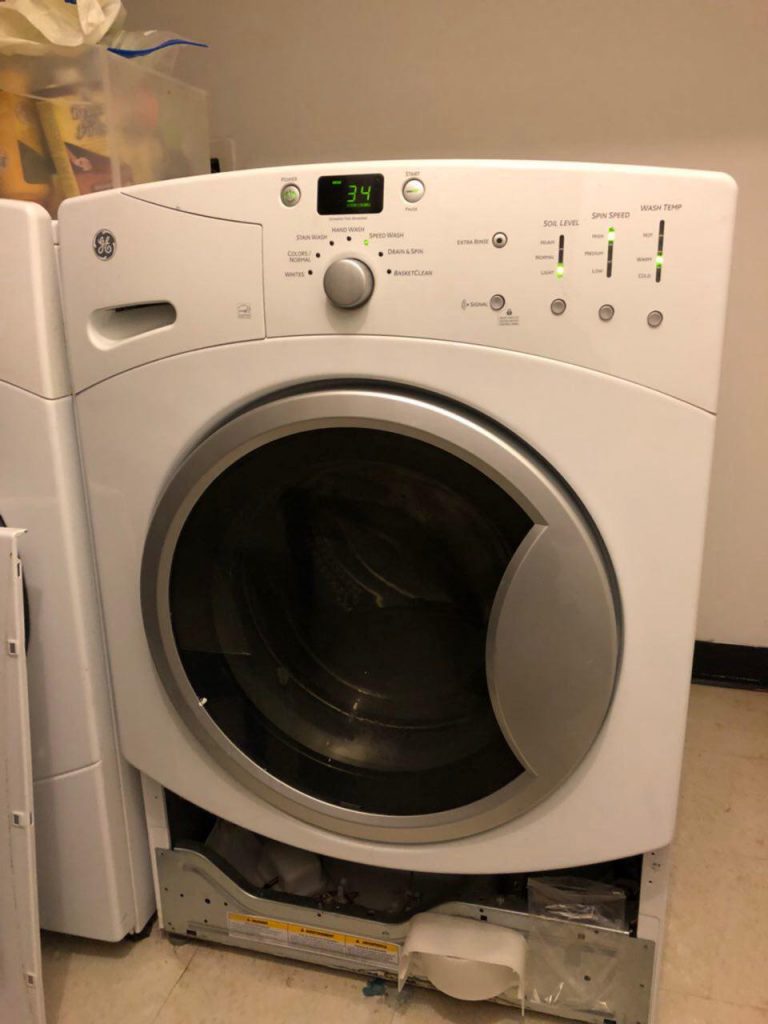
How To Level Your Washer
A washer that isn’t level can vibrate, make noise, and even leak. Leveling is easy:
- Place a bubble level on top of the washer.
- Adjust the feet by turning them clockwise or counterclockwise.
- Check all four corners.
- Tighten the lock nuts once level.
Most people forget to level their washer after moving it, which leads to noise and leaks.
When To Call A Professional
Some issues are too complex for DIY repairs. Call a professional if:
- You smell burning or see smoke.
- The drum doesn’t turn at all.
- Water leaks from inside the machine.
- Error codes won’t clear after resets.
- The control board fails.
Repair costs range from $100–$500, depending on the problem. If your washer is under warranty, contact GE support.
Comparing Washer Maintenance Costs
Let’s compare the cost of common maintenance tasks:
| Task | DIY Cost | Professional Cost | Frequency |
|---|---|---|---|
| Drain filter cleaning | $0–$5 | $80–$150 | Monthly |
| Door gasket replacement | $30–$60 | $200–$300 | Rare |
| Leveling washer | $0 | $80–$120 | After moving |
| Drain pump replacement | $40–$100 | $200–$400 | Rare |
DIY maintenance is much cheaper. Beginners often miss this fact and spend more than needed.
Extra Troubleshooting Insights Most Beginners Miss
- Door gasket cleaning is critical. Mold, lint, or small objects inside the gasket cause leaks and odor, but most people overlook this area.
- Drain filter maintenance: Many don’t realize their washer has a filter that needs cleaning. Clogged filters are the top cause of drainage and spinning issues.
- Hose checks: Washing machine hoses wear out faster than you might think. Replace hoses every five years, even if they look fine.
- Resetting after a power outage: Power cuts can confuse the washer’s control board. Always reset your washer after an outage for smooth operation.
- Cycle selection matters: Using the right cycle for your load helps prevent unbalanced loads, noise, and spinning failures.

Frequently Asked Questions
How Often Should I Clean The Drain Filter In My Ge Front Load Washer?
Clean the drain filter every one to two months. If you wash pet bedding or sandy clothes, clean it more often. This prevents drainage and spinning problems.
Why Does My Ge Front Load Washer Smell Bad?
Odor comes from mold or bacteria inside the drum, gasket, or detergent drawer. Run a self-clean cycle monthly, wipe the gasket, and leave the door open after each wash.
What Should I Do If My Washer Shows An Error Code?
Check your user manual or GE’s website for code meanings. Most codes point to specific problems, like drainage or door lock issues. Fix the cause, then reset the washer.
Can I Use Regular Detergent In My Ge Front Load Washer?
No. Only use HE (High-Efficiency) detergent. Regular detergent creates too many suds, leading to leaks, error codes, and poor cleaning results.
Where Can I Find More Information On Ge Washer Troubleshooting?
For official troubleshooting and repair guides, visit the GE Appliances website or GE Appliances Support.
A GE front load washer is a reliable appliance when properly maintained. By following these troubleshooting steps, cleaning tips, and practical advice, you’ll avoid most problems and fix common issues yourself. Remember, regular maintenance saves money and keeps your washer running smoothly for years.
If you face a problem you can’t solve, don’t hesitate to call a professional. With the right knowledge, you’ll keep your laundry routine stress-free and efficient.

