

A practical, step-by-step Hoshizaki Ice Maker Troubleshooting Guide to fix common ice machine issues fast.
I’ve worked with commercial kitchen equipment for years, and this Hoshizaki Ice Maker Troubleshooting Guide brings clear, practical fixes and safety-first steps you can use today. You’ll find how Hoshizaki ice machines work, common problems, exact troubleshooting steps, error code meanings, preventive maintenance, parts to stock, and when to call a pro. Read on to learn tested tips, avoid costly mistakes, and keep your ice flowing reliably.

36% off Today’s Exclusive Deals
Limited-time Exclusive Deals. Check current discount on Amazon.
Check Price on Amazon As an Amazon Associate I earn from qualifying purchases.
How Hoshizaki Ice Makers Work
Hoshizaki ice makers make ice in cycles using water, refrigeration, and timed harvest. Water is sprayed or fed over a cold evaporator plate or mold. The refrigeration system freezes thin ice sheets or cubes, then a harvest cycle releases ice into a bin.
Key components to know:
- Water inlet and water pump: supply and circulate water for freezing.
- Evaporator or mold: where ice forms.
- Compressor and condenser: create the cold needed to freeze water.
- Control board and sensors: manage cycle timing and safety.
- Water filter and drain: ensure clean water and proper removal.
Understanding these parts helps when you follow this Hoshizaki Ice Maker Troubleshooting Guide because most faults trace to one of these systems. Manufacturers’ manuals also map fault codes to parts for quick diagnosis.

Common Problems and Quick Diagnoses
This Hoshizaki Ice Maker Troubleshooting Guide focuses on the problems you’ll see most often and how to spot the cause fast.
No ice or low ice production:
- Cause: Dirty condenser, low water flow, or refrigerant issue.
- Quick check: Feel condenser airflow, inspect water supply, and check ice cycle times.
Ice machine not harvesting ice:
- Cause: Faulty harvest heater, thermostat, or control board.
- Quick check: Listen for harvest cycle, test heater continuity, and inspect wiring.
Ice is cloudy or tastes bad:
- Cause: Old water filter, dirty evaporator, or contaminated water.
- Quick check: Smell and taste ice, check filter age, and inspect for scale.
Leaking water:
- Cause: Clogged drain, cracked water line, or loose fittings.
- Quick check: Trace leaks during a cycle and inspect drain lines.
Unusual noises:
- Cause: Worn pump, failing compressor, or loose panels.
- Quick check: Note noise type and location, then isolate by running cycles and listening closely.
This Hoshizaki Ice Maker Troubleshooting Guide helps you prioritize checks and decide whether a DIY fix is safe and effective.
Step-by-Step Troubleshooting Guide
Follow these steps in order for safe, efficient diagnosis using this Hoshizaki Ice Maker Troubleshooting Guide.
Safety first:
- Turn power off before opening panels or touching components.
- Wear gloves and eye protection when handling parts or chemicals.
- Keep water and electricity separate to avoid shocks.
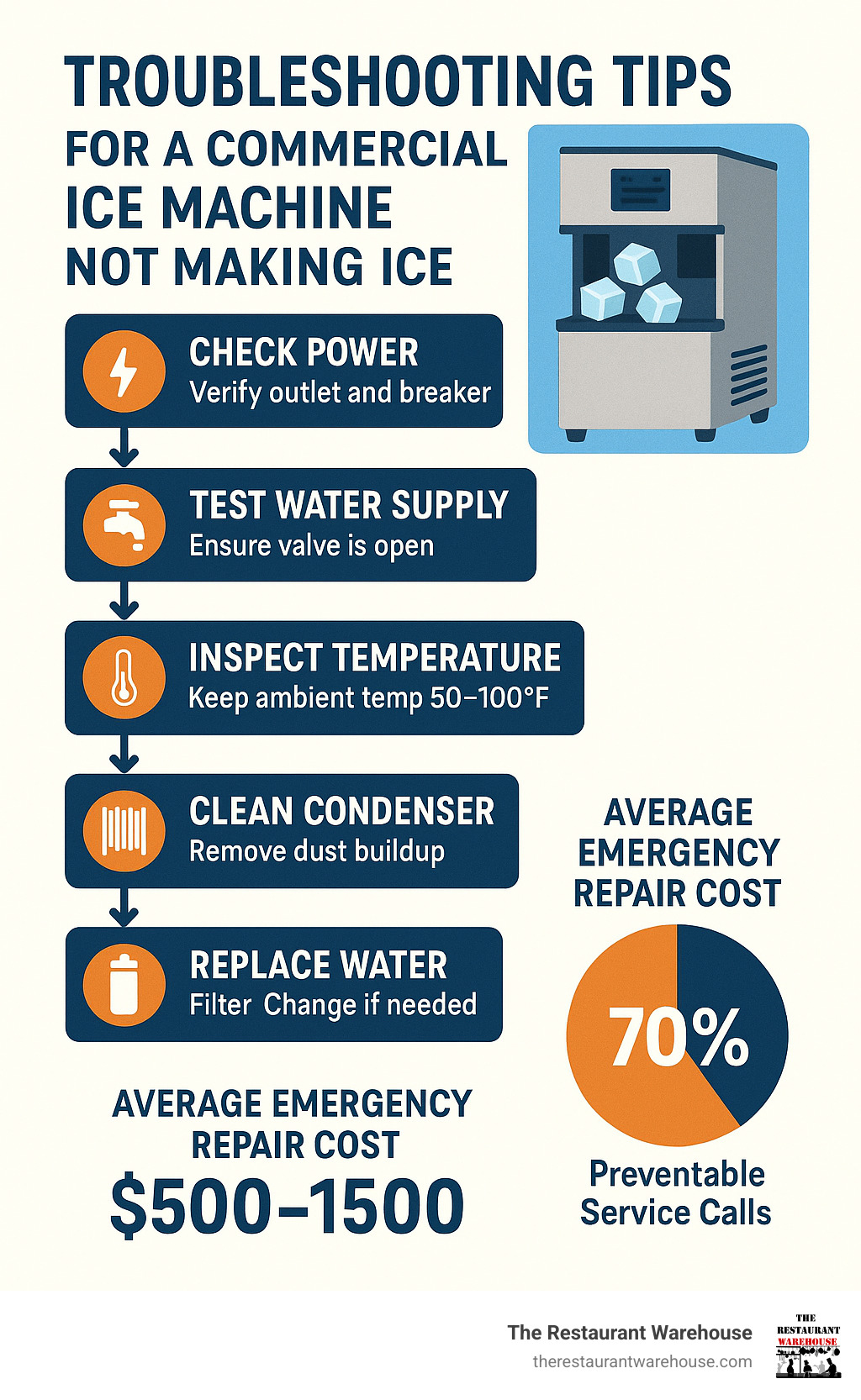
Step 1: Verify power and controls
- Check outlet and breaker; ensure unit has power.
- Inspect control display and LEDs for errors.
- Reset power for 30 seconds to see if the controller clears a transient error.
Step 2: Check water supply
- Confirm valve is fully open and water pressure is adequate.
- Inspect inlet screen and filter for clogging.
- Measure water flow during fill cycle; slow fill suggests a blocked line or low pressure.
Step 3: Inspect condenser and airflow
- Clean condenser fins and ensure vents are clear.
- For air-cooled units, ensure 2–3 inches clearance; for water-cooled, check water flow and heat exchange.
Step 4: Test refrigeration basics
- Feel suction and discharge lines; suction should be cold.
- Inspect for frost patterns on evaporator; missing frost indicates a refrigerant or compressor issue.
- If suspecting refrigerant leaks, call certified HVAC/R tech.
Step 5: Evaluate harvest components
- Test harvest heater continuity with a multimeter.
- Inspect thermostat and sensors for proper function.
- Observe harvest cycle: heater should energize and release ice after a set time.
Step 6: Clean and descale
- Run manufacturer-approved cleaning solution through the machine per instructions.
- Remove mineral scale from evaporator and water tray to restore performance.
- Replace water filter after major cleaning.
Step 7: Verify drainage and pumps
- Clear clogs in drain trap and lines.
- Test pump operation and listen for cavitation or squeal.
Step 8: Re-test and monitor
- Run multiple cycles, watch for error codes or abnormal behavior.
- Log cycle times, water usage, and production rates to compare against specs.
I used these steps when a restaurant’s Hoshizaki unit made half its usual ice. Cleaning the condenser and replacing the filter fixed it within an hour—no parts replaced. This Hoshizaki Ice Maker Troubleshooting Guide emphasizes checks that save time and money.
Understanding Error Codes and What to Do
This Hoshizaki Ice Maker Troubleshooting Guide covers common codes and immediate actions. Error codes vary by model; always consult the unit diagram when possible.
E1 or Error 1: No water detected or low water flow
- Action: Check water supply valve, inlet filter, and float switch. Clear blockages.
E2 or Error 2: Water level sensor fault
- Action: Inspect float, sensor wiring, and connections. Replace sensor if faulty.
E3 or Error 3: Condenser overtemp or fan failure
- Action: Clean condenser, check fan motor and airflow. Replace fan if it doesn’t run.
E4 or Error 4: Harvest heater error
- Action: Test heater continuity, inspect wiring, and check control relay. Replace heater assembly if defective.
E5 or Error 5: Drain pump or drain fault
- Action: Clear drain line and trap. Verify pump runs and replace if blocked or burned.
E6 or Error 6: Thermostat or sensor (ice thickness) fault
- Action: Test sensor resistance and wiring. Replace thermostat or sensor as needed.
Use this Hoshizaki Ice Maker Troubleshooting Guide to map codes to fixes. If a code persists after basic checks, capture the code, model, and cycle details before calling service.
Preventive Maintenance and Best Practices
Preventive care is the most cost-effective part of this Hoshizaki Ice Maker Troubleshooting Guide. Regular maintenance prevents most failures.
Weekly tasks:
- Wipe exterior and clean splash guards.
- Check water filter condition and replace if needed.
Monthly tasks:
- Inspect and clean condenser and ventilation areas.
- Check bin and ice surfaces for scale or contamination.
Every 3–6 months:
- Descale evaporator and internal water paths using the correct cleaning agent.
- Test water quality and change filter cartridges.
Annually:
- Have a certified technician inspect refrigeration charge, valves, and electrical connections.
- Replace worn seals, gaskets, or hoses as preventive measures.
Practical tip: Keep a simple maintenance log. Record dates for cleaning, filter changes, and any repairs. This habit makes troubleshooting easier and supports warranty claims.
Parts, Tools, and Replacements to Keep Handy
Being prepared speeds repairs and reduces downtime. This Hoshizaki Ice Maker Troubleshooting Guide recommends common spare parts and tools.
Essential spare parts:
- Water filters and O-rings
- Drain pumps and traps
- Harvest heaters and thermostats
- Float switches and sensors
- Condenser fans and replacement belts (if applicable)
Tools to have:
- Multimeter for electrical tests
- Small wrench set and screwdrivers
- Tubing cutters and hose clamps
- Cleaning brushes and approved descaling solution
- Replacement water filter cartridges
Ordering tip: Use OEM or manufacturer-approved parts to keep warranty and ensure proper fit. Keep part numbers from the manual handy for quick ordering.

When to Call a Professional
Use this Hoshizaki Ice Maker Troubleshooting Guide to decide when to DIY and when to call a pro.
Call a technician if:
- You suspect a refrigerant leak or compressor failure.
- Error codes persist after basic troubleshooting.
- Electrical components burn out or wiring is damaged.
- The unit is under warranty and repair could void coverage.
Before the tech arrives:
- Document error codes and symptoms.
- Clear access to the machine and have the model and serial number ready.
- Share recent maintenance history to help the technician diagnose faster.
I once delayed calling a tech for a noisy compressor. That cost more later. When in doubt about refrigeration or complex electrical issues, calling a certified technician saves time and money.
Frequently Asked Questions of Hoshizaki Ice Maker Troubleshooting Guide
What causes my Hoshizaki ice maker to make small, misshapen cubes?
Small or malformed cubes usually come from low water pressure, clogged water filters, or scale on the evaporator. Check the water supply and clean filters or descale.
How often should I descale a Hoshizaki ice machine?
Descale every 3–6 months depending on water hardness and usage. Heavy mineral content or hard water may require more frequent descaling.
Can I replace the harvest heater myself?
You can replace the harvest heater if you are comfortable with basic electrical troubleshooting and the unit is powered off. If the heater is integrated with sealed components or the issue involves refrigerant, call a technician.
Why does my ice taste like metallic or chlorine?
Metallic or chlorine tastes often come from poor water quality, old filters, or contaminated water lines. Replace the filter and flush the system after cleaning.
My Hoshizaki unit shows E3 condenser error; what should I do now?
First clean the condenser and ensure proper airflow. If the fan motor is not running or temperatures remain high, call a service technician to inspect the fan motor and refrigerant system.
Conclusion
This Hoshizaki Ice Maker Troubleshooting Guide gives clear steps, common fixes, preventive routines, and signs to call a professional. Start with basic checks: power, water, condenser, and controls, then move to heaters and sensors. Keep spare parts and a maintenance log to cut downtime and costs. Take action now—inspect your unit, follow the steps above, and schedule routine care. If this guide helped, leave a comment, share your experience, or subscribe for more appliance troubleshooting tips.

