

Most Ezgo electric carts fail from battery or controller faults—start with battery checks.
I have worked on dozens of Ezgo Electric Golf Cart Troubleshooting cases and trained with service manuals, so I know how these carts behave. This guide gives clear steps, real-world tips, and easy fixes for common Ezgo Electric Golf Cart Troubleshooting problems so you can diagnose issues fast and ride with confidence. Read on for step-by-step diagnostics, safety notes, and maintenance tips drawn from hands-on experience.

36% off Today’s Exclusive Deals
Limited-time Exclusive Deals. Check current discount on Amazon.
Check Price on Amazon As an Amazon Associate I earn from qualifying purchases.
Common Causes and Quick Checks for Ezgo Electric Golf Cart Troubleshooting
Understanding the top causes helps you troubleshoot faster. Most problems fall into a few areas: batteries, charger, wiring, controller, or mechanical parts. Start with the basics before you dig deeper.
Common quick checks
- Check battery state of charge and connections. Loose or corroded terminals cause many faults.
- Inspect the charger indicator lights. A charger fault often mimics battery failure.
- Listen for controller clicks when you turn the key. No noise can mean a dead main contactor.
- Look for burnt or melted wiring. Heat damage points to current overloads or shorts.
- Test the parking brake and safety switches. Safety interlocks can prevent movement.
Why these checks matter
- They save time. Simple fixes often solve the problem.
- They prevent damage. Catch wiring or charger faults early.
- They keep you safe. Faulty batteries or controllers can create hazards.

Step-by-Step Diagnostic Guide for Ezgo Electric Golf Cart Troubleshooting
Follow an ordered process to find the root cause quickly. Work from easy checks to deeper tests.
- Visual inspection
- Look for corrosion, leaks, cracks, or loose parts.
- Check tire pressure and brake wear; sometimes a perceived electrical problem is mechanical.
- Battery voltage and hydrometer check
- Measure each battery with a voltmeter. Healthy 6V batteries show about 6.2–6.4V at rest.
- Use a hydrometer on flooded lead-acid cells to check specific gravity if available.
- Charger and charging test
- Plug the charger in and note indicator lights. A normal charge cycle will show a charging status.
- Measure charger output at the pack; confirm correct voltage and current.
- Controller and solenoid tests
- Turn the key and press forward. Listen for solenoid click.
- Use a multimeter to check for voltage at the controller input and output while the accelerator is pressed.
- Motor and mechanical check
- Inspect motor brushes and commutator where applicable.
- Lift the wheels and test under load if safe to do so.
- Wiring and ground tests
- Check harness connectors for heat discoloration.
- Ensure frame ground is solid and free of paint or rust.
These steps form a logical path for Ezgo Electric Golf Cart Troubleshooting. Start simple, record results, and move deeper only if needed.

Battery and Charger Issues (Deep Dive)
Batteries are the heart of electric carts. Faulty or weak batteries account for most Ezgo Electric Golf Cart Troubleshooting calls.
Signs of battery problems
- Low range or slow acceleration.
- Cart barely moves or stops suddenly.
- Visible corrosion or swollen cases.
Battery tests and fixes
- Rest voltage test: Measure each battery after 8–12 hours off charge.
- Load test: Use a load tester or swap with known-good battery to confirm performance.
- Equalize charge: Follow the manufacturer’s equalizing procedure if cells show imbalance.
- Replace cells or pack: Replace batteries in matched sets to ensure longevity.
Charger behavior and fixes
- Charger won’t power on: Check AC outlet and fuse. Replace fuse if blown.
- Charger shows error codes: Note the pattern; service manual codes point to specific issues.
- Slow charging: Could be weak charger or bad battery cell.
Maintenance tips
- Clean terminals monthly and apply a thin coat of dielectric grease.
- Keep water levels topped on flooded batteries.
- Charge after each use and store charged to avoid sulfation.
My experience: a cart came in with weak range. Charger showed normal lights but one battery read 4.9V. Swapping that battery with a fresh one restored range and saved the owner money by avoiding a full pack replacement.
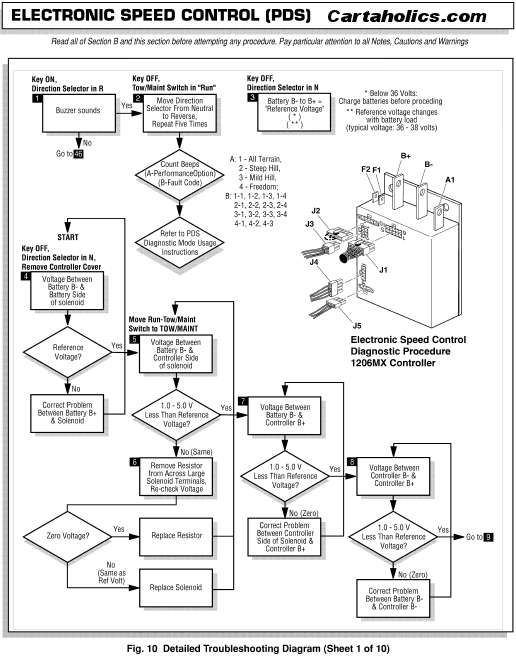
Motor, Controller, and Wiring Problems
If batteries and charger are good, the issue often sits with the controller, motor, or wiring. Ezgo Electric Golf Cart Troubleshooting here needs careful electrical checks.
Controller signs and checks
- No power to drive circuits despite full batteries.
- Controller overheats or trips protection.
- Fault codes on display or flashing LEDs.
Troubleshooting steps
- Check fuses and contactors first. A blown fuse or stuck contactor can stop power flow.
- Verify voltage at controller input with accelerator pressed.
- Inspect control wires and connectors for corrosion or loose pins.
Motor symptoms and fixes
- Grinding or unusual noise: Inspect bearings and brushes.
- No movement with controller showing output: Motor winding or connection issue may exist.
- Overheating motor: Check load, wiring, and controller settings.
Wiring and connector tips
- Replace melted connectors; use high-temperature connectors for high-current paths.
- Solder or crimp connections properly and seal with heat shrink.
- Label wires during disassembly to avoid errors when reassembling.
Real note: I once repaired a cart where a mouse chewed wiring near the solenoid. Replacing the harness and sealing the area fixed intermittent cutouts.

Brake, Throttle, and Safety Systems
Safety switches and throttle controls can stop the cart from moving. These are common pitfalls in Ezgo Electric Golf Cart Troubleshooting.
Common culprit switches
- Neutral safety switch prevents drive if not engaged properly.
- Brake-in safety switch disables throttle when brake is pressed or stuck.
- Seat switch may disable movement if not detecting weight.
Throttle issues and fixes
- Sticky or worn throttle pots cause uneven or no response.
- Clean throttle linkage and test the potentiometer with a multimeter.
- Replace throttle assembly if out of spec.
Brake and mechanical checks
- Adjust brake cable and inspect pads for wear.
- Confirm parking brake release fully engages the safety switch.
Safety first: always disconnect batteries before working on electrical safety switches. Reconnect only to test after repairs.

Maintenance Tips to Prevent Ezgo Electric Golf Cart Troubleshooting
Good habits cut down troubleshooting time and costs. Regular maintenance prevents many failures.
Routine maintenance checklist
- Check battery water monthly and top up distilled water.
- Clean terminals and apply corrosion protectant.
- Inspect wiring harnesses and secure loose cables.
- Test charger and measure pack voltage regularly.
- Lubricate steering and suspension points per recommended schedule.
Seasonal care
- Store carts on a full charge in cool, dry areas.
- Use a battery maintainer during long storage.
- Winterize by removing and storing batteries if not used.
Lessons learned: owners who charge after each use and maintain terminals see longer battery life and fewer controller issues.

Tools and Parts You'll Need for Troubleshooting
Having the right tools speeds repairs and improves safety. A basic kit covers most Ezgo Electric Golf Cart Troubleshooting needs.
Essential tools
- Digital multimeter with amp clamp
- Hydrometer for flooded batteries
- Battery load tester
- Hand tools: sockets, wrenches, pliers
- Wire crimpers, soldering iron, heat-shrink tubing
- Torque wrench for critical fasteners
Spare parts to keep on hand
- Fuses and fuse holders
- Solenoid or contactor
- Terminal connectors and heat-shrink
- Spare battery or single cell for testing
- Controller fuses and common relays
Tip: buy OEM or high-quality replacements for controllers and solenoids to avoid repeat failures.
Quick PAA Questions About Ezgo Electric Golf Cart Troubleshooting
What causes my Ezgo cart to lose power suddenly?
- Sudden loss of power usually points to a bad battery, blown fuse, or faulty contactor. Check batteries and fuses first.
How do I know if my charger is bad or the battery is bad?
- Charge the pack and measure resting voltage on each battery. If charger shows normal output but one cell reads low, the battery likely fails.
Can a bad throttle cause erratic speed?
- Yes. A worn throttle potentiometer or bad wiring can cause surging or no response. Test the throttle with a multimeter.
Is it safe to drive with a slightly corroded battery terminal?
- Mild corrosion reduces performance and can lead to overheating. Clean terminals promptly for safe operation.
How often should I replace batteries on an Ezgo cart?
- With proper care, batteries last 3–5 years. Heavy use, poor charging, or poor maintenance shortens lifespan.
Frequently Asked Questions of Ezgo Electric Golf Cart Troubleshooting
Why won’t my Ezgo electric cart start even with full batteries?
Often a bad main contactor, blown fuse, or safety switch stops startup. Check fuses, solenoid click, and safety interlocks first.
How do I test the controller on my Ezgo cart?
Check for voltage at the controller input while pressing the accelerator and test output to the motor. Use the service manual for specific test points.
What should I do if my cart runs slow uphill?
Slow hills often reveal weak batteries, high internal resistance, or a controller limiting current. Test battery under load and inspect controller settings.
Can I replace one battery in a pack or should I replace all?
Replace the entire pack or at least matched batteries in series to avoid imbalance that shortens life and causes charging issues.
Why is my charger not completing the charge cycle?
Charger errors can come from bad batteries, poor AC supply, or charger faults. Test charger output and monitor battery voltages to isolate the issue.
Conclusion
A clear, methodical approach makes Ezgo Electric Golf Cart Troubleshooting fast and effective. Start with battery and charger checks, then move to controller, motor, wiring, and safety systems. Keep tools and a maintenance routine on hand to prevent common problems. Take action today: run a full battery and connection check, document results, and schedule needed repairs. If you found this helpful, leave a comment, subscribe for more guides, or share your cart story.

