

Badminton works your legs, core, shoulders, arms, back, and forearms through dynamic, explosive movements.
I have coached and played badminton for years, and I know exactly which muscles badminton targets and why. This guide breaks down what muscles does badminton work? with clear explanations, practical drills, and injury-prevention tips. Read on to learn which muscle groups get stronger, how specific strokes and footwork recruit them, and how to train smart to improve power, speed, and endurance on court.

36% off Today’s Exclusive Deals
Limited-time Exclusive Deals. Check current discount on Amazon.
Check Price on Amazon As an Amazon Associate I earn from qualifying purchases.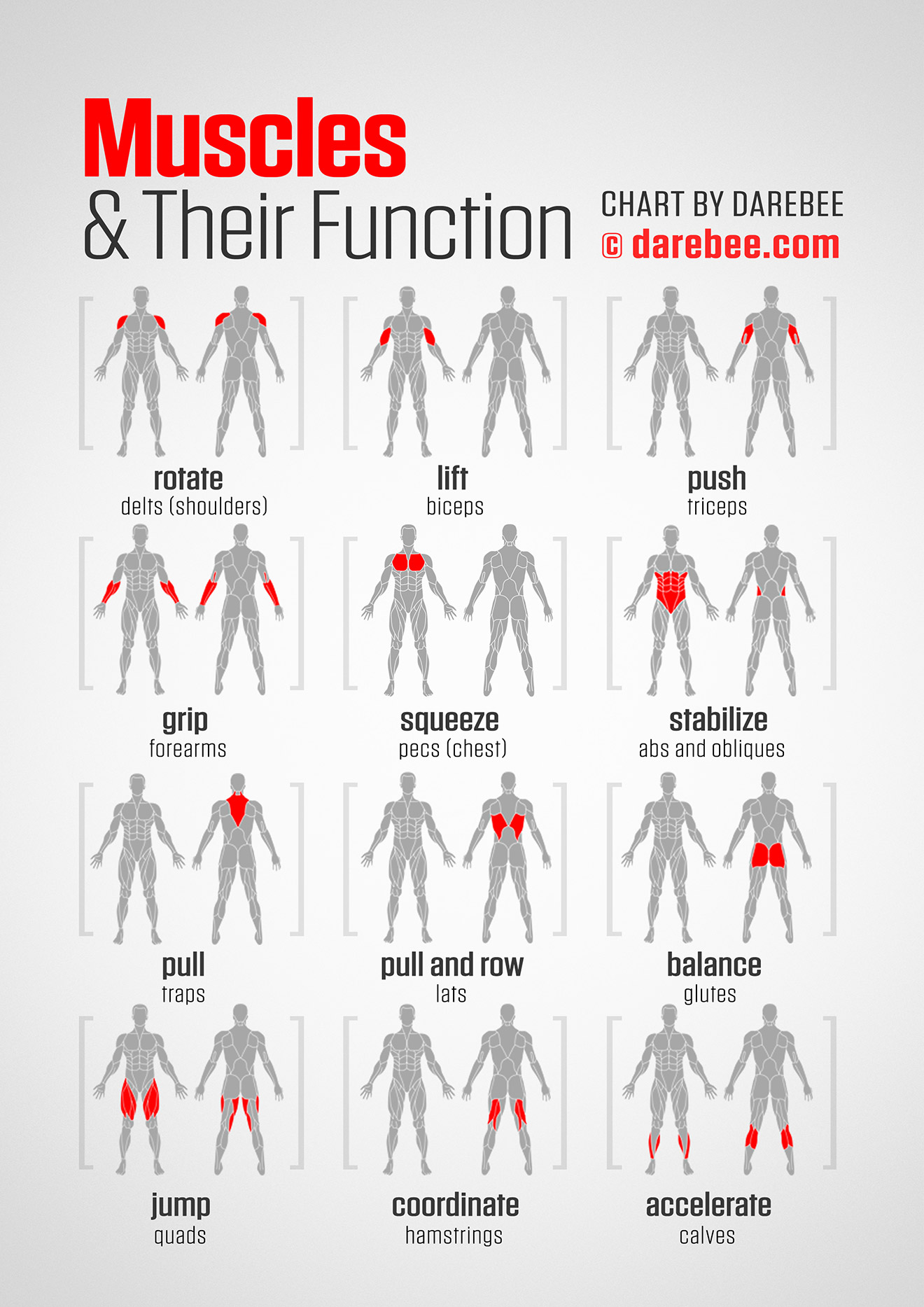
How badminton engages the whole body
Badminton is a fast, multi-directional sport. It mixes sprinting, lunging, jumping, and twisting. These actions force many muscle groups to work together for power and balance.
On every point you push off, rotate, and swing. That combination trains both slow and fast muscle fibers. Understanding what muscles does badminton work? helps you design better practice and conditioning.
Primary muscles worked
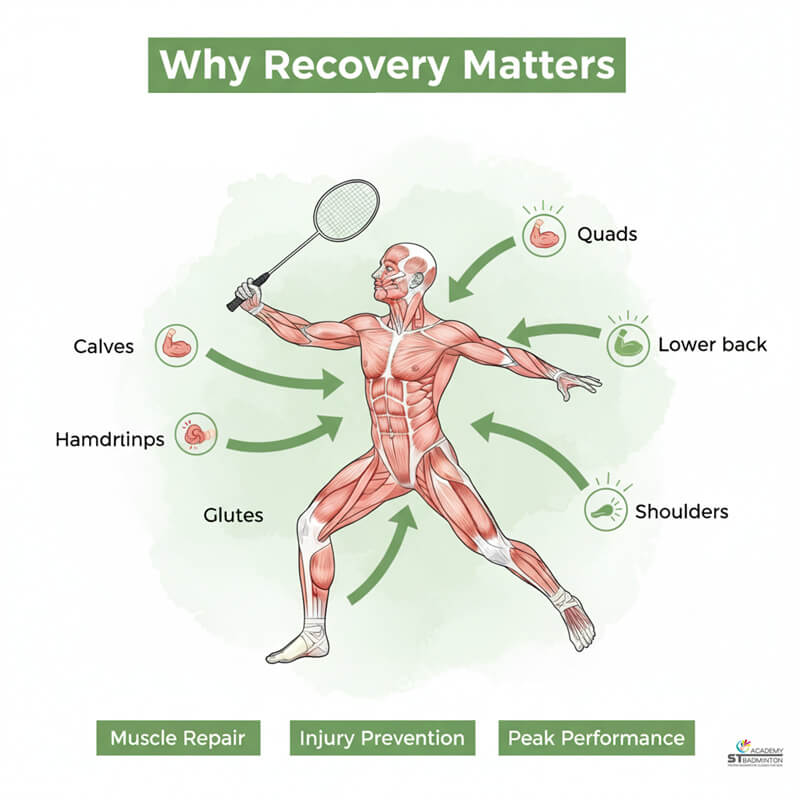
Below are the main muscle groups that badminton trains. Each group is followed by why it matters and common movements that use it.
Legs: quads, hamstrings, glutes, calves
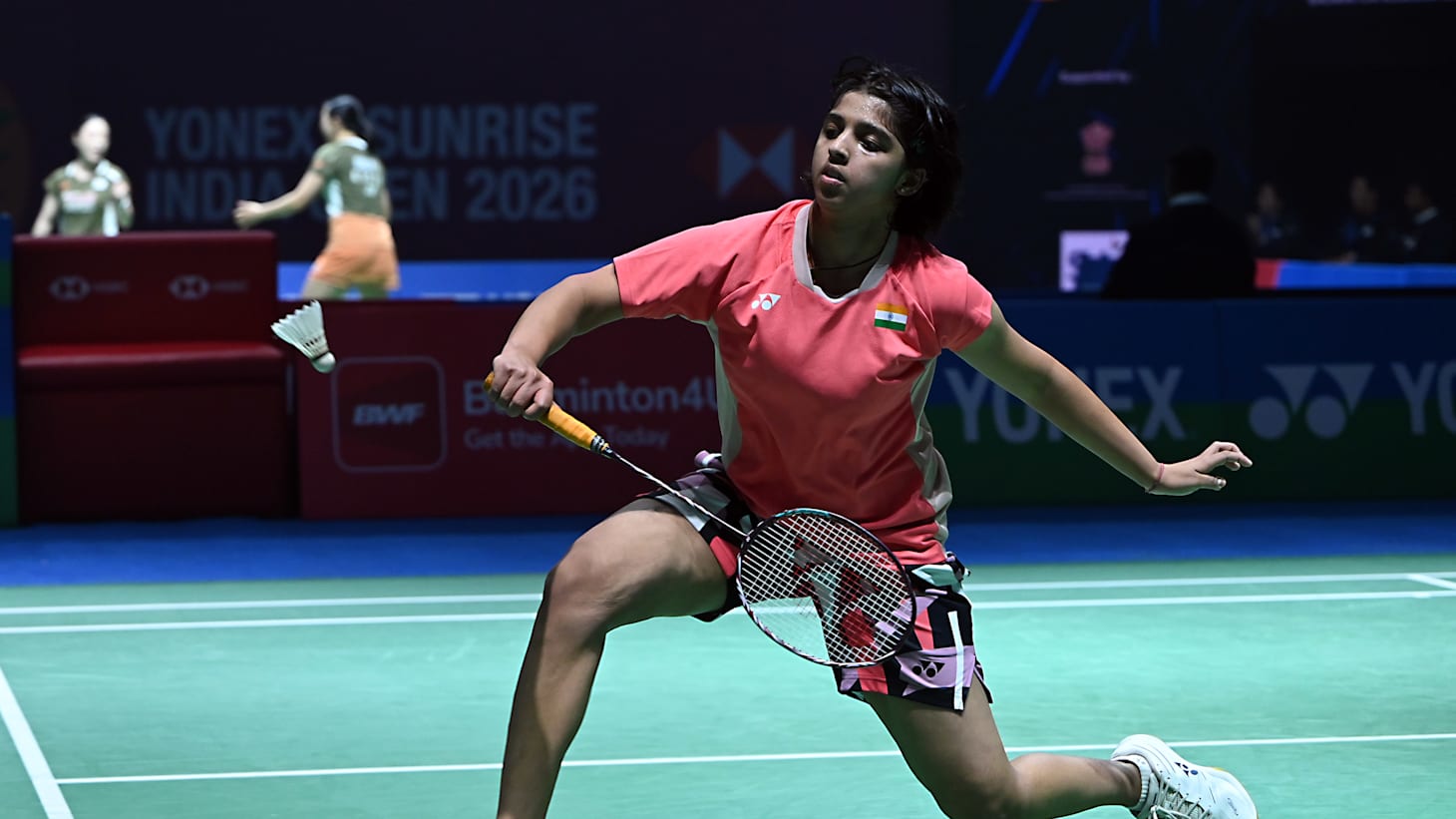
Legs provide push-off, quick court coverage, and stable landings. Lunges and sprint starts use quads and glutes. Quick shuffles and toe pushes use calves. Strong legs improve reach and reduce fatigue.
Core: rectus abdominis, obliques, lower back
The core stabilizes your body during lunges and powerful shots. Twists for smashes recruit obliques. A stiff core lets you transfer force from the legs to the racket for better shots.
Shoulders and upper back: deltoids, trapezius, rhomboids, lats
Overhead clears, net shots, and smashes use shoulder and upper back muscles. The deltoids power the swing, while lats and rhomboids stabilize the shoulder blade. Proper shoulder strength helps prevent injury.
Arms and forearms: biceps, triceps, wrist flexors/extensors
Arm muscles generate racket speed and control. Triceps drive the arm on smashes. Forearms and wrist muscles control racket angle and spin, important for precision and deception.
Hip flexors and adductors/abductors
Side steps, lunges, and recovery steps engage hip flexors and the inner/outer thigh muscles. These muscles control foot placement and balance during quick direction changes.
Calves and ankle stabilizers
Frequent jumps and quick direction changes tax the calves and small ankle muscles. Strong stabilizers reduce sprain risk and improve quick pushes.
What muscles does badminton work? All of these, in a coordinated way that favors explosive strength, endurance, and balance.
Movement patterns and muscle recruitment
Knowing movements helps you see why muscles are used. Here are common patterns and the muscles they recruit.
-
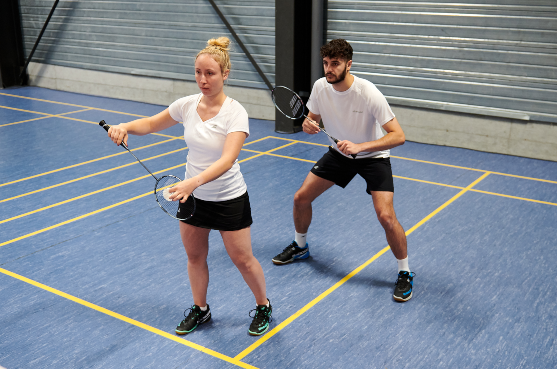
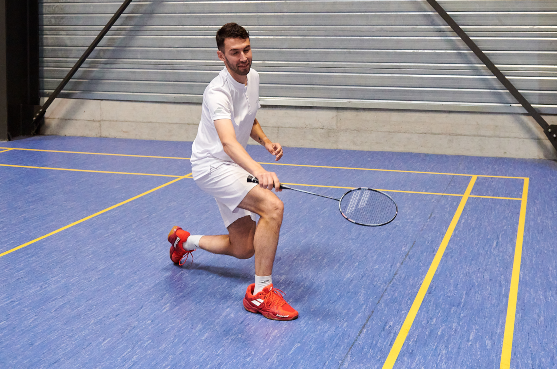
Lunge and recover
- Works quads, glutes, hamstrings, hip stabilizers, and core.
- Eccentric control in landing builds muscle resilience.
-
Overhead smash
- Uses deltoids, triceps, lats, upper back, and core rotation.
- Fast shoulder and core coordination create racket speed.
-
Clear and drive
- Uses legs for push-off, shoulders and back for power, and wrists for control.
-
Quick shuffle and split-step
- Engages calves, hip abductors, and ankle stabilizers for rapid direction change.
-
Jump smash
- Adds explosive power from glutes, quads, calves, and core to the overhead swing.
These patterns answer what muscles does badminton work? by linking actions to the actual muscle groups used.

Benefits for strength, power, and endurance
Badminton builds several physical qualities at once. That mix makes it efficient for overall fitness.
-
Improved lower-body power
- Repeated lunges and jumps increase explosive strength in legs.
-
Better core stability
- Twisting and reaching while balanced strengthens the core for daily tasks.
-
Enhanced shoulder endurance and control
- High repetition of swings improves muscular endurance in the upper body.
-
Cardio and anaerobic fitness
- Short bursts between rests boost both aerobic and anaerobic systems.
-
Balance and proprioception
- Quick changes of direction train small stabilizer muscles and coordination.
These benefits show why players ask what muscles does badminton work? — because the sport is both dynamic and functional.
Sample drills and exercises to target those muscles
To get the most from badminton, combine on-court drills with off-court strength work. Below are practical options.
-
On-court drills
- Multi-directional shadow drills: simulate rallies, focus on footwork and core stability.
- Jump-and-smash practice: do 10 reps, focus on explosive hip and calf drive.
- Net recovery drills: short lunges and quick backswing repetitions.
-
Strength exercises
- Squats or split squats: build quads and glutes.
- Romanian deadlifts: train hamstrings and lower back.
- Planks and side planks: strengthen core and obliques.
- Pull-aparts or rows: reinforce upper back to protect shoulders.
- Wrist curls and reverse curls: improve forearm strength and control.
-
Mobility and flexibility
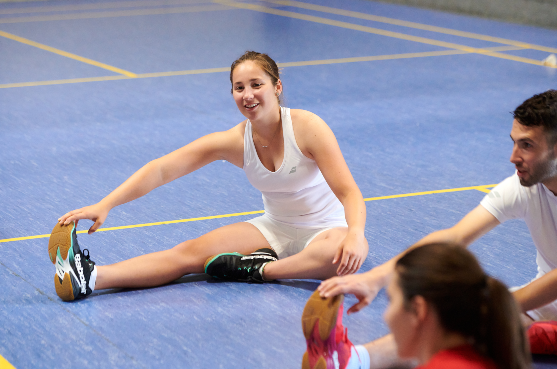
- Hip flexor stretches and calf stretches reduce tightness.
- Shoulder mobility drills maintain safe range for overhead strokes.
Pairing these drills with technical practice answers what muscles does badminton work? while helping you prevent injury and improve performance.

Common mistakes and injury prevention
Players often overuse certain muscles or neglect proper mechanics. Address these common issues to stay healthy.
-
Relying too much on the wrist for power
- This strains forearms and can cause tendinitis. Focus on legs and core for power, using the wrist for control only.
-
Weak hips and unstable knees
- Poor hip strength shifts load to knees. Strengthen hip abductors and glutes to protect joints.
-
Poor shoulder mechanics
- Overhead strokes with bad form can injure the rotator cuff. Use proper technique and balanced upper back work.
-
Skipping mobility work
- Tight muscles limit movement and raise injury risk. Add regular stretching and foam rolling.
Understanding what muscles does badminton work? helps you spot which areas to train and which to protect. Always warm up and progress gradually.
How often to train and progressions
Frequency depends on goals. For general fitness, moderate practice works well. For performance, structure matters.
-
- Practice 2–3 times per week. Add two strength sessions focusing on legs and core.
-
Intermediate players
- Train 3–5 times per week with one or two targeted strength sessions per week.
-
Advanced players
- Play 5–6 times weekly with periodized strength and recovery. Emphasize explosive lifts and mobility.
Progress gradually in volume and intensity. Track which muscles feel weak or tired; that tells you what to target. This helps you understand what muscles does badminton work? and how to build them effectively.
Personal experience and practical tips
From years coaching and playing, I learned what works and what to avoid. Here are lessons from the court.
-
Focus on feet first
- Quick steps and a good split-step make shots easier. I shifted focus to footwork early and noticed faster court coverage and fewer shoulder loads.
-
Use leg drive for power
- Too many players swing from the shoulder. When I trained leg drive, smashes gained power with less shoulder fatigue.
-
Balance training mattered most
- Single-leg stability exercises cut down recovery time between shots. I include one-leg RDLs in my warm-up.
-
Listen to pain
- Persistent forearm or shoulder pain needs rest and rehab. Early treatment prevented long layoffs for me and my students.
These tips come from real practice and show how understanding what muscles does badminton work? turns into better training decisions.
Frequently Asked Questions of What muscles does badminton work?
What muscles are most used in a badminton smash?
A smash primarily uses the deltoids, triceps, lats, upper back, and core rotation. Leg drive from glutes and quads also adds power for a stronger smash.
Does badminton build leg muscles?
Yes. Repeated lunges, jumps, and sprinting strengthen quads, hamstrings, glutes, and calves. The sport favors explosive strength over slow hypertrophy.
Will badminton improve core strength?
Badminton improves core strength through constant rotation and stabilization during shots and recovery. Planks and rotational drills amplify this benefit.
How does badminton affect forearm and wrist muscles?
Forearm and wrist muscles get frequent work for racket control and spin. Regular play and targeted wrist exercises improve endurance and precision.
Can badminton help with balance and ankle stability?
Yes. Quick directional changes and split-steps train ankle stabilizers and proprioception. This reduces sprain risk and improves on-court agility.
Is shoulder conditioning important for badminton players?
Shoulder conditioning is vital to sustain overhead strokes and prevent injury. Balanced upper back work and rotator cuff exercises are essential for longevity.
Conclusion
Badminton trains the whole body. What muscles does badminton work? Legs, core, shoulders, back, arms, forearms, hips, and stabilizers all play key roles. The sport builds power, endurance, balance, and coordination when paired with smart strength and mobility work. Start by focusing on footwork, core stability, and balanced shoulder training. Try the drills and strength exercises above, monitor your recovery, and adjust practice as you improve. If this guide helped, leave a comment, subscribe for more tips, or share your own experience on which muscles badminton worked best for you.

