

Tennis uses points, games, and sets: 15-30-40 scoring, deuce, advantage, tie-breaks decide sets.
I’ve played and coached tennis for years, so I know how confusing the system can seem at first. This guide breaks down how does tennis scoring work in plain language. You’ll get clear definitions, step-by-step examples, common rules, and practical tips you can use on court today. Read on to master tennis scoring and feel confident calling points and keeping score.

36% off Today’s Exclusive Deals
Limited-time Exclusive Deals. Check current discount on Amazon.
Check Price on Amazon As an Amazon Associate I earn from qualifying purchases.
Basics of tennis scoring
Tennis scoring moves from points to games to sets to match. A player needs points to win a game. Games add up to win a set. Sets decide the match. Knowing this chain makes it easy to answer "How does tennis scoring work" in any situation.
Key terms to remember:
- Point: the smallest unit.
- Game: first to win enough points (with margin).
- Set: first to a number of games (with margin or tie-break).
- Match: best of a set number, usually best-of-3 or best-of-5.

Points in a game
Tennis uses the classic 0, 15, 30, 40 point labels rather than simple counts. Here is how a single game usually plays out:
- 0 points is called "love".
- First point won becomes 15.
- Second point becomes 30.
- Third point becomes 40.
- Fourth point wins the game if the opponent has less than 40.
If both players reach 40-40, that score is called deuce. From deuce:
- The next point gives "advantage" to the winner.
- If that same player wins the next point, they win the game.
- If they lose it, score returns to deuce.
When trying to understand how does tennis scoring work at the point level, think of deuce as a mini-reset until one player wins two points in a row from deuce.
Quick PAA-style questions
How does tennis scoring work at deuce?
From deuce, a player must win two straight points. The first gives advantage, the second secures the game.
How does tennis scoring work for a single game?
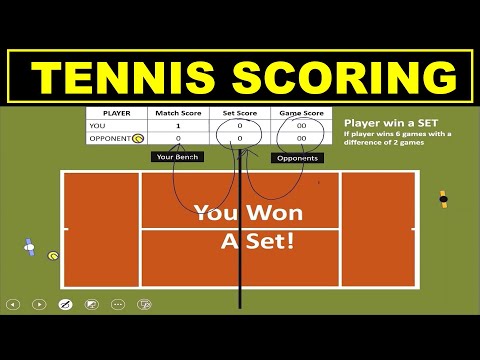
A standard game goes 0, 15, 30, 40, then game. If tied at 40-40, play continues until one player gains a two-point lead.

Games, sets, and matches
A typical match is structured like this:
- Win games to win a set.
- Commonly, a set is first to 6 games with a two-game lead.
- If the set reaches 6-6, a tie-break usually decides the set.
Match formats:
- Best-of-3 sets: winner is first to 2 sets.
- Best-of-5 sets: winner is first to 3 sets. This is common in some men’s tournament finals.
When asking how does tennis scoring work across a match, remember that each layer (points → games → sets) must be won with required margins or tie-break rules applied.
Tie-breakers and special rules
Tie-breaks end 6-6 sets in most events. Standard tie-break rules:
- Players alternate serves and switch ends.
- First to 7 points with a two-point lead wins the tie-break and the set (7–6).
- If score reaches 6-6 in the tie-break, play continues until a two-point margin is reached.
Other formats you may see:
- 10-point match tie-break: often used instead of a final set in doubles or some events. First to 10 points with two-point lead wins.
- Advantage set: no tie-break; play continues until one player leads by two games (seen at some Grand Slam final sets).
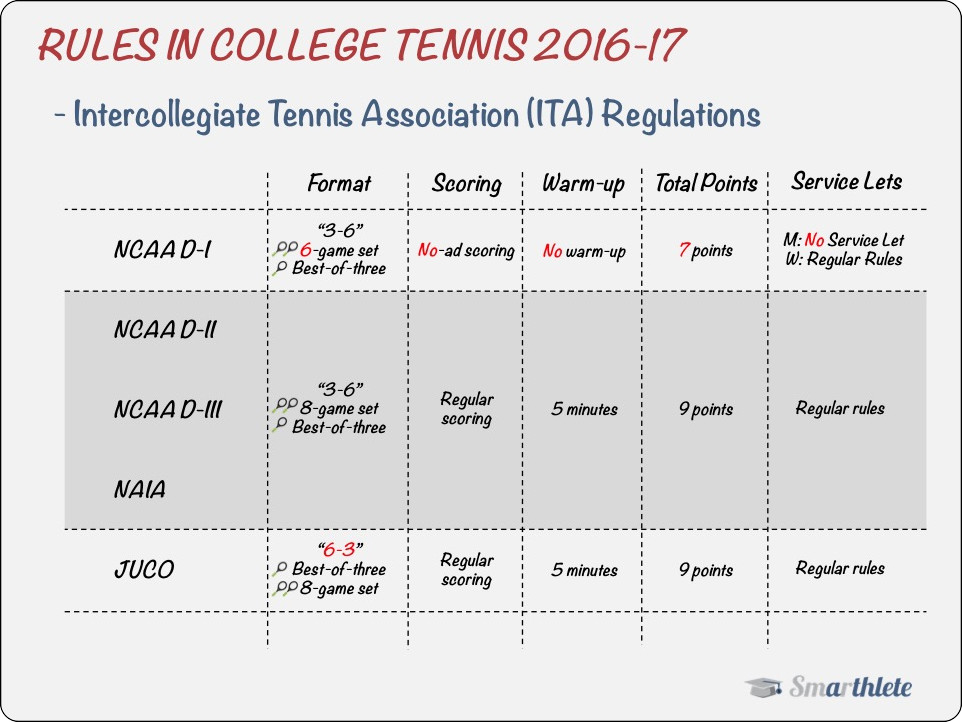
- No-ad scoring: at deuce, next point wins the game instead of advantage. Used in some leagues to speed play.
If you wonder how does tennis scoring work in tie-breaks, the short answer is: points count numerically (1, 2, 3…) and the first player to the target with a two-point lead wins.
Serving, rotation, and scoring in doubles
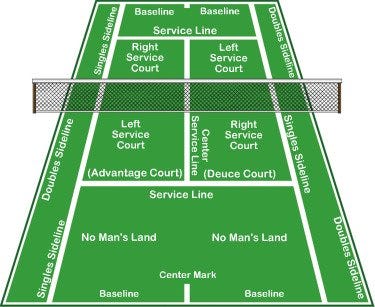
Who serves and where matters for scoring and order. Singles:
- Server alternates each game.
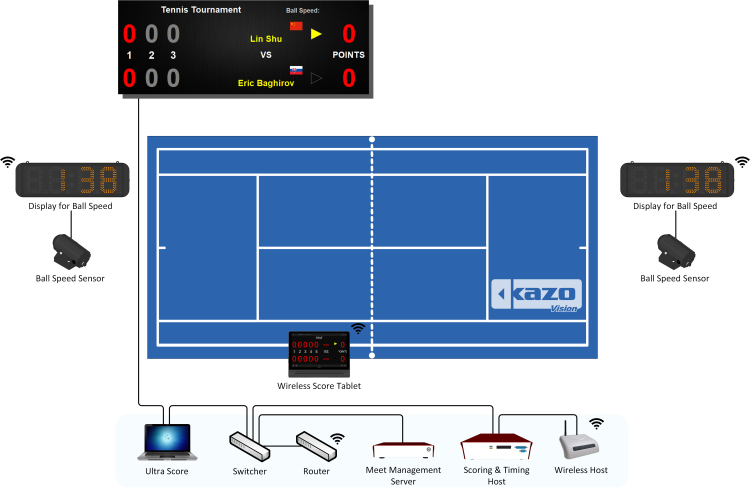
- The server announces the score before each point (server’s score first).
Doubles has a clear rotation:
- Team A serves game 1, Team B serves game 2, and so on.
- Within a team, partners alternate serving the team’s service games.
- The receiving positions rotate so each player receives on alternate points and games.
When learning how does tennis scoring work in doubles, focus on service order and clear score calls. It avoids confusion and helps players track who serves next.

Common mistakes, tips, and personal experience
From my coaching days I saw the same issues often. New players mix up the order of 15, 30, 40. Others forget to call the score before serving. Here are tips I use and teach:
- Always call the score loudly, server’s score first. It reduces disputes.
- Use simple shorthand on a scoreboard: 0, 15, 30, 40, A.
- Practice tie-break scoring in drills. Tie-breaks feel fast; practice helps you keep calm.
A practical lesson I learned: in club matches, a clear score call at each change of serve prevented arguments and sped up play. Also, practicing no-ad games helps you handle pressure points better.
Frequently Asked Questions of How does tennis scoring work?
What does "love" mean in tennis scoring?
Love means zero points. It likely comes from an old phrase meaning "for the love of the game." It simply indicates a player has not scored in that game.
How many points to win a game in tennis?
Normally you need four points and a two-point margin. Points are called 15, 30, 40, then game, with deuce and advantage used when tied.
What is a tie-break and how does it affect the set?
A tie-break decides a set tied at 6-6. Players play to 7 points with a two-point lead; the winner takes the set 7–6.
How does scoring work in no-ad games?
At deuce, the next point wins the game. There is no advantage phase. This speeds up matches and is common in some formats.
How many sets to win a match?
Most matches are best-of-3 sets. Major men’s matches at some tournaments are best-of-5. The match ends when one player reaches the required sets.
Can a set be won 6-5?
No. A player must win 6 games with a two-game lead. If the score is 6-5, play continues. If the trailing player wins the next game the set goes to 6-6 and often a tie-break.
Conclusion
Understanding how does tennis scoring work starts with points, moves to games, then sets, and finishes with the match. Learn the 15-30-40 system, deuce and advantage, tie-break rules, and serve order. Practice calling the score and run tie-break drills to build confidence. Try these tips in your next match, and leave a comment about what part of tennis scoring you want to master next.

