

Water trampolines can be safe when properly chosen, anchored, inspected, and supervised.
I’ve spent seasons testing lake gear and helping families set up summer fun. This guide explains how water trampolines work, the real risks, and clear steps to stay safe. I’ll share hands-on tips, common mistakes I’ve seen, and safety checks you can do in minutes. Read on to learn when a water trampoline is a good idea and how to cut risk before you jump.

36% off Today’s Exclusive Deals
Limited-time Exclusive Deals. Check current discount on Amazon.
Check Price on Amazon As an Amazon Associate I earn from qualifying purchases.
How water trampolines work and what they are
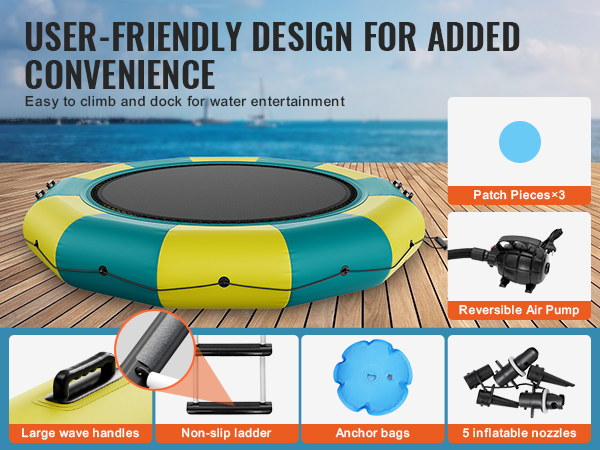
A water trampoline is an inflatable platform that floats on water and has a bounce surface. Most models use heavy-duty PVC or TPU and multiple air chambers. They rely on buoyancy, air pressure, and anchors to stay stable.
Key parts
- Inflatable frame that sits on the water.
- Bounce mat attached to the ring or interior.
- Anchor points and ropes to keep it in place.
- Repair patches and valves for maintenance.
Why people choose them
- They add play and exercise on lakes or calm bays.
- They are portable versus fixed docks.
- Many families use them for summer fun and small gatherings.

Main safety concerns with water trampolines
Water trampolines are fun, but they bring hazards. Knowing the common risks helps you plan.
Drowning and near-drowning
- Users can fall off the trampoline into deep water.
- Panic, exhaustion, or injury can lead to drowning if no supervision is present.
Impact injuries
- Collisions between jumpers cause head, neck, or limb injuries.
- Hard landings on edges or deflated sections raise risk.
Entrapment and pinch hazards
- Gaps between the bounce mat and inflatable ring can trap feet or hands.
- Deflated seams or torn fabric increase that danger.
Anchor failure and drift
- Poor anchoring can let the trampoline drift into shallow water, rocks, or boat traffic.
- Sudden storms or currents can stress anchors.
Weather and environmental hazards
- Wind, waves, and lightning make use unsafe.
- Cold water shock or underwater obstacles add hidden risks.
Equipment failures
- Low-quality materials or improper inflation lead to failures.
- Worn valves, seams, and ropes are common weak points.
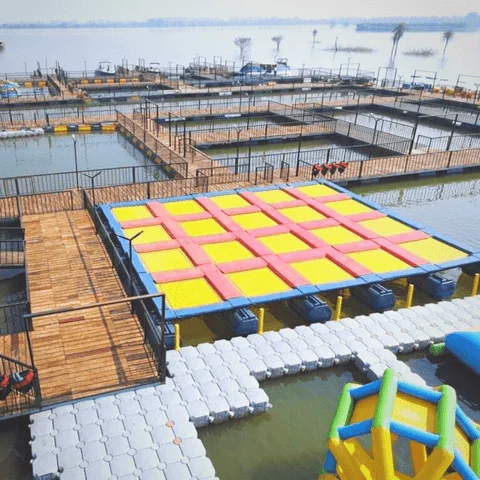
How to make water trampolines safe: setup, rules, and checks
Safety starts before you let anyone jump. Follow these steps.
Before you buy
- Choose a reputable brand with clear weight limits and warranty.
- Look for multiple independent air chambers and thick fabric.
Site selection
- Pick a deep area with no submerged rocks, logs, or boat channels.
- Avoid strong currents, boat traffic, and narrow coves.
Anchoring and flotation
- Use a multi-point anchor system rated for the size of your trampoline.
- Check anchors after launch and after heavy use.
Inflation and inspection
- Inflate to the manufacturer’s recommended pressure every time.
- Inspect seams, valves, and repair kits before each season.
Rules and supervision
- Always use with adult supervision and a safety watcher.
- Limit the number of jumpers based on the manufacturer’s recommendation.
- Enforce no diving, no flips unless trained, and no rough play.
Safety gear and training
- Keep life jackets available, and require them for weak swimmers and kids.
- Learn basic water rescue and CPR if you host many users.
Maintenance
- Rinse fresh water off salt or grime, dry before storage, and patch small tears promptly.
- Replace ropes and anchor lines every season or earlier if worn.
Quick clarifications
– Can you use a water trampoline in a pool? Small models may fit pools, but most are designed for open water and need anchoring. Pool use changes buoyancy and can stress liners.
- Do life jackets prevent all injuries? Life jackets lower drowning risk but do not stop impact injuries or collisions.
- How often should anchors be checked? Check anchors before each use and after storms. Replace worn hardware immediately.

Risks by age, capacity, and behavior
Risk varies by user and use patterns. Match gear to people.
Young children
- Kids tire fast and can panic. Require life jackets and close sight.
- Consider a net or barrier to slow falls into deep water.
Teenagers and adults
- Teen rough play is a leading cause of injuries. Set clear rules.
- Alcohol increases risk dramatically. Never mix drinking and trampolining.
Weight limits and crowding
- Exceeding weight limits changes bounce dynamics and stresses seams.
- Fewer jumpers reduce collision risk.
Night use and visibility
- Avoid after dark. Low visibility makes rescue harder and increases collision risk.
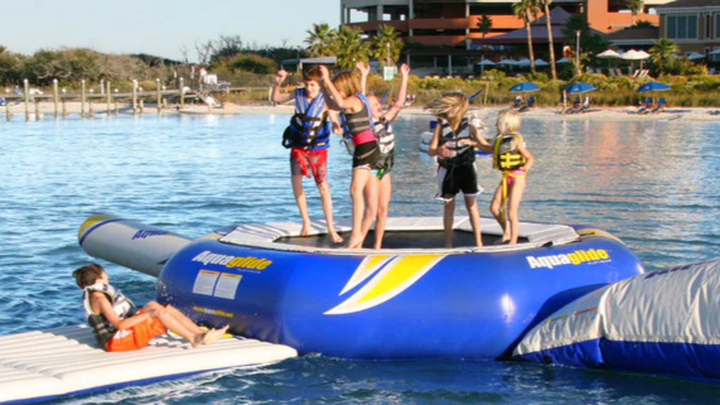
Benefits and limitations of water trampolines
They add big fun but come with trade-offs.
Benefits
- Great exercise and social play.
- Portable and storable in off-season.
- Good for calm water bodies.
Limitations
- Not for rough waters or crowded lakes.
- Require storage and seasonal maintenance.
- Can be costly and need anchors and accessories.
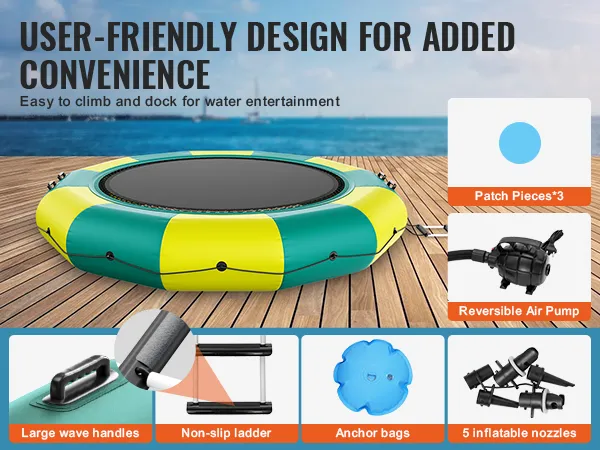
My hands-on experience: lessons, mistakes, and practical tips
I’ve set up and tested several water trampolines at lakes and private docks. Here are practical lessons I learned.
Lessons learned
- Double-check anchors. One drifted unit taught me to add a third anchor.
- Inflate often. Low pressure made the mat sag and caused awkward landings.
- Teach simple rules. Clear limits prevented most fights and risky flips.
Common mistakes
- Buying the cheapest model without spare parts.
- Tying anchors to unstable shore items like trees or loose posts.
- Letting many jumpers crowd the mat at once.
Practical tips
- Mark a safe swim zone around the trampoline with buoys.
- Keep a throw rope and a boat hook nearby.
- Store the trampoline dry and out of sun to extend life.
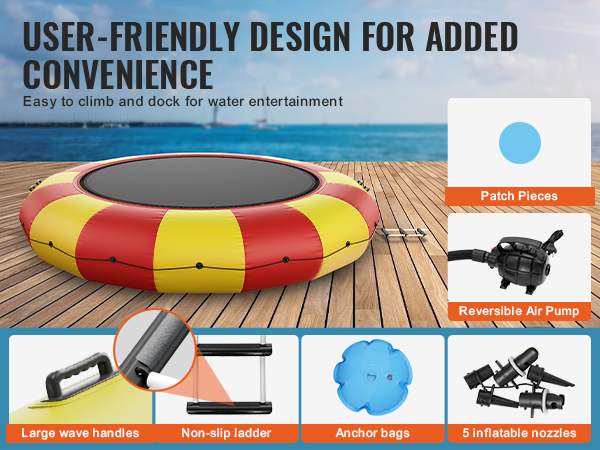
Safety equipment checklist before each use
Use this quick checklist every session.
- Life jackets for non-swimmers and kids.
- Multi-point anchors and spare rope.
- Repair kit and pump.
- Throw rope, first aid kit, and rescue hook.
- Phone in a waterproof case and a designated safety watcher.

Regulations, insurance, and liability considerations
Check rules before installing.
- Local rules may restrict floating toys in public lakes or reservoirs.
- Homeowner insurance may have exclusions for water toys. Ask your insurer.
- Written rules and posted signage help if liability is questioned.
Frequently Asked Questions of Are water trampolines safe?
Are water trampolines safe for children?
Water trampolines can be safe for children with constant adult supervision and life jackets for weak swimmers. Choose a model sized for kids and limit the number of users.
Do I need anchors for a water trampoline?
Yes, anchors are essential to prevent drift and collisions with boats or shore. Use a multi-point, properly rated anchor system.
Can you use a water trampoline in the ocean?
It is not recommended in ocean waters with waves, currents, or boat traffic. Calm bays might be safe with extra anchoring and caution.
How often should I inspect a water trampoline?
Inspect seams, valves, ropes, and anchors before each use and do a full check at the start and end of the season. Replace worn parts promptly.
Are life jackets required on a water trampoline?
Life jackets are highly recommended for children, weak swimmers, and in deeper water. They reduce drowning risk but do not prevent impact injuries.
What is the typical lifespan of a water trampoline?
Lifespan varies by material, care, and use; many last 3–7 years with good care. UV exposure and rough use shorten life.
Can multiple people jump at once?
Only if the manufacturer allows it. Too many jumpers increase collision risk and strain the unit.
Conclusion
Water trampolines offer big summer fun when used smartly. Pick a quality model, anchor it well, inspect it often, and keep clear rules and supervision. My own mishaps taught me that small checks and limits cut most risk. If you commit to safe setup and good habits, a water trampoline can be a great backyard or lake addition.
Try these steps this season: choose a trusted model, set anchor and rules, and teach safe habits to all users. If you found this guide useful, leave a comment, share your experience, or subscribe for more gear and safety tips.

