

Storing a boat with a wakeboard tower is a challenge many boat owners face. Wakeboard towers make boating more fun and versatile, but their height and shape create unique storage issues. If you store your boat incorrectly, you risk damage to the tower, the boat, or even your garage.
Many boat owners worry about fitting their boat in standard spaces or protecting expensive gear attached to the tower. Understanding the right storage methods will help you keep your boat safe, reduce maintenance costs, and make your next launch easier.

36% off Today’s Exclusive Deals
Limited-time Exclusive Deals. Check current discount on Amazon.
Check Price on Amazon As an Amazon Associate I earn from qualifying purchases.This guide gives practical advice and expert tips on storing boats with wakeboard towers. You’ll learn about indoor and outdoor storage, tower folding techniques, trailer adjustments, and ways to protect your gear. Whether you are new to wakeboarding or a seasoned boater, this article will help you avoid common mistakes and keep your boat in top shape.
Understanding Wakeboard Towers And Storage Challenges
Wakeboard towers are strong metal frames attached to boats, usually made from aluminum or stainless steel. They allow you to mount speakers, lights, racks, and tow lines for wakeboarding. Their height, typically between 6 and 8 feet above the deck, makes it difficult to fit boats in standard garages or storage units.
Many towers are fixed (non-folding), while others are foldable. Folding towers can collapse to lower heights, but require careful handling. Some towers have attached accessories, making them bulkier and more fragile.
Key storage challenges:
- Height restrictions: Most garages and storage facilities have ceilings between 7–10 feet. Boats with towers often exceed these heights.
- Width and length: Wakeboard boats are wide and long, so finding suitable space is difficult.
- Accessories: Speakers, racks, lights, and boards attached to the tower add bulk and increase risk of damage.
- Trailer compatibility: Not all trailers are designed for boats with towers, complicating storage and transport.
It’s important to measure your boat’s full height (including the tower and accessories) before choosing a storage solution. Many owners forget to include the trailer height, leading to frustrating surprises.
Indoor Storage Options
Indoor storage is the best way to protect your boat and wakeboard tower from weather, theft, and vandalism. However, it requires careful planning.
Private Garage Storage
If you want to store your boat in your own garage, start by measuring the door height and ceiling clearance. Most residential garages have doors between 7–8 feet high. Many wakeboard boats with towers exceed this.
Solutions:
- Folding towers: If your tower folds, lower it before storing. This usually reduces height by 2–3 feet.
- Remove accessories: Take off racks, speakers, and lights to reduce height and prevent damage.
- Trailer adjustments: Lower the trailer tongue or use drop axles to decrease overall height.
Example: A 22-foot wakeboard boat with a folded tower may fit in an 8-foot garage, but only if the trailer tongue is lowered and accessories are removed.
Commercial Storage Facilities
Many boat owners use commercial storage facilities. These offer higher ceilings and specialized spaces.
Types of facilities:
- Dry stack storage: Boats are stored on racks, often stacked vertically. Wakeboard boats rarely fit unless towers are folded.
- Individual units: Like self-storage units, these offer privacy and security. Look for units with at least 10-foot ceilings.
- Warehouse storage: Large indoor spaces for multiple boats, often with staff to help move and store boats.
Advantages:
- Controlled climate reduces mold and corrosion.
- Security cameras and staff deter theft.
- Access to boat maintenance services.
Tip: Always ask about height limits, entry door size, and tower folding policies before renting space.
Indoor Marina Storage
Some marinas offer indoor storage, often in large sheds or hangars. These spaces are ideal for wakeboard boats, but availability is limited and prices are higher.
Benefits:
- Proximity to water makes launching easy.
- Professional staff can assist with tower folding and maintenance.
Non-obvious insight: Indoor marina storage often requires advance booking, especially in popular boating areas. Plan ahead to avoid disappointment.
Outdoor Storage Solutions
Outdoor storage is cheaper and more flexible, but exposes your boat to weather and security risks.
Driveway Or Backyard Storage
Many owners keep their boat at home, parked in the driveway or backyard. This is convenient but requires extra protection.
How to do it safely:
- Use a waterproof cover designed for wakeboard towers.
- Fold the tower if possible, or remove accessories.
- Place the boat on a level surface, using wheel chocks to prevent movement.
- Consider a portable shelter or canopy for added protection.
Common mistake: Using a standard boat cover that does not fit over the tower. This leaves parts exposed, increasing risk of water damage.
Outdoor Storage Facilities
Outdoor facilities offer parking spaces for boats and trailers. These are often gated and monitored, but less secure than indoor options.
Considerations:
- Check if the facility allows boats with towers. Some have strict height limits.
- Choose a spot away from trees and high-traffic areas to avoid accidental damage.
- Invest in a high-quality lock for the trailer and tower.
Marina Outdoor Storage
Some marinas offer outdoor storage on paved lots. Advantages include easy access to the water and onsite security.
Tip: Use a custom-fit cover that protects the tower and attached gear. Inspect your boat regularly, especially after storms.
Folding And Removing The Wakeboard Tower
Folding or removing the tower is the simplest way to reduce storage height. However, it requires the right tools and knowledge.
Folding Towers
Most modern wakeboard towers are designed to fold. Manufacturers use quick-release knobs, hinges, or pins to make the process easier.
Steps for folding:
- Remove accessories (racks, speakers, lights).
- Locate the folding points (usually near the base).
- Release the pins or knobs, and gently lower the tower.
- Secure the tower with straps or supports to prevent movement.
Safety tip: Never fold the tower alone. Always have someone help to avoid dropping or bending the tower.
Non-obvious insight: Check the wiring and cables before folding. Many towers have wires running through them for lights or speakers. Pulling the tower without disconnecting these can cause expensive damage.
Removing The Tower
If folding is not possible, consider removing the tower entirely. This is more time-consuming but gives maximum clearance.
How to remove:
- Disconnect all wiring and accessories.
- Remove mounting bolts using proper tools.
- Carefully lift the tower off and store it in a padded area.
Drawback: Removing the tower may require professional help, especially for large boats or towers with complex wiring.

Protecting Your Wakeboard Tower And Accessories
Wakeboard towers are expensive and vulnerable to damage during storage. Protecting them is essential.
Choosing The Right Cover
A custom-fit cover is the best way to protect your boat and tower. Look for covers made from marine-grade polyester or canvas. These resist UV, water, and mildew.
Features to look for:
- Extra height and width for towers and accessories.
- Reinforced seams and straps.
- Vents to prevent mold.
Example: A cover with mesh vents and padded corners will last longer and keep your tower safe.
Storing Accessories
Remove fragile accessories like speakers, lights, and racks before storage. Store them in a dry, padded box. This prevents rust and breakage.
Tip: Label wires and connectors for easy reinstallation.
Preventing Corrosion
Wakeboard towers are exposed to water and salt. Before storing, wash the tower with fresh water and dry thoroughly. Apply a protective wax or corrosion inhibitor to metal surfaces.
Common mistake: Storing the boat with wet gear or salt residue. This speeds up rust and damage.
Trailer Considerations For Boats With Wakeboard Towers
Your trailer affects how you store and transport your boat. Not all trailers are compatible with towers.
Trailer Height And Clearance
Some trailers sit higher than others, adding 1–2 feet to your boat’s overall height.
How to reduce height:
- Use a trailer with drop axles.
- Lower the trailer tongue (with a jack or block).
- Remove or fold the tower before loading.
Trailer Compatibility
Check if your trailer is designed for wakeboard boats. Look for wide bunks and strong support frames.
Tip: Install side guides to help align the boat during loading, especially with a bulky tower.
Comparing Trailer Types
Here’s a comparison of trailer types for wakeboard boats:
| Trailer Type | Height Added | Best For | Drawbacks |
|---|---|---|---|
| Standard bunk trailer | +1.5 feet | General use | May not fit low garages |
| Drop axle trailer | +1 foot | Low clearance storage | Less ground clearance |
| Custom wakeboard trailer | Varies | Wakeboard boats with towers | Higher cost |
Non-obvious insight: Some custom trailers allow the boat to sit lower by recessing the bunks, but this can make launching more difficult at shallow ramps.
Choosing The Right Storage Facility: Data And Costs
The cost and availability of storage options vary by location. Wakeboard boats are often larger and more expensive to store.
Average Storage Costs
According to industry data:
- Indoor storage: $200–$400 per month for wakeboard boats.
- Outdoor storage: $75–$200 per month.
- Marina storage: $300–$600 per month (indoor), $100–$250 per month (outdoor).
Prices depend on size, location, and amenities.
Facility Features Comparison
Compare storage facility features:
| Feature | Indoor Facility | Outdoor Facility | Marina Storage |
|---|---|---|---|
| Climate control | Yes | No | Sometimes |
| Security cameras | Yes | Often | Yes |
| Height limit | 10-12 ft | Varies | Varies |
| Maintenance services | Available | Rare | Available |
| Proximity to water | No | No | Yes |
Tip: Always ask for the facility’s exact height limit and policies regarding wakeboard towers before booking.
Preparing Your Boat For Storage
Proper preparation prevents damage and makes launching easier next season.
Cleaning And Drying
Wash your boat thoroughly, including the tower and accessories. Dry all surfaces to prevent mold.
Removing Gear
Take off all wakeboards, skis, ropes, and fragile gear. Store them separately in a dry place.
Battery And Fuel
Disconnect the battery and fill the fuel tank with stabilizer. This prevents corrosion and engine problems.
Lubrication
Lubricate moving parts on the tower, hinges, and trailer. This reduces rust and makes folding easier next time.
Documentation
Keep a record of your boat’s height, width, and tower configuration. This helps when booking storage or planning upgrades.
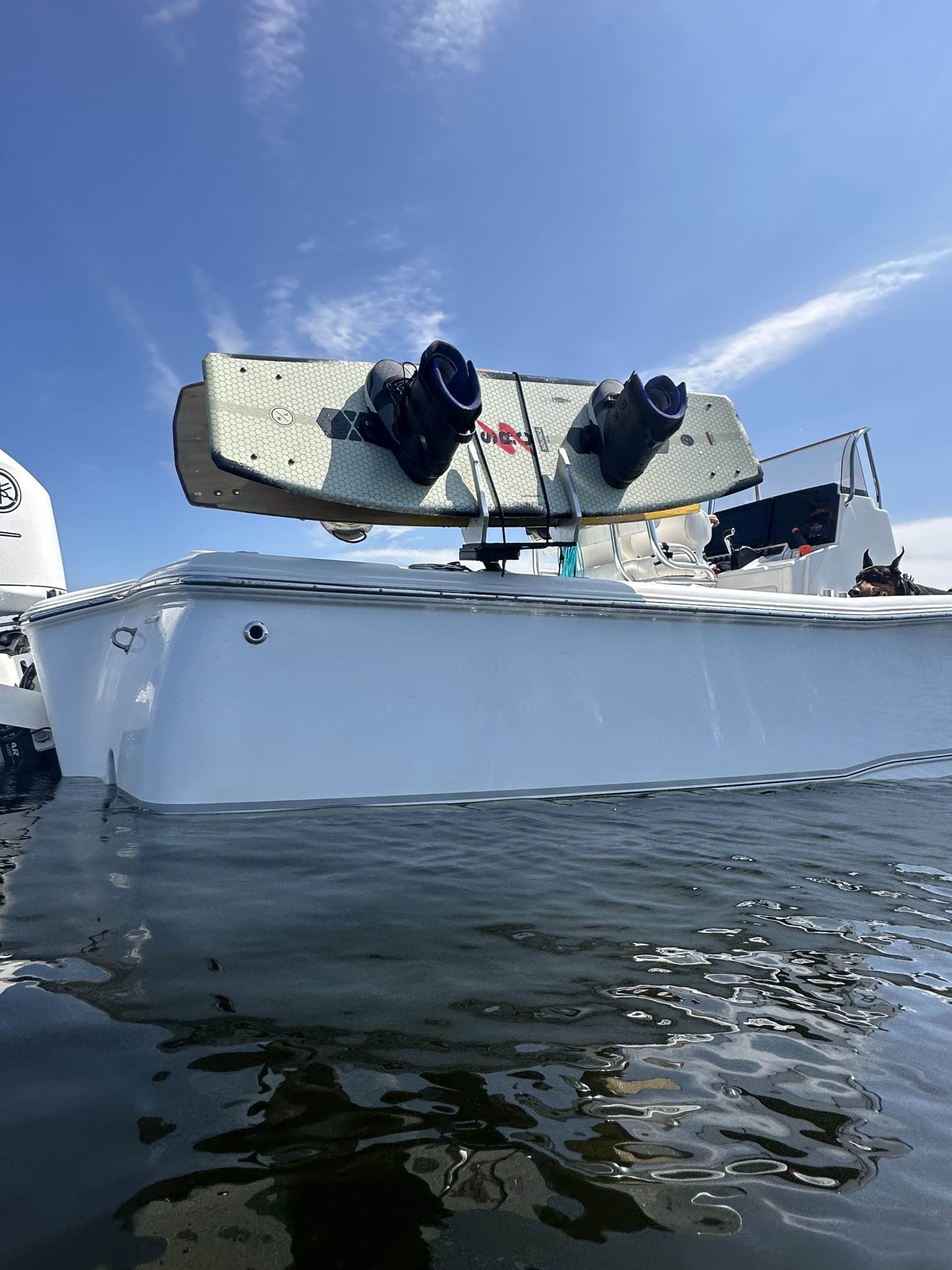
Common Mistakes To Avoid
Many boat owners make errors that lead to costly repairs.
- Ignoring tower height: Not measuring full height leads to storage problems.
- Leaving accessories attached: Fragile gear gets damaged or stolen.
- Using the wrong cover: Standard covers leave towers exposed.
- Not folding the tower: Missing this step can increase storage costs.
- Skipping cleaning: Salt and moisture cause rust and mold.
- Forgetting trailer adjustments: Trailer height can ruin storage plans.
- Storing in humid areas: Moisture damages electronics and upholstery.
- Not checking wiring: Damaged wires from folding towers lead to expensive fixes.
Non-obvious insight: Always check insurance policies. Some insurers require specific storage methods for wakeboard boats, especially with towers.
Examples From Real Boat Owners
Many boat owners share their experiences and solutions online.
Case study 1: Mark, from Texas, stores his wakeboard boat in a 9-foot garage. He folds the tower, removes all accessories, and uses a drop axle trailer. He also installed a custom cover with extra height. His tip: “Measure everything twice, and always dry your tower before storage.”
Case study 2: Susan, in Florida, uses marina indoor storage. She pays extra for climate control and professional staff to help fold the tower. She avoids salt damage by rinsing the tower after every use.
Case study 3: Alex, in California, stores his boat outdoors. He uses a heavy-duty canopy and a waterproof cover. He locks the trailer and tower, and checks after each storm.
Useful Resources
For more information and official guidance, visit the BoatUS storage guide. This site offers tips, facility locators, and maintenance advice for boat owners.
Frequently Asked Questions
How Can I Measure My Boat’s Height With A Wakeboard Tower?
Measure from the ground to the highest point on the tower, including any accessories and trailer height. Use a tape measure and double-check after folding the tower if possible.
Do I Need A Special Cover For My Boat With A Wakeboard Tower?
Yes, a custom-fit cover designed for boats with towers is best. Standard covers do not protect the tower or attached gear.
Can I Store My Boat Outdoors With The Tower Up?
You can, but it’s risky. Use a waterproof cover and remove fragile accessories. Outdoor storage exposes the tower to weather, increasing maintenance needs.
Is It Better To Fold Or Remove The Wakeboard Tower?
Folding is easier and faster, but only if your tower is designed for it. Removing gives more clearance but is more complex and may require professional help.
What Should I Check Before Booking A Storage Facility?
Ask about height limits, door size, security features, climate control, and tower policies. Measure your boat and trailer before booking to avoid problems.
Storing a boat with a wakeboard tower is more complex than standard boat storage. Planning ahead, measuring carefully, and protecting your gear will save money and headaches. Use the right cover, choose a suitable facility, and fold or remove the tower when possible.
With these tips, your boat and tower will stay safe and ready for next season.


