

Volleyball uses rally scoring: every rally awards a point; sets are usually to 25 (win by two).
I’ve played and coached volleyball for years, and I’ll walk you through exactly how volleyball scoring works. This guide explains rules, point examples, set structure, common variations, and practical tips you can use on the court. Read on to get clear, actionable answers that make the rules easy to remember and apply.

36% off Today’s Exclusive Deals
Limited-time Exclusive Deals. Check current discount on Amazon.
Check Price on Amazon As an Amazon Associate I earn from qualifying purchases.
Basic principles: rally scoring versus side-out
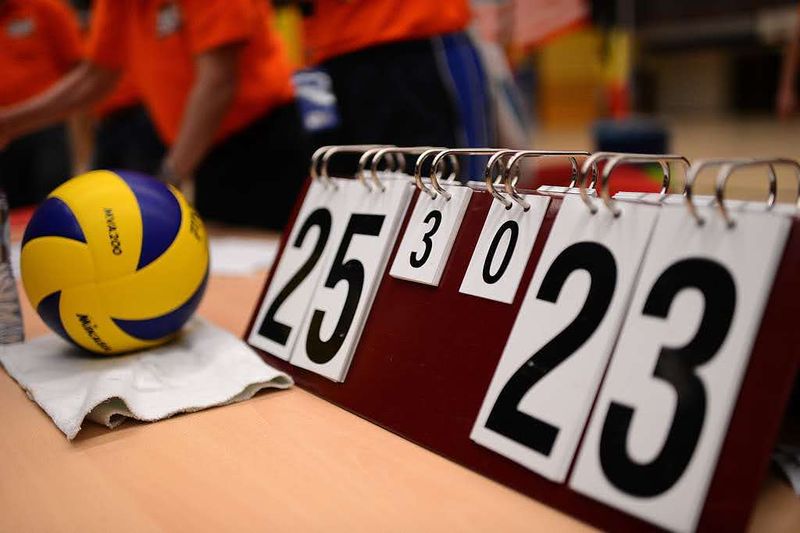
Rally scoring is the standard system today. Any team can score on every rally, whether serving or receiving. Most adult and competitive matches use rally scoring to 25 points per set. Teams must win a set by at least two points.
Older scores used side-out scoring. In that system, only the serving team could score. If the receiving team won the rally, they gained the serve but not a point. Side-out scoring is now rare in organized play. How does volleyball scoring work? At the base, rally scoring simplifies tracking and speeds up matches.

Sets, match format, and point targets
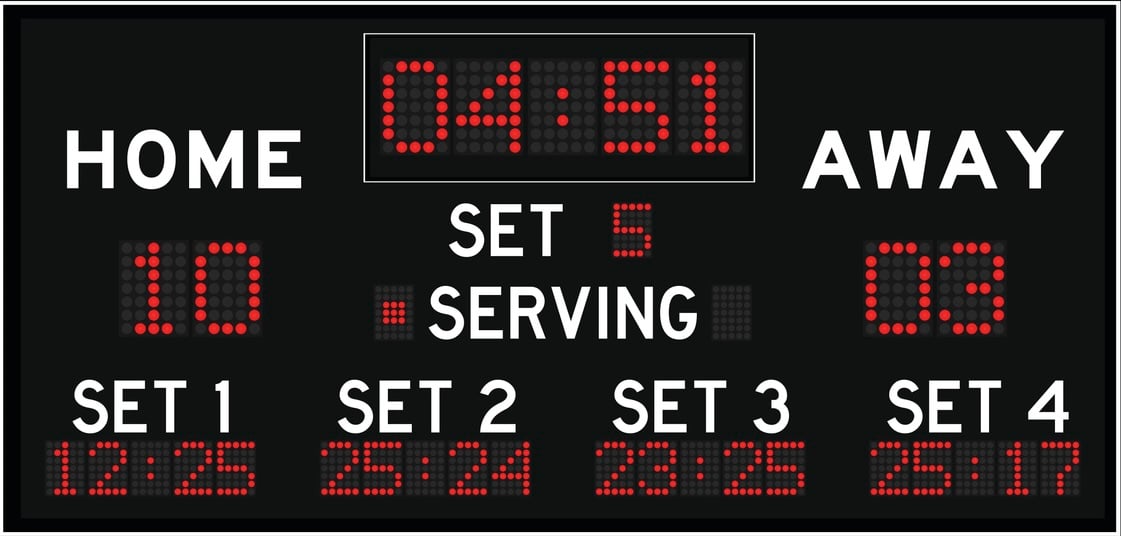
Competitive indoor matches are often best-of-five sets. The first four sets go to 25 points. If the match goes to a fifth set, that set usually goes to 15 points. Each set requires a two-point margin to win. Some leagues use point caps for long sets, but official play typically has no cap — play continues until a two-point lead occurs.
How does volleyball scoring work in match format? Remember these quick rules:
- Best-of-five match is standard for high-level play.
- Sets 1–4 go to 25 points; set 5 goes to 15 points.
- Win by two points; some recreational leagues may impose a cap.
How points are awarded: faults, errors, and skill plays
Points are awarded after each rally. The team that wins the rally gets the point. Common ways to win a rally include:
- Ball lands inside the opponent’s court.
- Opponent hits the ball out of bounds.
- Opponent commits a fault, such as double contact, net touch, or four hits.
- Serve ace or block that finishes the rally.
Player skill creates points too. Well-placed serves, effective blocks, and smart attacks win rallies. How does volleyball scoring work when referees intervene? The first and second referees determine faults and award the point. Their signals finalize the ruling for that rally.
Serving, rotation, and who gets the point
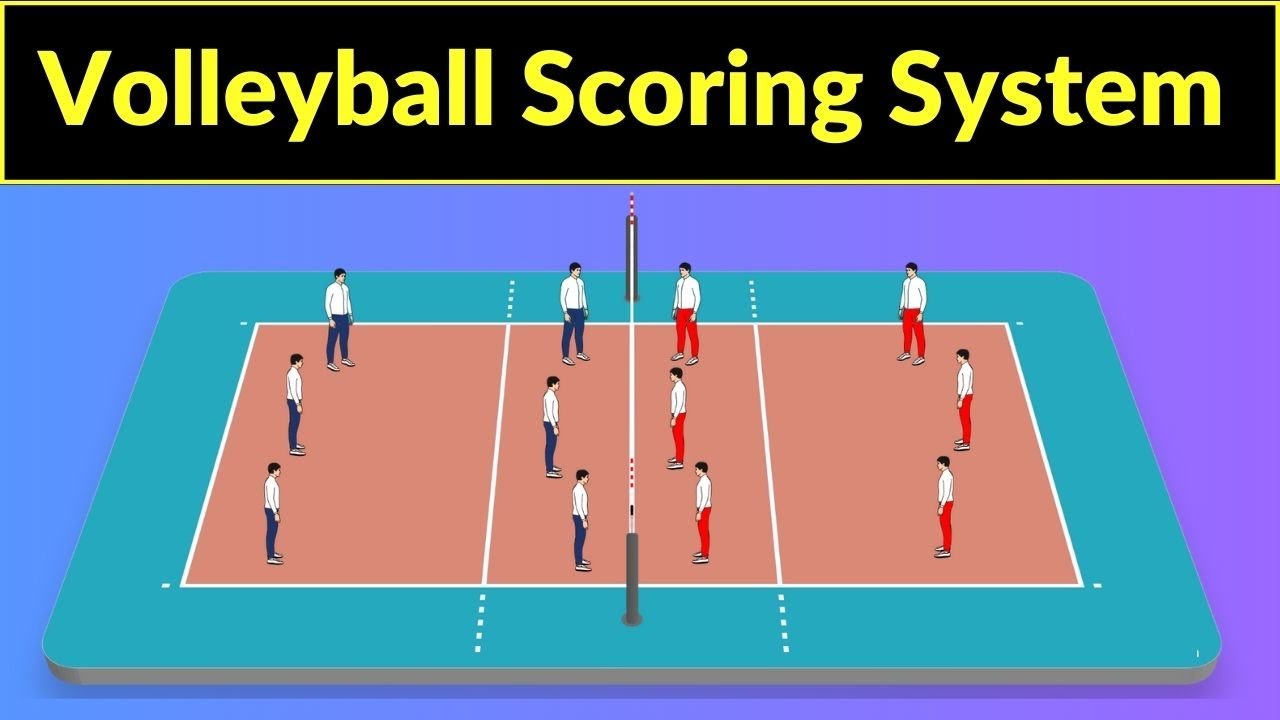
When a team wins a rally, they gain the point. If the winning team was not serving, they get the point and the next serve. Teams rotate clockwise when they gain the right to serve. Each rotation changes who serves, which affects matchup dynamics but not how points are counted.
Key serving and rotation facts:
- Rotation occurs only after a team wins the serve back.
- The server must stand behind the end line and not step on it until contact.
- Libero players have special rules and limited substitutions; their presence affects rotation but not the scoring system.
How does volleyball scoring work around rotation? The rotation only dictates who serves and the on-court positions; scoring stays the same for each rally.
 penalties and referee signals that affect scoring”
style=”max-width: 100%; height: auto; border: 2px solid black; border-radius: 10px; display: block; margin: 0 auto;”
loading=”lazy”
/>
Common penalties and referee signals that affect scoring
Referee calls can immediately shift the scoreboard. Common penalties that award a point to the opponent include:
- Net touch by a player while ball is in play.
- Four hits or a double touch.
- Foot fault on service.
- Delay of game or illegal substitution.
Referees signal faults clearly with hand signs. A mistaken call can be contested via coach challenge in some competitions. How does volleyball scoring work when mistakes happen? Challenges and replays may reverse calls, but final rulings follow the official rules and the match protocol.
Scoring variations: beach, recreational, youth, and adaptive formats
Different forms of volleyball change point targets and some rules:
- Beach volleyball usually uses best-of-three sets to 21 points, with a deciding set to 15.
- Recreational leagues might play to 21 or 15 with caps and shorter matches.
- Youth leagues often reduce court size and use rally scoring to lower targets to speed learning.
- Adaptive and wheelchair volleyball include modified rules to keep play fair and accessible.
How does volleyball scoring work across formats? The core idea — score per rally — often remains, but point targets and rotation rules can vary by format and level.

Practical tips and strategy to win points
Winning more rallies wins sets. Here are tactical ideas that I use in practice and coaching:
- Serve with purpose: aim for weak passers and vary speed. Targeted serving creates easy points or poor passes.
- Prioritize first-ball attack: a good pass sets up a kill. Clean reception raises point expectancy.
- Block and transition: commit to smart blocking angles and then sprint for transition offense.
- Communicate and simplify: call plays and keep systems basic under pressure.
From my experience, teams that serve tough and pass cleanly win more points. A common mistake is overcomplicating offense; simplify and execute.
PAA-style questions
Can a team score while receiving serve?
Yes. Under rally scoring, either team can score on every rally, even when receiving the serve. The serving team no longer has exclusive scoring advantage.
What happens if the ball touches a boundary line?
If the ball touches the boundary line, it is in. The rally goes to the team that forced the ball to hit the line. Lines are considered in play.
Is there a time limit between points?
There is usually a short timeout between rallies enforced by referees. Delays or repeated stalling can result in a penalty that awards the opponent a point.
Frequently Asked Questions of How does volleyball scoring work?
How does volleyball scoring work during a rally?
Every rally awards one point to the team that wins the rally. Points come from opponent errors, successful attacks, serve aces, or opponent faults.
How many points to win a set?
Most indoor sets go to 25 points with a two-point margin. The fifth set, when used, is typically to 15 points and also requires a two-point lead.
How does rotation affect scoring?
Rotation affects who serves and player positions but does not change how points are scored. Teams rotate clockwise when they win the serve back.
What are the most common faults that cost points?
Net touch, four hits, double contact, out-of-bounds, and foot faults on serve are frequent faults that give the opponent a point. Clean technique reduces these errors.
Can a match use a point cap?
Yes. Some recreational or local competitions use a cap to limit set length, such as a first-to-30 with a cap at 30. Official play usually has no cap and continues until a two-point margin is reached.
Is the libero allowed to serve and score?
Libero rules vary by competition. In many formats the libero may serve in specific rotations, but their primary role is defensive and their substitutions are restricted. The libero’s actions can still contribute to scoring via improved defense and passing.
Conclusion
Understanding how does volleyball scoring work gives you the power to play smarter and coach better. Remember: rally scoring makes every rally valuable, sets require a two-point margin, and faults are the quickest path to losing points. Use targeted serving, clean passing, and tight communication to turn rules into wins. Try a focused serving drill or practice situational plays next time you train, and leave a comment about which scoring rule surprised you or helped your team most.

