

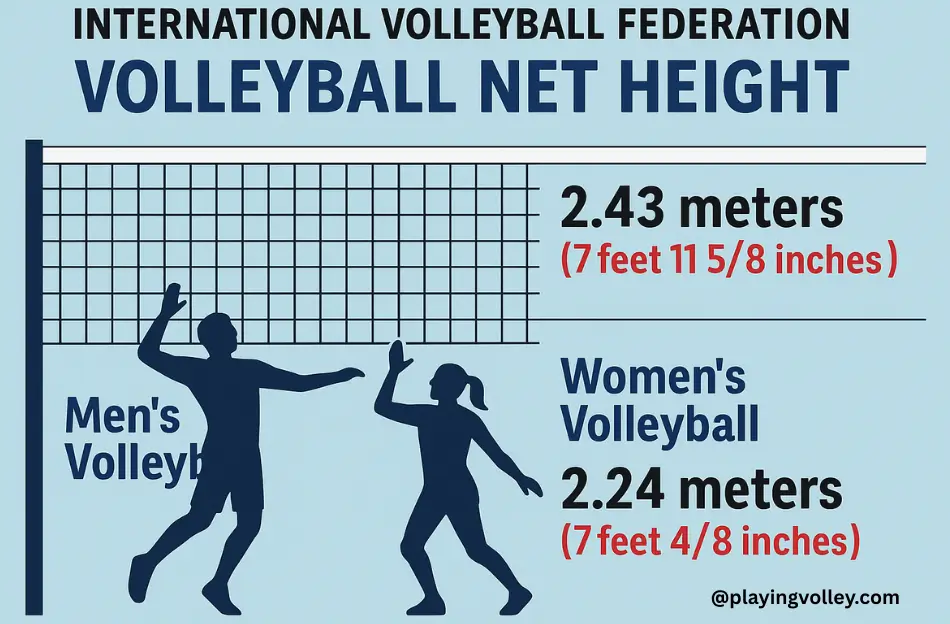
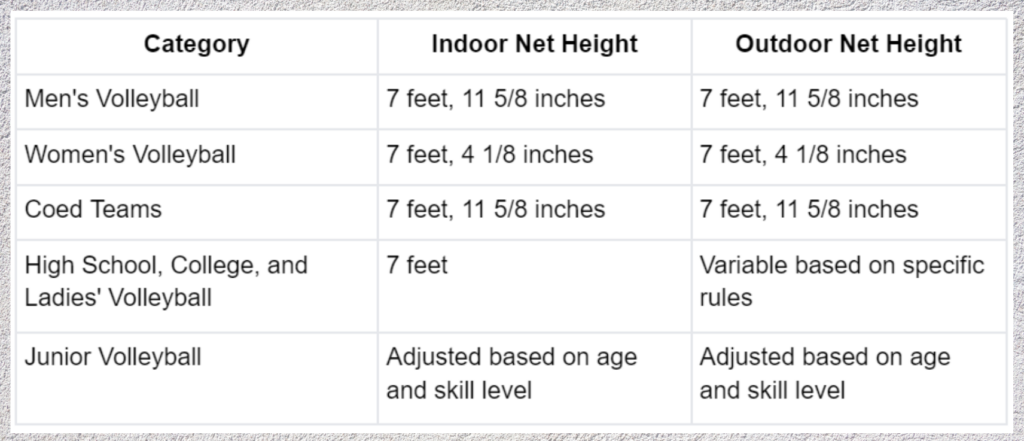
Men's net: 7 feet 11 5/8 inches; Women's net: 7 feet 4 1/8 inches.
I’ve coached and played for years, and I’ll walk you through exactly how high is a volleyball net, why those heights matter, and how to set one correctly. This guide covers official rules, youth and recreational variations, measuring tips, safety notes, and practical coaching advice so you can set the net right every time.

36% off Today’s Exclusive Deals
Limited-time Exclusive Deals. Check current discount on Amazon.
Check Price on Amazon As an Amazon Associate I earn from qualifying purchases.
Standard net heights for competitive play: rules and exact numbers
Official bodies set net heights to keep play fair. Knowing how high is a volleyball net starts with two main standards for adult play.
Men’s competitive net height
- 7 feet 11 5/8 inches (2.43 meters).
Women’s competitive net height - 7 feet 4 1/8 inches (2.24 meters).
Coed and sitting volleyball
- Coed play often uses the men’s height for mixed teams, but some leagues use a compromise height.
- Sitting volleyball uses a much lower net (about 1.15 m for men and 1.05 m for women) to fit the seated style of play.
Why these heights matter
- They balance offense and defense so skills matter more than size alone.
- Standard heights allow consistent training, scouting, and fair competition across regions and levels.
How net height varies by age and skill level
Youth leagues change net height to match growth and skill. This helps players learn proper form and reduce injury.
Common youth heights
- Ages 8 and under: often 6 feet to 6 feet 6 inches (1.83 m to 1.98 m).
- Ages 9–12: often 6 feet 6 inches to 7 feet (1.98 m to 2.13 m).
- Ages 13–14: often 7 feet to 7 feet 4 1/8 inches (2.13 m to 2.24 m).
- High school and up: follow adult standards.
Recreational and backyard play
- Recreational courts may lower the net for fun or to match player height.
- Beach volleyball uses the same adult heights but often adjusts for mixed-ability play.
How to decide
- Match the net to player strength and skill. Lower nets help beginners practice attacking and blocking without strain.

How to measure and set a volleyball net correctly
Getting the net height right is simple if you follow steps and use the right tools.
Tools you need
- Tape measure or measuring pole calibrated in feet/inches and meters.
- A level surface or known reference point like the top of the post.
- Net tension rope and antennae for regulation play.
Step-by-step setup
- Step 1: Place poles at the correct court sidelines and raise the net center to the official height for your group.
- Step 2: Measure from the court surface to the top of the net at the center and adjust until correct.
- Step 3: Tighten the net so it is firm but not over-stretched; check the sides and center again.
- Step 4: Attach antennae and ensure they stand vertical above the net to mark the crossing zone.
Common mistakes to avoid
- Measuring from uneven ground—always check court level first.
- Setting height at the sides instead of the center—net sags and varies if not measured at center.
- Over-tensioning, which can damage net fibers and posts.
Personal tip from experience
- I once practiced on a court where the net was a few inches high at center. Spiking form got bad fast. Measuring at center and keeping a small tension check fixed the problem and improved practice quality.

How net height affects play, training, and strategy
Net height shapes what skills you teach and how teams compete. Understanding how high is a volleyball net helps coaches plan drills and match tactics.
Offense
- Higher nets favor strong jumpers and fast attackers.
- Lower nets help beginners develop timing and arm swing without fear of large blocks.
Defense
- Blocking technique shifts with net height—timing and hand penetration change as the net goes up or down.
- Defensive positioning differs for higher nets: more focus on reading hitter approaches and tempo.
Training adjustments
- Use adjustable nets to vary challenge in drills.
- Gradually raise net height to build jumping and timing skills.
Example drill ideas
- Progressive approach: start with lower net for form, then raise to game height for power work.
- Block-and-hit relay: practice timing at the actual match height to refine footwork and hands.

Equipment, safety, and court considerations
Net height relates to safety and gear. Proper setup reduces injuries and keeps play fair.
Safety checklist
- Check net attachments and post padding regularly.
- Inspect tension cords and net mesh for wear.
- Ensure antennae are secure and visible.
Indoor vs outdoor differences
- Outdoor conditions like wind and sand affect net tension and play. Tighten more for windy days.
- Surface type means you may need to measure differently; courts can settle over time.
Upgrades that help
- Telescoping poles for quick height changes.
- Portable measuring poles with fixed stops for common youth heights.

Quick people-ask questions about net height (PAA-style)
How high is a volleyball net for beginners?
- Beginners often use lower nets, typically 6 to 7 feet, to focus on technique and reduce strain.
Does beach volleyball use the same net height?
- Yes; beach tournaments use the same official adult heights, but casual beach play may vary.
Can you change net height during a match?
- Official matches require a fixed net height for the match. Practicing, you can change height between sets or drills.
Is net height different for men’s and women’s college volleyball?
- Yes; men's is 7 feet 11 5/8 inches, and women's is 7 feet 4 1/8 inches in college play.
How often should you check net height?
- Check before every match and at least weekly for regular practice, more often if posts or ground shift.
Frequently Asked Questions of How high is a volleyball net?
How high is a volleyball net for men?
Men’s competitive net height is 7 feet 11 5/8 inches (2.43 meters) for official play. This is the standard used by most governing bodies.
How high is a volleyball net for women?
Women’s official net height is 7 feet 4 1/8 inches (2.24 meters). That height provides consistent play across levels.
How high is a volleyball net for youth players?
Youth net height varies by age but commonly ranges from 6 feet to 7 feet 4 inches depending on league rules. Always check your local league guidelines.
How high is a volleyball net for coed or mixed leagues?
Coed leagues may use the men’s height or a compromise height set by the league. Confirm the league’s rules before play.
How high is a volleyball net in recreational play?
Recreational net height is flexible and often lowered to match participant skill or for fun. Use a height that keeps play safe and enjoyable.
How high is a volleyball net for sitting volleyball?
Sitting volleyball nets are much lower: around 1.15 meters for men and 1.05 meters for women. These are set to fit the seated game style.
Conclusion
Knowing how high is a volleyball net gives you the tools to set up fair, safe, and productive play. Use official heights for competition, adjust for youth and training, and double-check measurements at the court center to avoid bad habits. Try adjusting net height in practice to build confidence and skill, and always inspect gear for safety.
If this helped, try measuring your local court and practicing a drill at both competition and reduced heights. Leave a comment with your net setup tips, or subscribe for more coaching and setup guides.

