

A standard rugby match is 80 minutes of play, split into two 40-minute halves, plus halftime.
I’ve played, coached, and watched rugby for years, so I know the common questions fans ask. This article breaks down exactly how long is a rugby match, how time is kept, differences across leagues and age groups, and what to expect when you watch or attend a game. Read on for clear, practical answers, real-life tips, and the little rules that change how long a rugby match feels.

36% off Today’s Exclusive Deals
Limited-time Exclusive Deals. Check current discount on Amazon.
Check Price on Amazon As an Amazon Associate I earn from qualifying purchases.
What is the standard length of a rugby match?
A professional rugby match lasts 80 minutes of playing time. That time is split into two halves of 40 minutes each. Halftime is usually about 10 minutes, so a match’s pure on-field time is 80 minutes with a short break in the middle.

How time is kept during play
The referee controls the match clock. The clock runs continuously during each 40-minute half. At the end of 40 minutes the referee stops play at the next natural break or whistle. When the clock reads 80 minutes, play may continue until the ball is dead or a stoppage occurs.
- The clock keeps running for most stoppages, so time is not paused like in some other sports.
- Referees can add time at the end of a half to compensate for serious delays.
- Sin-bin and red-card penalties do not stop the clock but change player numbers.
How long is a rugby match? The answer depends in part on how often the referee calls time and how many stoppages happen. In practice, the visible clock in stadiums shows the official flow.
Variations by code and level: union, league, and youth rugby
Different forms of rugby follow the same basic length but with specific tweaks.
- Rugby union (most international and club play): Two 40-minute halves. Halftime commonly 10 minutes.
- Rugby league: Two 40-minute halves as well. Rules on stoppage and extra time differ.
- Youth and amateur rugby: Halves are often shorter. Typical junior games have 20 to 30 minute halves depending on the age group.
- Sevens rugby: Matches are much shorter. Standard sevens games are two 7-minute halves, with finals sometimes 10-minute halves.
How long is a rugby match at different levels? For adult union and league it’s 80 minutes; for youth and sevens it can be much shorter.

Extra time, tie-breakers, and tournament rules
Knockout games sometimes require a clear winner. Competitions define extra time rules.
- Common approach: 20 minutes of extra time split into two 10-minute halves.
- If still tied, some tournaments use sudden death, while others use kicking contests or replays.
- Domestic cups and international tournaments publish their own tie-break rules, so check the event rules.
How long is a rugby match when extra time is needed? Add the competition’s extra-time window, commonly 20 minutes, to the regular 80 minutes.
What affects the total live broadcast or stadium time
A televised or in-person match lasts longer than 80 minutes. Expect about 2 to 2.5 hours for a full event.
- Halftime breaks add roughly 10–15 minutes.
- Pre-match ceremonies, player warmups, and replays add time.
- Injuries, reviews by the television match official (TMO), and disciplinary processes extend the live length.
From my experience in organizing club matches, the real-world time from kickoff to final whistle for a regular match is often 95 to 120 minutes once breaks and delays are included. That’s why planning travel or viewing time should allow extra time beyond the 80 minutes.
Common match-day scenarios and practical tips
Here are clear, short tips to help you plan or coach around match length.
- Arrive 45 minutes early to warm up and secure a seat.
- Expect the game to run longer if there are injuries or TMO checks.
- For youth matches, confirm half lengths with your local club or league.
- If you are broadcasting or timing an event, build buffer time for delays.
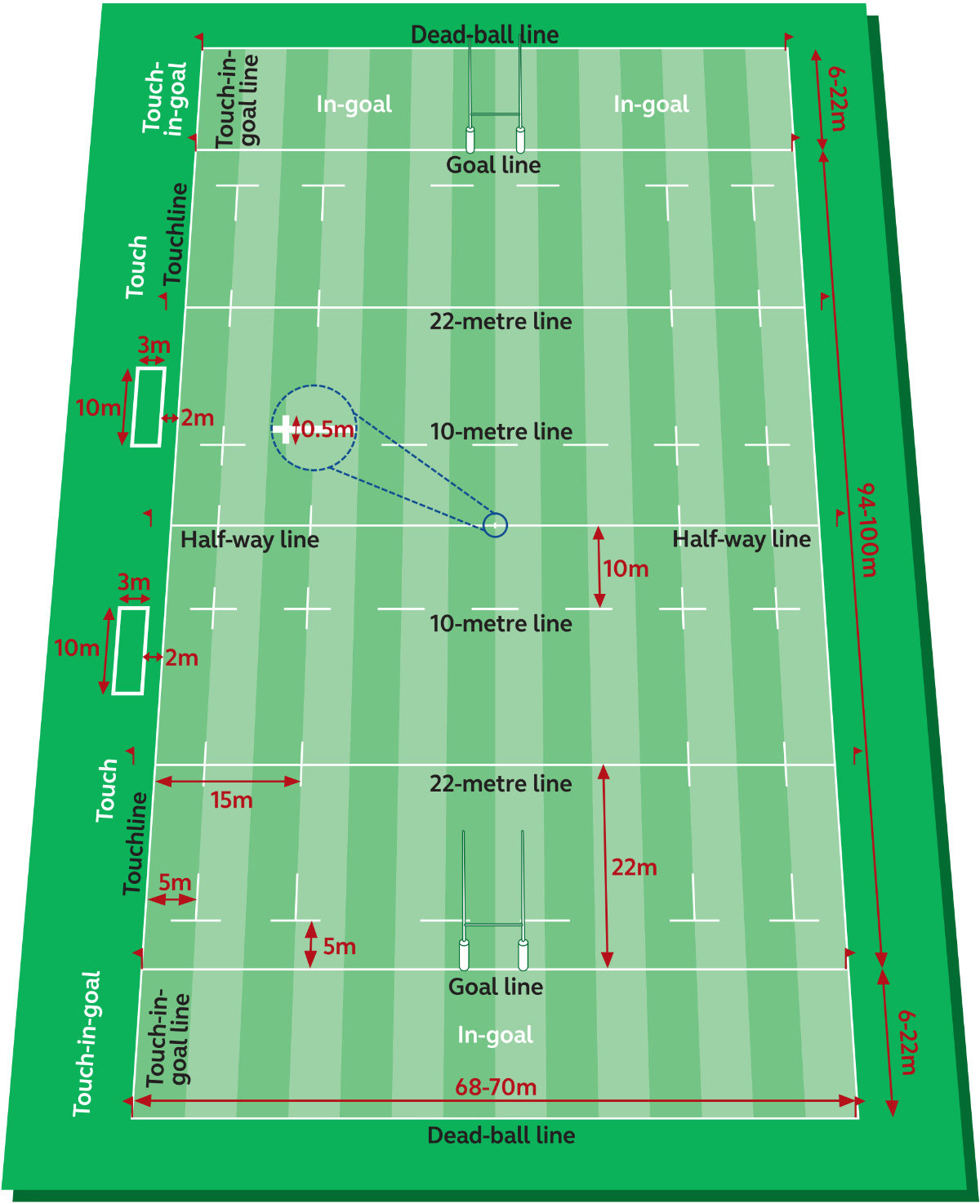
How long is a rugby match in practice? It’s best to treat 80 minutes as the playing time and add 20–40 minutes for other match-day events.
Personal experience and lessons learned
I once coached a club final where a lengthy TMO review and a serious injury added nearly 30 minutes to the event. We learned to warn families and sponsors about variable end times. My practical advice:
- Tell spectators to expect delays.
- Train players to stay hydrated and mentally ready for extra minutes.
- Officials and coaches should communicate clearly when time is extended.
These small moves make the match experience smoother for everyone and reflect real-world answers to how long is a rugby match.
PAA-style quick questions
Q: How long is a professional rugby match?
A: A professional rugby match is 80 minutes of play, split into two 40-minute halves, with about 10 minutes halftime.
Q: Does the clock stop for injuries in rugby?
A: Generally the clock keeps running; the referee may add time at the end of the half to make up for serious delays.
Q: How long is a rugby sevens match?
A: Rugby sevens matches are usually two 7-minute halves, with finals sometimes using 10-minute halves.
Q: How long is a youth rugby match?
A: Youth matches vary by age. Common halves are 20 to 30 minutes, but check local league rules for precise timings.
Q: How long is a rugby match with extra time?
A: Extra time commonly adds 20 minutes (two 10-minute halves). Further tie-breakers depend on tournament rules.
Frequently Asked Questions of How long is a rugby match?
What is the official half-time length in rugby?
Halftime is usually about 10 minutes in most competitions. Some non-professional games may use a 5–15 minute interval.
Is the referee’s clock the only official timekeeper?
Yes. The referee controls the official match time. Stadium clocks are for spectators and may show added time differently.
Do stoppages add to the half length?
Referees do not usually stop the clock for routine stoppages. They add time at the end of each half to account for major delays.
How long is a rugby match including halftime and stoppages?
Expect about 100 to 120 minutes total for a professional match when halftime and typical stoppages are included.
Are sin-bin times counted separately?
A sin-bin lasts 10 minutes of playing time for the offending player. The match clock continues while a player is in the sin-bin.
Does rugby league handle time differently than union?
Both league and union use two 40-minute halves. Specific stoppage and extra-time rules can differ by code and competition.
Can matches be shortened for weather or safety?
Yes. Referees and organizers can shorten or abandon matches for player safety, extreme weather, or other emergencies.
Conclusion
Knowing how long is a rugby match helps you plan to play, coach, or watch with confidence. The standard answer is 80 minutes of play across two 40-minute halves, but real match-day time varies with halftime, stoppages, and extra time. Prepare for an event that usually lasts up to two hours live and stay flexible for delays. If you enjoy rugby, use this guide to arrive early, follow competition rules, and expect the unexpected.
Want more clear guides like this? Leave a comment, subscribe for updates, or check event rules before the next game.

