

Keeping a fish tank clean is more than just a chore—it’s the foundation of a healthy, beautiful aquarium. Clean water supports vibrant fish, prevents disease, and lets you enjoy the underwater world you’ve created. But many new fish owners feel confused about how to clean a fish tank properly.
Some worry they might harm their fish or upset the tank’s balance. Others may not realize how often cleaning is needed or what tools to use. If you want your aquarium to look clear and your fish to thrive, understanding the right cleaning methods is essential.

36% off Today’s Exclusive Deals
Limited-time Exclusive Deals. Check current discount on Amazon.
Check Price on Amazon As an Amazon Associate I earn from qualifying purchases.This guide will walk you through every step of how to clean a fish tank, whether you have a small bowl or a large planted aquarium. You’ll learn which supplies to use, how to handle the fish safely, when to do water changes, and smart tips to avoid common mistakes. With a little planning and the right techniques, cleaning your aquarium will become a simple and satisfying routine.
Why A Clean Fish Tank Matters
A clean tank is not just about looks. Fish, plants, and beneficial bacteria all depend on clean water to survive. Over time, waste from fish, uneaten food, and decaying plants release ammonia and other toxins. If these build up, they can quickly stress or kill your fish.
Studies have shown that poor water quality is the leading cause of illness and death in home aquariums. Ammonia and nitrite spikes, algae blooms, and cloudy water are all signs of a dirty tank. On the other hand, regular cleaning keeps the water clear, the glass free from algae, and the filter working efficiently.
Some beginners think they can skip cleaning if the tank “looks okay. ” However, many problems develop slowly, and by the time you notice them, your fish may already be suffering. Consistent cleaning also means you’ll spend less time fixing big problems later.
Essential Supplies For Cleaning A Fish Tank
Before you begin, gather the right supplies. This makes the process smoother and protects your fish and equipment. Using the wrong tools, like regular soap or household sponges, can introduce toxins or scratch the glass.
Here are the most important items for cleaning a freshwater or saltwater aquarium:
- Algae scraper or pad: Removes algae from glass or acrylic surfaces.
- Gravel vacuum (siphon): Sucks up debris from the substrate while changing water.
- Bucket (for aquarium use only): Never use a bucket that has held soap or chemicals.
- Fish net: Useful for moving fish if needed.
- Water conditioner: Removes chlorine and chloramines from tap water.
- Aquarium-safe glass cleaner: For outside surfaces only.
- Filter media replacement: Like sponges, cartridges, or bio-rings.
- Towels: To wipe drips and spills.
You may also need a water test kit to check ammonia, nitrite, nitrate, and pH. For planted tanks, curved scissors and tweezers help tidy plants.
Comparison Of Cleaning Tools
Here’s a quick look at common cleaning tools and their best uses:
| Tool | Best For | Important Note |
|---|---|---|
| Algae Scraper | Removing algae from glass | Choose acrylic-safe for plastic tanks |
| Gravel Vacuum | Cleaning substrate, water changes | Do not suck up sand in planted tanks |
| Fish Net | Moving fish, removing debris | Wet before use to protect fish slime coat |
| Bucket | Transporting water | Keep one bucket only for aquarium use |
Never use soaps or cleaning sprays inside your aquarium. Even small traces can poison fish and beneficial bacteria.

Preparing To Clean The Fish Tank
Proper preparation can make the cleaning process faster and safer, both for you and your aquatic pets. Start by unplugging any electrical equipment, such as heaters, filters, and lights. This prevents shocks and protects your gear from running dry.
Next, wash your hands and arms thoroughly with water only—no soap or lotion. Rinse well to remove any residues that could harm the tank. If you have long sleeves, roll them up, or wear gloves designed for aquarium use.
It’s best to clean your tank during the day. This way, you can see clearly and spot any problems, like sick fish or broken equipment.
If you have delicate or easily stressed fish, avoid making sudden movements. You don’t need to remove the fish for regular cleaning, but if you must move them, use a wet net and a temporary holding tank with water from their aquarium.
Step-by-step Guide To Cleaning A Fish Tank
Cleaning a fish tank involves several key steps. Each one plays a role in keeping the ecosystem balanced.
1. Remove Algae From Glass And Decorations
Algae can build up on the glass, rocks, and decorations, making the tank look dirty and blocking light. Use an algae scraper or pad to gently wipe the inside walls. For stubborn spots, a plastic razor blade (for glass tanks only) can help.
If you see algae on decorations, you can remove them and scrub with warm water and a clean brush. Avoid soaps or detergents. For live plants, gently rub off algae with your fingers.
2. Clean Or Replace Filter Media
Filters trap waste and support beneficial bacteria. But over time, filter pads or sponges get clogged. Once a month (or as recommended), rinse filter media in a bucket of old tank water—not tap water. Tap water can kill helpful bacteria.
Only replace one part of the filter at a time. Replacing everything at once can remove too many bacteria and upset the tank’s cycle.
3. Siphon The Gravel Or Substrate
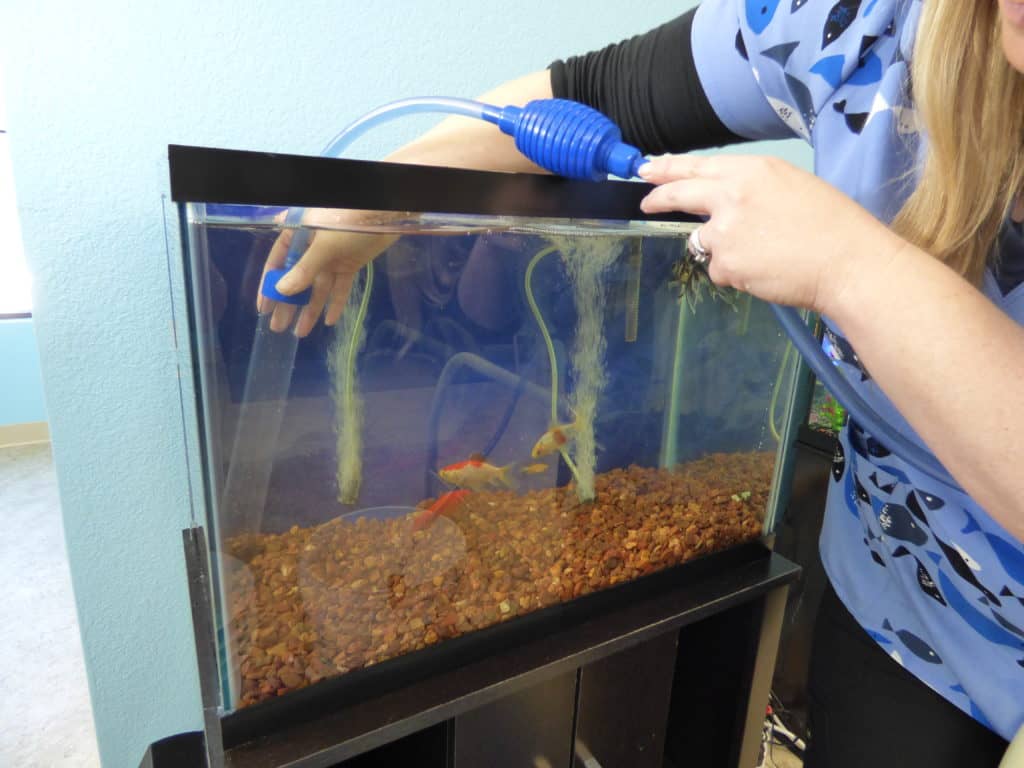
Fish waste and uneaten food sink into the gravel. A gravel vacuum removes debris while sucking out old water. Push the vacuum deep into the gravel and let the dirty water flow into your bucket. For sand, hover the siphon just above the surface to avoid sucking up the substrate.
Aim to clean about one-third of the gravel at each cleaning. This keeps some bacteria in place and avoids disturbing the ecosystem too much.
4. Perform A Partial Water Change
Fresh water dilutes toxins and refreshes minerals. Most tanks need a 10–25% water change every one to two weeks. Use a bucket to add new water that matches the tank’s temperature. Always add water conditioner to remove chlorine and chloramines.
Pour new water in slowly to avoid disturbing plants and fish. For larger tanks, a hose with a siphon attachment can make this easier.
5. Clean Tank Equipment And Glass
Wipe the outside of the glass with an aquarium-safe cleaner or vinegar and a soft cloth. Clean the light covers, lids, and any exposed equipment. Rinse everything with water before returning to the tank.
6. Reassemble And Restart Equipment
After cleaning, plug in the heater, filter, and lights. Check that everything is working properly. Watch your fish for a few minutes to make sure they are swimming normally and not stressed.
How Often Should You Clean Your Fish Tank?
There’s no single answer—the right schedule depends on your tank’s size, fish load, and filter strength. But here are some general guidelines:
- Small tanks (under 10 gallons): Clean every week.
- Medium tanks (10–40 gallons): Clean every 1–2 weeks.
- Large tanks (over 40 gallons): Clean every 2–4 weeks, with small water changes in between.
Test your water regularly for ammonia, nitrite, and nitrate. If levels are high, increase cleaning frequency. Tanks with live plants usually need less cleaning, since plants absorb some waste.
Typical Cleaning Schedule
| Task | Frequency | Notes |
|---|---|---|
| Partial water change | Every 1–2 weeks | 10–25% of water |
| Gravel vacuum | Every 2–4 weeks | 1/3 of substrate per cleaning |
| Filter media rinse | Monthly | Use old tank water |
| Algae removal | As needed | More often in well-lit tanks |
Remember, over-cleaning can be as harmful as under-cleaning. Try to keep a balance so you don’t remove too much beneficial bacteria at once.
Cleaning Special Types Of Fish Tanks
Not all tanks are the same. The cleaning routine changes a bit for different setups.
Planted Tanks
Live plants use fish waste as fertilizer. Too much cleaning can remove helpful nutrients. Focus on gentle gravel vacuuming and less frequent water changes. Trim dead leaves and remove rotting plants during cleaning.
Saltwater Aquariums
Saltwater tanks are more sensitive to changes. Use reverse osmosis (RO) water for changes, and mix new saltwater 24 hours before use. Clean protein skimmers and check for salt creep on edges. Test salinity with a refractometer after each cleaning.
Betta Bowls Or Small Tanks
Small tanks get dirty faster. Clean at least once a week and change 25–50% of the water. Never use soap to clean bowls—just hot water and a clean sponge.
Tanks With Sensitive Fish
Some species, like discus or wild-caught fish, stress easily. Move slowly, avoid loud noises, and use soft nets. Try to keep water parameters stable during cleaning.
Common Mistakes When Cleaning A Fish Tank
Even experienced aquarists sometimes make mistakes. Here are some to avoid:
- Using soap or household cleaners: These are toxic to fish and bacteria.
- Changing all the water at once: Sudden changes shock fish and destroy helpful bacteria.
- Over-cleaning the filter: Rinsing with tap water kills bacteria that keep water safe.
- Moving fish unnecessarily: Most fish can stay in the tank during cleaning.
- Ignoring water temperature: Adding cold or hot water can stress or kill fish.
- Cleaning on an irregular schedule: Inconsistent care leads to unstable water quality.
- Not testing water: Invisible toxins can build up even in clear water.
- Neglecting to clean equipment: Heaters, filters, and lights collect dirt over time.
Tips For Easier And More Effective Cleaning
Cleaning doesn’t have to be a hassle. With a few smart habits, you can cut down your workload and keep your tank looking great.
- Feed fish lightly: Extra food means more waste and faster water pollution.
- Use live plants: They help absorb nutrients and reduce algae.
- Choose the right filter: A good filter does half the cleaning for you.
- Set a calendar reminder: Consistency is key for healthy fish.
- Keep cleaning tools nearby: A bucket and scraper by the tank make quick touch-ups easy.
- Observe your tank daily: Early signs of trouble (like cloudy water or odd fish behavior) mean it’s time to clean.
What To Do After Cleaning
After you finish, check that all equipment is plugged in and running smoothly. Watch your fish for a while—if they’re swimming calmly, you did well. If any look stressed or hide, test the water and look for problems.
If you spot cloudy water or floating debris, wait a few hours. The filter will clear things up. If issues remain, test for ammonia or nitrite, and repeat a small water change if needed.
Never feed your fish right after cleaning. Wait a few hours for them to settle down.
Troubleshooting: When Things Go Wrong
Sometimes, even with good cleaning, problems can occur. Here’s how to handle common issues:
- Cloudy water: Usually harmless bacteria bloom after cleaning. It clears in a few days.
- Algae keeps coming back: Reduce light, feed less, and add fast-growing plants.
- Fish gasping at the surface: Oxygen may be low. Add an air stone and check for ammonia.
- Dead fish after cleaning: Test for toxins. You may have removed too much bacteria or changed water too quickly.
If in doubt, test your water and research the symptoms. The Aquarium Wiki (Wikipedia) is a great place to start for more detailed information.
The Role Of Beneficial Bacteria In A Clean Tank
Many new aquarists don’t realize how important beneficial bacteria are. These bacteria live in the filter, gravel, and decorations. They break down harmful ammonia into nitrite, and then into less harmful nitrate. Without them, even a clean-looking tank can be toxic.
Never sterilize your tank or replace all the filter media at once. Always rinse filter sponges in old tank water, not tap water. If you must do a deep cleaning, save some old gravel or filter pads to “seed” the new setup with bacteria.
How To Clean Fish Tank Accessories
Decorations, rocks, artificial plants, and other accessories collect algae and debris. Remove them during major cleanings and scrub with a brush in hot water. For tough algae, soak items in a 10% bleach solution for 10 minutes, rinse thoroughly, and let them air-dry completely before returning to the tank.
Never use bleach on live plants or porous rocks, as they can absorb chemicals.

Should You Ever Do A Full Tank Tear-down?
Completely emptying and scrubbing a tank is rarely needed. Only do this if you have a serious disease outbreak or need to reset the tank. A full tear-down destroys the biological balance and can stress or kill fish. If you must, save as much water as possible and keep filter media wet during the process.
Comparing Cleaning Needs: Freshwater Vs. Saltwater Tanks
Cleaning routines differ slightly between freshwater and saltwater setups:
| Aspect | Freshwater | Saltwater |
|---|---|---|
| Water changes | 10–25% every 1–2 weeks | 10–20% every 1–2 weeks with RO water |
| Algae cleaning | Scraper and snails helpful | Scraper, snails, and some fish (e.g., tangs) |
| Equipment cleaning | Rinse filter, wipe glass | Rinse skimmer, test salinity, wipe glass |
| Testing | Ammonia, nitrite, nitrate, pH | Same as freshwater plus salinity, calcium |
Saltwater tanks also need testing for calcium, alkalinity, and salinity. The cleaning steps are similar, but saltwater fish are more sensitive to sudden changes.
Frequently Asked Questions
How Often Should I Clean My Fish Tank?
For most tanks, a partial water change and light cleaning every one to two weeks is best. Small tanks need more frequent care, while large or heavily planted tanks may need less.
Can I Use Regular Tap Water For My Aquarium?
Yes, but always use a water conditioner to remove chlorine and chloramine. Never add untreated tap water directly to your tank.
Should I Remove My Fish During Cleaning?
Usually, you don’t need to move your fish. Most species are fine if you clean gently and change only part of the water. Only move fish if you need to do a full tank tear-down or treat disease.
Why Is My Tank Cloudy After Cleaning?
Cloudy water after cleaning is usually caused by a bacterial bloom. This is common and should clear up in a few days as the tank re-balances. Test your water to be sure ammonia and nitrite are safe.
Is It Safe To Clean Aquarium Decorations With Bleach?
Only if needed for tough algae, and only with a diluted solution (10% bleach, 90% water). Rinse very well and air-dry items before returning them to the tank. Never use bleach on live plants or porous materials.
Keeping your fish tank clean is one of the best ways to enjoy healthy, active fish and a clear, beautiful aquarium. With the right routine and a little patience, you’ll find that cleaning becomes an easy, even relaxing part of fishkeeping.
By understanding your tank’s needs and avoiding common mistakes, you’ll help your aquatic pets thrive for years to come.

