

Filing taxes is a yearly event that can make people feel nervous, confused, or even a bit overwhelmed. If you are new to the process, or if English is not your first language, it can feel extra challenging. But with some clear steps and helpful tips, you can file your taxes with confidence and avoid costly mistakes.
This guide will walk you through everything you need to know about how to file taxes in the United States, from understanding basic terms to choosing the best way to file. By the end, you’ll know what to do, what to avoid, and how to make the process as smooth as possible.

36% off Today’s Exclusive Deals
Limited-time Exclusive Deals. Check current discount on Amazon.
Check Price on Amazon As an Amazon Associate I earn from qualifying purchases.What Does “filing Taxes” Mean?
In the US, filing taxes means sending a report of your income, expenses, and tax payments to the Internal Revenue Service (IRS) each year. The IRS uses this information to see if you paid enough, too much, or too little tax throughout the year. If you paid too much, you get a refund. If you paid too little, you may owe more.
Everyone who earns above a certain amount—depending on age, filing status, and income type—must file a tax return. Even if you don’t have to file, you might want to, because you could get a refund for taxes withheld or qualify for tax credits.
Who Needs To File Taxes?
The rules about who must file taxes can be confusing, but they mostly depend on:
- Your age
- Your filing status (single, married, head of household, etc.)
- Your gross income (total money earned before taxes)
- Special situations (like self-employment, dependents, or being claimed on someone else’s return)
For 2023 tax returns (filed in 2024), here’s a simple example:
| Filing Status | Age | Income Threshold |
|---|---|---|
| Single | Under 65 | $13,850 |
| Married Filing Jointly | Both under 65 | $27,700 |
| Head of Household | Under 65 | $20,800 |
If your income is at or above the number for your group, you must file a return. But there are exceptions: for example, if you are self-employed and made more than $400, you must file even if your total income is below the threshold. Always check the IRS website or ask a tax professional if you’re unsure.
Key Tax Forms: What You Need To File
Understanding which forms you need is a big part of filing taxes. Here are the most common ones:
- Form W-2: Shows how much you earned from an employer and how much tax was withheld
- Form 1099: Reports other income (like freelance work, interest, dividends)
- Form 1040: The main form you use to file your tax return
- Form 1098: Reports mortgage interest, student loan interest, or tuition payments
Each form has a purpose. For example, if you have a job, your employer must send you a W-2 by January 31. If you do gig work or contract jobs, you’ll likely get a 1099-NEC. Keeping these forms organized is critical for accurate filing.
Ways To File Your Taxes
You have several options for filing your taxes. Each has pros and cons, depending on your situation.
1. File By Paper
You can fill out your tax return by hand, print it, and mail it to the IRS. This is the slowest way. You will need to:
- Download the correct forms (like Form 1040) from the IRS website
- Fill them out carefully
- Attach copies of your W-2s, 1099s, and other documents
- Mail everything to the IRS address for your state
Paper filing is free but more likely to have errors, and refunds take longer—often six to eight weeks.
2. Use Tax Software
Many people use tax software like TurboTax, H&R Block, or TaxAct. These programs ask you simple questions, fill in the forms for you, and can e-file your return. Most major software offers a free version for simple tax situations.
Benefits:
- Checks for errors automatically
- Guides you step by step
- E-filing gives a faster refund (often within three weeks)
3. Hire A Tax Professional
If your taxes are complicated, or you want expert help, you can hire a Certified Public Accountant (CPA) or tax preparer. This is a good choice if you:
- Own a business or rental property
- Have many investments
- Face a major life change (divorce, inheritance, etc.)
- Want help with tax planning
Professional help costs more—usually $150 to $500 or more—but can save you time and stress.
4. Free Irs Resources
The IRS Free File program lets you use tax software for free if your income is below a certain level (currently $73,000). There are also Volunteer Income Tax Assistance (VITA) and Tax Counseling for the Elderly (TCE) programs for people with lower incomes, disabilities, or who are age 60+.
Step-by-step: How To File Taxes
Let’s break down the process into clear steps. Following this order helps you avoid missed details.
Step 1: Gather Your Documents
Before you start, collect all your tax documents:
- W-2s from employers
- 1099s for side jobs, investments, or bank interest
- 1098s for mortgage or student loan interest
- Proof of health insurance (Form 1095-A/B/C)
- Records of deductible expenses (charity donations, medical costs)
- Last year’s tax return (if you have it)
- Social Security numbers for yourself, spouse, and dependents
Having everything ready saves time and avoids mistakes.
Step 2: Decide How To File
Choose whether to use paper, software, or a professional. Think about cost, time, and how complex your taxes are.
Tip many beginners miss: If your situation changed—like a new job, marriage, or a baby—software or a pro can help you avoid missing new credits or deductions.
Step 3: Fill Out The Tax Return
If using software, answer each question honestly and upload your forms. If using paper, copy numbers carefully from each form into your Form 1040.
Non-obvious insight: Double-check your Social Security number and bank account info. Many refunds are delayed because of small typos.
Step 4: Claim Deductions And Credits
Deductions lower your taxable income. Credits lower your tax bill directly. Some common ones:
- Standard deduction: Most people use this. For 2023, it’s $13,850 for singles, $27,700 for married filing jointly.
- Itemized deductions: For large mortgage interest, medical costs, or big charity donations.
- Earned Income Tax Credit (EITC): For low- to moderate-income workers.
- Child Tax Credit: Up to $2,000 per child under 17.
Many people forget to check for education, energy, or childcare credits that can save hundreds or thousands of dollars.
Step 5: Check Your Work
Review everything before filing. Common mistakes include:
- Wrong Social Security numbers
- Misspelled names
- Missing signatures (if filing by paper)
- Incorrect math
Tax software helps catch many of these, but not all. Always go over your return one last time.
Step 6: File The Return
If you e-file, submit your return online. You’ll get a confirmation from the IRS, usually within 24 hours.
If you mail a paper return, send it to the right IRS address for your state. Use certified mail if you want proof it was received.
Step 7: Pay Any Taxes Owed
If you owe money, pay by the filing deadline (usually April 15). You can pay online, by check, or by setting up a payment plan with the IRS.
If you’re due a refund, the fastest way to get it is to choose direct deposit to your bank account.
Filing Deadlines And What Happens If You Miss Them
The deadline to file federal taxes is usually April 15. If that falls on a weekend or holiday, the deadline moves to the next business day.
If you need more time, you can file Form 4868 for an automatic six-month extension. But remember:
- An extension gives you more time to file, not more time to pay.
- If you owe taxes, you must pay by the original deadline to avoid interest and penalties.
If you miss the deadline and owe money, the IRS will charge penalties. If you are due a refund, there is no penalty for filing late, but you must file within three years to claim your money.
Common Mistakes To Avoid
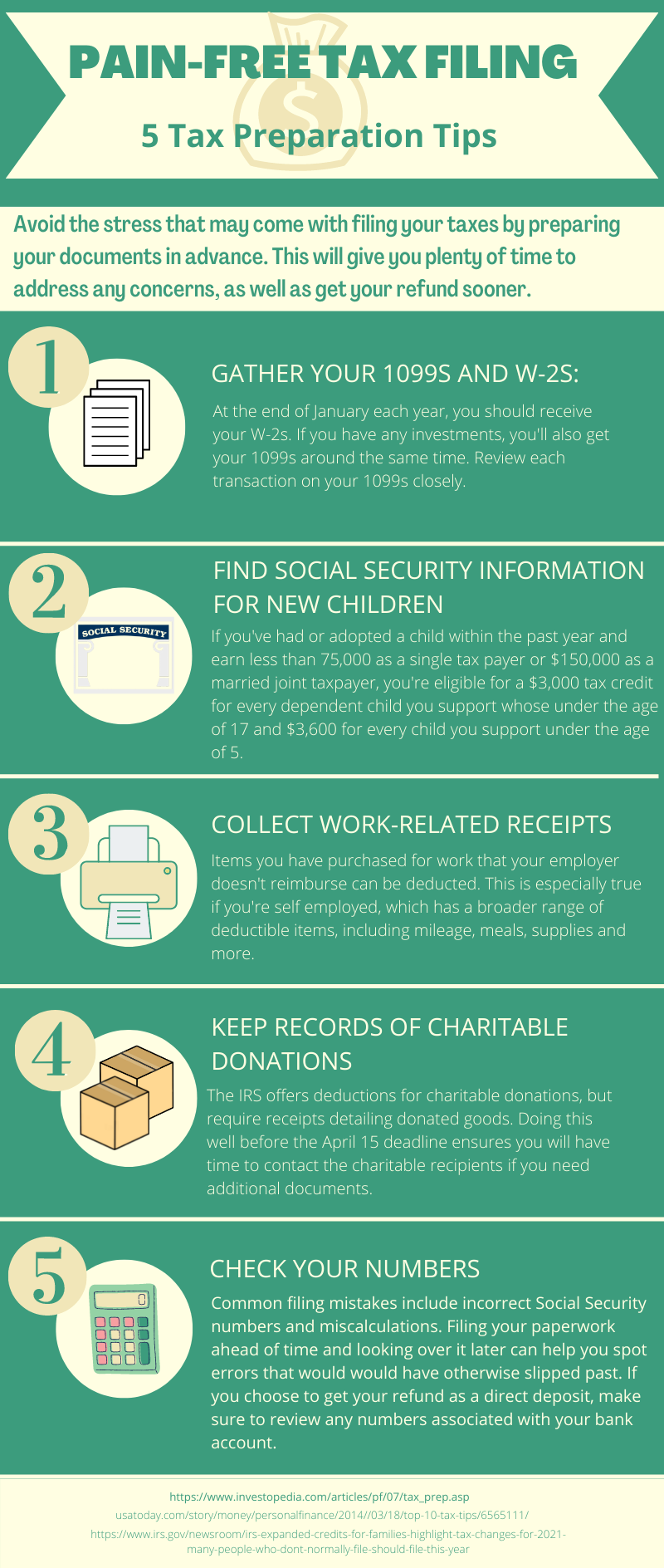
Many people make simple errors that cause delays or even audits. Here are some to watch for:
- Forgetting all income: You must report all income, even from side jobs or tips. The IRS gets copies of your W-2s and 1099s.
- Wrong filing status: Choosing the wrong status (like “single” instead of “head of household”) can affect your tax bill and refund.
- Math errors: Even simple addition mistakes can cause problems.
- Missing signatures: If you file on paper, don’t forget to sign and date your return.
- Wrong bank info: Double-check routing and account numbers if choosing direct deposit.
- Not updating your address: The IRS will send refund checks or letters to the address on your return.
Hidden tip: If you move after filing, file a change of address with the IRS (Form 8822) to avoid lost mail.
Tax Refunds: What To Expect
If you overpaid taxes, you’ll get a refund. The fastest way is by e-filing and choosing direct deposit. Most refunds arrive within 21 days. If you mail a paper return or request a paper check, it can take six weeks or longer.
You can check your refund status using the IRS “Where’s My Refund? ” tool. If your refund is late, check for errors or missing documents.
Special Situations: Self-employed, Students, And More
Some people have unique tax needs. Here’s how to handle a few common ones.
Self-employed Or Gig Workers
If you work for yourself, drive for Uber, or do freelance work, you’ll likely get a 1099-NEC or 1099-K. You must report all income, even if you don’t get a form.
- You can deduct business expenses (supplies, mileage, home office).
- You may need to pay self-employment tax (Social Security and Medicare).
- Keep careful records—receipts, invoices, mileage logs.
Students
If you’re a student, you may get a 1098-T for tuition payments or a 1098-E for student loan interest.
- You may qualify for the American Opportunity Credit or Lifetime Learning Credit.
- Student loan interest (up to $2,500) may be deductible.
Retirees
If you receive Social Security, pensions, or retirement account withdrawals, you may need to file taxes.
- Some Social Security benefits may be taxable, depending on your total income.
- Required Minimum Distributions (RMDs) from retirement accounts must be reported.
Non-residents And Immigrants
If you are not a US citizen or green card holder, you may need to file a special form (1040-NR). Tax treaties with your country can affect your filing. Always consult the IRS or a tax expert for your situation.
How Long To Keep Your Tax Records
The IRS recommends keeping copies of your tax returns and supporting documents for at least three years from the date you filed. For some situations (like claiming a loss from worthless securities), keep records for up to seven years.
| Type of Record | How Long to Keep |
|---|---|
| Tax returns | At least 3 years |
| W-2s, 1099s | At least 3 years |
| Records for property (home, stocks) | Until you sell + 3 years |
| Business records | At least 7 years |
Storing digital copies is fine, but make sure they are backed up.
State Taxes Vs. Federal Taxes
Most states also have an income tax, with their own forms and deadlines. Some, like Florida and Texas, have no state income tax. Others, like California and New York, have separate tax forms and rules.
You must file a state return in every state where you lived or earned income. State refunds and deadlines can be different from federal ones.
| State | State Income Tax? | Special Notes |
|---|---|---|
| California | Yes | High rates, separate forms |
| Florida | No | Only federal filing required |
| Texas | No | Only federal filing required |
| New York | Yes | Separate e-filing system |
Check your state’s tax department website for details.
E-filing Vs. Paper Filing: Which Is Better?
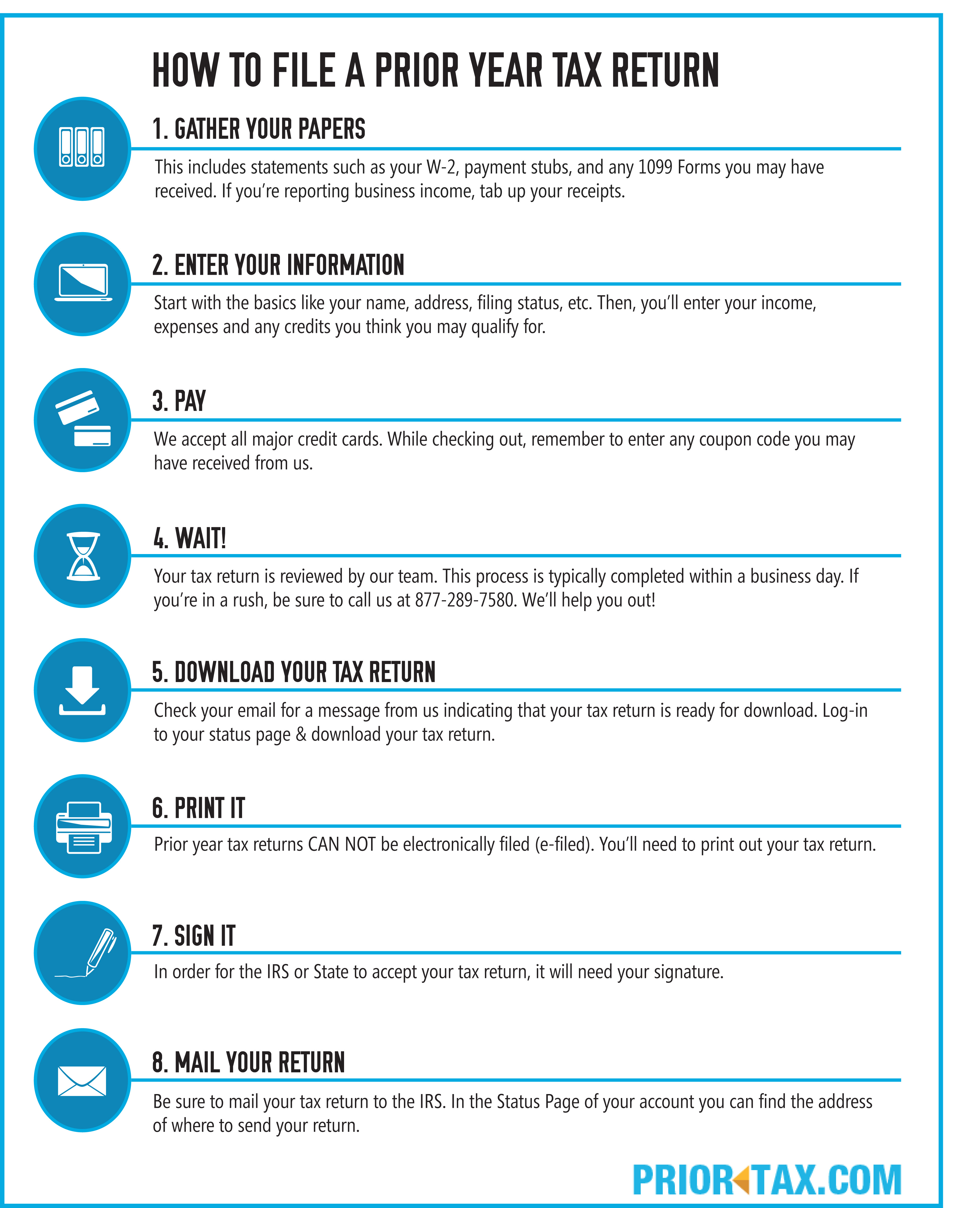
For most people, e-filing is the best choice. It’s faster, more secure, and less likely to have errors. The IRS processes e-filed returns much quicker, so refunds come sooner.
Paper filing may be necessary if:
- You have complicated forms not supported by e-filing
- You are amending a prior year’s return
- You don’t have internet access
But for the majority, e-filing is safer and more efficient.
Protecting Yourself From Tax Scams
Tax season brings out scammers who try to steal your information or money. Protect yourself by:
- Ignoring emails or phone calls claiming to be from the IRS (the IRS never asks for info this way)
- Never giving out your Social Security number or bank info unless you are sure who you’re dealing with
- Using strong passwords for online tax accounts
If you’re unsure, check official guidance from the IRS website.
Frequently Asked Questions
What Happens If I Make A Mistake On My Tax Return?
If you catch the error before the IRS does, you can file an amended return using Form 1040-X. If the IRS finds a mistake, they may fix simple math errors automatically or send you a notice asking for more information.
How Do I Know If I Need To File Taxes?
Check your income against the thresholds for your filing status and age. Even if you don’t have to file, it may be worth it if you can get a refund or claim credits.
Can I File My Taxes For Free?
Yes, if your income is under $73,000, you can use the IRS Free File program. Many VITA and TCE sites also offer free help for qualifying people.
How Do I Check My Refund Status?
Use the IRS “Where’s My Refund? ” tool online. You’ll need your Social Security number, filing status, and the exact refund amount.
What If I Can’t Pay My Taxes By The Deadline?
File your return on time and pay as much as you can. Then, set up a payment plan with the IRS. This reduces penalties and interest.
Filing taxes may seem complex, but it gets easier each year you do it. Take your time, keep good records, and use the resources available to you. With these steps, you’ll be able to file your taxes accurately and avoid unnecessary stress.


