

A dead car battery can ruin your day in seconds. You turn the key, and instead of the familiar engine rumble, you get nothing or maybe a weak clicking sound. Many drivers panic or call for help immediately. But with the right know-how, you can often fix this problem yourself in less than 20 minutes. Jump starting a car is a simple skill, but it must be done safely. Doing it wrong can damage your car—or even hurt you. This guide will walk you through every step, explain why each step matters, and help you avoid common mistakes. Even if you’ve never opened your car’s hood before, you’ll finish this article ready to help yourself (or someone else) when the battery dies.
Understanding Why Car Batteries Die
Car batteries power everything from the starter motor to the lights and radio. But they don’t last forever. The average lifespan of a car battery is about 3 to 5 years, but many factors can shorten this:

36% off Today’s Exclusive Deals
Limited-time Exclusive Deals. Check current discount on Amazon.
Check Price on Amazon As an Amazon Associate I earn from qualifying purchases.- Leaving headlights or interior lights on drains the battery fast.
- Extreme temperatures (hot or cold) stress the battery, making it weaker.
- Short trips can prevent the battery from fully recharging.
- Corroded terminals or loose connections reduce power flow.
- Old batteries simply lose their ability to hold charge.
Knowing the cause can help prevent future problems. For example, if your battery dies after you left the lights on, a jump start is usually all you need. But if it keeps dying for no clear reason, it might be time for a new battery or a checkup at a repair shop.
What You Need To Jump Start A Car
Jump starting is not complicated, but you do need some basic items:
- Jumper cables: These are thick, insulated wires with clamps on both ends. The cables must be long enough to reach between two cars parked close together.
- A second vehicle with a working battery: This is often called the “booster” or “donor” car.
- Protective gloves and eye protection (optional but recommended): Car batteries contain acid that can be dangerous if mishandled.
Some cars come with jump starter packs—portable battery units that don’t need a second car. These devices are handy, especially if you often drive in remote areas. However, traditional jumper cables are still the most common solution.
Safety Precautions Before You Start
Jump starting a car is generally safe if you follow the correct steps. But car batteries carry a lot of energy, and mistakes can cause sparks, short circuits, or even explosions. Here’s how to stay safe:
- Turn off both vehicles before connecting cables.
- Remove jewelry (rings, bracelets, necklaces) to avoid accidental electrical contact.
- Check for leaks or damage on the battery. If the battery is cracked, leaking, or swollen, do NOT try to jump start it.
- Read your owner’s manual. Some cars—especially hybrids or luxury models—have special procedures or hidden battery terminals.
- Keep metal objects away from the battery terminals.
One thing many people miss: make sure both cars are in Park (automatic) or Neutral (manual), and engage the parking brake. This prevents accidental movement when you start the engine.
Step-by-step Guide: How To Jump Start A Car
Jump starting is a process with clear steps. Follow them in order, and don’t skip any. Here’s how to do it safely and effectively:
1. Position The Vehicles
- Park the booster car close to the dead car, but not touching. The batteries should be within reach of the jumper cables.
- Turn off both engines and remove keys from the ignition.
- Open the hoods of both vehicles and secure them.
2. Identify The Battery Terminals
- Find the positive (+) and negative (–) terminals on both batteries. The positive terminal is usually marked with a red cover or a plus sign.
- Brush off any dirt or corrosion. Use a wire brush if needed, but avoid getting debris in your eyes.
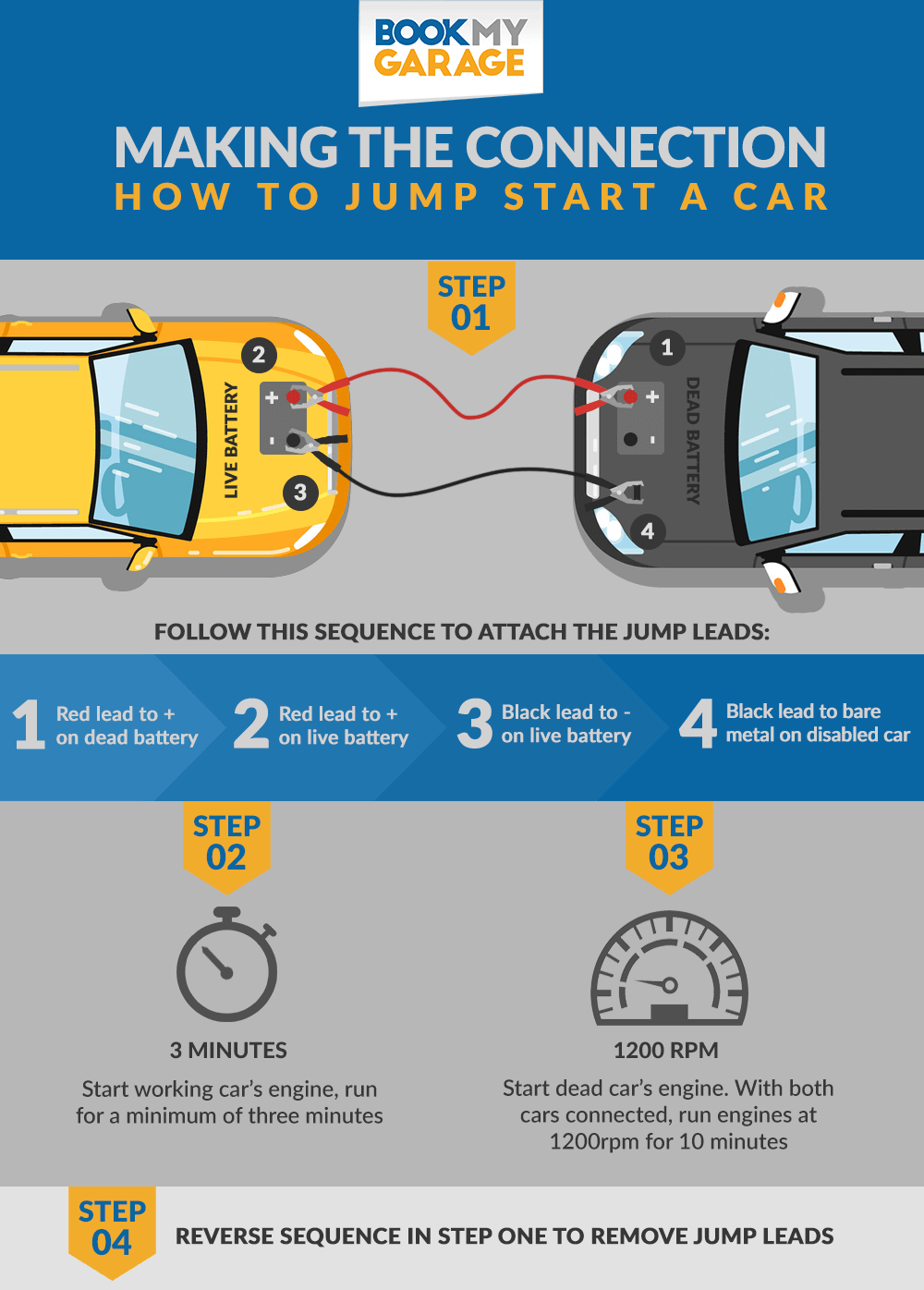
3. Connect The Jumper Cables
Connect the cables in this exact order:
- Red clamp to dead battery (+): Attach one red (positive) clamp to the positive terminal of the dead battery.
- Red clamp to good battery (+): Attach the other red clamp to the positive terminal of the working battery.
- Black clamp to good battery (–): Attach one black (negative) clamp to the negative terminal of the working battery.
- Black clamp to bare metal: Attach the last black clamp to a clean, unpainted metal surface on the dead car’s engine block or chassis—NOT the battery itself. This reduces the risk of sparks near the battery.
4. Start The Booster Car
- Start the engine of the booster car. Let it run for 2–3 minutes to build up a charge in the dead battery.
5. Start The Dead Car
- Try to start the dead car. If it doesn’t start right away, wait another minute and try again.
- If the car still doesn’t start after 2–3 tries, stop and check your connections. If it still fails, the battery may be too far gone or there’s another issue.
6. Remove The Cables In Reverse Order
Disconnect the jumper cables in the reverse order of how you connected them:
- Black clamp from dead car’s metal ground
- Black clamp from booster car’s negative terminal
- Red clamp from booster car’s positive terminal
- Red clamp from dead car’s positive terminal
Avoid letting the clamps touch each other or any metal part of the car as you remove them.
7. Let The Engine Run
- Keep the engine running for at least 15–30 minutes to help recharge the battery. If possible, drive the car for a while rather than letting it idle.
Visual Comparison: Steps At A Glance
Here’s a quick overview for reference:
| Step | Action | Key Detail |
|---|---|---|
| 1 | Position vehicles | Close, but not touching |
| 2 | Identify terminals | Red (+), Black (–) |
| 3 | Connect cables | Follow sequence exactly |
| 4 | Start booster car | 2–3 minutes running |
| 5 | Start dead car | Try, wait, retry if needed |
| 6 | Remove cables | Reverse order, avoid sparks |
| 7 | Let engine run | 15–30 minutes to recharge |
What To Do If Jump Starting Fails
Sometimes, a jump start won’t work. This can be frustrating, but don’t force it. Here are some common reasons:
- Severely discharged or damaged battery: Batteries that are very old or have internal damage often cannot hold a charge.
- Corroded or loose cables: Poor connections block the flow of electricity.
- Faulty starter motor or alternator: If the starter or alternator is broken, even a good battery won’t help.
- Electrical system issues: Modern cars have complex electronics that can prevent starting if something is wrong.
If jump starting fails:
- Check cable connections. Make sure clamps are tight and on clean metal.
- Look for obvious damage or leaks.
- If possible, try a different set of jumper cables or another vehicle.
- If nothing works, call for professional roadside assistance.

Differences Between Jump Starting Older And Newer Cars
Modern cars are packed with electronics. This affects how you jump start them. In older cars, the process is usually straightforward. But with newer cars, you need to be more careful:
- Some cars have remote battery terminals instead of direct battery access.
- Many hybrids and electric vehicles need special procedures—never try to jump start an EV with a traditional car.
- Sensitive electronics can be damaged by voltage spikes from improper jump starting.
Consult your owner’s manual before jumping a modern car. When in doubt, get help from a professional.
Using A Portable Jump Starter
Portable jump starters are becoming popular. These are small, rechargeable units you can keep in your trunk. They don’t require another vehicle. To use one:
- Turn off your car and connect the jump starter’s clamps just like traditional cables—red to positive, black to negative or a metal ground.
- Turn on the jump starter unit.
- Start the car. If successful, disconnect the clamps and recharge the jump starter as soon as possible.
Some units have built-in safety features to prevent incorrect connection or overcharging. Always follow the manufacturer’s instructions.
Common Mistakes To Avoid
Jump starting sounds simple, but mistakes are common. Avoid these errors:
- Reversing cable order: Connecting cables the wrong way can create sparks, damage electronics, or even cause explosions.
- Letting clamps touch: If the clamps touch each other during the process, it can cause a short circuit.
- Jump starting a leaking battery: Leaking or swollen batteries are dangerous. Do not attempt to jump them.
- Ignoring safety gear: Protect your eyes and hands, especially when dealing with old or dirty batteries.
- Disconnecting too soon: If you remove the cables before the dead battery has time to recharge, the car may stall again.
One insight many people miss: Even after a successful jump, a weak battery may leave you stranded again soon. Get your battery and charging system checked as soon as possible.
Essential Tips For Success
To make your jump starting experience as smooth and safe as possible, keep these points in mind:
- Keep jumper cables in your car at all times. You never know when you or someone else will need them.
- Check battery age—if yours is over 3 years old, test it every few months.
- Clean battery terminals regularly to prevent corrosion and improve electrical contact.
- Don’t rush—take a minute to check everything before starting.
- Replace worn cables—old, frayed cables are unsafe and can fail when you need them most.
Battery Health And Replacement: Data Overview
How do you know when it’s time to replace your battery? Here’s a look at average battery life and warning signs:
| Battery Age | Chance of Failure (%) | Common Warning Signs |
|---|---|---|
| 1-2 years | 5% | None or slow crank in extreme weather |
| 3-4 years | 20% | Dim lights, weak starts, corrosion |
| 5+ years | 50%+ | Frequent jump starts, swollen case, leaks |
If your battery is over 5 years old or needs frequent jumps, it’s safer to replace it.
Environmental And Weather Impacts
Many people don’t realize how much weather affects your battery. Cold weather thickens engine oil and slows chemical reactions inside the battery, making starts harder. Hot weather evaporates battery fluid and increases corrosion.
During winter, battery failures spike. According to the American Automobile Association (AAA), battery-related calls increase by 30% in cold months. If you live in a region with extreme temperatures, check your battery regularly and consider a battery rated for your climate.
What To Do After A Jump Start
You’re back on the road, but your job isn’t done yet. Here’s what to do next:
- Drive for at least 20 minutes to let the alternator recharge the battery.
- Turn off unnecessary electronics (radio, AC, headlights) until the battery is stronger.
- Check the battery and charging system at a repair shop soon. There may be an underlying issue.
- Record the incident—note the time and reason for the dead battery. This can help diagnose problems if it happens again.
Quick Comparison: Jumper Cables Vs. Portable Jump Starters
Which is better for emergencies? Both have pros and cons.
| Feature | Jumper Cables | Portable Jump Starter |
|---|---|---|
| Requires another vehicle | Yes | No |
| Ease of use | Simple, but needs two cars | Very easy, solo operation |
| Cost | Low ($15–$40) | Higher ($60–$200+) |
| Maintenance | None | Must keep charged |
| Size | Bulky cables | Compact device |
If you often drive alone or in remote areas, a portable jump starter is a smart investment.
When To Call For Professional Help
Some situations require expert help:
- Battery is leaking, swollen, or smells like rotten eggs: This means it’s damaged and dangerous.
- Repeated battery failures: There may be an underlying electrical problem.
- You’re unsure about the procedure: Mistakes can be costly or hazardous.
Roadside assistance services are available in most areas. They can jump start your car, replace the battery, or tow you if needed. For more details, visit the AAA guide.
Frequently Asked Questions
How Long Should I Leave Jumper Cables Connected?
Leave the cables connected for at least 2–3 minutes after starting the booster car and another minute after starting the dead car. This allows enough charge to transfer. Remove cables as soon as the dead car starts.
Can I Jump Start A Car In The Rain?
Yes, but be careful. Jumper cables are insulated, so it’s generally safe. Avoid standing in deep water and make sure your hands are dry. If lightning is present, wait for the storm to pass.
Is It Safe To Jump Start Modern Cars With Sensitive Electronics?
Most modern cars can be safely jump started if you follow the correct procedure and use the correct connection points. Always check your owner’s manual first, as some models require special steps.
What Happens If I Connect Jumper Cables In The Wrong Order?
Connecting cables incorrectly can cause sparks, damage the battery, or fry sensitive electronics. Always double-check each clamp before connecting. If you make a mistake, disconnect immediately and check for damage.
Can I Use A Motorcycle Or Small Battery To Jump Start A Car?
It’s possible, but not recommended. Car batteries require much more power than motorcycle or lawnmower batteries. Using a smaller battery may not provide enough current and can damage both batteries.
Jump starting a car is a skill every driver should know. With the right steps, tools, and safety measures, you can get back on the road quickly and confidently. If you run into trouble, don’t hesitate to get professional help—your safety is always most important.

