

Staying motivated is often harder than it sounds. Many people start strong when pursuing a goal but lose their drive after a few weeks or months. You might have felt this yourself—beginning a project, learning a new skill, or working toward better health, only to find your energy fading over time.
This is normal, but it doesn’t mean you should give up. Understanding how to stay motivated can help you reach your goals, overcome challenges, and feel more satisfied with your progress.

36% off Today’s Exclusive Deals
Limited-time Exclusive Deals. Check current discount on Amazon.
Check Price on Amazon As an Amazon Associate I earn from qualifying purchases.Motivation isn’t just about feeling excited. It’s about keeping your mind focused, even when things get tough or boring. In this article, you’ll learn practical ways to stay motivated, see real examples, and discover strategies that work for different kinds of goals.
You’ll also find data, comparisons, and answers to common questions about motivation. Whether you’re a student, employee, entrepreneur, or just someone looking to improve, these insights can help you build lasting motivation.
What Is Motivation And Why Does It Fade?
Motivation is the force that pushes you to start and continue actions. It can come from inside you (intrinsic motivation) or from outside (extrinsic motivation). For example, you might study hard because you enjoy learning (intrinsic) or because you want good grades (extrinsic).
A key challenge is that motivation often fades. Research from the American Psychological Association shows that motivation drops after the first few weeks of pursuing a new goal. This is called the “honeymoon period.” After this, reality sets in, obstacles appear, and the excitement disappears.
Why Does This Happen?
- Lack of progress: When you don’t see quick results, it’s easy to lose hope.
- Boredom: Repeating the same task can feel dull.
- Distractions: Life events, social media, and other interests can pull your attention away.
- Unclear goals: If your goal is vague, you may forget why you started.
- Overwhelm: Big goals can feel impossible, making you want to quit.
Understanding these challenges helps you build strategies to fight back.
Set Clear And Achievable Goals
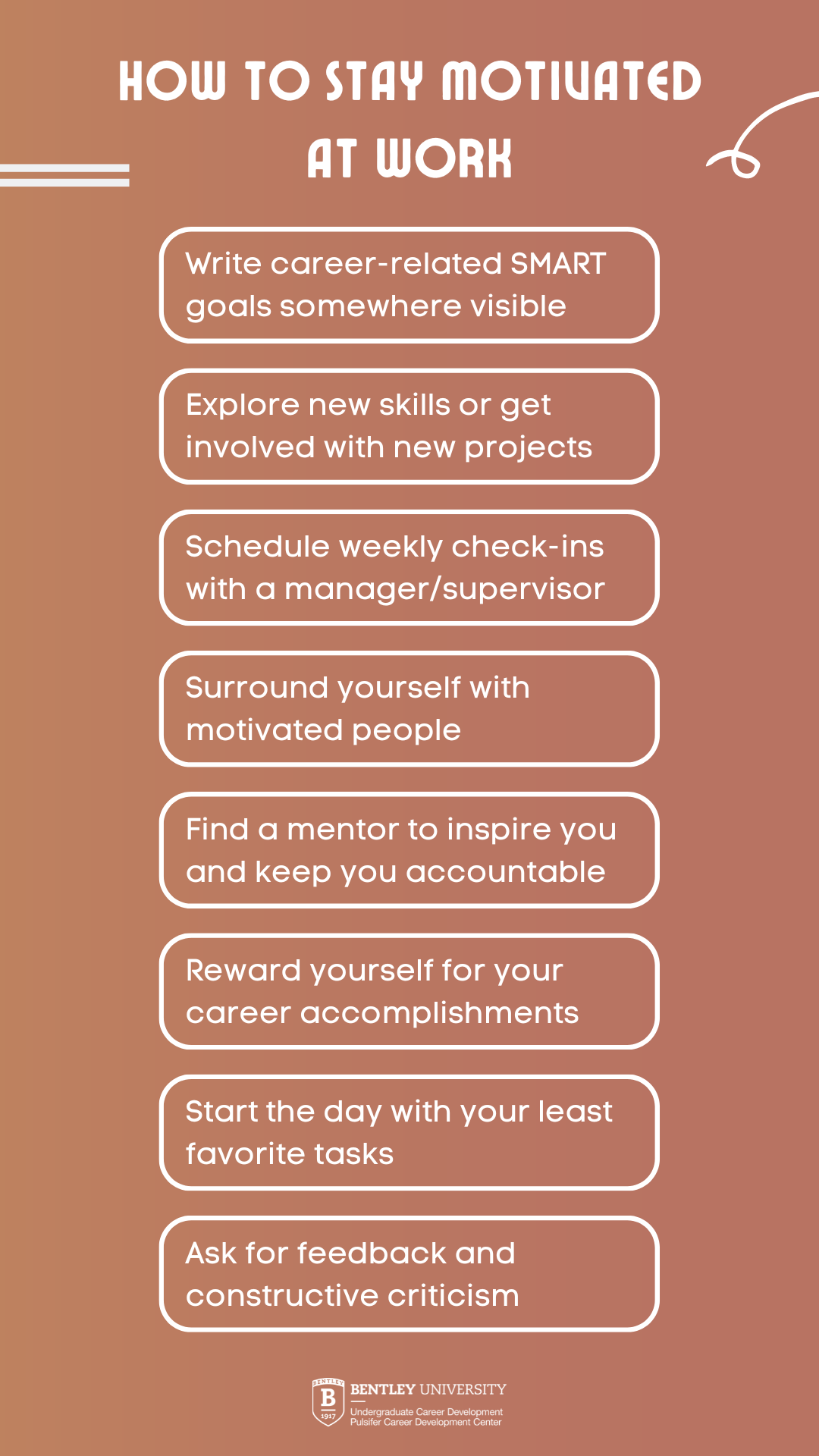
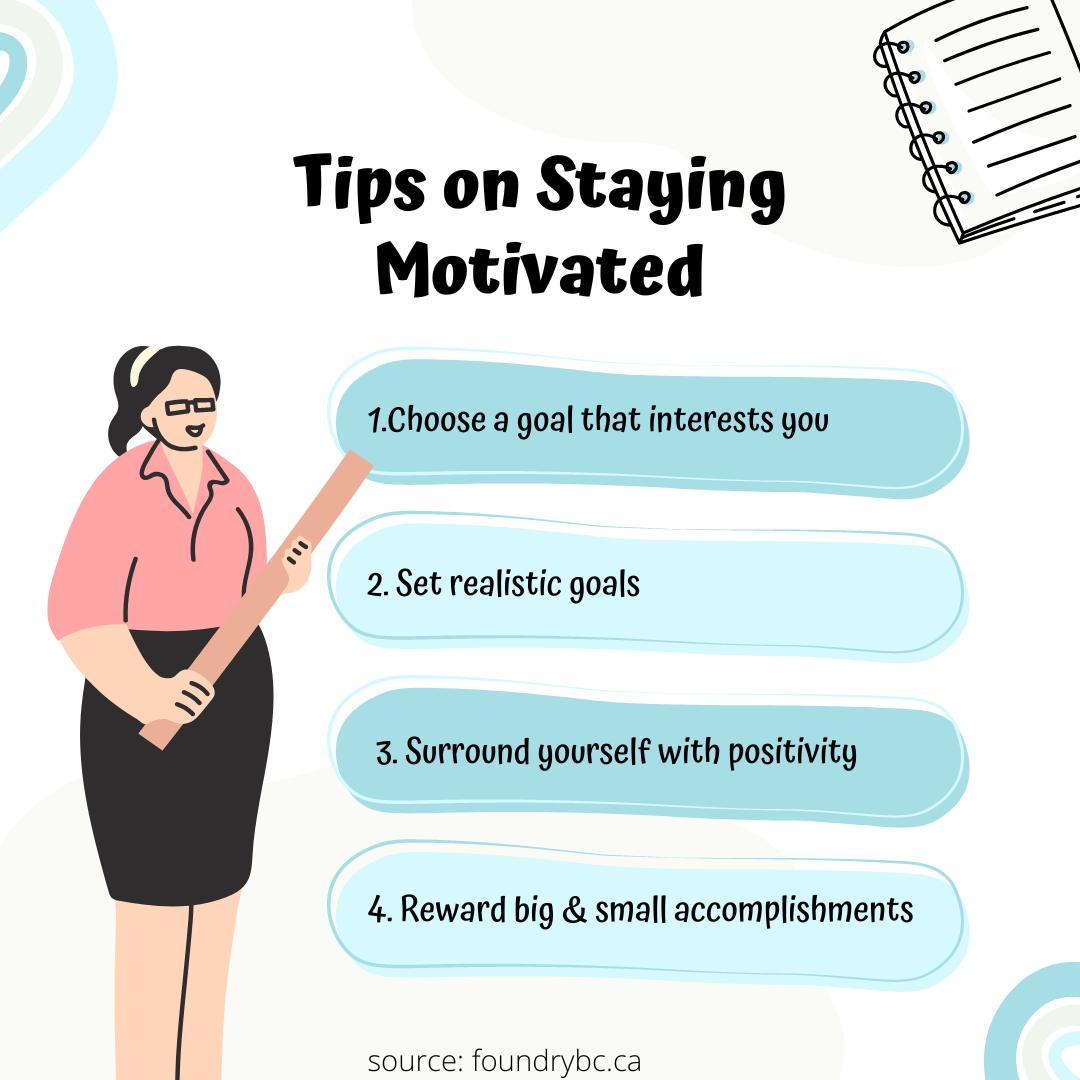
The first step in staying motivated is having clear goals. Vague goals like “get healthy” or “be successful” don’t help. Instead, break your goal into specific, achievable steps.
Smart Goals
A popular method is the SMART goal system:
- Specific: What exactly do you want?
- Measurable: How will you know you’ve reached it?
- Achievable: Is it possible?
- Relevant: Does it matter to you?
- Time-bound: When will you finish?
Example: Instead of “I want to lose weight,” try “I will lose 10 pounds in 3 months by walking 30 minutes every day.”
This method makes your goal feel real and gives you a roadmap.
Tracking Progress
People who track their progress stay motivated longer. Use a journal, app, or calendar to mark your achievements. Seeing small wins can boost your confidence and remind you of your progress.
Find Your “why”
Many people miss this crucial step. Your why is the reason behind your goal. It’s not just about the result, but about what the result means to you.
Ask yourself:
- Why do I want this?
- How will my life improve?
- Who else will benefit?
If your goal is to learn English, maybe your “why” is to get a better job or help your children study. Write your “why” somewhere visible. When your motivation drops, reading it can help you remember why you started.
Break Big Goals Into Small Steps
Large goals can feel overwhelming. A non-obvious insight is that breaking big goals into small steps prevents burnout and keeps motivation high. For example, if you want to write a book, start with one page a day. If you want to run a marathon, begin by jogging for five minutes.
Example Table: Big Goals Vs. Small Steps
| Big Goal | Small Step |
|---|---|
| Learn English fluently | Practice 10 new words daily |
| Save $5,000 | Save $10 per week |
| Run a marathon | Run 1 mile every other day |
| Write a novel | Write 300 words per day |
Each small step gives you a quick win, making your goal feel possible.
Celebrate Small Wins
Research shows that celebrating small wins boosts motivation. When you finish a small step, reward yourself. Rewards don’t have to be big—they can be as simple as a favorite snack, a short walk, or sharing your progress with a friend.
How To Celebrate
- Share your progress on social media or with a support group.
- Treat yourself to something enjoyable (a movie, hobby time).
- Mark your achievement on a calendar.
A simple celebration makes your brain feel good and encourages you to keep going.
Build A Routine
Routine is powerful for motivation. When you have a set schedule, tasks feel automatic. You don’t have to think every day about whether you should work on your goal.
Example Table: Routine Vs. Random Action
| Routine | Random Action |
|---|---|
| Study English every day at 7 PM | Study whenever you feel like it |
| Exercise every morning | Exercise once a week, not planned |
| Save money every Friday | Save money when you remember |
A routine builds consistency and reduces decision fatigue. You know what to do and when, making it easier to stay motivated.

Avoid Common Motivation Mistakes
Many people make mistakes that kill motivation. Here are some to watch out for:
- Trying to do too much at once: This leads to burnout.
- Ignoring rest: Your body and mind need breaks.
- Comparing yourself to others: Everyone’s journey is different.
- Setting unrealistic goals: Goals should challenge you, but not be impossible.
- Missing feedback: If you don’t know if you’re improving, motivation fades.
A non-obvious insight: perfectionism is a major motivation killer. If you wait for perfect conditions or results, you’ll never start or continue. Accept progress, not perfection.
Use Positive Self-talk
How you talk to yourself matters. Negative thoughts (“I’ll never finish,” “I’m not good enough”) reduce motivation. Practice positive self-talk:
- “I can do this.”
- “I’m making progress.”
- “Every step counts.”
This may feel silly at first, but studies show that positive self-talk improves performance and motivation, especially in sports and learning.
Get Support From Others
Motivation grows when you have support. Find friends, family, or groups who encourage you. You can join online communities, local clubs, or study partners.
Example Table: Types Of Support
| Support Type | How It Helps |
|---|---|
| Family | Emotional encouragement, practical help |
| Friends | Accountability, shared goals |
| Online groups | Advice, motivation, shared experiences |
| Mentors | Guidance, expert feedback |
Even a simple message from a friend can make a big difference.
Use Technology Wisely
Apps, tools, and online resources can boost motivation. For example, habit tracking apps, language learning platforms, or fitness trackers remind you of your goals and show progress.
But be careful—technology can also distract you. Choose tools that support your goal, not ones that waste your time.
Useful Tools
- Habit tracking apps (like Habitica, Streaks)
- Fitness trackers (Fitbit, Garmin)
- Language learning platforms (Duolingo, Memrise)
- Productivity apps (Trello, Todoist)
For more on how technology can help, see this APA article.
Practice Mindfulness And Self-care
Mindfulness means paying attention to the present moment. When you’re mindful, you notice your thoughts and feelings without judging them. This helps you stay calm and focused, even when motivation drops.
Self-care is also important. Eating well, sleeping enough, and taking breaks help your mind stay fresh. If you ignore self-care, your motivation will suffer.
Mindfulness Techniques
- Deep breathing for five minutes
- Short meditation sessions
- Keeping a gratitude journal
These activities help you reset and recharge.
Adjust Your Environment
Your environment affects your motivation more than you might think. If your workspace is messy or noisy, it’s harder to focus. Small changes can make a big difference.
Tips For A Motivating Environment
- Keep your workspace tidy.
- Remove distractions (TV, social media).
- Place motivational quotes or pictures nearby.
- Use good lighting.
Even moving to a different room can help you feel more motivated.
Learn From Setbacks
Setbacks are part of every journey. Instead of feeling discouraged, see them as chances to learn. Ask yourself:
- What went wrong?
- What can I do differently next time?
- How can I improve?
Most successful people fail many times before reaching their goals. Accepting setbacks as learning opportunities keeps motivation strong.
Compare Different Motivation Strategies
There is no single best way to stay motivated. People are different, and strategies work differently for each person. Here’s a simple comparison of popular methods:
| Strategy | Best For | Weakness |
|---|---|---|
| Reward System | Short-term goals | Can lose effect over time |
| Routine | Long-term consistency | May feel boring |
| Social Support | Group projects | Depends on others’ reliability |
| Positive Self-Talk | Personal goals | Needs practice |
| Mindfulness | Stressful tasks | Requires patience |
Try different strategies and see what works best for you.
Real Examples Of Staying Motivated
Hearing real stories can inspire you. Here are some true examples:
- Maria, a student: Maria wanted to learn English for a job. She set a goal to learn 20 new words each week, joined an online group, and tracked her progress. After six months, she improved her skills and got her desired job.
- James, an entrepreneur: James started a small business. He faced many failures but kept a journal of his wins and losses. He used feedback to improve and asked mentors for advice. After two years, his business became profitable.
- Fatima, a runner: Fatima aimed to run a marathon. She broke her training into small steps, celebrated each milestone, and joined a running club for support. She finished the marathon and felt proud of her persistence.
These examples show that motivation comes from clear goals, support, and learning from setbacks.
Motivation Statistics
Motivation is not just a feeling—it’s backed by research. Here are some useful statistics:
- 92% of people never achieve their New Year’s goals, according to a University of Scranton study.
- People who set specific goals are 33% more likely to achieve them.
- Accountability partners increase success rates by up to 65%.
- Tracking progress raises motivation by 20% on average.
These numbers show the importance of clear goals, support, and tracking.
Frequently Asked Questions
How Can I Stay Motivated When I Don’t See Quick Results?
It’s normal to lose motivation if results are slow. Focus on small wins. Track your progress and celebrate even tiny achievements. Remember that most goals take time. If you keep moving forward, results will come.
What If I Feel Bored With My Routine?
Boredom can kill motivation. Try changing your routine—study at a new place, use different tools, or set new challenges. Adding variety makes tasks more interesting and keeps your mind engaged.
How Do I Recover From Setbacks?
Setbacks are part of the journey. Instead of feeling discouraged, look for lessons. Ask yourself what went wrong and how you can improve. Talk to others who have faced similar challenges. Learning from mistakes helps you stay motivated.
Can Technology Really Help Me Stay Motivated?
Yes, technology can help. Apps and online platforms make it easier to track progress, set reminders, and connect with others. But be careful—too much screen time can distract you. Use technology as a tool, not a replacement for real effort.
Is It Better To Work Alone Or With Others?
Both options have benefits. Working alone helps you focus, while working with others gives you support and accountability. If you feel stuck, try joining a group or finding a mentor. Mixing solo and group work often brings the best results.
Staying motivated is a skill you can build. With clear goals, small steps, support, and a positive mindset, you can keep moving forward—even when things get tough. Remember, motivation is not just about feeling excited; it’s about building habits and using strategies that work for you.
Keep experimenting, learning, and celebrating your progress. The journey may be long, but every step counts.

