

Many people want to cook faster, save energy, and keep more nutrients in their food. The pressure cooker is a kitchen tool that helps you do all three. But for many, this device can feel confusing or even a bit scary. Maybe you’ve heard stories of exploding pots or mushy meals. The truth is, modern pressure cookers are safe, efficient, and much easier to use than you might think.
Learning to use a pressure cooker can change how you cook every day. You’ll make stews, beans, meats, rice, and even desserts in a fraction of the time. This guide will help you understand how a pressure cooker works, what you can cook, and how to use it safely.

36% off Today’s Exclusive Deals
Limited-time Exclusive Deals. Check current discount on Amazon.
Check Price on Amazon As an Amazon Associate I earn from qualifying purchases.Whether you’re a complete beginner or just want to improve, you’ll find clear steps, practical tips, and real examples.
What Is A Pressure Cooker?
A pressure cooker is a sealed pot that uses steam and high pressure to cook food very quickly. When water boils inside the cooker, the steam cannot escape. This trapped steam increases the pressure and temperature inside the pot. The result? Food cooks up to 70% faster than with regular methods, and flavors stay strong.
There are two main types of pressure cookers:
- Stovetop pressure cookers: These are placed on a stove, and you control the heat manually.
- Electric pressure cookers: These plug into the wall and have digital controls, like the popular Instant Pot.
Both types work on the same basic idea, but electric models are often easier for beginners.
Why Use A Pressure Cooker?
People choose pressure cookers for several reasons:
- Saves time: Beans that need hours on the stove are ready in 30 minutes.
- Keeps nutrients: Less water and time means more vitamins stay in your food.
- Saves energy: You use less gas or electricity since cooking is faster.
- Tenderizes tough cuts: Cheap meats become soft and tasty.
- Versatile: You can cook soups, rice, meats, vegetables, and even cakes.
Studies show that pressure cooking keeps up to 90% of vitamin C in vegetables, compared to only 60% with boiling.
How Does A Pressure Cooker Work?
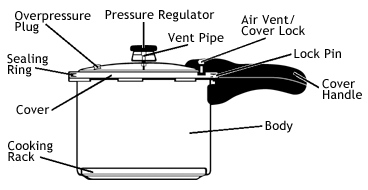
A pressure cooker has a locking lid, a rubber sealing ring, a pressure valve, and a heavy-duty pot. When you add liquid and heat, steam builds up. The pressure inside can reach 15 psi (pounds per square inch), raising the boiling point of water from 212°F to about 250°F.
This high temperature cooks food faster and breaks down tough fibers.
Key Parts Of A Pressure Cooker
Here’s a look at the main parts you’ll find on most pressure cookers:
| Part | Function |
|---|---|
| Lid | Seals the pot, traps steam and pressure |
| Rubber Gasket | Makes an airtight seal |
| Pressure Valve | Releases excess steam for safety |
| Pressure Indicator | Shows when the pot is under pressure |
| Inner Pot | Where you put your food and liquid |
| Handles | For safe moving and opening |
Knowing each part helps you use your cooker the right way and avoid mistakes.
Getting Ready: Before You Start Cooking
Before you cook with a pressure cooker, a few simple steps make everything easier and safer.
- Read the manual: Every cooker is a little different. Look for how to lock the lid, release pressure, and clean the gasket.
- Check the gasket: The rubber ring must be smooth, clean, and flexible. If it’s cracked or stiff, get a new one.
- Inspect the valves: Look for clogs or food bits in the pressure valve and safety vent. Clean with a brush or toothpick.
- Gather the right tools: You’ll need measuring cups, a wooden spoon, and a trivet or rack for certain foods.
- Choose your recipe: Start with simple dishes like rice, beans, or chicken stew.
Pro tip: Keep extra gaskets on hand. They can wear out, and a bad seal means no pressure.
Step-by-step: How To Use A Pressure Cooker
Let’s walk through the typical steps for using a pressure cooker. This process works for both stovetop and electric models, but you should always check your specific device’s instructions.
1. Add Food And Liquid
Pressure cookers need liquid to work. The steam is what creates pressure, so never use a dry cooker.
- Most recipes need at least 1 cup (240 ml) of water or broth.
- For grains and beans, follow the recipe ratios closely.
- Do not fill the pot more than 2/3 full (1/2 for foods that expand, like beans or rice).
2. Close And Lock The Lid
Fit the lid onto the pot and turn or lock it in place. Make sure the pressure valve is in the correct position (often called “sealing” on electric models).
3. Build Pressure
- For stovetop cookers, turn the heat to high. When the pressure indicator pops up or steam starts to escape, lower the heat to maintain steady pressure.
- For electric cookers, select your program (like “Bean/Chili” or “Meat/Stew”) and press start. The cooker will build pressure automatically.
4. Cook For The Right Time
Start your timer when full pressure is reached. Cooking times are often much shorter than regular recipes.
Here’s a quick guide to typical pressure cooking times:
| Food | Pressure Cooking Time | Regular Cooking Time |
|---|---|---|
| Chicken Breast | 8-10 minutes | 25-30 minutes |
| Dried Beans | 25-35 minutes | 1.5-2 hours |
| Basmati Rice | 5-7 minutes | 18-20 minutes |
| Potatoes (whole) | 10-12 minutes | 40-50 minutes |
| Beef Stew | 30-35 minutes | 2-3 hours |
Non-obvious tip: Don’t start timing until you see the pressure indicator or hear the cooker’s signal. If you start too early, your food might be undercooked.
5. Release Pressure Safely
When the cooking time is up, pressure must be released before opening the lid. There are two main ways:
- Natural release: Let the cooker cool on its own. Pressure drops slowly (10-20 minutes). Best for meats and soups.
- Quick release: Open the valve to let steam out fast. Good for vegetables and delicate foods.
Never force open a cooker under pressure. Wait until the indicator shows it’s safe.
6. Open The Cooker
Once pressure is released, unlock and remove the lid, tilting it away from you to avoid hot steam.
7. Serve Or Finish Cooking
Some foods, like stews, may need a few extra minutes simmering without the lid. Taste and adjust seasoning as needed.
What You Can Cook In A Pressure Cooker
A pressure cooker is much more than a tool for beans and stews. Here are just a few foods you can make:
- Beans and legumes: Black beans, chickpeas, lentils (no soaking needed).
- Grains: Rice, quinoa, barley, farro.
- Meats: Chicken, beef, pork—especially tough cuts like brisket or stew meat.
- Soups and stews: Vegetable soup, chicken stew, chili.
- Vegetables: Potatoes, carrots, beets.
- Eggs: Hard- or soft-boiled eggs, easy to peel.
- Desserts: Cheesecake, rice pudding, flan.
Surprising fact: You can even sterilize baby bottles and jars in a pressure cooker.
Common Mistakes And How To Avoid Them
Many beginners make the same errors. Here’s how to dodge the most frequent ones:
- Not enough liquid: The cooker needs steam to build pressure. Always add the minimum required (usually 1 cup).
- Overfilling: Too much food or liquid can block the valve and create a mess.
- Ignoring the gasket: A dry, cracked, or dirty gasket means poor sealing and no pressure.
- Opening too soon: Never force the lid. Wait for the pressure to drop.
- Wrong cooking times: Pressure cookers are fast. Overcooking will make food mushy.
- Using thickeners too early: Cornstarch or flour can block the valve. Add these after pressure cooking, not before.
Extra insight: If your cooker “burns” or gives a “food burn” warning (common with electric models), you may not have enough liquid or you might have starchy food stuck to the bottom. Always deglaze with a little water if you sauté first.
Safety Tips For Using A Pressure Cooker
Modern pressure cookers are designed with multiple safety features. Still, you should always follow basic rules:
- Check all parts before each use, especially the gasket and valves.
- Never open under pressure. Always wait for the indicator to drop.
- Keep your face and hands away from the steam vent when releasing pressure.
- Don’t use damaged cookers: If you see cracks, warping, or broken parts, stop using the cooker.
- Clean after every use: Remove the gasket and clean the lid, valve, and pot.
Important: Most accidents happen with old or poorly maintained cookers. Modern models have 3-5 safety features.
Choosing The Right Pressure Cooker
If you’re buying a new pressure cooker, consider these factors:
Size
Pressure cookers range from 2 to 10 quarts. For most families, a 6-quart model is ideal. Singles or couples may prefer 3-4 quarts, while large families might want 8 quarts or more.
Material
- Stainless steel: Durable, resists stains and odors.
- Aluminum: Heats faster, but can stain and react with acidic foods.
Type
- Stovetop: Reaches higher pressure, cooks faster, but needs more attention.
- Electric: Easier to use, with built-in timers and programs. Good for beginners.
Safety Features
Look for models with:
- Locking lid system
- Pressure indicator
- Automatic pressure release
- Backup safety vents
Price And Brand
Trusted brands like Instant Pot, Presto, and Fagor are reliable. Prices range from $40 to $150+.
Here’s a simple comparison of common pressure cooker types:
| Feature | Stovetop | Electric |
|---|---|---|
| Ease of Use | Manual | Automatic |
| Cooking Speed | Faster | Slower |
| Safety Features | Basic | Advanced |
| Price Range | $40–$100 | $60–$150 |
| Best For | Experienced cooks | Beginners |
Cleaning And Maintaining Your Pressure Cooker
Keeping your pressure cooker clean and well maintained is key for safety and performance.
- Wash all parts after each use: Remove the gasket and valve. Wash with warm, soapy water.
- Dry thoroughly: Moisture can cause the gasket to wear out quickly.
- Check for buildup: Starch or food can block the valve. Use a toothpick or brush to clean it.
- Inspect the gasket: Replace at least once a year or sooner if cracked.
- Store with the lid upside down: This keeps the gasket from staying compressed.
Advanced tip: Once a month, check the pressure release valve and safety vent for clogs. This is a step many users forget, but it prevents most accidents.

Pressure Cooking Vs. Other Cooking Methods
Why choose a pressure cooker over boiling, steaming, or slow cooking? Let’s compare:
- Boiling: More nutrients lost, takes longer.
- Steaming: Gentle, but slower.
- Slow cooker: Easy but needs 6-8 hours.
- Pressure cooker: Fast, keeps flavors and nutrients, uses less energy.
A study from the Journal of Food Science found that pressure cooking green beans kept 90% of vitamin C, while boiling kept only 66%.
Troubleshooting Common Pressure Cooker Problems
Even with practice, you might face issues. Here’s how to fix them:
- No pressure: Check that there’s enough liquid, the lid is locked, and the gasket is in place.
- Steam escaping from the sides: Lid may not be sealed. Check the gasket and re-lock the lid.
- Food stuck to the bottom: Deglaze with a little water before sealing. Stir well.
- Tough meat: May need more cooking time or natural release.
- Foamy foods (like beans) blocking the valve: Don’t fill more than half with foamy foods, and add a spoon of oil to reduce foaming.
Unexpected fact: Hard water can leave white deposits inside the pot. Clean with vinegar and water once a month.
Recipes To Try In Your Pressure Cooker
Here are three beginner-friendly recipes to get you started.
Simple Chicken Stew
- 1.5 lbs (700 g) chicken thighs, cut up
- 2 cups (480 ml) chicken broth
- 3 potatoes, cubed
- 2 carrots, sliced
- 1 onion, chopped
- 2 cloves garlic, minced
- 1 tsp salt, 1/2 tsp pepper
Add all ingredients to the pot. Lock lid, cook at high pressure for 12 minutes (manual or “Stew” setting). Natural release for 10 minutes, then quick release. Serve hot.
Basic Black Beans (no Soak)
- 1 cup (200 g) dried black beans, rinsed
- 3 cups (720 ml) water
- 1/2 onion, chopped
- 1 bay leaf, 1 tsp salt
Add beans, water, onion, and bay leaf. Lock lid. Cook at high pressure for 28 minutes. Natural release. Add salt after cooking.
Creamy Rice Pudding
- 3/4 cup (150 g) rice
- 2 cups (480 ml) milk
- 1/3 cup (65 g) sugar
- 1/2 tsp cinnamon
Add rice, milk, and sugar. Lock lid, cook at high pressure for 10 minutes. Quick release. Stir in cinnamon and let cool.
Serving size: Each recipe makes 4 servings. Cooking time (including pressure build/release): 30-50 minutes.
Frequently Asked Questions
How Much Liquid Do I Need In A Pressure Cooker?
Most recipes need at least 1 cup of liquid (water, broth, or sauce) to create steam. Some foods, like rice or beans, may need more. Always check your cooker’s manual for the minimum amount.
Can I Open The Lid Before All The Pressure Is Released?
No, you must wait until the pressure indicator drops or the valve shows zero pressure. Opening early is dangerous and can cause burns or mess.
Are Electric Pressure Cookers Better Than Stovetop Ones?
Electric models are easier for beginners and have automatic features. Stovetop cookers are faster and reach higher pressure but need more attention. Choose based on your cooking style and comfort level.
Can I Cook Frozen Meat In A Pressure Cooker?
Yes, you can cook frozen meat directly. Add 5-10 minutes extra to the cooking time and make sure pieces are separated. Never overfill the cooker.
Is Pressure Cooking Healthy?
Yes, studies show pressure cooking keeps more nutrients than boiling or frying. The short cooking time and less water help preserve vitamins and minerals. For more details, see Wikipedia.
Using a pressure cooker opens up a new world of fast, healthy, and flavorful cooking. With the right steps and safety, you’ll soon wonder how you ever lived without it. Explore new recipes, keep your cooker clean, and enjoy delicious meals every day.

