

Using a pressure washer can turn a dirty driveway, patio, or siding into a clean, bright surface in minutes. But many beginners make mistakes that can damage surfaces or even hurt themselves. Learning how to use a pressure washer the right way saves you time, prevents costly errors, and makes your cleaning jobs much easier.
Whether you want to tackle tough stains, clean your car, or prepare surfaces for painting, this guide will walk you step-by-step through everything you need to know. You’ll learn about choosing the right machine, safe operation, expert tips, and common pitfalls—all in simple, clear language.

36% off Today’s Exclusive Deals
Limited-time Exclusive Deals. Check current discount on Amazon.
Check Price on Amazon As an Amazon Associate I earn from qualifying purchases.Understanding Pressure Washers
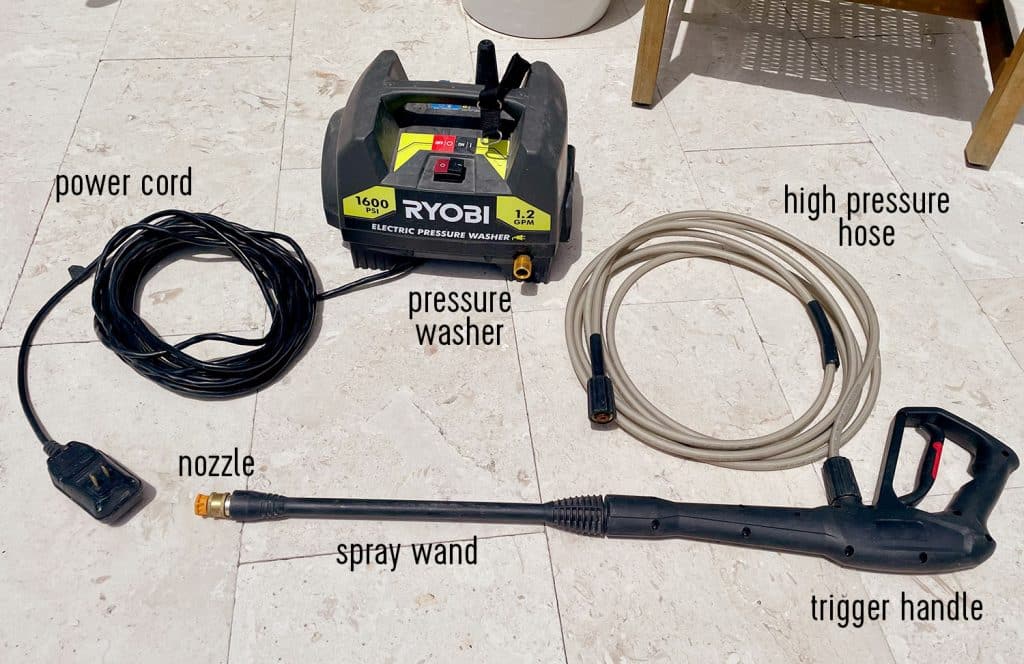
A pressure washer is a machine that uses high-pressure water to clean dirt, grime, mold, and other tough stains from surfaces. The water comes out much faster and harder than from a normal hose. There are two main types:
- Electric pressure washers: Usually quieter, lighter, and good for small jobs like cars, patios, or furniture.
- Gas pressure washers: More powerful, suitable for larger areas like driveways, siding, or decks.
Pressure is measured in PSI (pounds per square inch). Most home models range from 1,300 to 3,000 PSI. Water flow is measured in GPM (gallons per minute). Higher GPM means you clean faster.
Comparing Electric Vs Gas Pressure Washers
Here’s a quick comparison to help you choose:
| Feature | Electric | Gas |
|---|---|---|
| Power (PSI) | 1,300–2,000 | 2,000–3,000+ |
| Noise Level | Low | High |
| Portability | Lightweight | Heavy |
| Maintenance | Easy | Needs regular upkeep |
| Price | Lower | Higher |
Non-obvious insight: Electric models often stop the pump automatically when you release the trigger, which saves wear and tear. Gas models usually don’t, so you must turn them off if you pause for long.
Choosing The Right Pressure Washer
Before buying or renting a pressure washer, consider:
- Job Size: For small tasks like cleaning bikes or patio furniture, an electric model is enough. For large driveways or heavy stains, a gas model works better.
- Surface Type: Delicate surfaces (like wood or car paint) need lower PSI. Concrete or brick can handle higher PSI.
- Budget: Electric models usually cost $100–$250. Gas models start at $250 and can go above $500.
Pressure Washer Nozzle Guide
Nozzles control the spray angle and pressure. Using the wrong nozzle can damage surfaces or make cleaning slow.
| Nozzle Color | Angle | Use |
|---|---|---|
| Red | 0° | Very high pressure, for tough stains (rarely used) |
| Yellow | 15° | Heavy-duty cleaning (concrete, brick) |
| Green | 25° | General cleaning (patios, decks) |
| White | 40° | Delicate surfaces (cars, windows) |
| Black | Soap | Low pressure for applying detergent |
Tip: Always start with a wider nozzle (like white or green). If the stain doesn’t come off, switch to a narrower one.
Getting Ready To Use A Pressure Washer
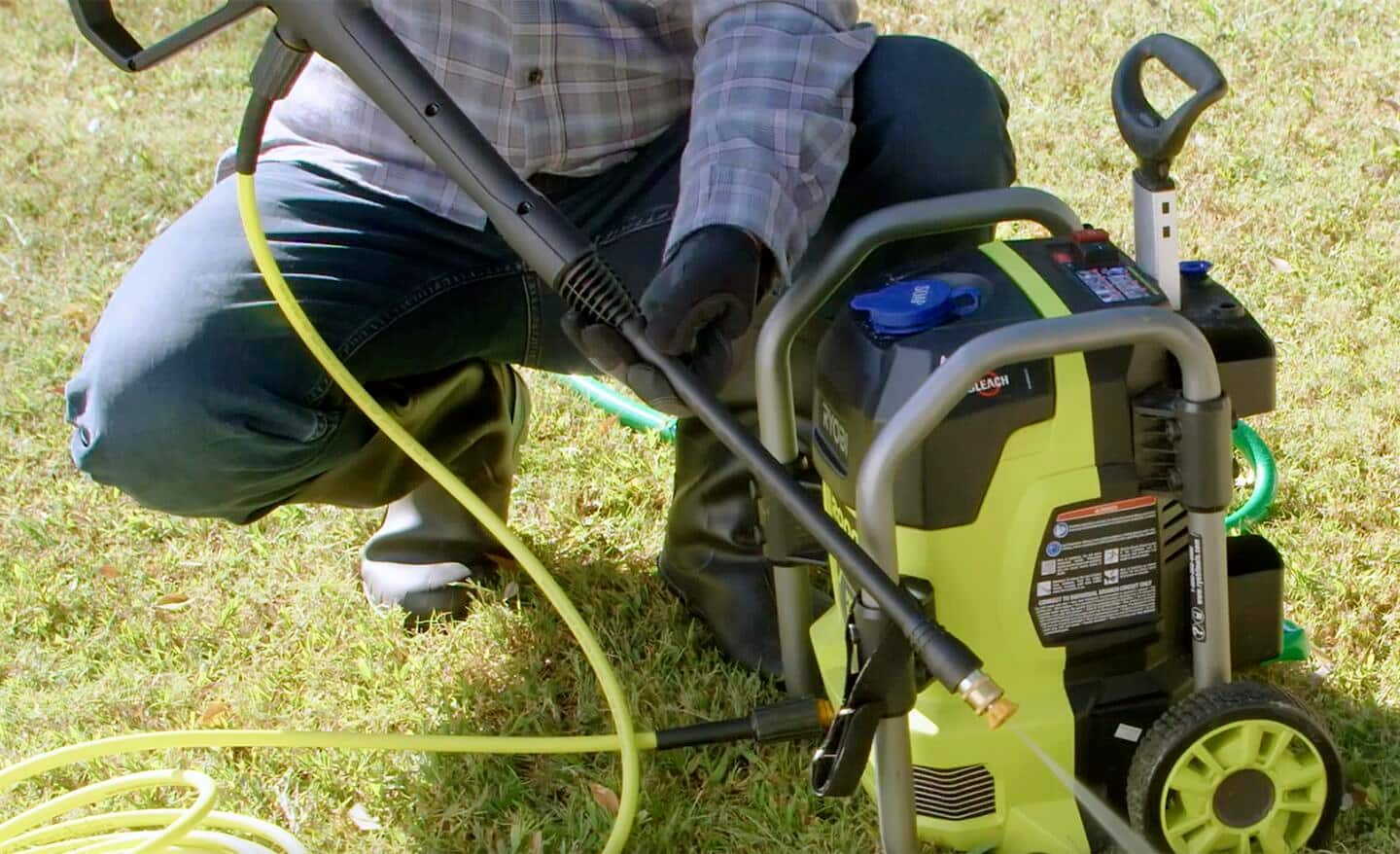
Preparation is crucial. Here’s what you need to do before starting:
- Read the manual: Each machine is different. Check safety warnings and setup steps.
- Wear protective gear: Use safety glasses, gloves, and sturdy shoes. High-pressure water can cut skin.
- Clear the area: Remove toys, furniture, and pets. Cover electrical outlets and delicate plants.
- Check connections: Make sure hoses are tight. A loose connection can leak or pop off.
- Test water supply: Pressure washers need a steady flow. Most require at least 2–3 GPM from your tap.
Common Beginner Mistakes
- Using the wrong nozzle: This can etch surfaces or leave streaks.
- Skipping safety gear: Eye injuries are common from flying debris.
- Forgetting to check water supply: If water flow is too low, the pump can overheat.
Step-by-step Guide: How To Use A Pressure Washer
Follow these steps for safe and effective cleaning:
1. Attach The Hose And Nozzle
Connect the garden hose to your pressure washer’s water inlet. Attach the correct spray nozzle for your job. Make sure everything is locked in place.
2. Turn On The Water Supply
Open your tap fully. Never run the pressure washer without water—it can damage the pump.
3. Prime The Pump
Squeeze the trigger for a few seconds (without starting the motor) to remove air from the system.
4. Start The Machine
For electric models, plug in and turn on. For gas models, check oil and gas, set choke, and pull the starter cord.
5. Begin Cleaning
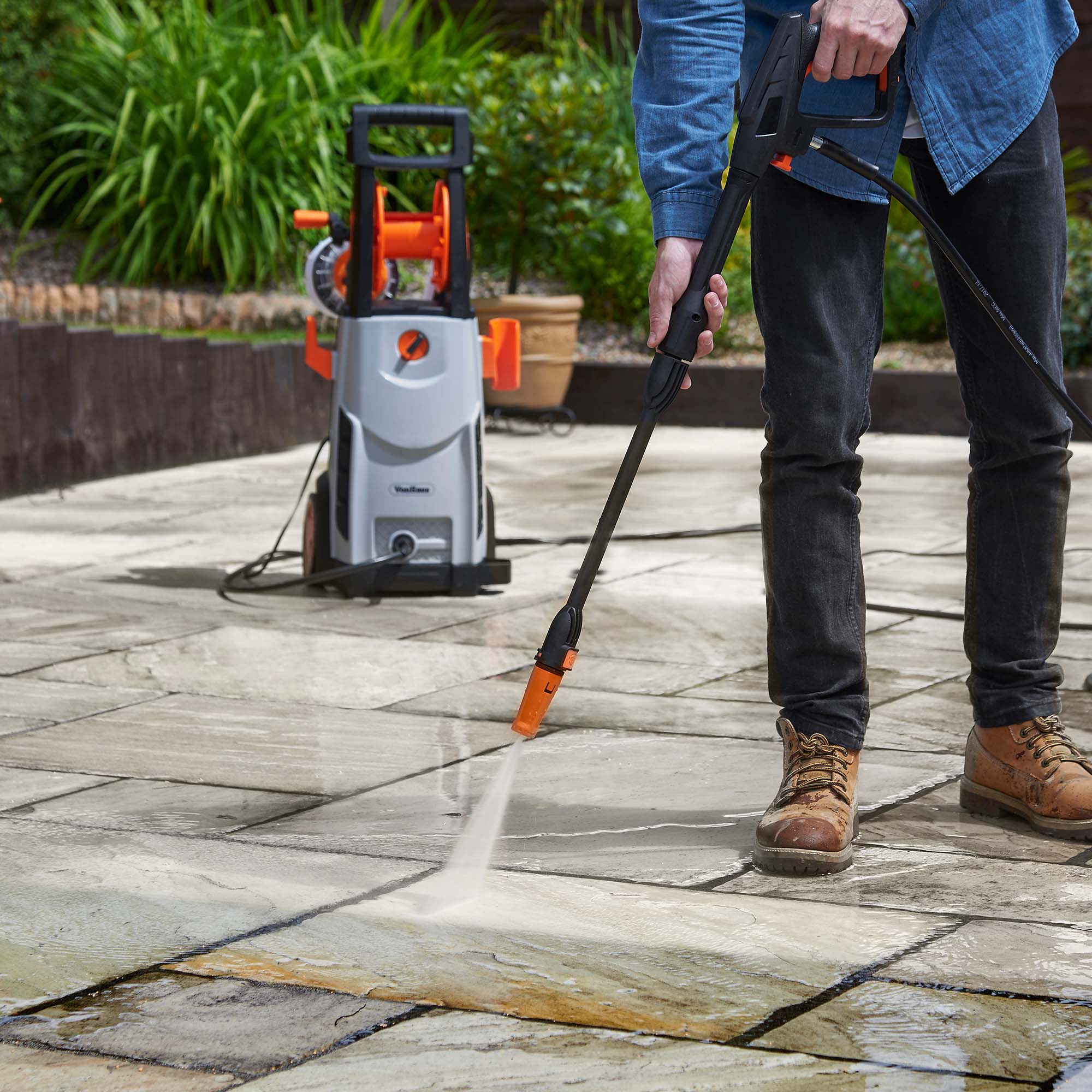
Hold the wand about 2–3 feet from the surface. Move closer for tough stains, but never less than 6 inches unless you’re using a wide nozzle. Keep the wand moving to avoid streaks or gouges.
6. Use Detergent (optional)
Many pressure washers have a detergent tank. Fill with the right soap (never use bleach or harsh chemicals unless the manual allows). Switch to the black nozzle, spray soap, let it sit for a few minutes, then rinse with a wider nozzle.
7. Rinse Thoroughly
Always rinse surfaces with clean water to remove soap and loosened dirt.
8. Turn Off And Clean Up
Unplug or switch off the machine. Shut off water supply. Press the trigger to release leftover pressure. Disconnect hoses and store equipment.
Experience-based insight: If you’re washing vertical surfaces (like walls), start from the bottom and move upward with soap. Rinse from top down. This prevents streaks and lets dirty water flow off clean areas.
Safety Tips For Using A Pressure Washer
Pressure washers are powerful tools. Follow these safety tips:
- Never aim the wand at people, pets, or yourself.
- Avoid spraying windows with high pressure—they can shatter.
- Don’t use a pressure washer on ladders; the kickback can make you lose balance.
- Keep electrical connections dry.
- Use only approved detergents. Some chemicals can damage your pump or harm plants.
Table: Safety Risks And How To Prevent Them
| Risk | How to Prevent |
|---|---|
| Eye injuries | Wear safety glasses |
| Slip and fall | Wear non-slip shoes, keep area clear |
| Electric shock | Keep plugs and cords dry |
| Surface damage | Use correct nozzle, keep wand moving |
| Inhalation of fumes | Use gas washers outdoors only |
Non-obvious insight: Many beginners forget to check for loose paint or soft wood before washing. High-pressure water can easily strip paint or gouge wood. Always inspect the area first.
Cleaning Different Surfaces
Pressure washers work well on many surfaces. But each has its own needs:
Concrete
Use the yellow (15°) or green (25°) nozzle. Hold the wand close for tough oil stains, but don’t stay in one spot for long.
Wood Decks
Use the white (40°) nozzle. Keep the wand farther away (about 2 feet). Too much pressure can splinter wood.
Cars
Use the white (40°) nozzle or a foam cannon. Keep at least 12 inches away. Use car-safe soap, and never aim at tires or delicate trim.
Siding
Use the green (25°) or white (40°) nozzle. Spray at a downward angle to avoid forcing water behind the siding.
Outdoor Furniture
Plastic and metal can handle green (25°), but wood furniture needs white (40°). Test first in a hidden area.
Practical tip: If cleaning mold or mildew, use a detergent with a mildewcide. Let it sit before rinsing.
Deep Cleaning With Detergents
For tough jobs, detergents help break down dirt faster. Here’s how to use them:
- Check your washer for a soap tank or siphon hose.
- Use pressure washer-approved detergents. Regular household soap can clog the pump.
- Switch to the black soap nozzle.
- Apply detergent evenly. Let it sit 5–10 minutes (don’t let it dry).
- Switch back to a wider nozzle and rinse thoroughly.
Example: To clean patio bricks with moss, use a mold remover detergent, spray with the black nozzle, wait 10 minutes, then rinse with green.
Common mistake: Don’t mix bleach with pressure washer soap—it can damage parts and harm plants.
Maintenance And Storage
Proper care keeps your pressure washer working longer.
After Each Use
- Drain leftover water from hoses and pump.
- Rinse detergent tank with clean water.
- Wipe down the machine.
- Store nozzles in a dry place.
Seasonal Maintenance
- For gas models, change oil and check spark plug.
- Inspect hoses for cracks.
- If storing over winter, run antifreeze through the pump or keep indoors.
Data point: A well-maintained electric washer lasts 5–10 years. Gas models can last 10+ years with regular care.
Troubleshooting Common Problems
Sometimes things go wrong. Here’s how to fix common issues:
Low Pressure
- Check for clogged nozzle.
- Make sure water supply is adequate.
- Inspect hoses for leaks.
Machine Won’t Start
- For electric models, check plug and breaker.
- For gas models, check fuel, oil, and spark plug.
Soap Not Dispensing
- Use the black soap nozzle.
- Check for clogs in detergent line.
Pro tip: If your spray wand pulsates, there may be air in the system. Turn off, squeeze the trigger, and restart.
Environmental And Legal Considerations
High-pressure water can wash chemicals and dirt into drains. Some cities restrict pressure washing to protect the environment. Always check local rules before starting.
Water Usage
Pressure washers use less water than a hose for big jobs. A typical washer uses 1. 5–2. 5 GPM. A garden hose can use 6–8 GPM.
Statistic: Using a pressure washer to clean a driveway saves about 80% water compared to scrubbing with a hose.
Disposal
Avoid washing chemicals into storm drains. Use biodegradable detergents and block drains if possible.
Advanced Tips For Better Results
Once you’ve mastered the basics, try these expert techniques:
- Pre-soak surfaces with water before applying detergent. This loosens dirt and prevents streaks.
- Overlap strokes by about 25% for even cleaning.
- Work in sections for large areas. Don’t let soap dry before rinsing.
- Use extension wands for high places, but never on a ladder.
- Clean nozzles regularly by soaking in vinegar to prevent clogs.
Expert insight: If you clean your roof, use low pressure and roof-safe detergent. High pressure can damage shingles.
Comparing Pressure Washing To Other Methods
How Does Pressure Washing Stack Up Against Other Cleaning Methods?
| Method | Cleaning Power | Time Required | Water Usage | Best For |
|---|---|---|---|---|
| Pressure washing | High | Quick | Low | Driveways, siding, decks |
| Scrubbing by hand | Medium | Slow | High | Small areas |
| Chemical cleaning | Variable | Medium | Medium | Mold, mildew |
| Garden hose | Low | Slow | High | Light dirt |
Non-obvious insight: Pressure washing is faster and uses less water for big jobs, but hand scrubbing is better for delicate surfaces.
Frequently Asked Questions
What Surfaces Should I Avoid Pressure Washing?
Avoid using a pressure washer on soft wood, asphalt shingles, old brick, and windows. High pressure can damage or break these materials.
Can I Use Hot Water In My Pressure Washer?
Most home pressure washers are for cold water only. Using hot water can damage seals and pump parts. If you need hot water, choose a model designed for it.
How Often Should I Clean My Driveway With A Pressure Washer?
Cleaning your driveway once or twice a year is enough for most homes. If you live in a dusty area or have frequent oil stains, you might clean more often.
Is It Safe To Use Bleach In My Pressure Washer?
No. Bleach can corrode internal parts and harm plants. Always use detergents made for pressure washers.
What’s The Best Way To Store My Pressure Washer For Winter?
Drain all water, clean tanks, and store indoors. For gas models, add a fuel stabilizer. If you can’t bring it inside, run antifreeze through the pump.
Using a pressure washer is a powerful way to tackle tough cleaning jobs around your home or business. With the right machine, nozzle, and techniques, you can clean faster, save water, and protect your property. Remember to start slow, use proper safety gear, and check your surfaces before blasting away dirt. With these tips and knowledge, you’ll get professional results without risking damage or injury. For more detailed technical info and maintenance guidance, visit the Consumer Reports Pressure Washer Guide. Now you’re ready to use a pressure washer with confidence—and make your cleaning jobs easier than ever.

