

Anyone who has owned or managed a Manitowoc ice maker knows how critical these machines are for restaurants, hotels, healthcare, and many other businesses. When your ice maker flashes an error code and stops producing ice, it’s not just an inconvenience—it can cost you time, money, and customer satisfaction. Understanding what these error codes mean and how to troubleshoot them can make a big difference. With clear guidance, even those new to ice machine maintenance can avoid unnecessary service calls and get their machines running again quickly.
This guide will help you decode and solve the most common Manitowoc ice maker error codes. You’ll learn what each code means, practical steps to fix issues, and how to keep your ice maker running smoothly. Whether you’re a business owner, kitchen manager, or maintenance technician, this article offers practical advice, insider tips, and real-world examples you won’t find in a basic manual.

36% off Today’s Exclusive Deals
Limited-time Exclusive Deals. Check current discount on Amazon.
Check Price on Amazon As an Amazon Associate I earn from qualifying purchases.Understanding Manitowoc Ice Maker Error Codes
Manitowoc ice makers are equipped with control boards that monitor many functions. When something goes wrong, the machine displays an error code, usually as a series of blinking lights or a code on the screen. Each code points to a specific problem: water supply, temperature, sensors, or other technical faults.
The main reason for these error codes is to help users and technicians identify issues quickly. Instead of guessing, you can look up the code, understand the cause, and take action. However, some codes can be confusing, especially if you’re not used to ice machine terminology.
Where To Find Error Codes
- On most modern Manitowoc models, error codes show up on the display panel.
- Some older units use a series of blinking indicator lights.
- The user manual for your model will list codes, but codes are often similar across different Manitowoc ice makers.
Why Error Codes Matter
Ignoring error codes can lead to:
- Longer machine downtime
- Higher repair costs
- Spoiled ice or poor ice quality
- Damage to machine components
If you act quickly, you can often resolve issues yourself, saving both money and time.
Common Manitowoc Ice Maker Error Codes And What They Mean
Let’s break down the most frequent Manitowoc ice maker error codes. Each code targets a key system in your machine. Here are the codes you’re most likely to see, what they mean, and why they happen.
| Error Code | Meaning | Likely Cause |
|---|---|---|
| E1 | Long Freeze Time | Poor water flow, dirty evaporator, low refrigerant |
| E2 | Long Harvest Time | Harvest assist failure, dirty ice maker, stuck ice |
| E3 | Short Freeze Time | High water temp, hot room, faulty sensors |
| E4 | High Water Temperature | Hot water supply, bad water valve |
| E5 | Low Water Temperature | Cold supply, thermostat failure |
| E6 | Sluggish Water Fill | Clogged water filter, valve problem |
| E7 | Water Leak Detected | Leak in supply line, drain issue |
| E8 | Bin Thermistor Fault | Sensor failure or disconnected wire |
| E9 | Evaporator Thermistor Fault | Sensor failure or wiring issue |
Some machines use different codes or add extra codes for features like water curtain faults or communications errors. Always check your model’s guide for exact numbers.
Troubleshooting Steps For Top Manitowoc Ice Maker Error Codes
Now let’s dive into how to fix each of the most common error codes. These steps are designed for people with basic technical knowledge, but advanced troubleshooting may require a trained technician.
E1: Long Freeze Time
When the freeze cycle is taking too long, ice production drops. Here’s what to do:
- Check water flow – Make sure the water supply is open and the filter isn’t clogged.
- Inspect the evaporator – A dirty evaporator plate can slow ice formation. Clean it with Manitowoc-approved cleaner.
- Room temperature – If the machine is in a hot room, cooling may be poor. Improve ventilation.
- Refrigerant level – If all else fails, a technician should check for low refrigerant, which is not a DIY fix.
Insider tip: Don’t forget to check for scale buildup even if the evaporator looks “clean”—mineral deposits can be nearly invisible but still block heat transfer.
E2: Long Harvest Time
If the ice won’t release from the evaporator, you may see an E2 code.
- Check the harvest assist device – This pushes ice off the plate. If it’s stuck, clean or replace it.
- Look for stuck ice – Remove any jammed cubes.
- Clean the machine – A dirty ice maker (especially the water curtain) can block harvest cycles.
Non-obvious insight: If you recently switched to a different water source, increased minerals can speed up scale formation, making harvest problems more common.
E3: Short Freeze Time
A short freeze cycle means the ice isn’t forming correctly.
- Check room temperature – If the room is too warm, the ice may not set.
- Test sensors – Faulty thermistors can cut cycles short; replace if needed.
- Water temperature – Hot water entering the machine can prevent ice from freezing.
Watch out: Sometimes the problem is a misaligned sensor rather than a failed one. Make sure sensors are securely attached.
E4: High Water Temperature
High water temp can stop ice production entirely.
- Test the incoming water – The supply should be cold, not hot.
- Check the water valve – A faulty valve can mix hot and cold water.
- Insulate supply lines – In hot kitchens, pipes may absorb heat. Insulation can fix this.
Example: A restaurant near a dishwasher often sees E4 codes because the incoming cold line gets warm during rush hours.
E5: Low Water Temperature
Water that’s too cold can also cause issues.
- Check the supply – Very cold water slows ice formation.
- Inspect the thermostat – Replace if it’s reading wrong.
- Room temperature – Extremely cold rooms can also impact cycle times.
Tip: If you’re in a cold climate, check for frozen pipes or supply lines.
E6: Sluggish Water Fill
A slow water fill is usually a supply issue.
- Replace or clean the water filter – Clogged filters are the most common cause.
- Check the inlet valve – If the valve is blocked, water flow will be slow.
- Inspect supply pressure – Very low water pressure (below 20 psi) can trigger this code.
Practical insight: Always flush a new filter before installing to avoid clogging with manufacturing residue.
E7: Water Leak Detected
Leaks can cause big problems fast.
- Inspect all hoses and connections – Tighten or replace as needed.
- Check the drain – A blocked drain can back up and trigger this error.
- Look for ice buildup inside – Melting ice from a slow leak can set off the sensor.
Expert tip: Even a tiny leak can trigger this code. Use a flashlight to check for small drips under the machine.
E8/e9: Thermistor Faults
Thermistors are sensors that detect temperature. If they fail or lose connection:
- Check wiring and connections – Loose or corroded wires are common.
- Replace the thermistor – If wires are good, the sensor itself is likely the problem.
- Reset the machine – Power cycling can clear some sensor errors.
Important: Always power off the machine before opening panels.
How To Reset A Manitowoc Ice Maker After An Error
Sometimes, after fixing the cause, you need to reset the machine to clear the error code. Here’s how:
- Turn off the power at the main switch or unplug the unit.
- Wait 1-2 minutes to let the control board reset.
- Turn the machine back on.
- Check if the code returns. If it does, the problem isn’t solved.
Some newer models have a reset button on the control board. Check your manual for details.
Note: Resetting will not solve the problem if the root cause is not fixed. The error will return.
Preventive Maintenance To Avoid Error Codes
The best way to stop error codes is regular maintenance. Manitowoc recommends a service every 6 months, but your location and water quality may require more frequent care.
Key Maintenance Tasks
- Clean the evaporator and bin – Use Manitowoc ice machine cleaner.
- Replace water filters – Every 6 months, or more often with hard water.
- Check and clean the condenser coil – Dust buildup reduces cooling.
- Inspect hoses and valves – Look for leaks or wear.
- Descale as needed – Especially important in areas with hard water.
Maintenance Frequency Table
Here’s a quick guide for how often to perform each task:
| Task | Recommended Frequency | Signs It’s Needed Sooner |
|---|---|---|
| Clean evaporator/bin | Every 6 months | Reduced ice output, visible scale |
| Replace water filter | Every 6 months | Slow fill, E6 code |
| Clean condenser coil | Every 3 months | Hot machine, slow cycles |
| Descale system | Every 3–6 months | White buildup, poor harvest |
Missed insight: Regular maintenance doesn’t just prevent errors—it extends machine lifespan and keeps ice safe for customers.
When To Call A Technician
While many Manitowoc ice maker error codes can be solved with basic steps, some issues require a professional.
Signs You Need Expert Help
- Repeated error codes after basic troubleshooting
- Refrigerant issues (never DIY due to safety and legal rules)
- Electrical faults or visible damaged wires
- Major leaks that could damage property
A factory-trained technician can run advanced diagnostics and replace complex parts. Keeping a log of error codes and fixes helps them diagnose faster.
Practical Tips For Quick Fixes And Fewer Headaches
- Keep a maintenance log – Write down when filters are changed and errors occur.
- Stock spare parts – Thermistors, water filters, and cleaner save time during breakdowns.
- Label water lines – Prevents hot/cold mix-ups, a common error source.
- Train staff – Everyone should know how to check and reset the machine safely.
Advanced Troubleshooting: What Pros Do Differently
Professionals have tools and habits that help them solve Manitowoc ice maker problems faster:
- Use a multimeter – To check voltage at sensors and valves.
- Check the board diagnostics mode – Many Manitowoc machines have a test mode; run it for more details.
- Verify bin switch and curtain function – These parts tell the machine when the bin is full. If stuck, the machine won’t make ice or will give false errors.
- Measure water pressure – Correct water pressure is vital for every cycle.
Hidden tip: Sometimes, error codes are triggered by power surges or brownouts. Installing a surge protector can reduce unexpected errors.
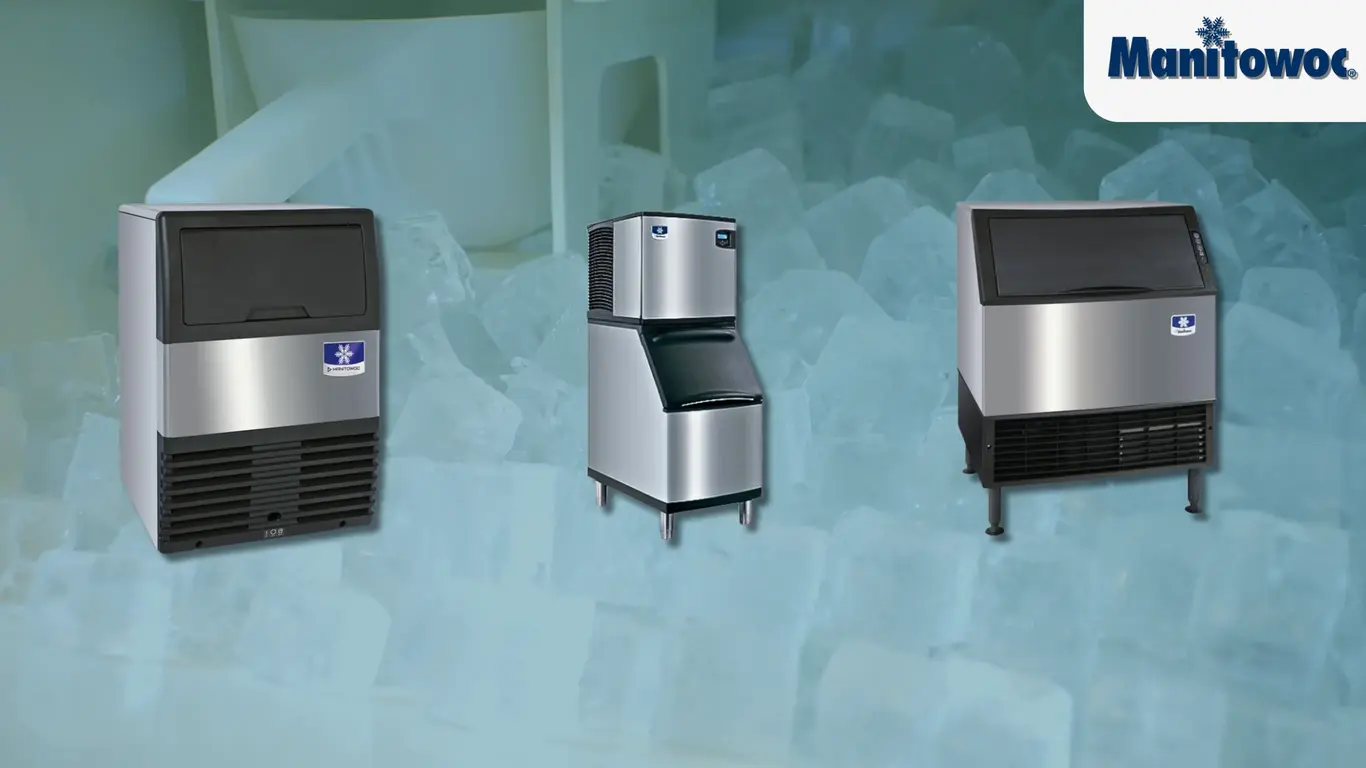
Manitowoc Ice Maker Error Codes: Model Variations
Not all Manitowoc ice makers use the same codes or diagnostics. Here’s a summary of how some popular models display errors.
| Model | Error Code Display | Special Features |
|---|---|---|
| Indigo Series | Digital screen (E1–E9 and more) | Touchpad, advanced self-diagnostics |
| Q-Series | Blinking LEDs (counted blinks) | Basic diagnostics, less detail |
| SM-Series | Digital or LED, varies | Often used in small businesses |
Quick tip: If you’re unsure about your model, look for the serial number label—usually inside the ice bin or behind the front panel. Then search for your model’s manual on the Manitowoc website.
Common Mistakes When Dealing With Error Codes
Beginners and even experienced users often make these mistakes:
- Ignoring small errors – Even a brief code can mean a growing problem.
- Cleaning with wrong chemicals – Only use Manitowoc-approved cleaner; others can damage parts.
- Skipping power-off steps – Always disconnect power before opening panels.
- Guessing at codes – Always check your manual or the official Manitowoc site for your specific model.
Insider advice: If you keep seeing the same code, don’t just reset it—find and fix the underlying cause.

How Manitowoc Error Codes Improve Service Efficiency
For businesses, these codes are not just a hassle—they’re a tool. Clear error codes let staff or service teams:
- Respond faster to problems
- Order the right parts ahead of time
- Reduce machine downtime
- Document service for warranty claims
Many large facilities keep laminated error code charts in the kitchen or maintenance room for quick reference.
Additional Resources For Manitowoc Ice Maker Owners
If you want to go deeper, Manitowoc offers many resources online. The official Manitowoc website has:
- Downloadable user manuals for every model
- Maintenance videos
- Parts diagrams
For advanced troubleshooting or parts ordering, you can also visit Manitowoc Technical Library.
Final Thoughts
A Manitowoc ice maker is a reliable partner in any business—if you know how to interpret and act on its error codes. Most issues are caused by simple problems like water flow, dirty parts, or sensor errors. With regular maintenance and a basic understanding of error codes, you can avoid major breakdowns, keep your ice supply steady, and extend the life of your investment.
Remember, quick action and proper troubleshooting save money and keep your customers happy.
Frequently Asked Questions
What Should I Do First When I See An Error Code On My Manitowoc Ice Maker?
Start by noting the exact error code showing on your machine. Check your user manual or a reliable Manitowoc resource for what it means. Try the basic troubleshooting steps described above for that code. If the problem continues after a reset, call a trained technician.
How Often Should I Clean My Manitowoc Ice Maker To Prevent Errors?
It’s best to clean your machine at least every 6 months. In busy or hard water areas, clean every 3 months. Regular cleaning removes scale and prevents most error codes linked to water quality and machine hygiene.
Why Does My Manitowoc Ice Maker Keep Showing E2 Even After I Clean It?
If the E2 code (long harvest time) returns after cleaning, check the harvest assist mechanism for jams or wear. Also, look for stuck ice or sensor problems. If these steps don’t work, the machine may need a new sensor or a technician’s help.
Can I Reset My Manitowoc Ice Maker Without Fixing The Problem?
You can reset the machine, but if you don’t fix the underlying problem, the error code will come back. Always solve the cause—like a dirty filter or stuck ice—before resetting.
Where Can I Find Detailed Troubleshooting Help For My Manitowoc Ice Maker Model?
Visit the official Manitowoc website or the Manitowoc Technical Library for manuals, error code lists, and service tips. Your machine’s user manual is also a great resource. If you’re unsure, call a qualified technician.
With the right approach, Manitowoc ice maker error codes become a helpful guide—not a source of stress. Stay proactive, follow these tips, and your ice machine will keep your business cool and customers happy.

