

Few phone matchups spark as much curiosity as the Motorola Razr+ versus the Sony Xperia 1 VI. On one side, you have a bold foldable from a brand with deep roots in mobile history. On the other, a flagship slab phone from a company known for its focus on display, camera, and multimedia excellence. If you’re trying to choose between these two very different flagships, you’re in the right place. In this in-depth comparison, we’ll break down design, performance, cameras, battery, display, software, and more. We’ll also share some real-world insights that don’t show up in spec sheets—but matter a lot in daily life.
Design And Build Quality
The first thing you’ll notice: these phones look and feel nothing alike. The Motorola Razr+ (also called Razr 40 Ultra in some regions) is a clamshell foldable, while the Sony Xperia 1 VI is a classic candy bar phone.

36% off Today’s Exclusive Deals
Limited-time Exclusive Deals. Check current discount on Amazon.
Check Price on Amazon As an Amazon Associate I earn from qualifying purchases.Motorola Razr+: Style And Flexibility
Fold the Razr+ shut, and it’s pocket-sized, with a satisfying snap. Open it, and you get a tall 6. 9-inch screen. The outer display—a 3. 6-inch OLED—is big enough to check notifications, reply to texts, run some apps, and take selfies.
The hinge feels refined, and the vegan leather finish (on some colors) adds a touch of luxury.
This design isn’t just about nostalgia. The foldable form means the phone takes up half the space in your pocket or bag. The flex mode lets you bend the phone at different angles, useful for video calls or hands-free selfies. Motorola claims the hinge is rated for 400,000 folds—more than enough for several years of daily use.
Sony Xperia 1 Vi: Sleek And Professional
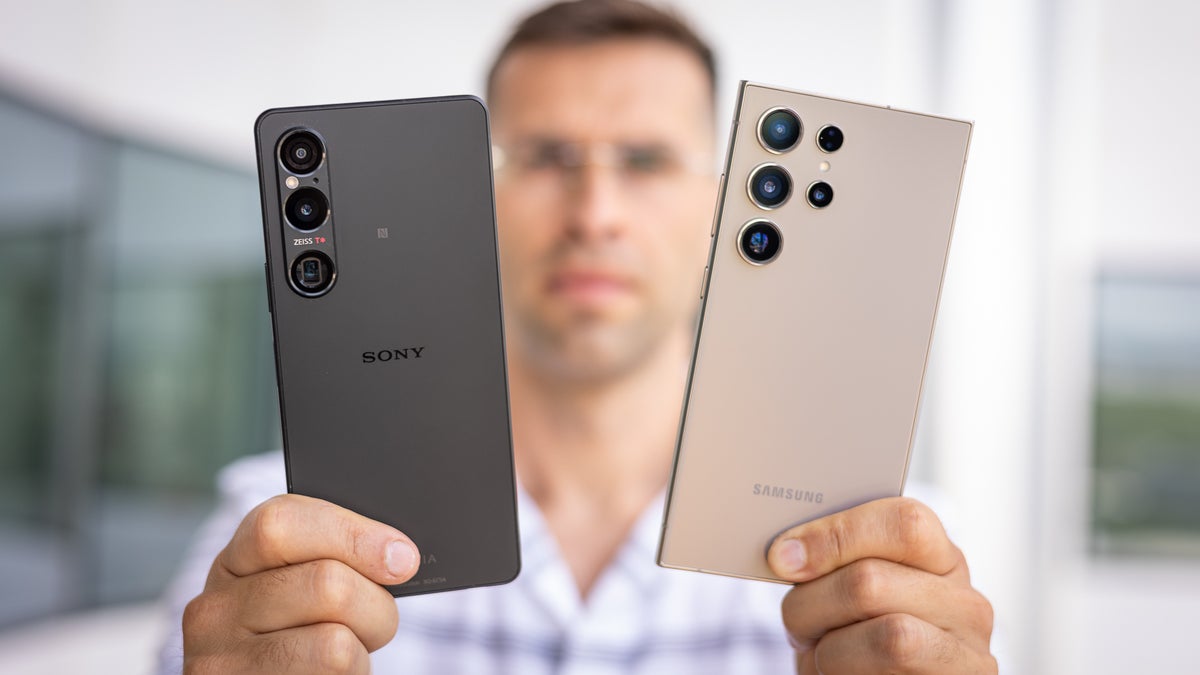
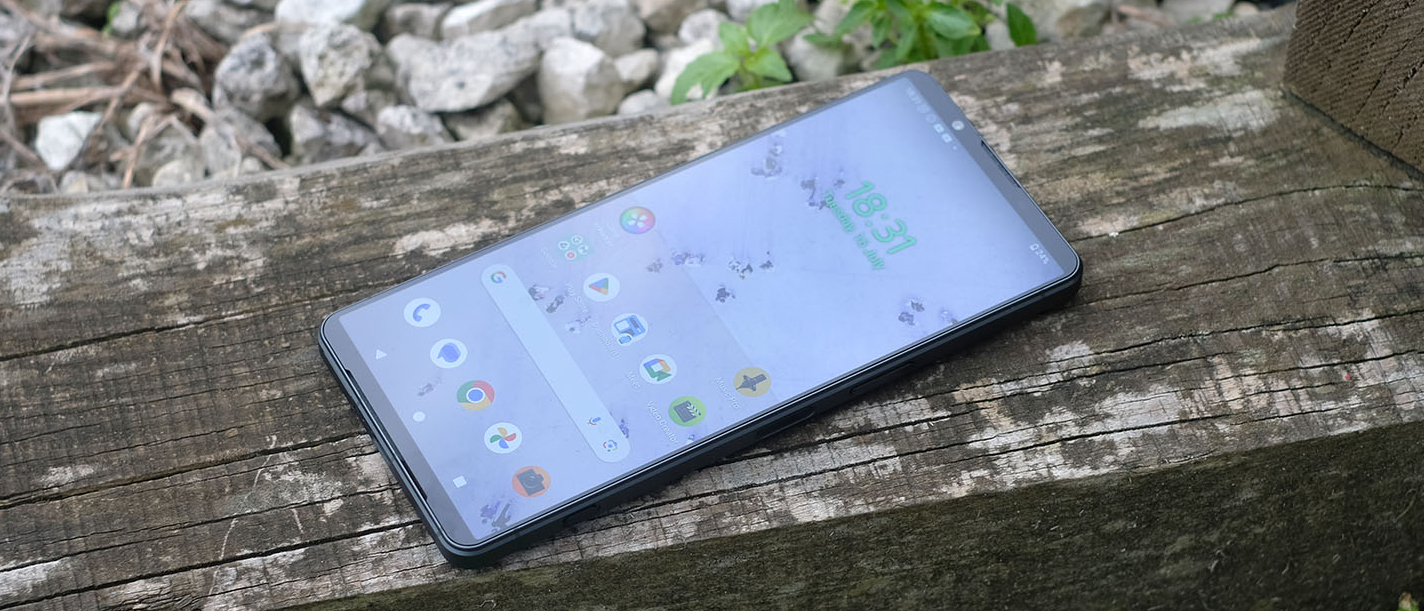
The Xperia 1 VI sticks to Sony’s signature tall, narrow slab design. Its 21:9 aspect ratio makes it comfortable to hold, even with a 6.5-inch display. The body is made of frosted Gorilla Glass Victus 2 and a sturdy aluminum frame. This phone feels premium and solid—no flex or creak.
Sony also keeps some rare features: a 3.5mm headphone jack, a physical camera shutter button, and a microSD card slot. It’s IP68 water and dust resistant, so you can use it in the rain or even rinse it off if needed.
Side-by-side Comparison
Here’s a quick look at the main design differences:
| Feature | Motorola Razr+ | Sony Xperia 1 VI |
|---|---|---|
| Form Factor | Foldable (clamshell) | Bar (slab) |
| Main Display | 6.9″ pOLED (FHD+) | 6.5″ OLED (FHD+) |
| Cover Display | 3.6″ pOLED | None |
| Weight | 188g | 182g |
| Headphone Jack | No | Yes |
| Expandable Storage | No | Yes (microSD) |
| Water Resistance | IP52 | IP68 |
Non-obvious Insight
Most buyers focus on the foldable wow-factor or Sony’s professional look. But it’s easy to miss how the Razr+’s cover screen saves time by letting you do tasks without opening the phone. On the other hand, Xperia’s microSD slot gives you endless storage for photos and videos—a rare feature in 2024.
Display Quality
Both phones use OLED panels with high refresh rates, but their approaches could not be more different.
Razr+: Dual Oled Displays
The main screen is a 6.9-inch pOLED with a 165Hz refresh rate. Colors pop, blacks are deep, and scrolling feels ultra-smooth. The cover display is also OLED, at 3.6 inches. It’s among the largest on any foldable, and it’s not just for notifications—you can run full apps, watch videos, or check directions.
The inner screen’s crease is visible in some lighting, but you stop noticing it after a few days. Brightness peaks around 1,400 nits, so outdoor visibility is good but not class-leading.
Xperia 1 Vi: 4k-like Oled And Pro Features
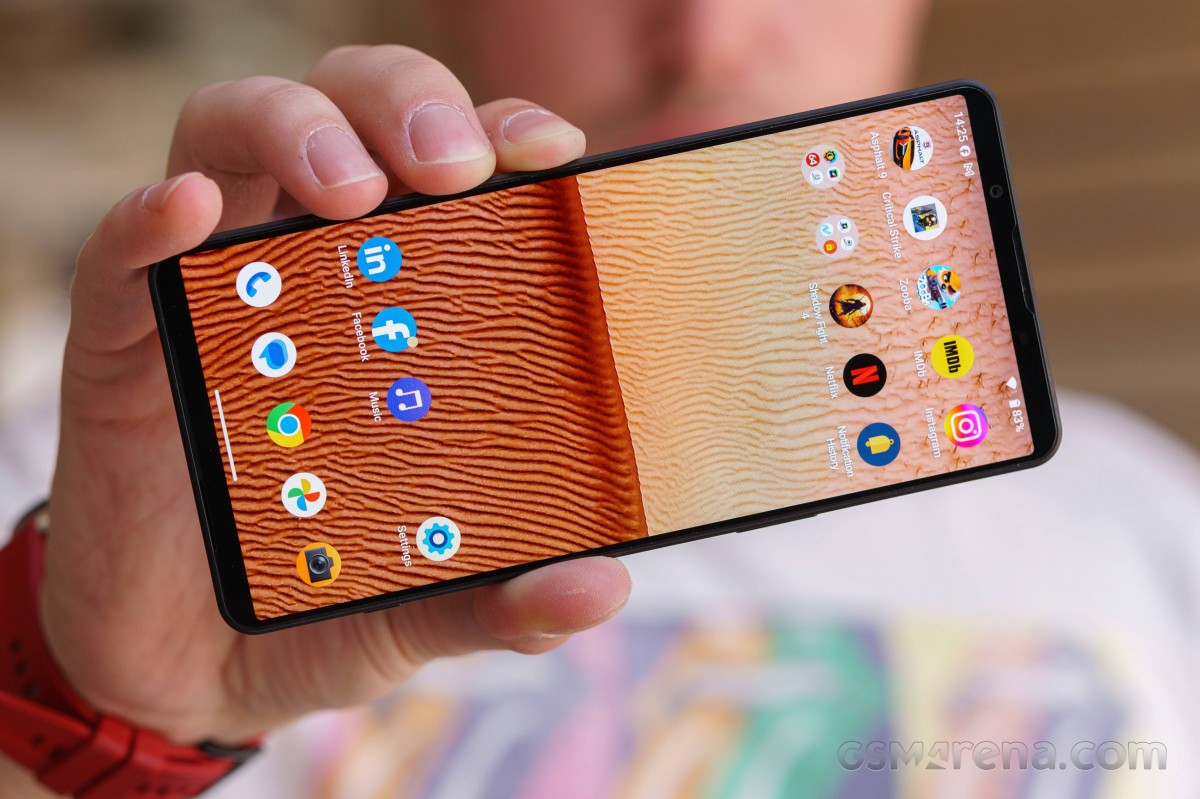
Sony is famous for its displays, and the Xperia 1 VI continues the tradition. The 6.5-inch OLED moves to a slightly lower resolution this year (FHD+ instead of true 4K), but it’s still incredibly sharp at 120Hz. The 21:9 aspect ratio is ideal for movies, gaming, and multitasking with split-screen apps.
Sony’s Creator Mode delivers super-accurate colors, perfect for photographers and videographers. The screen can hit over 1,300 nits in high brightness mode, making it easy to use in sunlight.
Display Comparison
| Spec | Motorola Razr+ (Main) | Sony Xperia 1 VI |
|---|---|---|
| Size | 6.9″ | 6.5″ |
| Resolution | 2640 x 1080 (FHD+) | 2340 x 1080 (FHD+) |
| Refresh Rate | 165Hz | 120Hz |
| Brightness (peak) | ~1,400 nits | ~1,300 nits |
| Aspect Ratio | 22:9 | 21:9 |
| Cover Display | 3.6″ (pOLED, 1056 x 1066) | None |
Non-obvious Insight
While the Razr+’s cover screen is great for quick replies and selfies, Sony’s display is tuned for color accuracy. If you edit photos or watch a lot of movies, the Xperia’s screen gives you a more “cinematic” feel. The Razr+’s refresh rate is higher on paper, but most users won’t notice a big difference above 120Hz.
Performance And Hardware
Performance is about more than just benchmarks—it’s about how the phone feels every day.
Motorola Razr+: Fast, But Not The Fastest
The Razr+ uses the Snapdragon 8+ Gen 1 chipset, paired with 8GB of RAM and 256GB of storage. This was Qualcomm’s top chip in 2022, and it still handles most tasks with ease. Apps open quickly, multitasking is smooth, and games run well. However, against the latest flagship chips, it’s a step behind—especially for demanding games or future-proofing.
Thermal management is good thanks to Motorola’s cooling system, but the phone can get warm if you push it hard. 256GB is the only storage option, and there’s no microSD slot.
Sony Xperia 1 Vi: Flagship Power
Sony equips the Xperia 1 VI with the Snapdragon 8 Gen 3—the newest and most powerful chip from Qualcomm in 2024. With 12GB RAM and 256GB or 512GB storage options (plus microSD expansion), it’s a true powerhouse.
Everyday tasks fly. Heavy games like Genshin Impact or Call of Duty Mobile run at max settings with no lag. Sony’s software is lightweight, so the phone feels snappy even with many apps open. The phone rarely gets hot, even under load.
Performance Side-by-side
| Spec | Motorola Razr+ | Sony Xperia 1 VI |
|---|---|---|
| Processor | Snapdragon 8+ Gen 1 | Snapdragon 8 Gen 3 |
| RAM | 8GB | 12GB |
| Storage | 256GB | 256GB/512GB + microSD |
| Expandable Storage | No | Yes |
Insight For Real Users
Most people won’t notice a big speed gap in daily use, but if you plan to keep your phone for 3+ years or use it for heavy gaming, the Xperia’s newer chip and extra RAM will age better.
Camera Systems
Smartphone cameras are more than just megapixels. The processing, lens selection, and software all matter.
Razr+: Good For Social, Not For Pros
The Razr+ has a dual camera setup on the back:
- 12MP main camera (f/1.5, OIS)
- 13MP ultra-wide (f/2.2, 108˚ FoV)
The main camera takes sharp, colorful photos in daylight. Low-light shots are decent, but can show some noise and lose detail. The ultra-wide is handy for landscapes or group shots, but there’s no telephoto lens for zoom.
The best part? Thanks to the cover display, you can take high-quality selfies with the main camera. Just open the camera app on the outer screen, frame your shot, and snap. The inner display houses a 32MP selfie camera, but the outer cameras usually deliver better results.
Xperia 1 Vi: Pro-level Flexibility
Sony packs in a triple camera array:
- 48MP main (wide, f/1.9, OIS)
- 12MP ultra-wide (f/2.2, 123˚ FoV)
- 12MP telephoto (variable optical zoom, f/2.3-3.5, OIS)
The main camera uses a larger sensor for better low-light shots and more natural depth. The telephoto lens stands out—it offers true optical zoom from 85mm to 170mm, which is rare. You can zoom smoothly without losing detail, perfect for portraits or distant subjects.
Sony’s camera software is inspired by their Alpha cameras. You get manual controls (shutter speed, ISO, focus), and special apps for photo and video. The learning curve is higher, but serious photographers will love the flexibility.
Both phones record 4K video, but Xperia supports up to 120fps slow-mo and advanced color profiles.
Camera Comparison Table
| Feature | Motorola Razr+ | Sony Xperia 1 VI |
|---|---|---|
| Main Camera | 12MP, f/1.5, OIS | 48MP, f/1.9, OIS |
| Ultra-wide | 13MP, 108˚ | 12MP, 123˚ |
| Telephoto | None | 12MP, variable zoom (85-170mm), OIS |
| Selfie Camera | 32MP (inner screen), main cams via cover display | 12MP front |
| 4K Video | Yes (main cam) | Yes (main, ultra-wide, telephoto, selfie) |
Hidden Detail
The Razr+ makes casual selfies or TikToks easier, thanks to the cover screen. But if you want real zoom, pro-style manual controls, or richer video options, the Xperia 1 VI is in another league.
Battery Life And Charging
Battery life is a daily concern. Here’s how these phones stack up in real-world use.
Razr+: Mid-size Battery, Fast Charging
Motorola fits a 3,800mAh battery into the Razr+, which is good for a foldable. With mixed use, expect about 5-6 hours of screen time per charge. If you use the cover display more and the inner screen less, you can stretch it further. Streaming video and gaming will drain the battery faster.
Charging is fast: 30W wired charging fills the battery from 0 to 100% in about an hour. There’s also 5W wireless charging—slow, but useful for topping up overnight.
Xperia 1 Vi: Larger Battery, Lasts Longer
Sony gives the Xperia 1 VI a 5,000mAh battery. In daily use, this phone easily lasts a full day, and light users may get into a second day. Even with heavy camera or video use, it holds up well thanks to efficient hardware and software.
Charging is 30W wired, with the same 0-100% charge in about an hour. Wireless charging is supported at 15W, and there’s reverse wireless charging for topping up earbuds or another phone.
Real-world Insight
Foldables like the Razr+ often have smaller batteries because of hinge and screen constraints. The Razr+ does well for its size, but if you need maximum endurance, the Xperia 1 VI is the clear winner.
Software Experience
A phone’s software can make or break your daily experience. Both phones run Android 14, but with very different philosophies.
Motorola Razr+: Clean And Simple
Motorola’s take on Android is close to “stock,” with a few helpful touches. The Quick View cover display offers widgets, notifications, and even full apps. You can customize shortcuts or use the phone hands-free in flex mode.
There’s little bloatware, and updates are relatively fast (Motorola promises three years of OS updates, four years of security patches). The UI is simple, with helpful gestures like “twist to open camera” or “chop to turn on flashlight. ”
Xperia 1 Vi: Feature-rich And Pro Tools
Sony’s software is clean but adds unique features for creators. The Photo Pro, Cinema Pro, and Video Pro apps give manual controls for shooting and editing. You also get advanced audio options, game enhancers, and multitasking tools like window pinning.
Sony supports three years of OS updates and four years of security patches. The interface is customizable, but some settings are buried in menus, which may confuse new users.
Less-obvious Guidance
Both phones are easy for beginners, but if you want deep camera/video tools, Sony is unmatched. If you want a simple experience with quick access to essentials, Motorola’s UI is less overwhelming.
Multimedia And Audio
Entertainment is a big deal for many users. How do these phones handle music, movies, and gaming?
Razr+: Good Speakers, No Headphone Jack
The Razr+ has stereo speakers with Dolby Atmos support. Sound is loud and clear for a foldable, but the small body limits bass. There’s no headphone jack, so you’ll need Bluetooth or USB-C headphones.
The main screen is great for video, but the tall aspect ratio means some black bars with standard 16:9 content. The cover display can play music and videos for quick entertainment.
Xperia 1 Vi: Audiophile Features
Sony is known for audio, and the Xperia 1 VI delivers:
- Front-facing stereo speakers with rich sound
- 3.5mm headphone jack for wired headphones
- LDAC and Hi-Res Audio support for wireless headphones
The 21:9 display is perfect for movies—almost no black bars with cinematic content. Sony’s built-in Dynamic Vibration gives haptic feedback with music and games, adding immersion.
What Many Miss
The headphone jack is more than nostalgia—it means lower latency, better sound quality (if you have good headphones), and no adapter needed. For podcasts, streaming, and gaming, Xperia’s audio advantage is clear.
Durability And Repairs
Phones are expensive, so durability matters. Here’s how these two compare:
Razr+: Foldable, But Not Fragile
The Razr+ is rated IP52 (protected from dust, resistant to light splashes). It’s not waterproof, so don’t take it swimming. The hinge is tested for 400,000 folds, and the inner screen uses ultra-thin glass with a plastic layer on top. You’ll want to be careful with keys or coins in your pocket.
Repairs are trickier than with slab phones. If the inner screen breaks, it’s a specialized fix—often through Motorola’s service centers.
Xperia 1 Vi: Classic Toughness
The Xperia 1 VI is IP68 rated—dust tight and can survive 1.5 meters underwater for 30 minutes. Gorilla Glass Victus 2 on the front and back resists scratches and drops.
Because it’s a standard slab phone, repairs (like screen or battery replacement) are easier and cheaper at most repair shops.
Practical Tip
Foldables are getting tougher, but if you’re hard on your devices or work outdoors, the Xperia’s water and dust protection is a huge plus.
Connectivity And Extras
Both phones support 5G, Wi-Fi 6E, Bluetooth 5.3, and NFC. But there are a few extras to note:
- Razr+: ESIM and physical SIM support, but no expandable storage.
- Xperia 1 VI: Dual SIM (nano + eSIM), microSD card slot, and a dedicated shutter button.
Sony also offers proprietary apps for video streaming, PlayStation Remote Play, and more. Motorola’s standout extra is the custom cover screen widgets and flex mode.
Pricing And Value
Flagship phones aren’t cheap. Here’s where each phone lands at launch (2024 US pricing):
- Motorola Razr+: $999 (8GB/256GB)
- Sony Xperia 1 VI: $1,299 (12GB/256GB), $1,399 (12GB/512GB)
The Razr+ is more affordable, but you get less RAM, an older chip, and no expandable storage. The Xperia 1 VI is pricier, but offers more power, storage options, and pro features.
Buyer’s Mistake To Avoid
Don’t assume higher price always means better for you. If you won’t use Sony’s pro camera tools, the Razr+ may offer better value. If you want the longest software support and best hardware, Xperia is worth the premium.
Who Should Buy Which?
There’s no single “best” phone here—just the best one for your needs.
Pick The Motorola Razr+ If…
- You want a compact foldable that fits in small pockets or purses
- You love the idea of a big cover screen for quick tasks and selfies
- Style and uniqueness matter as much as raw specs
- You’re happy with good, not pro-level, cameras
- You want a slightly lower price point
Pick The Sony Xperia 1 Vi If…
- You need flagship power and future-proof specs
- You care about camera flexibility (manual controls, real optical zoom, pro video)
- You want long battery life and durability
- You value expandable storage and a headphone jack
- You work with photos, video, or music professionally
Real-world Scenarios
Let’s look at a few common user profiles:
- The Social Media Creator: Razr+’s cover screen makes it easy to record, preview, and post quick videos. But Sony’s camera apps offer more control for advanced editing.
- The Outdoor Enthusiast: Xperia’s water and dust protection, plus tough glass, make it safer for hiking or the beach.
- The Movie Buff: Xperia’s 21:9 screen and front speakers deliver a better movie-watching experience.
- The Frequent Traveler: Razr+ folds small for travel, but Xperia’s dual SIM and microSD slot are handy abroad.
- The Power User: Xperia’s newer chip, more RAM, and long battery life keep up with heavy multitasking.
Frequently Asked Questions
Is The Motorola Razr+ Durable Enough For Daily Use?
The Razr+ is more durable than older foldables, with a hinge tested for 400,000 folds and an IP52 rating. However, it’s not fully waterproof, and the inner screen can scratch more easily than glass. Use a case and avoid rough pockets for best results.
Does The Sony Xperia 1 Vi Support Wireless Charging And Expandable Storage?
Yes, the Xperia 1 VI supports both 15W wireless charging and microSD card expansion. You can add up to 1TB of extra storage for photos, videos, and apps.
Which Phone Is Better For Photography: Razr+ Or Xperia 1 Vi?
The Xperia 1 VI offers a more advanced camera system, with a larger main sensor, real optical zoom, and pro manual controls. The Razr+ is great for selfies and social sharing, but Sony is better for serious photography and video work.
Can You Use The Motorola Razr+ Cover Screen For All Apps?
You can run many full apps on the Razr+ cover screen, including messaging, music, maps, and camera. Some apps may not be fully optimized, but Motorola continues to add support.
How Long Will These Phones Get Software Updates?
Both Motorola and Sony promise three years of Android OS updates and four years of security patches. Xperia may offer slightly faster updates, but both are competitive with other Android flagships.
For more technical details and in-depth reviews, check the official pages and trusted sites like GSMArena.
Choosing between the Motorola Razr+ and Sony Xperia 1 VI is about matching your lifestyle, not just comparing specs. Both are excellent phones, but each brings a unique experience to the table. Consider what features truly matter for your daily life, and you’ll find your perfect fit.

