

Volleyball's basic rules are simple: two teams, three touches, win by rally scoring to 25 (lead by two).
I’ve played, coached, and written about volleyball for years, so I’ll walk you through the basic rules of volleyball in a clear, friendly way. This guide covers the court, scoring, player roles, serving, touches and faults, net rules, and practical tips. Read on to master the basic rules of volleyball and feel confident on the court quickly.

36% off Today’s Exclusive Deals
Limited-time Exclusive Deals. Check current discount on Amazon.
Check Price on Amazon As an Amazon Associate I earn from qualifying purchases.
Fundamental rules of volleyball
Volleyball is played by two teams of six on a rectangular court divided by a net. The basic rules of volleyball require each team to try to ground the ball on the opponent’s side or force an error. Each play starts with a serve and continues until the ball hits the court, a team commits a fault, or the ball goes out of play. The three-contact limit and rotation rules shape how teams organize offense and defense.
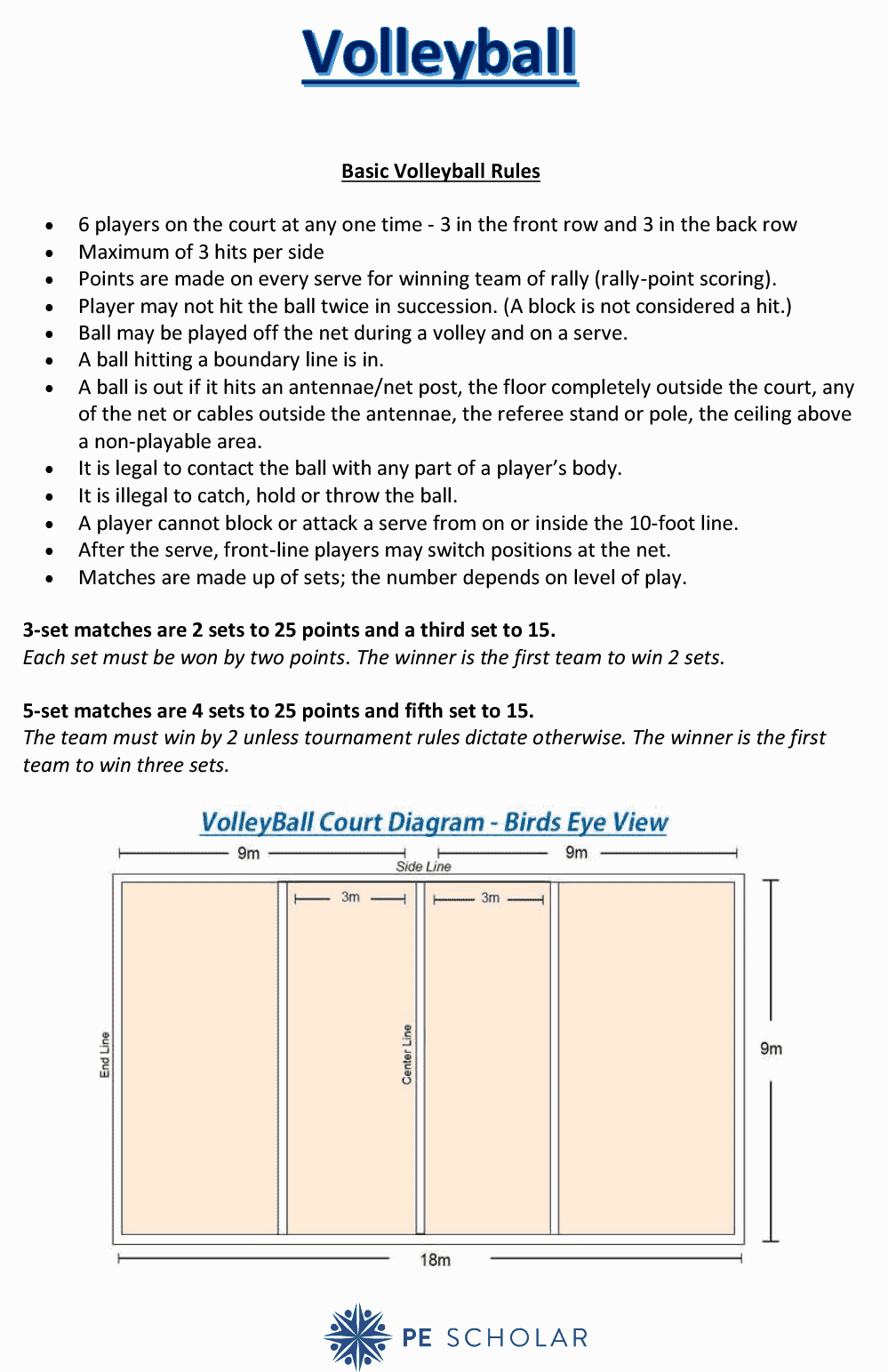
Scoring and match format
Most games use rally scoring: every rally awards a point to one team. A set is typically played to 25 points and a team must win by two points; a deciding fifth set is often played to 15 points. Matches are commonly best of five sets, though recreational play can be best of three. Timeouts and substitutions are limited, so teams plan them carefully to manage momentum.

Player positions and rotations
Players rotate clockwise after winning the serve back. The six rotational positions are tied to front-row and back-row roles. Key roles include:
- Setter: runs the offense and sets the ball for attackers.
- Outside hitter: primary attacker and passer in serve receive.
- Middle hitter: fast attacks and blocks at the net.
- Opposite: strong attacker, often handles right-side offense.
- Libero: defensive specialist restricted to back-row play.
Understanding positions helps players meet the basic rules of volleyball while keeping legal rotations and attack restrictions.

Serving rules
Serves must be made from behind the end line and can be underhand or overhand. The server may step on the line only after making contact; stepping on or over before contact is a foot fault. A served ball that touches the net and lands in is valid in most play formats. Serving starts the rally and can be a powerful weapon when players know the basic rules of volleyball related to service order and faults.

Playing the ball: touches and faults
Teams may touch the ball up to three times before returning it across the net. A single player cannot touch the ball twice in succession, except after a block. Common faults include:
- Carrying or lifting the ball with prolonged contact.
- Double contact on hard-driven balls by the same player (some leniency by referees).
- Four-team contacts before sending the ball over.
Remembering the three-touch limit is one of the clearest basic rules of volleyball and guides safe, legal team play.
Net and court violations
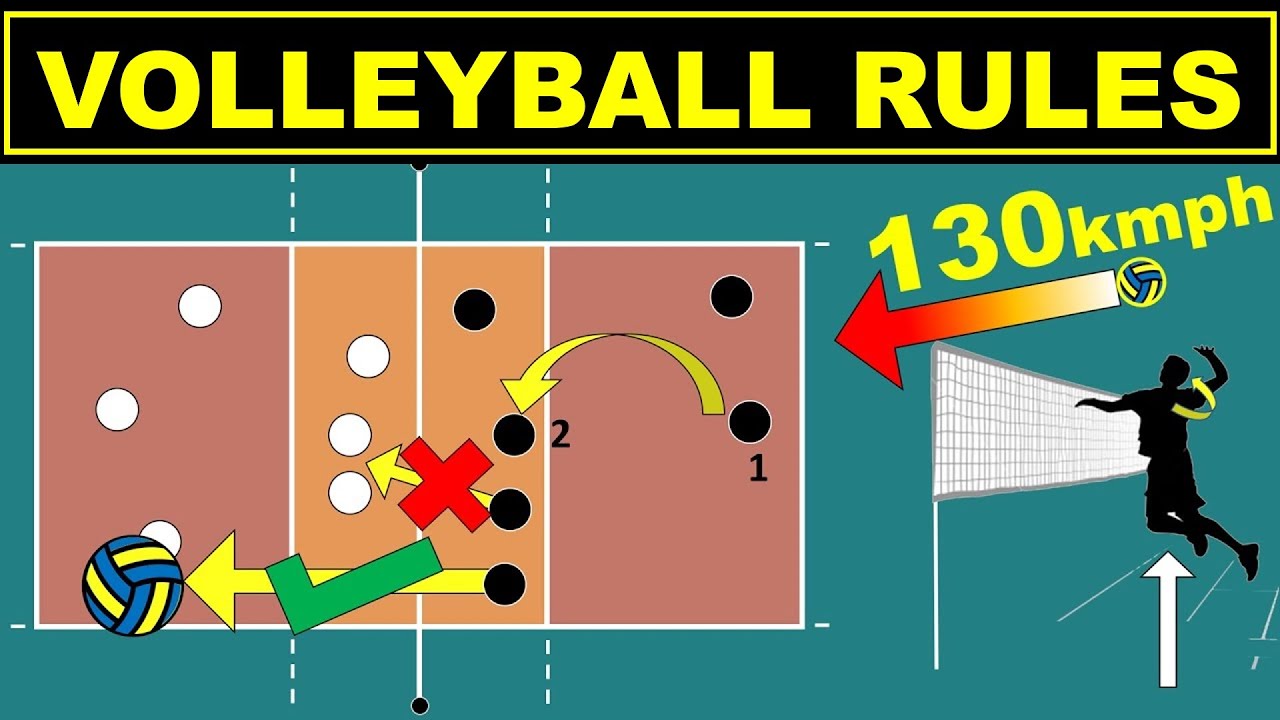
Touching the net while playing the ball is a fault if it interferes with play. Players may cross under the net if they don’t interfere and their foot does not cross the center line in a dangerous way. Back-row players cannot attack a ball above the net from in front of the attack line. Avoiding net and centerline violations is essential to follow the basic rules of volleyball and keep the game fair.

Common strategies and tips
Good teams blend skill, timing, and communication. Focus on:
- Serve receive formation and consistent passes.
- Quick sets to the middle to disrupt blockers.
- Effective blocking and transition from defense to offense.
From my coaching experience, working on serve receive and setter-hitter timing yields the fastest improvement. Practice simple drills that reflect the basic rules of volleyball, like three-touch rallies and rotation drills, and avoid overcomplicating the early learning phase.
Quick answers to common questions
What is the three-touch rule?
The three-touch rule means a team can touch the ball up to three times before returning it over the net. This encourages passing, setting, and attacking as a sequence.
Can the libero serve?
In many formats the libero is allowed one rotation to serve, but rules vary by league. Check local competition rules for the exact libero service permissions.
Is a net touch always a fault?
Not always. A net touch is a fault if it affects play or is by a player on the action. Light contact that does not influence the rally is often allowed.
Frequently Asked Questions of What are the basic rules of volleyball?
What counts as a legal block?
A block is legal if a player reaches above the net to intercept the ball without touching the net or committing a fault. Blocking a serve is not allowed in most rules, and the block does not count as one of the team’s three allowed touches.
How does rotation work in volleyball?
Rotation happens clockwise after a team wins serve back. Players must keep their order until the ball is served, and the front-row players may move after the serve to assume attacking or defensive positions.
What is a libero and what can the libero do?
The libero is a back-row defensive specialist who wears a different color jersey. The libero cannot attack above the net, cannot serve in some formats, and cannot rotate to the front row.
When is a ball out of bounds?
A ball is out if it lands completely outside the court lines or touches an object outside play. If the ball touches the boundary line, it is in.
Can a player reach over the net to block or attack?
Players may reach over the net to block a ball that has crossed the plane but cannot interfere with an opponent’s play or contact the ball on the opponent’s side before the opponent’s attack hit.
Conclusion
The basic rules of volleyball are simple to learn and unlock the fun and strategy of the sport. Focus on the three-touch rule, legal serving, rotation order, and avoiding net faults to play confidently. Try a few focused drills, play a set with friends, and use this guide to check rules during practice. If this helped, leave a comment, share your own tips, or subscribe for more practical volleyball guides.

