

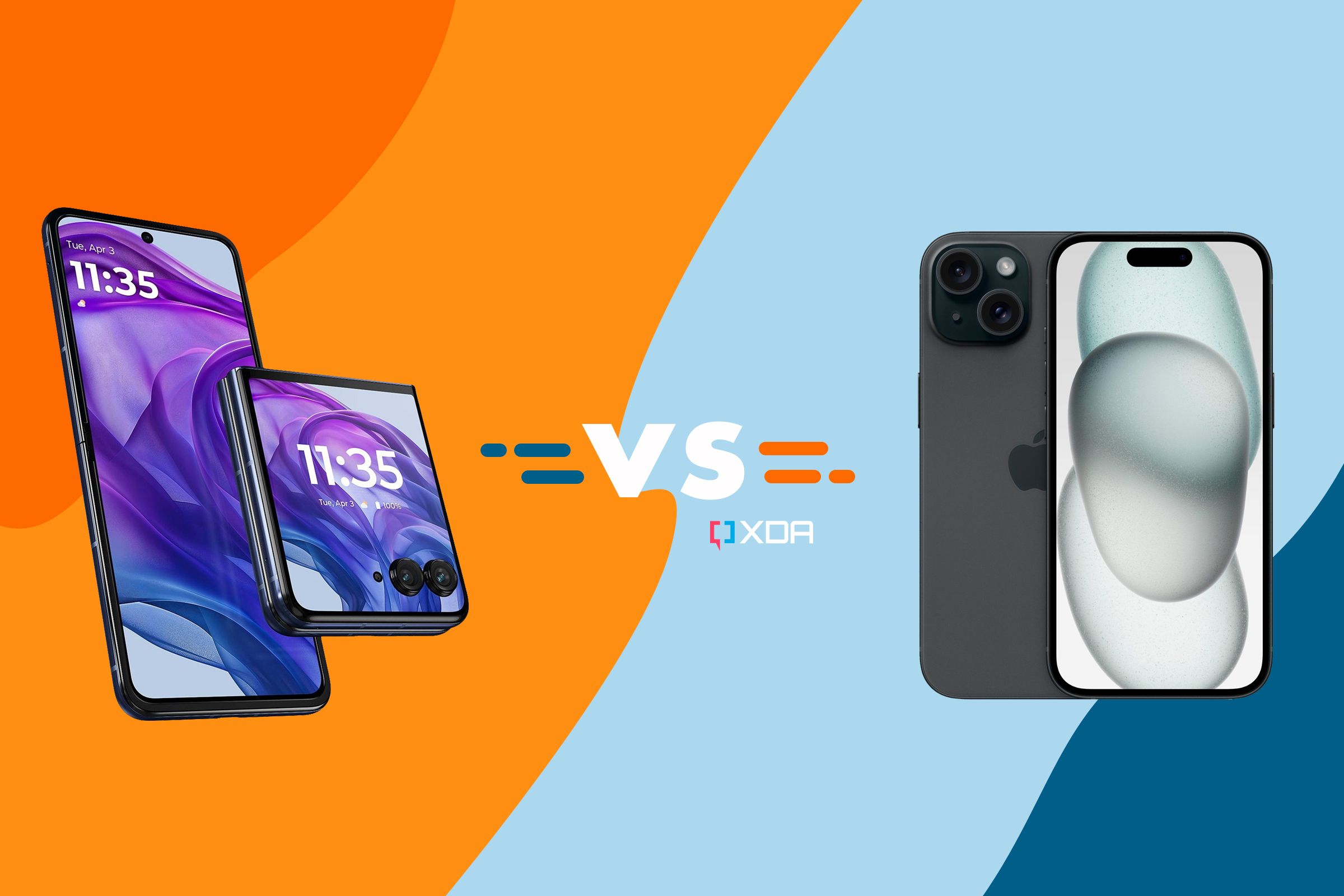
Choosing a new smartphone in 2024 is not easy. The market is full of options, but two models stand out: the Motorola Razr+ and the iPhone 15 Pro. Both are flagship devices, but they follow very different paths. The Razr+ is a modern flip phone, designed for those who want something unique and compact. The iPhone 15 Pro, on the other hand, is Apple’s latest premium device, known for its power and ecosystem. If you are trying to decide between these two, there are many things to consider. This article will compare the Razr+ and iPhone 15 Pro across 15 key factors, helping you understand which one is right for you.
Design And Build Quality
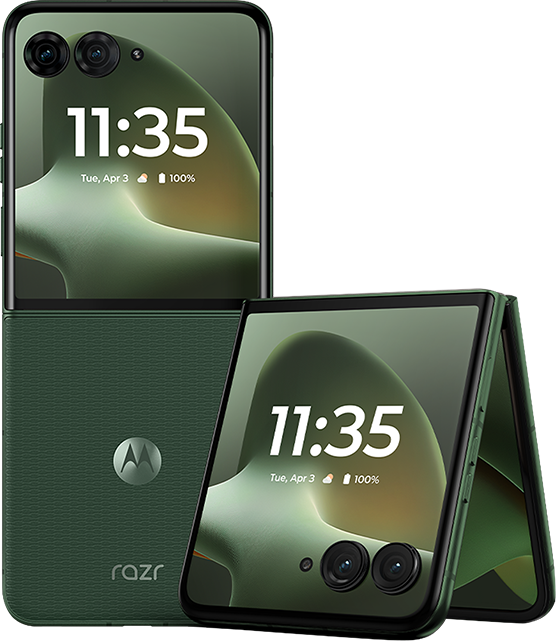
The first thing people notice about a phone is its design. The Motorola Razr+ is famous for its foldable design. When closed, it is very compact, easily fitting in small pockets or bags. The outside has a 3.6-inch cover screen, letting you check notifications, reply to messages, or even run some apps without opening the phone. Open it up, and you get a 6.9-inch OLED display. The hinge is smooth, and Motorola claims it can survive hundreds of thousands of folds. The Razr+ is made of aluminum and glass, but because it folds, the main screen has a thin, flexible layer that feels a bit different from traditional glass.

36% off Today’s Exclusive Deals
Limited-time Exclusive Deals. Check current discount on Amazon.
Check Price on Amazon As an Amazon Associate I earn from qualifying purchases.The iPhone 15 Pro sticks to the classic slab design. Apple uses titanium for the frame, making the phone lighter but still very strong. The back is matte glass, with a clean and minimal look. The iPhone does not fold, but it feels solid and premium in the hand. Apple pays attention to details: the buttons have a satisfying click, the camera bump is sculpted, and the edges are slightly curved for comfort. The iPhone 15 Pro is also IP68 water and dust resistant, so you can accidentally drop it in water without worry. The Razr+ has a lower IP52 rating, so it’s protected against light splashes but not full submersion.
Both phones offer something special: the Razr+ is unique and nostalgic with its flip design, while the iPhone 15 Pro feels refined and classic.
Display Quality
Screen quality affects everything you do with a smartphone. The Motorola Razr+ features a foldable 6.9-inch OLED display with a 2640 x 1080 resolution and a fast 165Hz refresh rate. Colors are vivid, blacks are deep, and the high refresh rate makes scrolling smooth. The flexible screen is impressive, but you can sometimes see a slight crease at the fold, especially when viewing at an angle or in bright light. The cover display is also OLED, with a sharp 1066 x 1056 resolution, and is bright enough for outdoor use.
The iPhone 15 Pro has a 6.1-inch Super Retina XDR OLED display with a resolution of 2556 x 1179. It supports ProMotion for a 120Hz adaptive refresh rate. Colors are accurate, brightness reaches up to 2000 nits outdoors, and HDR content looks stunning. The iPhone’s display is flat and covered with Apple’s Ceramic Shield, which is more resistant to scratches and drops than most glass.
While the Razr+ gives you two screens and more flexibility, the iPhone 15 Pro’s display is slightly sharper, brighter, and more durable. For people who want the best screen for videos, gaming, or editing photos, the iPhone is hard to beat.
The Razr+ is better for those who want something different, with a fun and useful outer display.
Performance And Speed
A phone’s performance depends on its processor, memory, and software. The iPhone 15 Pro uses Apple’s new A17 Pro chip, built on a 3nm process. This chip is the fastest ever in a smartphone, with a 6-core CPU, 6-core GPU, and 16-core Neural Engine. In benchmarks, it beats every Android phone, including the Razr+. Apps open instantly, games run smoothly, and heavy tasks like video editing are effortless. The iPhone also comes with 8GB of RAM, which is plenty thanks to Apple’s efficient software.
The Motorola Razr+ uses Qualcomm’s Snapdragon 8+ Gen 1 chip, which was top-of-the-line in 2022. It’s still very fast, with an octa-core CPU and Adreno 730 GPU, and comes with 8GB of RAM as well. Everyday tasks like browsing, streaming, and multitasking feel quick. You can even play demanding games, though not at the highest settings like on the iPhone.
For pure speed and future-proofing, the iPhone 15 Pro is the clear winner. However, the Razr+ is powerful enough for most users, unless you want to do intensive gaming or creative work on your phone.
Software And User Experience
The operating system changes how you interact with your phone. The iPhone 15 Pro runs iOS 17, known for its smooth performance, security, and regular updates. The interface is simple, with easy access to apps, widgets, and settings. Apple’s software integrates tightly with the hardware, making features like Face ID, Live Text, and AirDrop work seamlessly. iOS also connects well with other Apple devices, such as Macs, iPads, and Apple Watch.
The Motorola Razr+ runs a nearly stock version of Android 13. This gives you more freedom to customize your home screen, use widgets, and choose your default apps. Motorola adds a few helpful features, like Moto Actions (quick gestures to open the camera or turn on the flashlight) and a special UI for the cover screen. Android users enjoy more flexibility, but updates are less certain—Motorola promises 3 years of major updates, while Apple usually supports iPhones for 5-6 years.
If you want a phone that stays updated and is easy to use, the iPhone 15 Pro is the safer bet. If you love customizing your phone or prefer Google’s ecosystem, the Razr+ will feel more familiar.

Camera System
Photography is a top priority for many buyers. The iPhone 15 Pro has a triple camera setup: a 48MP main sensor, 12MP ultra-wide, and 12MP 3x telephoto. The main camera takes sharp, detailed photos in any light. Night mode brings out color and detail in low light. The telephoto lens is great for portraits and zoom shots, while the ultra-wide captures sweeping landscapes. Apple’s Photonic Engine and Smart HDR 5 make photos look natural but vibrant.
The Razr+ has a dual camera: a 12MP main sensor and a 13MP ultra-wide. On paper, the numbers may seem similar, but the iPhone’s sensors are larger and more advanced. The Razr+ takes good photos in daylight, with accurate colors and fast autofocus. Low light is more challenging, with more noise and less detail. There’s no dedicated telephoto lens, so zoom is digital and loses quality.
For video, the iPhone 15 Pro shoots up to 4K at 60fps with Dolby Vision HDR, and even supports ProRes recording for professionals. The Razr+ records 4K video but lacks advanced features like Cinematic mode or ProRes.
If camera quality matters most, the iPhone 15 Pro is the better choice. The Razr+ is good for casual photos and selfies (especially using the cover screen as a viewfinder), but it can’t match Apple’s cameras in all situations.
Battery Life And Charging
No one likes charging their phone all day. The iPhone 15 Pro has a 3274mAh battery. Thanks to the efficient A17 Pro chip and iOS optimization, it lasts about a day and a half with normal use. Streaming video, browsing, and social media are no problem. Even with heavy gaming, you can get through a full day. The iPhone supports fast wired charging (up to 27W), MagSafe wireless charging (up to 15W), and Qi wireless charging.
The Motorola Razr+ has a 3800mAh battery, slightly bigger on paper. However, the larger and brighter screen, plus the demands of a foldable hinge, mean real-world battery life is about a day with typical use. If you use both screens often, you may need to recharge sooner. The Razr+ supports 30W fast wired charging and 5W wireless charging.
In real use, the iPhone 15 Pro lasts a bit longer and charges faster wirelessly. The Razr+ charges faster with a cable, but wireless charging is slower. Neither phone is a battery champion, but the iPhone is slightly ahead in endurance.
Storage Options
How much storage you need depends on your habits. The iPhone 15 Pro comes in 128GB, 256GB, 512GB, and 1TB options. This is great if you store lots of photos, videos, or apps. The downside is that iPhones do not support microSD cards, so what you buy is what you keep.
The Razr+ is available in 256GB and 512GB versions. Like the iPhone, there’s no microSD card slot, so you cannot expand storage later. Both phones use fast internal storage, making app loading and file transfers quick.
If you want the absolute most space, the iPhone 15 Pro’s 1TB model is unmatched. But for most users, 256GB or 512GB is enough.
Security And Privacy
Smartphones hold private data, so security is important. The iPhone 15 Pro uses Face ID, Apple’s advanced facial recognition. It’s fast, secure, and works in most lighting. Apple is known for strong privacy: your data stays on your device, and features like App Tracking Transparency let you control what apps can see.
The Motorola Razr+ uses a side-mounted fingerprint sensor for unlocking. It’s reliable and quick, even with a mask or sunglasses. Android 13 includes regular security updates and privacy controls, but Motorola’s update schedule is not as long as Apple’s. Both phones let you use PINs, passwords, and biometric locks, but Apple’s approach is more comprehensive.
For the highest level of privacy and long-term security updates, the iPhone 15 Pro leads.
Audio And Speakers
Sound quality is easy to overlook until you watch a movie or listen to music. The iPhone 15 Pro has stereo speakers—one at the bottom, one in the earpiece. Audio is loud, clear, and balanced, with good bass for a phone. It supports Spatial Audio for a 3D effect when watching videos or using headphones.
The Razr+ also has stereo speakers, tuned by Dolby Atmos. They are clear, but not as loud or deep as the iPhone’s. Neither phone has a headphone jack, so you’ll need Bluetooth or USB-C/Lightning headphones.
If you care about audio, especially for movies or games, the iPhone 15 Pro has a slight edge.
Network And Connectivity
Both phones are 5G-ready, so you can enjoy faster downloads and better coverage where available. The iPhone 15 Pro supports more 5G bands globally, making it a better choice for travelers. It also includes Wi-Fi 6E and Bluetooth 5.3 for fast, stable connections.
The Razr+ supports 5G, Wi-Fi 6E, and Bluetooth 5.3 as well. Both have NFC for contactless payments. The iPhone uses Apple Pay, while the Razr+ supports Google Pay. The iPhone 15 Pro introduces USB-C for charging and data transfer, replacing the old Lightning port. The Razr+ also uses USB-C.
One non-obvious detail: the iPhone 15 Pro has Ultra Wideband (UWB) for precise location tracking with AirTags or for device-to-device transfers. The Razr+ lacks UWB, which could matter if you use smart trackers or want to share files quickly with other devices.
Durability And Repairability
A phone’s durability depends on its materials and design. The iPhone 15 Pro’s titanium frame and Ceramic Shield front make it very sturdy. Its IP68 rating means it can survive 6 meters underwater for up to 30 minutes. If you drop it, there’s a good chance it will survive with no damage. However, repairing an iPhone can be expensive, especially the screen or back glass.
The Razr+ is more fragile due to its folding screen. The hinge is strong, but the flexible OLED is softer and more prone to scratches or dents. Its IP52 rating protects against small splashes, but not much more. On the plus side, Motorola makes it easy to replace the battery or screen, and parts are more available than in past models.
If you want a phone that survives accidents, the iPhone 15 Pro is safer. If you want something you can fix yourself, the Razr+ is better than most foldables, but still not as tough as a regular phone.
Price And Value
Price is often a deciding factor. The Motorola Razr+ launched at around $999 for the 256GB version. This is competitive for a foldable phone, and you may find discounts over time.
The iPhone 15 Pro starts at $999 for 128GB, rising to $1499 for 1TB. Apple rarely discounts new models, so prices stay steady. The iPhone holds its value better over time, making it a better investment if you plan to resell or trade in later.
If you want something unique at a premium price, the Razr+ is attractive. But if you want a phone that keeps its value and gets updates for years, the iPhone 15 Pro is a smarter buy.
Ecosystem And Accessories
Many people buy a phone because of what it connects to. The iPhone 15 Pro is part of a huge ecosystem: AirPods, Apple Watch, iPads, Macs, Apple TV, and smart home devices. Features like Handoff, Universal Clipboard, and AirDrop make life easier if you use more than one Apple device.
The Razr+ works well with Google services, Chromebooks, and Android Wear watches. Accessories like cases and chargers are available, but the selection is smaller than for the iPhone. Foldable phones also have fewer case options, and screen protectors are harder to apply.
If you already use Apple products, the iPhone 15 Pro fits in perfectly. If you use Android or want more flexibility, the Razr+ is a good match.
Unique Features
Both phones offer something you cannot find elsewhere. The Razr+ stands out with its foldable design. You can close it to end calls, prop it up for video chats, or use the cover screen for selfies. The “Flex View” mode lets you split the screen and use two apps at once, or take group photos hands-free.
The iPhone 15 Pro introduces the Action Button, replacing the mute switch. You can set it to open the camera, start a voice memo, or turn on a shortcut. The iPhone also supports ProRes video recording, Spatial Video for the Vision Pro headset, and emergency SOS via satellite.
For people who love new tech, the Razr+ is more fun to show off. For people who want advanced features for work or creativity, the iPhone 15 Pro is more versatile.
User Experience And Everyday Use
How a phone feels in daily life matters more than specs. The Razr+ is light, compact, and slips easily into a pocket or purse. The cover screen is very useful for quick replies, music controls, or checking the weather without opening the phone. Some users find the fold satisfying, but others worry about long-term durability.
The iPhone 15 Pro is reliable, fast, and consistent. It’s a bit heavier, but fits comfortably in most hands. Notifications, calls, and apps work smoothly. If you travel, the iPhone’s eSIM support and global 5G bands make life easier.
Two insights many miss: foldable phones like the Razr+ get more attention from strangers—some people like this, others do not. Also, the outer screen is a real battery saver, since you don’t need to open the main display as often.
Side-by-side Comparison Table
To make things clearer, here is a direct comparison of key specs:
| Feature | Motorola Razr+ | iPhone 15 Pro |
|---|---|---|
| Main Display | 6.9″ Foldable OLED, 165Hz | 6.1″ OLED, 120Hz ProMotion |
| Cover Display | 3.6″ OLED | None |
| Processor | Snapdragon 8+ Gen 1 | A17 Pro |
| RAM | 8GB | 8GB |
| Storage | 256GB, 512GB | 128GB, 256GB, 512GB, 1TB |
| Main Camera | 12MP | 48MP |
| Ultra-Wide Camera | 13MP | 12MP |
| Telephoto Camera | None | 12MP 3x |
| Battery | 3800mAh | 3274mAh |
| Charging | 30W wired, 5W wireless | 27W wired, 15W MagSafe |
| Water Resistance | IP52 | IP68 |
| Operating System | Android 13 | iOS 17 |
| Price (US) | $999 (256GB) | $999 (128GB) |
Pros And Cons Table
Here’s a quick look at the main advantages and disadvantages of each phone:
| Motorola Razr+ | iPhone 15 Pro | |
|---|---|---|
| Pros | – Unique, compact foldable design – Large, useful cover screen – Fast charging – Clean Android software |
– Best-in-class performance – Amazing cameras – Long software support – Great ecosystem and accessories |
| Cons | – Less durable than slab phones – Cameras not as strong – Lower water resistance – Fewer accessories |
– More expensive for high storage – No foldable fun – Limited customization |
Which Should You Buy?
Deciding between the Motorola Razr+ and iPhone 15 Pro depends on your needs and preferences. The Razr+ is perfect for those who want a phone that stands out. It’s fun, compact, and offers something different with its cover display and foldable design. It’s also a good choice if you prefer Android and want a phone that fits in small pockets.
The iPhone 15 Pro is for those who want reliability, power, and the best camera system. It is a safe investment, will get updates for many years, and fits well into the Apple ecosystem. If you care about durability, camera quality, or long-term value, the iPhone is hard to beat.
A small tip: If you often drop your phone or use it in wet places, the iPhone’s higher water and dust resistance makes a real difference. For people who travel or use smart home devices, the iPhone’s better global support and ecosystem integration are important.
No phone is perfect for everyone. Think about what matters most to you: style, performance, camera, or software. Both the Razr+ and iPhone 15 Pro are excellent, but in very different ways.
If you want to dig deeper into their technical specifications, you can find detailed information on the GSMArena website.
Frequently Asked Questions
Which Phone Has The Better Camera: Motorola Razr+ Or Iphone 15 Pro?
The iPhone 15 Pro offers a more advanced camera system. With a larger 48MP main sensor, dedicated telephoto lens, and better low-light performance, it takes sharper and more detailed photos in most conditions. The Razr+ has a good camera for casual use, but the iPhone 15 Pro is better for photography fans.
How Durable Is The Foldable Screen On The Razr+?
The Razr+ uses a modern hinge and flexible OLED, which Motorola says can handle over 400,000 folds. However, foldable screens are still more delicate than regular glass. You may notice a crease over time, and it’s more prone to scratches.
Using the cover screen for quick tasks helps reduce wear on the main display.
Which Device Gets Longer Software Support?
Apple supports the iPhone 15 Pro for 5-6 years with major iOS updates. Motorola promises 3 years of Android updates for the Razr+, which is good for Android, but not as long as Apple. If you want your phone to stay up-to-date longer, the iPhone 15 Pro is the better choice.
Can I Use The Razr+ Cover Screen For All Apps?
You can use the Razr+ cover screen for many apps, but not all. Messaging, music, maps, and some social media apps work, but some third-party apps may have limited features. Motorola is adding support for more apps over time, but the experience is best with built-in or optimized apps.
Is The Price Difference Worth It For The Iphone 15 Pro?
Both phones start at $999, but the iPhone 15 Pro can cost more if you choose higher storage. It offers better cameras, performance, and longer support, so it may hold its value longer. The Razr+ is unique and often discounted, making it a good deal if you want something different.
Decide based on what features you use most and your budget.
Choosing between the Motorola Razr+ and iPhone 15 Pro is not just about specs, but about how each phone fits your life. Both have clear strengths. Take your time, think about your daily needs, and you’ll find the right match.

