

The world of foldable phones is moving fast. Two models are leading the charge in 2024: the Motorola Razr+ and the Huawei Pocket 2. Both are compact, stylish, and offer impressive features. But which one truly stands out? Choosing between them is not easy—each has strengths and weaknesses, and the right choice depends on your needs.
This article takes a close look at both devices. We’ll compare design, display quality, camera performance, software, battery life, and more. Along the way, you’ll find practical tips, clear explanations, and insights that help you decide. Whether you care about photography, multitasking, or just want a phone that feels special, you’ll discover what matters most for you.

36% off Today’s Exclusive Deals
Limited-time Exclusive Deals. Check current discount on Amazon.
Check Price on Amazon As an Amazon Associate I earn from qualifying purchases.Let’s unfold the details—literally—and see how the Motorola Razr+ and Huawei Pocket 2 stack up.
Design And Build Quality
How a foldable phone feels in your hand matters. Both the Motorola Razr+ and Huawei Pocket 2 offer a premium experience, but their design philosophies are different.
Motorola Razr+: Modern Retro
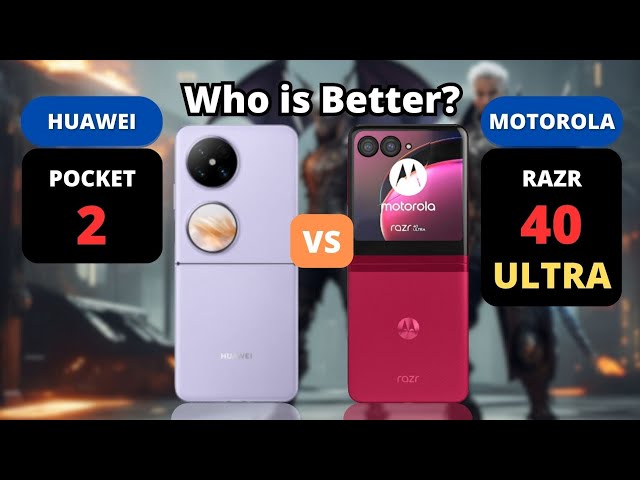
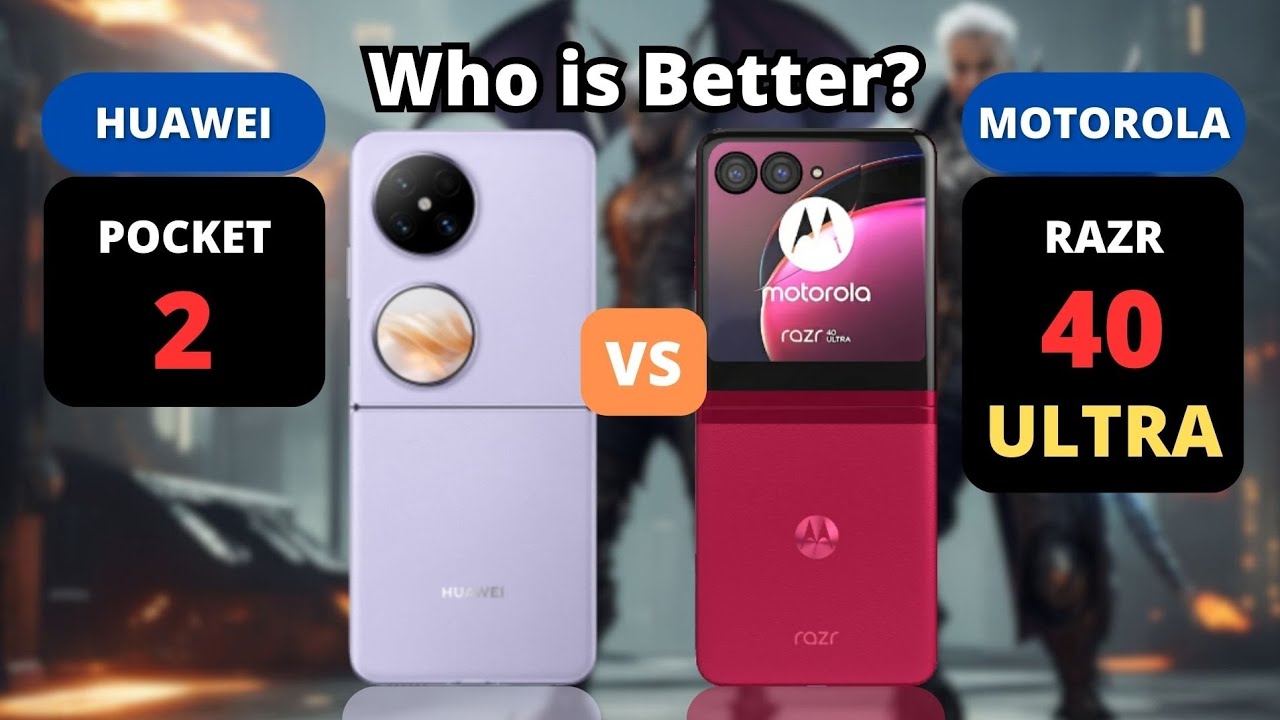
The Razr+ takes inspiration from the classic Razr flip phone. It’s thin, light, and has a soft curve when closed. The hinge is engineered for a smooth open and close, with little visible crease on the main screen. The body uses aluminum and Gorilla Glass Victus, giving it a sturdy feel without being heavy.
Its size when folded is 3.6 x 3.1 x 0.6 inches (91 x 79 x 15 mm), and it weighs about 188g. The hinge mechanism is tested for over 400,000 folds, which should last years for normal use.
Huawei Pocket 2: Elegant And Compact
Huawei’s Pocket 2 stands out with a rounded body and a unique camera ring on the outside. It looks like a luxury accessory—sleek, shiny, and pocketable. Materials include aluminum sides and a high-gloss glass back.
When closed, it measures 3.4 x 2.9 x 0.6 inches (87 x 75 x 15 mm), and weighs about 199g. The hinge is also robust, and Huawei claims a similar fold durability as Motorola.
Build Quality Insights
- Both phones resist dust and minor splashes, but Motorola Razr+ has an official IP52 rating (protection against dust and dripping water), which the Huawei Pocket 2 lacks.
- The Razr+ feels a bit lighter and slimmer in hand, while the Pocket 2 has a more jewelry-like feel.
- Pocket 2’s external ring display is a conversation starter, but it also means the camera bump is more pronounced.
Non-obvious insight: The hinge design affects long-term reliability. Motorola’s “teardrop” hinge keeps the display crease shallow, while Huawei’s “multi-dimensional” hinge helps reduce dust entry and screen stress. Both work well, but you’ll notice the Razr+ crease less when using bright backgrounds.
Display Quality And Experience
Foldable phones live or die by their screens. Both the main and cover displays matter, since you’ll interact with both every day.
Main Display
Motorola Razr+:
- 6.9-inch pOLED, 2640 x 1080 pixels (413 ppi)
- 144Hz refresh rate (very smooth scrolling)
- Brightness up to 1400 nits (good outdoors)
- 22: 9 aspect ratio, tall and narrow
Huawei Pocket 2:
- 6.94-inch OLED, 2690 x 1136 pixels (426 ppi)
- 120Hz refresh rate
- Brightness up to 1200 nits
- 21.9: 9 aspect ratio, similar to Razr+
Both offer: HDR10+ support, vibrant colors, deep blacks, and minimal bezels.
Cover Display
Motorola Razr+:
- 3.6-inch pOLED, 1056 x 1066 pixels
- Full-featured: Run any app, reply to messages, play videos, and more
Huawei Pocket 2:
- 1.15-inch circular OLED, 340 x 340 pixels
- Shows notifications, quick settings, camera preview, and widgets
Key difference: The Razr+ cover display is much larger and more functional. You can use it almost like a mini smartphone. The Pocket 2’s ring display is more limited, but stylish.
Screen Durability
Both brands use ultra-thin glass under a plastic protector. This makes them smoother than early foldables, but you still need to avoid sharp objects and pressing too hard.
Practical tip: If you type a lot or like to game on your phone, the Razr+’s higher refresh rate and larger cover screen give a smoother, more flexible experience.
Data Table: Display Specs
| Feature | Motorola Razr+ | Huawei Pocket 2 |
|---|---|---|
| Main Screen Size | 6.9 inches | 6.94 inches |
| Main Screen Resolution | 2640 x 1080 | 2690 x 1136 |
| Main Refresh Rate | 144Hz | 120Hz |
| Cover Display Size | 3.6 inches | 1.15 inches (round) |
| Cover Display Use | Apps, messaging, media | Notifications, camera, widgets |
Non-obvious insight: The Razr+ cover display lets you use the main cameras for selfies with full app support. On the Pocket 2, the small circle makes framing harder, but it’s great for quick selfies and notifications.
Performance And Hardware
Foldable phones need to balance power with heat and battery life. Both Motorola Razr+ and Huawei Pocket 2 use high-end hardware, but there are important differences.
Chipset And Speed
Motorola Razr+:
- Qualcomm Snapdragon 8+ Gen 1
- 8GB or 12GB RAM
- 256GB or 512GB storage (UFS 3.1)
Huawei Pocket 2:
- Kirin 9000S (Huawei’s custom chip, similar to Snapdragon 870/888)
- 12GB RAM
- 256GB, 512GB, or 1TB storage (UFS 3.1)
Day-to-day use: Both are fast for social media, browsing, and most apps. The Razr+ has a slight edge in gaming and heavy multitasking due to its newer Snapdragon chip.
Connectivity
- Razr+: 5G (sub-6GHz and mmWave in some regions), Wi-Fi 6E, Bluetooth 5.3, NFC, eSIM support
- Pocket 2: 5G (limited by region due to US restrictions), Wi-Fi 6, Bluetooth 5.2, NFC, dual SIM (no eSIM)
Important detail: The Pocket 2’s 5G may not work in all countries due to trade restrictions. If you travel, check your region’s support before buying.
Storage And Expansion
- Both phones do not have microSD card slots. Choose your storage size carefully, especially for photos and videos.
Non-obvious insight: The Razr+ is less prone to overheating thanks to the Snapdragon chip’s efficiency. The Pocket 2 can get warm during long 4K video recording or gaming.
Camera Capabilities
Foldable phones are now good enough for everyday photography, but details matter if you care about image quality.
Camera Specs
Motorola Razr+:
- Main: 12MP f/1.5 (wide), Dual Pixel AF, OIS
- Ultrawide: 13MP f/2.2 (120°)
- Front (internal): 32MP f/2.4
Huawei Pocket 2:
- Main: 50MP f/1.8 (wide), PDAF, OIS
- Ultrawide: 12MP f/2.2
- Telephoto: 8MP f/2.4 (3x optical zoom, OIS)
- Spectrum: 2MP (color accuracy)
- Front (internal): 10.7MP
Real-world Results
- Razr+: Great for quick snaps, selfies, and social media. Colors are vibrant, and the ultrawide is useful. Night shots are decent but can get noisy.
- Pocket 2: More advanced. The main sensor captures sharper images, with better low-light performance. The 3x zoom is unique among flip phones, letting you shoot portraits and faraway objects clearly.
Video
- Razr+: 4K at 60fps (main), 1080p selfie, good stabilization
- Pocket 2: 4K at 60fps (main), 4K at 30fps (selfie), excellent stabilization
Camera Experience
- The Razr+ lets you use the cover display for high-quality selfies with the main cameras.
- The Pocket 2’s round screen is fun for quick snaps but less flexible for vlogging.
Practical tip: If you love zoom or want the best image quality, the Pocket 2 is the clear winner. For most users, both will be more than enough.
Data Table: Camera Specs
| Camera | Motorola Razr+ | Huawei Pocket 2 |
|---|---|---|
| Main Sensor | 12MP, f/1.5, OIS | 50MP, f/1.8, OIS |
| Ultrawide | 13MP, 120° | 12MP, 120° |
| Telephoto | N/A | 8MP, 3x optical |
| Front (internal) | 32MP | 10.7MP |
| Video | 4K 60fps (main) | 4K 60fps (main) |
Non-obvious insight: The Pocket 2’s “spectrum” camera improves color accuracy, especially for flowers or art photos. Few users know this, but it makes a difference for creative shots.
Software Experience
Software is where these phones start to feel very different. Your choice may depend more on software than hardware.
Motorola Razr+: Stock Android With Extras
- Android 13 (upgradable to newer versions)
- Clean, fast, and uncluttered interface
- Motorola’s gestures: Chop to turn on flashlight, twist for camera
- Cover screen can run almost any Android app
- Google Play Store and all Google services included
Huawei Pocket 2: Harmonyos And App Gallery
- HarmonyOS 4.0 (Huawei’s own system, Android app compatible)
- No Google Play Store or Google services (due to US ban)
- Uses Huawei AppGallery for apps, plus third-party stores
- Some apps require sideloading
- Main screen is customizable, with quick widgets and themes
- Cover display shows widgets, notifications, and quick replies
Important detail: In China, HarmonyOS is smooth and rich in features. Outside China, you’ll need to find workarounds for missing Google apps. Many top apps are available, but some (like Gmail, Google Maps) require extra steps.
Security And Updates
- Razr+: 3 years of OS updates, 4 years of security patches
- Pocket 2: 2-3 years of updates, but timing may vary by region
Practical tip: If you rely on Google services or want the easiest setup, the Razr+ is the safer choice. If you like tinkering or mainly use Chinese apps, the Pocket 2 is powerful.
Non-obvious insight: Motorola’s cover screen lets you reply to messages, check maps, or even play games without opening the phone. This saves battery and feels futuristic.
Battery Life And Charging
Foldables have to fit batteries in a small space. How do these two models perform in real life?
Battery Specs
Motorola Razr+:
- 3800 mAh battery
- 30W wired charging
- 5W wireless charging
Huawei Pocket 2:
- 4520 mAh battery (larger than most flip foldables)
- 40W wired charging
- 5W wireless charging
- 5W reverse wireless charging (charge earbuds, etc.)
Real-world Usage
- Razr+: Lasts a full day with moderate use (screen on 4-5 hours). Heavy users may need an afternoon top-up. 30W charging fills 50% in about 20 minutes.
- Pocket 2: Usually lasts a day and a half, thanks to the larger battery. Even with heavy use, it rarely dies before bedtime. 40W charging is fast—70% in 30 minutes.
Charging Convenience
Both support USB-C and wireless charging. The Pocket 2’s reverse wireless charging is handy for earbuds or a friend’s phone.
Data Table: Battery And Charging
| Feature | Motorola Razr+ | Huawei Pocket 2 |
|---|---|---|
| Battery Capacity | 3800 mAh | 4520 mAh |
| Wired Charging | 30W | 40W |
| Wireless Charging | 5W | 5W + reverse |
| Typical Battery Life | 1 day | 1–1.5 days |
Non-obvious insight: The Pocket 2’s higher battery capacity is partly possible because of slightly thicker hinge design. If you need the longest battery, this is a real advantage.
Special Features
What sets these phones apart? Beyond specs, each has unique touches.
Motorola Razr+
- Moto Actions: Gestures like double twist for camera, chop for flashlight
- Ready For: Connect to a monitor/TV for desktop-like experience
- Voice Assistant: Google Assistant built-in
- Cover Display Apps: Play games, watch videos, use navigation—all without opening phone
- ESIM Support: Easy to switch carriers, useful for travel
Huawei Pocket 2
- 3x Optical Zoom: The only flip phone with true telephoto lens
- Super Spectrum Camera: Better color accuracy
- Reverse Wireless Charging: Charge other devices
- HarmonyOS Widgets: Deep customization for cover and main screens
- AI Features: Real-time translation, document scanning, scene recognition
Practical tip: If you’re often on the go, Motorola’s eSIM and Google integration make international use simpler. If you’re a creative or love photography, the Pocket 2’s camera and AI tools are hard to beat.
Price And Availability
Pricing and where you can buy these phones is crucial, especially with Huawei’s restrictions.
Motorola Razr+
- US Launch Price: $999 (8GB/256GB), often discounted
- Widely available in the US, Europe, India, and Latin America
- Works on most carriers, including Verizon, AT&T, T-Mobile
Huawei Pocket 2
- China Launch Price: Around $1,200 (8,999 RMB for 12GB/256GB)
- Limited availability outside China; import required in many countries
- No official US carrier support; some European and Asian carriers
- Google services not pre-installed outside China
Important detail: Importing the Pocket 2 may mean no warranty in your country and possible network issues. The Razr+ is easier to buy and support.
Non-obvious insight: Huawei’s high price is partly due to its advanced camera and battery. However, you may pay import taxes or face limited after-sales service.

Who Should Buy Which?
Choosing between the Motorola Razr+ and Huawei Pocket 2 comes down to priorities.
Choose Motorola Razr+ If:
- You want a full-featured cover display and easy app access.
- Google services and app compatibility matter.
- You want the best value and easy global availability.
- You prefer a lighter, thinner phone.
Choose Huawei Pocket 2 If:
- You want the best camera on a flip foldable, especially zoom.
- Battery life is your top concern.
- You like unique design and HarmonyOS features.
- You live in China or use mainly Chinese/alternative apps.
Practical tip: Don’t overlook after-sales support. If you need repair or updates, the Razr+ offers more peace of mind outside China.
Detailed Pros And Cons
Here’s a quick summary to help you compare:
Motorola Razr+
Pros:
- Large, functional cover display
- Stock Android with Google apps
- Light and slim
- Good fold durability
- Cheaper and widely available
Cons:
- Camera not as advanced as Huawei’s
- Battery life just average
- No telephoto zoom
Huawei Pocket 2
Pros:
- Best camera system among flip phones
- Large battery, long life
- 3x optical zoom
- Premium, unique design
Cons:
- No Google Play (outside China)
- Heavier, slightly bulkier
- Expensive, limited availability
User Experience: Real-life Scenarios
Imagine two people: Lisa, a young professional in New York, and Wei, a photographer in Shanghai.
- Lisa chooses the Razr+ for its cover screen. She checks her calendar, messages, and even maps without opening the phone. She loves Google Pay and Assistant. She misses the telephoto camera, but for her Instagram stories, the Razr+ is plenty.
- Wei picks the Pocket 2 for its camera. He captures street scenes using the 3x zoom and loves the color accuracy for editing. He doesn’t need Google apps and enjoys the long battery life on weekend shoots.
Non-obvious insight: The “feel” of a foldable matters. The Razr+’s cover display changes how you interact with your phone. The Pocket 2’s camera enables shots you can’t get with other flip phones.
Future-proofing And Longevity
How Long Will These Phones Stay Usable And Relevant?
- Razr+: With regular Android updates and a strong hinge, expect 3-4 years of smooth use.
- Pocket 2: Hardware is strong, but software support outside China can be uncertain. If you’re tech-savvy, you can keep it fresh with updates from Huawei’s forums.
Practical tip: Screen protectors and careful folding habits will help both phones last longer. Neither is as robust as a slab phone, but both are much improved over early foldables.
Which One Wins? Final Thoughts
The Motorola Razr+ is the best choice for most global users. Its cover display is a game-changer, software is simple, and the price is fair. The Huawei Pocket 2 is for those who want the best camera, longest battery, and don’t mind living without Google.
Both are excellent, but they serve different users. There’s no “wrong” choice—just the right fit for your style and needs.
If you want even more technical details, you can compare official specs on the GSMArena website.
Frequently Asked Questions
What Is The Main Difference Between The Motorola Razr+ And Huawei Pocket 2?
The biggest difference is the cover display and camera. The Razr+ has a much larger, fully functional cover screen, while the Pocket 2 focuses on advanced cameras and battery life. The Razr+ also runs Google apps, which the Pocket 2 cannot outside China.
Can I Use Google Play Store On The Huawei Pocket 2?
No, the Pocket 2 does not have Google Play Store or Google services due to US restrictions. You can use Huawei’s AppGallery or sideload some Android apps, but not all will work, and some features may be missing.
Which Foldable Is Better For Photography?
The Huawei Pocket 2 is better for photography, thanks to its 50MP main camera, 3x optical zoom, and color spectrum sensor. The Razr+ is good for casual shots but lacks advanced zoom and low-light performance.
Which Phone Lasts Longer On A Single Charge?
The Huawei Pocket 2 lasts longer. Its 4520 mAh battery and efficient software give it 1.5 days of use, while the Razr+ usually lasts a day. The Pocket 2 also charges faster with a 40W charger.
Is The Motorola Razr+ Or Huawei Pocket 2 More Durable?
Both are tested for thousands of folds, but the Motorola Razr+ has an official IP52 rating for dust and splash resistance, making it slightly more robust for everyday use. The Pocket 2 is well-built but doesn’t have an official IP rating.
When choosing your next foldable, remember: it’s not just about specs—it’s about how you use your phone every day. Both the Motorola Razr+ and Huawei Pocket 2 are amazing steps forward for foldables, and either could be your perfect fit.

