

Running faster is a goal that excites beginners and experienced athletes alike. Whether you want to win a race, improve your health, or simply feel the thrill of speed, learning how to run faster can be life-changing. But speed doesn’t come from wishful thinking—it requires the right mix of training, technique, and mindset.
If you’ve tried running harder without real results, you’re not alone. Many runners plateau because they overlook details that make a huge difference. In this guide, you’ll discover practical, science-backed strategies to unlock your speed potential, avoid common mistakes, and enjoy every step of your journey.

36% off Today’s Exclusive Deals
Limited-time Exclusive Deals. Check current discount on Amazon.
Check Price on Amazon As an Amazon Associate I earn from qualifying purchases.Understanding What Affects Running Speed
Before you can run faster, it helps to know what controls your speed. Many people think it’s just about leg strength, but the truth is more complex. Running speed is a mix of several factors:
- Stride length: The distance you cover with each step.
- Stride frequency: How many steps you take per minute.
- Muscle power: The force your muscles generate.
- Running form: How your body moves during each stride.
- Aerobic capacity: How well your heart and lungs deliver oxygen.
- Anaerobic threshold: Your ability to run hard before feeling exhausted.
- Mental focus: Your determination and confidence during a run.
Most runners naturally have a balance between stride length and frequency, but both can be improved. For example, elite sprinters take about 4–5 steps per second (240–300 steps per minute), while recreational runners average around 160–180 steps per minute. Small changes in either factor can lead to big gains.
Building A Strong Base: Why Slow Running Matters
It might sound strange, but running slower can help you run faster in the long term. This concept is called aerobic base building. When you run at an easy pace, your body adapts in ways that help you handle faster speeds later:
- Your heart becomes stronger and pumps more blood.
- Your muscles develop more capillaries to deliver oxygen.
- Your body learns to use fat for energy, saving your limited glycogen stores.
Most running experts recommend that about 80% of your total weekly mileage should be at an easy pace. You should be able to hold a conversation while running. This slow mileage gives you a solid base, reduces injury risk, and prepares you for harder workouts.
Interval Training: The Secret Weapon For Speed
If you want to run faster, interval training is essential. This method involves short bursts of fast running, followed by periods of rest or easy jogging. Interval workouts help you:
- Improve your VO2 max (your body’s ability to use oxygen).
- Boost your lactate threshold (how hard you can run before fatigue).
- Train your muscles to fire quickly and efficiently.
Here’s a sample interval session for beginners:
- Warm up for 10 minutes with easy jogging.
- Run 400 meters (1 lap on a track) at a fast but controlled pace.
- Walk or jog for 2 minutes.
- Repeat 4–6 times.
- Cool down with 10 minutes of easy jogging.
For more advanced runners, intervals can be longer or faster, with shorter rest periods. The key is to maintain good form during every repeat.
Technique Tweaks: Improving Your Running Form
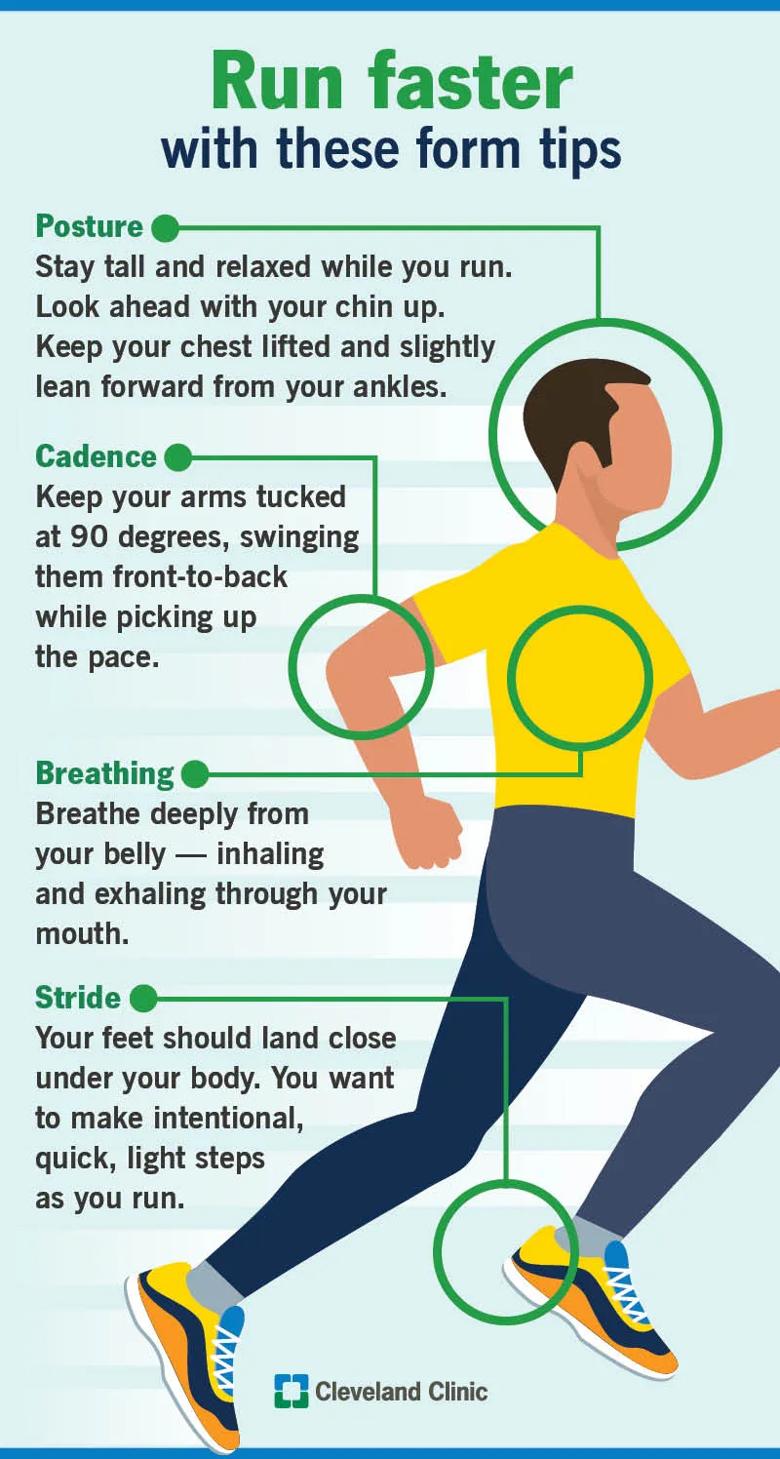
Running form is often overlooked, but small changes can add up to big speed gains. Here are the most important elements:
- Posture: Stand tall with a slight forward lean from the ankles, not the waist.
- Arms: Keep elbows at about 90 degrees, swinging forward and back (not side to side).
- Foot strike: Land lightly on your midfoot, not your heel.
- Cadence: Aim for 170–180 steps per minute for most distances.
A simple way to check your cadence is to count how many times your right foot hits the ground in 30 seconds, then double it. If your cadence is low, try shortening your stride slightly and increasing your turnover.
Common Form Mistakes
- Overstriding (landing with your foot too far ahead of your body)
- Slouching or looking down
- Tense shoulders and fists
- Excessive bouncing
Filming yourself or working with a coach can help you spot these issues.
Strength Training For Runners
Many runners skip strength training, but it’s a game-changer for speed. Stronger muscles help you push off the ground harder and maintain good form when tired. Focus on compound movements that work multiple muscle groups:
- Squats
- Lunges
- Deadlifts
- Step-ups
- Planks
Aim for 2–3 sessions per week, using moderate weights and focusing on good technique. You don’t need to bulk up—just build enough strength to support faster running.
Key Muscle Groups
Pay special attention to:
- Glutes: Powerful glutes drive your stride.
- Hamstrings: Help you lift and move your legs quickly.
- Core: Keeps your posture strong and stable.
- Calves: Provide push-off power.
Many beginners forget about the glutes, but weak glutes can cause slow running and injuries. Try single-leg exercises to spot and fix any imbalances.
Flexibility And Mobility: The Unsung Heroes
Being flexible and mobile helps you take longer, smoother strides and reduces injury risk. Tight muscles, especially in your hips, hamstrings, and calves, can limit your speed.
Simple Daily Routine
- Dynamic stretches before running (leg swings, walking lunges)
- Static stretches after running (hamstring stretch, calf stretch, hip flexor stretch)
- Foam rolling to release muscle tightness
Most runners see improved speed and comfort after just a few weeks of consistent stretching.
The Role Of Rest And Recovery
Running faster isn’t just about hard work. Rest and recovery are when your body actually gets stronger. Skipping rest leads to fatigue, injury, and slower progress.
- Take at least one full rest day each week.
- Sleep 7–9 hours per night to support muscle repair.
- Use easy days after hard workouts to let your body recover.
Overtraining is a common mistake—more isn’t always better. Listen to your body and don’t ignore warning signs like pain or extreme fatigue.
Nutrition: Fueling For Speed
Your body is like a high-performance machine—it needs the right fuel. Eating well helps you train harder and recover faster.
Key Nutrition Tips
- Carbohydrates: Your main energy source for fast running. Include whole grains, fruits, and vegetables.
- Protein: Repairs muscles after workouts. Aim for 1.2–1.7 grams per kilogram of body weight per day.
- Healthy fats: Support hormone balance and joint health.
- Hydration: Even small fluid losses slow you down. Drink water throughout the day, not just during runs.
Many runners forget to eat enough, especially before or after hard workouts. Skipping meals or going low-carb often leads to poor performance.

The Science Of Shoes: Do They Make You Faster?
Running shoes can make a difference, but not in the way you might think. The best shoes for speed are lightweight, fit your foot well, and match your running style. In recent years, carbon-plated shoes have helped elite runners break world records, but for most people, finding a comfortable, supportive shoe matters more.
Here’s a quick comparison of common shoe types:
| Shoe Type | Main Feature | Best For |
|---|---|---|
| Neutral | Cushioning, no support | Runners with normal arches |
| Stability | Extra support to control motion | Overpronators (feet roll in) |
| Racing Flats/Carbon | Very lightweight, minimal cushioning | Speed workouts and races |
Try on shoes later in the day (when your feet are largest) and test them with a short jog. Don’t chase trends—comfort and fit are most important.
Speed Workouts: Types And Examples
Running faster isn’t just about running hard all the time. Smart runners mix different types of speed workouts into their weekly plan. Here are the most effective ones:
1. Fartlek Runs
“Fartlek” means “speed play” in Swedish. You alternate between fast and slow running, often using landmarks as cues (like running fast to the next tree or light pole). Fartleks are flexible and fun, making them great for beginners.
2. Tempo Runs
Tempo runs are steady runs done at a “comfortably hard” pace—usually the fastest pace you can hold for about an hour. These runs train your body to clear lactic acid efficiently, so you can run faster for longer.
Sample tempo run:
- 10-minute easy warm-up
- 20 minutes at tempo pace
- 10-minute easy cool-down
3. Hill Sprints
Running up hills builds power and improves running form. Find a hill that takes 20–60 seconds to climb, sprint up, then walk back down to recover. Start with 4–6 repeats.
4. Strides
Strides are short accelerations (about 20–30 seconds) at 85–95% effort. Do 4–8 strides after easy runs to practice fast turnover and good form.
Here’s a side-by-side look at these workouts:
| Workout Type | Main Benefit | How Often |
|---|---|---|
| Fartlek | Speed, fun, variety | 1x per week |
| Tempo | Lactate threshold, endurance | 1x per week |
| Hill Sprints | Power, form | Every 2 weeks |
| Strides | Turnover, form | 2–3x per week |
Mixing these workouts keeps training interesting and targets all the systems you need for speed.
Mental Strategies: Unlocking Your Speed
Running fast isn’t just about the body—the mind plays a huge role. Many runners hold themselves back with negative thoughts or fear of discomfort. You can train your mind to push through barriers.
Tips To Boost Mental Strength
- Set clear, realistic goals (like running a 5K in under 25 minutes).
- Break big goals into small, manageable steps.
- Visualize yourself running strong and fast before workouts.
- Use positive self-talk (“I am strong,” “I can do this”).
- Focus on the present moment, not how much is left.
Elite runners often use mental training as much as physical training. Even on tough days, a positive mindset can help you run faster than you thought possible.
Common Mistakes That Slow Runners Down
Many runners slow their progress with avoidable mistakes. Here are some to watch for:
- Skipping warm-ups: Cold muscles are less powerful and more likely to get injured.
- Running every run hard: This leads to burnout and slower long-term progress.
- Ignoring strength and flexibility: Weak or tight muscles limit your stride.
- Wearing old or improper shoes: Increases injury risk and reduces efficiency.
- Not listening to your body: Pushing through pain often leads to setbacks.
- Poor nutrition or hydration: Even slight dehydration can slow you by 2% or more.
- Neglecting mental training: Doubt and fear hold back your best performance.
By fixing these issues, you can often see quick improvements without increasing your training load.
Tracking Progress: How To Measure Your Speed
You can’t improve what you don’t measure. Tracking your runs helps you see progress and adjust your training. Here are simple ways to measure your speed:
- Time yourself over a set distance (like 1 mile or 5K) every few weeks.
- Track your average pace per mile/km using a watch or phone app.
- Note your cadence and heart rate during workouts.
Here’s a comparison of popular tracking methods:
| Method | Pros | Cons |
|---|---|---|
| GPS watch | Accurate, easy to use, stores data | Can be expensive |
| Phone app | Convenient, free/cheap | Less accurate, drains battery |
| Manual timing | No device needed | More effort, limited data |
Regular tracking keeps you motivated and helps you celebrate small wins.
How To Build A Weekly Plan For Speed
All the best advice means little without a plan. Here’s how to design a balanced week that helps you run faster while staying healthy:
- 1–2 speed workouts (intervals, tempo, hills)
- 3–4 easy runs (focus on distance, not speed)
- 1–2 strength sessions
- 1–2 flexibility/mobility sessions
- 1 rest day
An example schedule:
- Monday: Easy run + strides
- Tuesday: Intervals or hill sprints
- Wednesday: Rest or easy cross-training
- Thursday: Tempo run
- Friday: Easy run + strength
- Saturday: Long easy run
- Sunday: Rest or gentle stretching
Adjust the number of days and intensity based on your experience and goals. Beginners should start with fewer hard workouts and add more as they improve.

Two Insights Most Runners Miss
- Speed comes from variety, not just effort. Many runners believe “run hard, get fast.” But real progress comes from mixing easy, moderate, and hard efforts, as well as strength and flexibility work.
- Small changes in form and cadence can create big results. For example, increasing your cadence by just 5% can make you more efficient, reduce injury risk, and shave seconds off your mile time—without extra training.
Getting Professional Help
Sometimes, the fastest way to improve is to ask for help. A running coach or experienced runner can spot technique issues, adjust your plan, and keep you motivated. Many local running stores offer free form checks, and online resources like Runner’s World offer expert tips.
Frequently Asked Questions
How Long Does It Take To Run Faster?
Most people notice improvements within 4–6 weeks of focused training, especially if they add interval workouts and strength training. Beginners may see even faster gains, while advanced runners need more time for smaller improvements.
Is It Better To Run Every Day Or Take Rest Days?
Rest days are important for recovery and injury prevention. Running every day can work for some, but most people do best with at least one full rest day per week. Listen to your body and don’t skip rest if you feel tired or sore.
What Should I Eat Before Running For Speed?
Eat a light meal or snack with carbs and a little protein 1–2 hours before running. Good options are a banana with peanut butter, toast with honey, or a small bowl of oatmeal. Avoid fatty or spicy foods, which can upset your stomach.
Can I Get Faster Without Running More Miles?
Yes. Adding speed workouts, strength training, and improving your running form can help you run faster without adding extra miles. Quality often matters more than quantity for speed gains.
How Do I Avoid Injuries When Training For Speed?
Warm up properly, increase training slowly, and pay attention to pain or discomfort. Cross-train with swimming or cycling, stretch regularly, and replace shoes before they wear out. Don’t ignore soreness—it’s your body’s way of warning you.
Running faster is a journey with ups and downs, but every runner can improve with the right approach. By focusing on the details—training, form, recovery, and mindset—you’ll unlock speed you never thought possible. Enjoy the process, celebrate your progress, and remember: your fastest days are still ahead.

