

Checking the engine oil in your car might seem simple, but doing it right can prevent serious engine trouble. Many drivers overlook this small task, thinking modern cars don’t need much attention. In reality, engine oil is the lifeblood of your vehicle.
If it runs low or gets dirty, your engine wears out faster, loses efficiency, and may even break down. By learning how to check engine oil properly, you can catch problems early and keep your car running smoothly for years.

36% off Today’s Exclusive Deals
Limited-time Exclusive Deals. Check current discount on Amazon.
Check Price on Amazon As an Amazon Associate I earn from qualifying purchases.Why Engine Oil Matters
Engine oil does more than just lubricate moving parts. It cools, cleans, and protects your engine. When oil levels are correct and the oil is clean, your engine stays healthy. Too little or dirty oil, and parts can grind together, overheat, or even seize up. Modern cars often have warning lights, but these aren’t always reliable. By the time a light comes on, damage may already be happening. That’s why regular checks are important, no matter what car you drive.
Main Functions Of Engine Oil
- Lubrication: Reduces friction between moving metal parts.
- Cooling: Carries heat away from the engine.
- Cleaning: Traps dirt and debris, preventing buildup.
- Protection: Forms a barrier against rust and corrosion.
Even if you drive a newer car, you can’t rely only on technology to monitor oil condition. A simple check every month or before a long trip can prevent expensive repairs.
When And How Often To Check Engine Oil
Many car owners wonder about the right frequency for checking oil. There is no single answer for every vehicle, but general guidelines exist.
Typical Recommendations
- Once a month for most drivers.
- Every 500 miles if your car is older or burns oil.
- Before long trips or heavy use.
If your car is under warranty, check your owner’s manual. Some new vehicles recommend longer intervals, especially if they have electronic oil monitors. Still, a manual check is always wise, especially if you notice leaks or your car is using more oil than usual.
Signs You Should Check Sooner
- Oil warning light comes on, even briefly.
- You see oil spots under your car.
- The engine sounds louder than usual.
- You smell burning oil while driving.
- Recent extreme weather, especially heat or cold.
Don’t wait for a problem to get worse. Early detection is the key to avoiding engine damage.
Tools And Supplies You Need
Checking engine oil is a task anyone can do with a few simple items. You do not need special skills or tools. Here’s what you should have on hand:
- Clean rag or paper towel: For wiping the dipstick.
- Gloves (optional): To keep your hands clean.
- Funnel (optional): For adding oil if needed.
- Engine oil: If you need to top up (check your owner’s manual for the right type).
- Flashlight (optional): Helps you see the dipstick markings in low light.
Most of these items are probably already in your home or garage. If not, you can buy them cheaply at any auto parts store.
Understanding The Dipstick And Oil Marks
The dipstick is your main tool for checking oil. It’s a thin metal rod, usually with a bright handle, often yellow or orange. The dipstick sits in a tube that goes deep into the engine’s oil pan.
At the tip of the dipstick, you’ll find two marks:
- Low (MIN): Oil should never be below this line.
- Full (MAX): Oil should not go above this line.
The area between these marks is the safe operating range. Some dipsticks use holes, lines, or crosshatches instead of words, but the idea is the same.
Here’s a quick comparison of common dipstick markings:
| Dipstick Type | Low Mark | Full Mark | Description |
|---|---|---|---|
| Line | Lower line | Upper line | Simple and common in older cars |
| Hole | Lower hole | Upper hole | Easy to read; popular in Asian cars |
| Crosshatch | Bottom of pattern | Top of pattern | Used in newer models; adds clarity |
If you’re unsure, your owner’s manual will have a diagram showing the marks for your car.
Step-by-step Guide: How To Check Engine Oil
Let’s go through the process, step by step, to make sure you check your engine oil correctly every time.
1. Prepare Your Vehicle
- Park on level ground. This is important; a slope will give a false reading.
- Turn off the engine. Wait at least 5–10 minutes for the oil to settle in the pan. Hot oil needs time to drain back down.
- Open the hood. Use the hood release inside your car, then secure the hood with its prop rod.
2. Locate The Dipstick
- Look for a colored handle, often yellow or orange.
- The dipstick is usually near the front or side of the engine.
- If you can’t find it, check your owner’s manual for the exact location.
3. Remove And Clean The Dipstick
- Pull the dipstick out all the way.
- Wipe it clean with a rag or paper towel. This removes old oil and gives an accurate reading.
4. Reinsert And Remove The Dipstick Again
- Put the clean dipstick back into the tube, making sure it goes all the way in.
- Pull it out once more and hold it horizontally.
5. Read The Oil Level
- Look at the tip of the dipstick. The oil will leave a shiny mark.
- The level should be between the MIN and MAX marks.
- If below MIN, you need to add oil. If above MAX, there may be too much oil.
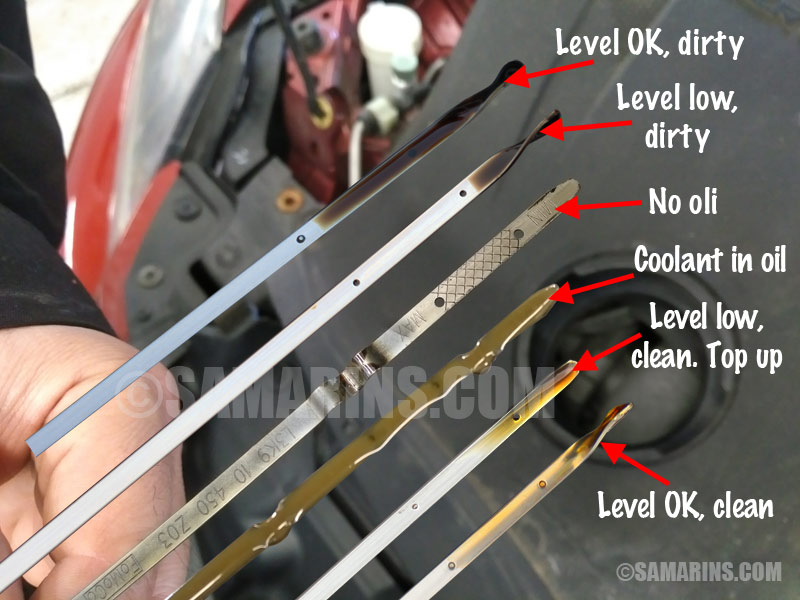
6. Check Oil Color And Condition
- Healthy oil is usually amber or light brown.
- Very dark, gritty, or milky oil means it’s time for a change or there may be a problem.
7. Add Oil If Needed
- If the oil is low, find the oil filler cap (often labeled “OIL”).
- Use a funnel to avoid spills.
- Add oil slowly—a little at a time—and recheck the level.
- Avoid overfilling, as this can damage the engine.
8. Replace Dipstick And Close Hood
- Make sure the dipstick is fully inserted.
- Close the oil filler cap tightly.
- Lower the hood and ensure it’s secure.
How To Interpret Oil Quality
Checking the oil’s color and feel is as important as checking the level. Here’s what to look for:
- Clean oil: Light brown or amber, smooth texture.
- Dirty oil: Dark, possibly gritty or thick.
- Milky oil: May signal coolant mixing with oil—a sign of a major engine problem.
- Metal flakes: Indicates engine wear, seek help immediately.
If you notice changes in oil quality, don’t ignore them. Even if the level is fine, dirty oil can’t protect your engine well. Change it as soon as possible.
Here’s a quick visual guide:
| Oil Appearance | Condition | Action Needed |
|---|---|---|
| Amber, clear | Healthy | No action |
| Dark brown, not gritty | Old but okay | Change soon |
| Black, gritty | Dirty | Change now |
| Milky, cloudy | Possible coolant leak | Visit mechanic |
| Shiny flakes | Metal in oil | Visit mechanic immediately |
Choosing The Right Engine Oil
Not all engine oils are the same. Using the wrong type can reduce performance or even harm your engine. Here’s what you need to know:
Types Of Engine Oil
- Conventional: Standard oil for older cars.
- Synthetic: Made for high performance and newer engines; lasts longer.
- Synthetic blend: A mix of both; offers better protection than conventional but costs less than full synthetic.
- High-mileage: Designed for engines with over 75,000 miles, with additives to reduce leaks and wear.
Viscosity Ratings
The numbers on oil bottles, like 5W-30, refer to viscosity—how thick or thin the oil is in cold and hot temperatures.
- The first number (5W) means how well oil flows in cold weather (“W” stands for “winter”).
- The second number (30) is how it flows at normal engine temperatures.
Always check your car’s owner manual for the recommended oil type and viscosity.
Here’s a simple comparison:
| Oil Type | Best For | Change Interval | Cost (per quart) |
|---|---|---|---|
| Conventional | Older vehicles | 3,000-5,000 miles | $5–$7 |
| Synthetic | New/high-performance | 7,500-10,000 miles | $8–$12 |
| Blend | Mixed driving | 5,000-7,500 miles | $6–$9 |
| High-mileage | 75,000+ miles | 3,000-5,000 miles | $7–$10 |
Common Mistakes When Checking Engine Oil
Many drivers make small errors that lead to bad readings or even engine problems. Avoid these common mistakes:
- Checking on a slope: Always use level ground for an accurate reading.
- Not waiting after shutting off the engine: Hot oil takes a few minutes to settle.
- Reading the dipstick only once: The first reading can be off. Always wipe and recheck.
- Using the wrong oil: Double-check oil type before topping up.
- Overfilling: More is not better—too much oil can damage your engine.
- Ignoring oil color: Dirty or milky oil signals bigger problems.
- Not securing the dipstick or cap: Can lead to leaks or contamination.
- Using dirty rags: Always use a clean cloth to avoid introducing debris.
By avoiding these mistakes, you can trust your oil checks and keep your engine safe.

What To Do If Oil Is Low Or Dirty
If you find your oil level is below the minimum, or if the oil looks dirty, act quickly. Here are the steps:
- Low oil: Top up with the right oil. Add a little at a time, checking the level as you go.
- Dirty oil: Schedule an oil change soon. If the oil is black and gritty, don’t wait.
- Frequent low oil: If you’re adding oil often, your car may have a leak or burning issue. Have it checked by a mechanic.
- Milky or metallic oil: This is a sign of a more serious engine problem. Do not drive the car; call a professional.
Ignoring these warning signs can lead to engine damage that costs thousands to repair.
How Weather And Driving Style Affect Oil
Many drivers don’t realize that temperature and driving habits affect oil life and checks.
- Hot climates: Oil breaks down faster. Check more often in summer.
- Cold weather: Oil thickens and takes longer to circulate. Let your car warm up gently.
- Short trips: Frequent short drives don’t give oil time to heat up and burn off moisture, so it gets dirty faster.
- Heavy loads/towing: Increases engine stress; check oil more often.
If you drive in tough conditions, increase your checking frequency and consider using synthetic oil, which handles extremes better.
The Benefits Of Regular Oil Checks
Staying on top of oil checks offers major benefits:
- Longer engine life: Well-oiled engines last longer and need fewer repairs.
- Better fuel efficiency: Clean oil reduces friction, so your engine works less.
- Lower repair costs: Prevents big problems like engine seizure or overheating.
- Peace of mind: You’ll know your car is safe, especially on long trips.
What most beginners miss is that even small oil leaks or slightly dirty oil can slowly cause expensive damage. Many engine failures start with neglecting this basic task.
Real-world Example
Consider a 2013 Toyota Camry with 100,000 miles. The owner checked the oil every two months, as the car burned a little oil with age. One day, the dipstick showed the oil just above the “MIN” mark. The owner topped up with the recommended 0W-20 synthetic.
Later, after noticing the oil was turning dark earlier than usual, he changed the oil and filter, preventing engine wear. This simple habit saved him from major repairs and kept the car running smoothly for years.

What To Do If You Overfill
Too much oil can be as bad as too little. Overfilling causes foam, reduces lubrication, and may damage seals. If you add too much:
- Do not drive the car.
- Remove excess oil using a siphon pump, turkey baster, or by loosening the drain plug (best left to a mechanic if you’re unsure).
- Recheck the level before starting the engine.
A common beginner mistake is thinking extra oil offers extra protection. In reality, it risks costly engine repairs.
Engine Oil Myths To Ignore
There are many myths about engine oil that confuse drivers. Here are some common ones:
- “You don’t need to check oil in new cars.” Even new engines can leak or burn oil.
- “Dark oil means it’s bad.” Oil naturally darkens as it works, but feel and smell matter more.
- “Synthetic oil is always better.” Not all engines need synthetic; follow manufacturer advice.
- “All oils are the same.” Viscosity and type matter; the wrong oil can harm your engine.
- “Topping up is as good as changing oil.” Adding oil doesn’t remove dirt and contaminants.
Trust your manual and regular checks, not rumors.
Frequently Asked Questions
How Often Should I Check My Engine Oil?
Most drivers should check engine oil once a month. If your car is older, burns oil, or you drive in extreme conditions, check every 500 miles. Always check before long trips.
What Happens If I Drive With Low Engine Oil?
Driving with low oil can cause the engine to overheat, wear out faster, or even seize completely. This may lead to costly repairs or engine replacement.
Can I Use Any Type Of Oil For My Car?
No, always use the recommended oil type and viscosity listed in your owner’s manual. Using the wrong oil can harm your engine or reduce performance.
What Should I Do If I Spill Oil While Topping Up?
If you spill oil, wipe it up immediately with a clean rag. Dispose of oily rags safely—do not leave them in the engine bay. If oil lands on hot parts, it may smoke for a while but usually burns off.
For large spills, have a mechanic clean it.
Where Can I Find More Information About Engine Oil And Car Maintenance?
The American Automobile Association (AAA) provides detailed car care guides and advice. Visit AAA Auto Repair for more information.
Regular oil checks are a simple but powerful way to extend your car’s life, save money, and drive with confidence. By following these steps and tips, you can avoid many common engine problems and enjoy worry-free driving for years to come.

