

Feeling confident can change your life. When you believe in yourself, you try new things, speak up in groups, and handle challenges better. But confidence is not something you are born with. Most people build it over time, step by step. Even the most successful people struggled with self-doubt. The good news? You can learn how to build confidence, no matter where you start. In this guide, you’ll discover practical strategies, real examples, and answers to common questions. Whether you want to be more confident at work, in social settings, or inside your own mind, you’ll find tools you can use right away.
What Is Confidence And Why Does It Matter?
Confidence is your belief in your own abilities. It’s not arrogance or thinking you are better than others. Instead, it’s a quiet trust that you can handle what comes your way. Confident people are more likely to take action, try new things, and bounce back from setbacks.

36% off Today’s Exclusive Deals
Limited-time Exclusive Deals. Check current discount on Amazon.
Check Price on Amazon As an Amazon Associate I earn from qualifying purchases.Research shows that higher self-confidence can lead to better job performance, stronger relationships, and even improved health.
Think about a time when you felt sure of yourself—maybe you gave a successful presentation or handled a difficult conversation. That feeling helps you act without being held back by fear. But when you lack confidence, you may avoid challenges, miss opportunities, or feel anxious.
Understanding Where Confidence Comes From
Many people think confidence is something you either have or don’t have. In reality, confidence is shaped by your experiences, thoughts, and actions. Here’s what influences it:
- Past experiences: Successes boost your confidence; repeated failures can lower it.
- Feedback from others: Positive feedback encourages you; criticism can make you doubt yourself.
- Self-talk: The way you speak to yourself matters. Encouraging words help; negative self-talk hurts.
- Skills and preparation: When you are prepared and skilled, you feel more confident.
- Mindset: People with a “growth mindset” (believing you can improve) build confidence more easily.
Understanding these sources helps you see that confidence is not fixed. You can change your habits and thoughts to become more confident.
Common Confidence Myths
Before you start building confidence, it’s helpful to clear up some myths:
- Confident people never feel fear or doubt.
- In reality, everyone feels nervous sometimes. Confident people act even when they are unsure.
- You need to be perfect to feel confident.
- Perfection is not needed. Confidence grows when you try, make mistakes, and keep going.
- Confidence is about being outgoing or loud.
- Quiet people can be just as confident as extroverts. It’s about how you feel inside.
Recognizing these myths can help you avoid common traps.
How To Build Confidence: Step-by-step Strategies
Building confidence is a process. You don’t have to change overnight. Small actions, repeated over time, create lasting change. Here’s how you can start.
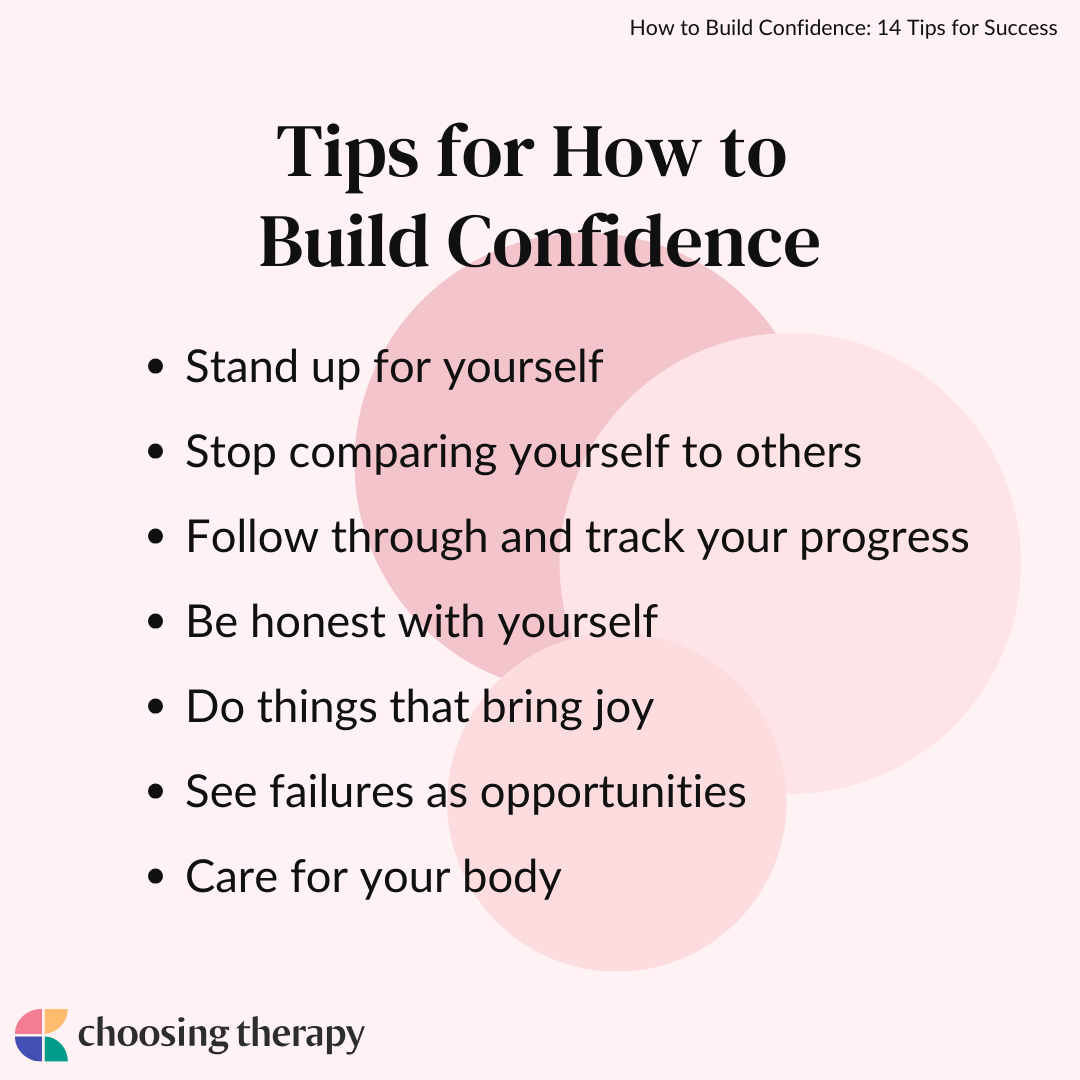
1. Set Small, Achievable Goals
Confidence grows with success. But big goals can feel overwhelming. Start with small wins:
- Choose one area you want to improve (like speaking up in meetings).
- Set a goal that feels just a little challenging.
- Celebrate when you reach it, no matter how small.
For example, if you want to get better at public speaking, start by asking one question in a group. As you succeed, your confidence will increase.
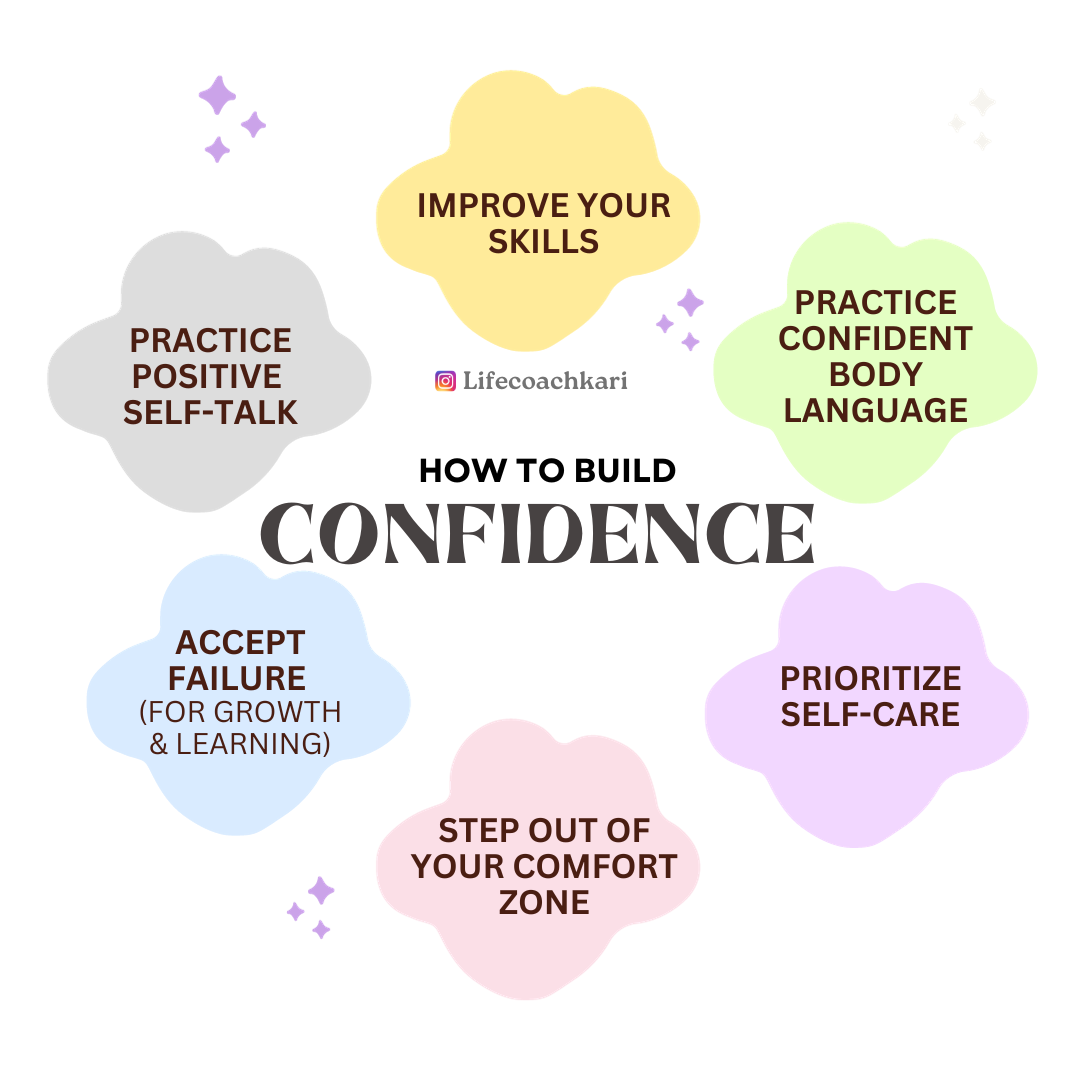
2. Practice Positive Self-talk
The way you talk to yourself has a huge impact. Many people use harsh words: “I’m not good enough” or “I always mess up.” Replace these with positive self-talk:
- “I am learning and improving.”
- “I can handle this.”
- “Mistakes help me grow.”
It may feel strange at first, but with practice, it becomes natural.
3. Learn New Skills
Confidence often comes from competence. When you know you can do something well, you feel more secure. Identify areas where you lack confidence and build your skills. For example:
- Take an online course.
- Practice with a friend.
- Ask for feedback.
The more you practice, the less scary things become.
4. Face Your Fears Gradually
Avoiding what scares you keeps your confidence low. Instead, face your fears in small steps. This is called exposure. For example, if you fear networking events:
- Attend for just 10 minutes.
- Say hello to one person.
- Each time, add a new challenge.
Over time, your fear will decrease, and your confidence will grow.
5. Take Care Of Your Body
Your physical health affects your mental state. Simple habits can help:
- Get enough sleep (7–8 hours per night for most adults).
- Eat healthy foods.
- Exercise regularly—even a short walk helps.
When you feel good physically, you are more likely to feel confident.
6. Keep A Success Journal
Write down your daily achievements, no matter how small. Reviewing this journal helps you see progress and reminds you of your abilities. For example, “Today I spoke up in class,” or “I finished a tough project. ” Over time, these small wins add up.
7. Surround Yourself With Supportive People
People around you can boost or lower your confidence. Spend time with those who encourage you and believe in your potential. If possible, limit time with those who are negative or critical. Supportive friends, mentors, or even online groups can make a big difference.
8. Maintain Good Posture And Body Language
Your body language affects how you feel. Standing tall, making eye contact, and smiling can actually make you feel more confident—even if you’re nervous inside. Try this before a big meeting or event.
9. Accept Failure As Part Of Growth
Everyone fails sometimes. Confident people see failure as feedback, not proof they aren’t good enough. When something goes wrong, ask:
- What did I learn?
- What can I do differently next time?
This attitude helps you keep trying and improving.
10. Compare Yourself Only To Your Past Self
It’s easy to compare yourself to others, especially on social media. But everyone’s journey is different. Focus on your own progress. Are you more confident than last year? Did you try something new this month? Use your own growth as your measure.
The Role Of Mindset In Building Confidence
Your beliefs about yourself shape your actions. People with a fixed mindset believe their abilities can’t change. Those with a growth mindset believe they can improve with effort. Research by psychologist Carol Dweck shows that a growth mindset leads to greater confidence and success.
If you catch yourself thinking, “I’m just not good at this,” add the word “yet. ” For example, “I’m not good at public speaking—yet. ” This small change opens the door to learning and growth.
Building Confidence At Work
Work is a common place where people want to feel more confident. Here’s how you can build confidence in your job:
- Prepare for meetings. Know your material and plan what you want to say.
- Ask questions. It shows you are interested and engaged.
- Volunteer for new tasks. Taking on new challenges helps you grow.
- Seek feedback. Ask trusted colleagues how you can improve.
Remember, even experienced professionals feel nervous sometimes. Preparation and practice help.

Building Confidence In Social Situations
Social confidence is not about being the life of the party. It’s about feeling comfortable with yourself around others. You can build it by:
- Practicing small talk. Start with simple questions like “How was your weekend?”
- Focusing on listening. Most people appreciate a good listener.
- Joining groups or clubs with shared interests.
- Remembering that many people feel shy or awkward at times.
If you make a social mistake, it’s okay. Most people forget small slip-ups quickly.
The Impact Of Self-care And Healthy Habits
Taking care of yourself is not selfish—it’s essential for confidence. When you feel healthy and rested, you handle stress better. Here are some habits that help:
- Exercise: Regular movement boosts mood and energy.
- Sleep: Lack of sleep can make you feel anxious and unsure.
- Healthy eating: Good nutrition supports brain and body.
Many people overlook these basics, but they create a strong foundation for confidence.
Comparing Strategies: What Works Best?
Not every strategy works for everyone. Here’s a quick comparison of popular confidence-building methods:
| Strategy | Strengths | Limitations |
|---|---|---|
| Setting Small Goals | Easy to start; builds momentum | May not address deeper fears |
| Positive Self-Talk | Improves mindset; reduces anxiety | Takes practice to change habits |
| Skill Building | Increases real ability; lasting impact | Requires time and effort |
| Exposure to Fears | Reduces anxiety over time | Uncomfortable at first |
| Self-Care | Boosts energy and mood | Results not always immediate |
Mix and match these strategies to find what works best for you.
Tracking Your Progress
Seeing your improvement is motivating. Here are some ways to track your journey:
- Write down your achievements weekly.
- Rate your confidence on a scale of 1–10 before and after new challenges.
- Ask friends or mentors for feedback.
A simple tracking table can help:
| Date | Challenge Faced | Confidence Level (1–10) | What I Learned |
|---|---|---|---|
| April 3 | Spoke in meeting | 6 | Preparation helped |
| April 10 | Led a group project | 7 | Feedback is valuable |
| April 18 | Networked at event | 5 | Practice makes it easier |
Looking back at your progress can give you a big boost.
Overcoming Setbacks And Building Resilience
Setbacks are part of everyone’s journey. What matters is how you respond. Here’s how to bounce back:
- Give yourself time to feel disappointed, but don’t stay stuck.
- Talk to someone you trust about what happened.
- Look for the lesson—what can you do differently next time?
- Remind yourself of past successes.
Resilience—the ability to recover from setbacks—is a key part of lasting confidence.
When To Seek Help
If low confidence keeps you from living your life or causes constant anxiety, it may help to talk to a professional. Therapists or counselors can help you understand where your doubts come from and teach you new tools. There’s no shame in asking for help.
In fact, it’s a sign of strength.
Two Common Confidence Mistakes (and How To Avoid Them)
Even with good intentions, people sometimes make mistakes that slow their progress. Here are two to watch for:
- Waiting for confidence before taking action.
- Many people believe they must feel confident first, then act. In reality, action creates confidence. Start small, and your feelings will follow.
- Trying to “fake it” all the time.
- While “fake it till you make it” can help in the short term, lasting confidence comes from real growth and self-acceptance. Use positive body language, but also do the inner work.
Real-life Examples: Building Confidence In Action
Learning from others’ experiences can help you see what’s possible. Here are a few real stories:
- Maria, a shy student, joined a debate club. At first, she was nervous. After a few months of practice and feedback, her confidence grew. She now speaks comfortably in front of groups.
- James felt unsure at his new job. He started by asking questions and volunteering for small projects. His efforts were noticed, and he was later promoted.
- Li, who moved to a new country, struggled with social situations. She joined a local club and practiced her language skills. Over time, her confidence in social settings improved.
Notice that none of these people became confident overnight. They took small steps, learned from mistakes, and kept going.
Key Data About Confidence
Statistics show how important confidence is:
- A study by the University of Melbourne found that confident people earn more and are promoted faster.
- According to the American Psychological Association, students with higher self-confidence achieve better grades.
- Research shows that self-confident people are more likely to try new things and recover from setbacks.
You can find more research on this topic at Wikipedia.
Building Confidence In Different Life Areas
Confidence is not just for work or social life. It helps in many areas:
- Health: Confident people are more likely to stick to exercise and healthy habits.
- Learning: You’re more open to new ideas and challenges.
- Relationships: You set healthy boundaries and express your needs.
Think about where you want more confidence. The same steps apply, no matter the area.
How Culture And Upbringing Affect Confidence
Culture plays a role in how you see yourself. In some cultures, being quiet is valued. In others, speaking up is encouraged. Your family and early experiences also shape your confidence. If you were often criticized, you may doubt yourself more.
If you were encouraged, you may feel more secure.
The important insight is this: your past influences you, but it does not have to define your future. With practice, you can build new habits and beliefs.
Quick Confidence Boosters For Everyday Life
Sometimes you need a fast way to boost your confidence. Here are some quick tips:
- Dress in a way that makes you feel good.
- Take a few deep breaths before a challenge.
- Listen to music that energizes you.
- Review your past successes.
- Smile—even if you don’t feel like it.
These small actions can shift your mood and help you perform better.
The Power Of Visualization
Visualization is a technique used by athletes and performers. Imagine yourself succeeding at a task. Picture the details: what you see, hear, and feel. This mental practice prepares your brain and increases your confidence. Try it before your next presentation or event.
Frequently Asked Questions
How Long Does It Take To Build Confidence?
Everyone is different, but building real confidence takes weeks or months, not days. Small, regular actions work better than big changes all at once. If you keep practicing, you will see progress.
Can You Build Confidence If You’re Shy Or Introverted?
Yes. Confidence is about believing in yourself, not being outgoing. Introverts can be very confident. Focus on your strengths and take small steps outside your comfort zone.
What Should I Do When I Feel Nervous Or Scared?
It’s normal to feel nervous. Take a deep breath, remind yourself of your past successes, and act anyway. Each time you face your fears, your confidence grows.
Is It Possible To Be Too Confident?
Yes, it’s possible. Overconfidence can lead to mistakes or ignoring feedback. Healthy confidence means knowing your strengths and weaknesses and staying open to learning.
How Can I Help Someone Else Build Confidence?
Encourage them, give honest positive feedback, and help them set small, achievable goals. Be patient—real confidence takes time to develop.
Building confidence is a journey. You don’t have to wait for the “perfect” moment. Start where you are, use these strategies, and watch your self-belief grow. The first step is often the hardest, but it’s also the most important. With practice, anyone can become more confident—one step at a time.

