

Mitsubishi mini-split troubleshooting starts with power, filters, remotes, and error-code checks.
I have spent years installing and fixing ductless systems. This Mitsubishi Mini Split Troubleshooting Guide pulls that hands-on experience into a clear, step-by-step resource. Read on and you will learn why common faults happen, how to diagnose them fast, and when to call a pro. This guide is practical, tested, and written to help you fix issues safely and quickly.

36% off Today’s Exclusive Deals
Limited-time Exclusive Deals. Check current discount on Amazon.
Check Price on Amazon As an Amazon Associate I earn from qualifying purchases.
Quick checklist for Mitsubishi Mini Split Troubleshooting Guide
Use this short checklist as your first stop. It helps you rule out easy fixes fast.
- Check power to the indoor and outdoor units.
- Inspect and clean air filters.
- Confirm the remote control mode and batteries.
- Look for visible ice, water leaks, or blocked airflow.
- Scan the indoor display for error codes and note them.
This quick list solves many simple issues and saves time before deeper troubleshooting.

Common problems and causes in the Mitsubishi Mini Split Troubleshooting Guide
Below are problems I see most often and the usual causes.
- No power or unit won’t start. Cause: tripped breaker, blown fuse, or faulty disconnect.
- Not cooling or heating enough. Cause: dirty filter, blocked outdoor unit, low refrigerant, wrong mode.
- Weak airflow. Cause: fan motor issues, clogged filter, or obstructed vents.
- Strange noises. Cause: loose panels, fan blades hitting debris, refrigerant flow noise.
- Water leaks indoors. Cause: clogged drain line, tilted unit, or frozen coil.
- Unit freezes up. Cause: low refrigerant, poor airflow, or sensor fault.
Each symptom points to a short set of checks. Start with the simplest items first.
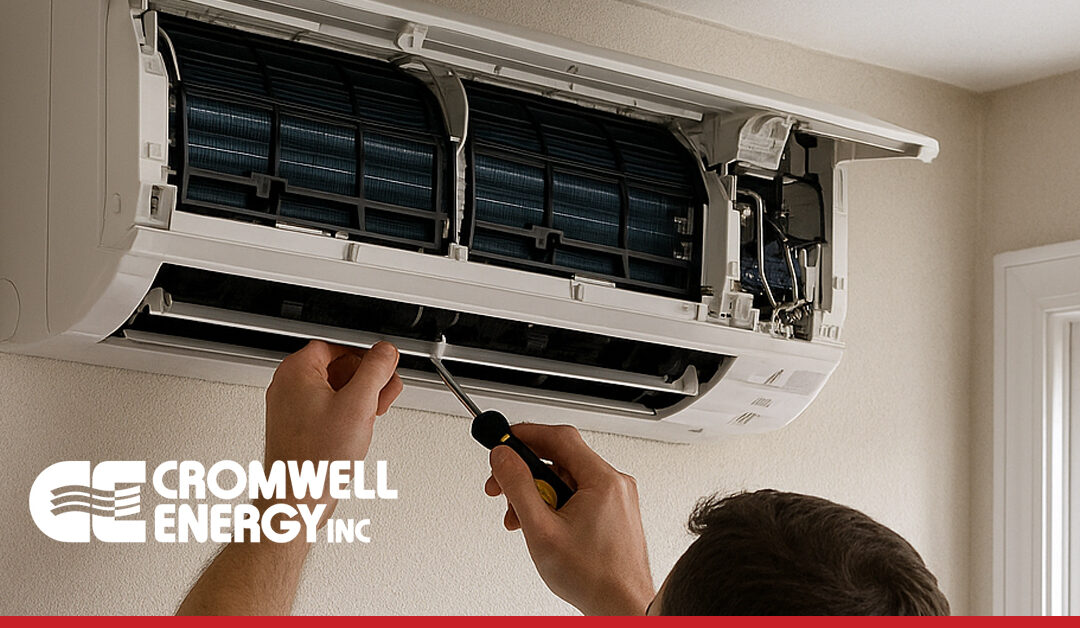
Step-by-step basic Mitsubishi Mini Split Troubleshooting Guide
Work through these steps in order. They are safe and common-sense.
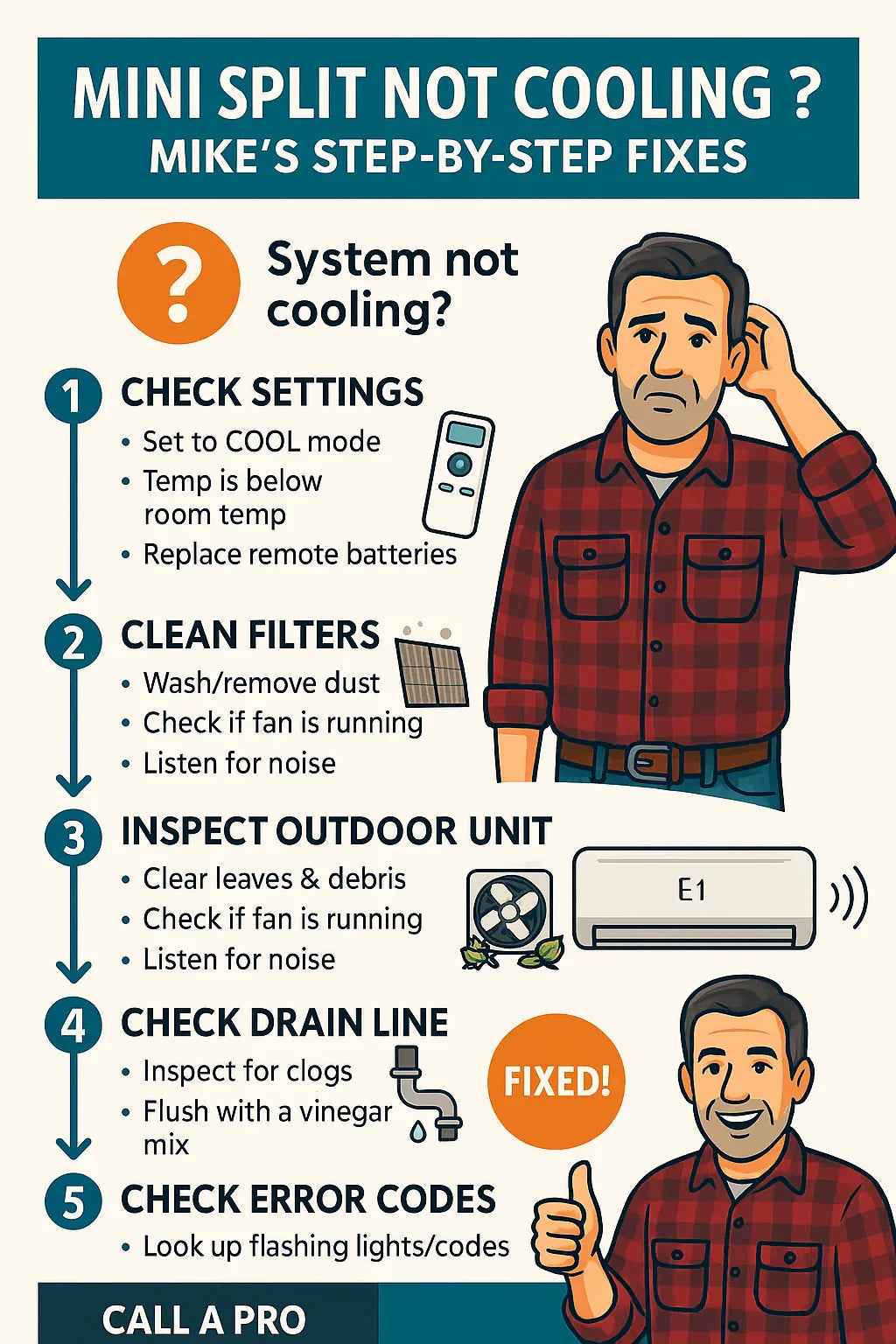
- Check the breaker and disconnect. Flip the breaker off and on. Reset any external disconnect switches.
- Inspect the remote. Replace batteries and confirm mode (cool/heat/auto). Confirm set temperature.
- Clean or replace air filters. Dirty filters reduce airflow and cause frost or poor performance.
- Clear the outdoor unit. Remove leaves, snow, and debris that block airflow.
- Look for ice on the indoor coil. If frozen, turn the unit to fan or defrost and let it thaw.
- Check the drain line and pan. Clear clogs with a wet/dry vacuum from the drain line access.
- Note any error codes on the indoor display. Write the code down for lookup.
- Power-cycle the system. Turn off power for 1–2 minutes, then restore power to reset controls.
If the unit still fails basic checks, stop and prepare to call a qualified technician. Safety first.
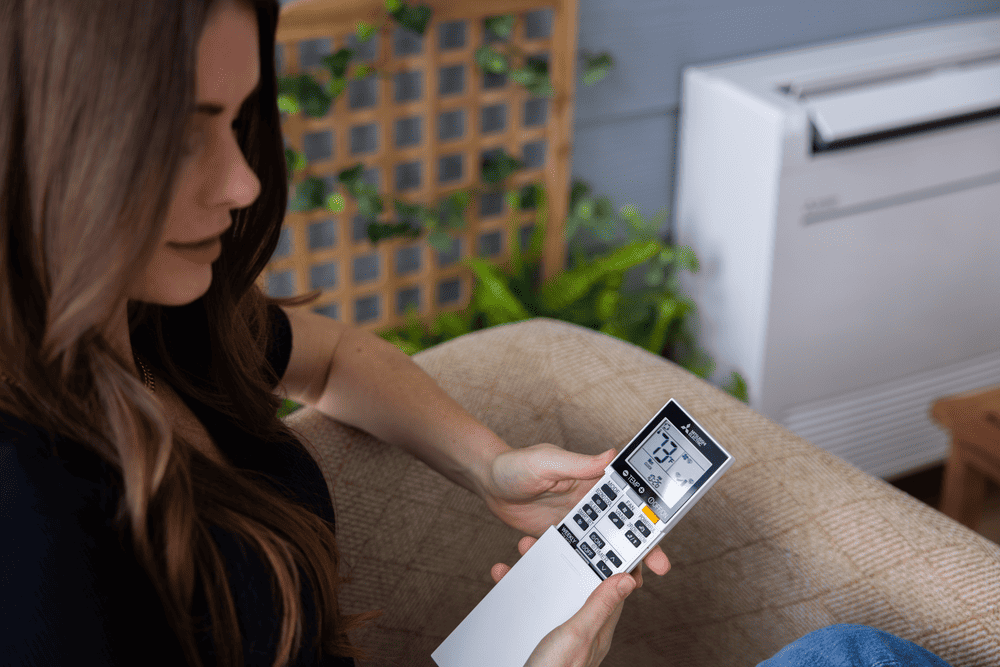
Reading and resetting error codes for the Mitsubishi Mini Split Troubleshooting Guide
Error codes are your fastest clue. They tell you where to look.
- Find codes on the indoor unit display or remote. Codes vary by model but often use letters and numbers.
- Common codes point to issues like sensor faults, communication errors, or high-pressure trips.
- To reset, power-cycle the unit at the breaker for 1–2 minutes. Some models allow a reset via remote commands.
- If the code returns, log it and consult the service manual or a licensed tech. Repeated codes mean a real fault, not a one-time glitch.
Always record the code and operating conditions. That saves diagnostics time for you and any technician.

Tools and parts to keep for Mitsubishi Mini Split Troubleshooting Guide
A small kit helps you fix quick problems on the spot.
- Fresh AA/AAA batteries for remotes.
- Soft brush and vacuum for filter cleaning.
- Small flashlight and mirror for tight spots.
- Wet/dry vacuum or manual pump for clearing drain lines.
- Basic hand tools: screwdriver set, pliers, adjustable wrench.
- Replacement filters and a lint-free cloth.
Carry safety gear: gloves and safety glasses. Do not attempt refrigerant or electrical repairs unless licensed.
Preventive maintenance included in the Mitsubishi Mini Split Troubleshooting Guide
Good care avoids many breakdowns. Do these tasks seasonally.
- Clean or replace filters every 1–3 months depending on use.
- Keep the outdoor unit clear of leaves, grass, and snow.
- Check condensate drain for clogs and clean as needed.
- Inspect insulation on refrigerant lines for damage.
- Run the unit in fan-only mode for a few hours to dry internal parts after heavy use.
Schedule a pro tune-up annually. A simple check prevents costly repairs later.

When to call a professional in this Mitsubishi Mini Split Troubleshooting Guide
Know your limits. Call a pro in these cases.
- Persistent error codes after resets.
- Suspected refrigerant leak or low pressure.
- Electrical faults, burning smells, or tripped breakers that return.
- Compressor or fan motor failures.
- After mechanical impact or storm damage.
A licensed HVAC tech has tools, gauges, and legal ability to handle refrigerant and electrical systems safely. Don’t risk DIY where it’s illegal or dangerous.

Troubleshooting by symptom — practical fixes from my experience
I’ve fixed many of these issues on real jobs. Here are direct tips.
Mitsubishi Mini Split Troubleshooting Guide for no cooling
- Confirm the mode, setpoint, and fan speed.
- Clean filters and the outdoor coil.
- If still weak, record any error codes and call tech for refrigerant diagnosis.
Mitsubishi Mini Split Troubleshooting Guide for strange noises
- Tighten screws and panels.
- Remove debris from fans.
- If noise is electrical or from compressors, shut off and call a pro.
Mitsubishi Mini Split Troubleshooting Guide for leaks or water inside
- Check and clear the condensate drain and trap.
- Verify the unit is level on its mounting bracket.
- If water persists, inspect the drain pan and condensate pump.
Mitsubishi Mini Split Troubleshooting Guide for frozen indoor coil
- Turn unit to fan-only or defrost mode and allow thaw.
- Clean filters and restore airflow.
- Persistent freeze often means low refrigerant or service is needed.
These short fixes often solve the problem. When unsure, stop and get help.
Mitsubishi Mini Split Troubleshooting Guide: safety tips and best practices
Keep safety front and center.
- Turn power off at the breaker before opening panels.
- Do not try to repair refrigerant systems unless certified.
- Use a ladder safely and avoid standing on unstable surfaces when accessing outdoor units.
- Wear gloves and eye protection when cleaning coils or handling debris.
Stay cautious. Small steps protect you and your system.
Frequently Asked Questions of Mitsubishi Mini Split Troubleshooting Guide
How do I reset my Mitsubishi mini split?
Turn off the breaker for the indoor and outdoor units for about 1–2 minutes, then turn power back on. Some models allow a reset via the remote—check the manual for the exact remote sequence.
Why is my Mitsubishi mini split blowing warm air?
Common causes are wrong mode, dirty filters, blocked outdoor unit, or low refrigerant. Start with the simple checks and note any error codes before calling a technician.
What does a flashing light on my Mitsubishi unit mean?
A flashing light typically signals a fault or error code. Write down the pattern or code and refer to the service manual or a technician for the exact meaning.
How often should I clean the filter?
Clean filters every 1–3 months depending on use and air quality. Dirty filters reduce airflow and can cause poor performance or coil freeze.
Can I recharge refrigerant myself?
No. Handling refrigerant requires certification and specific tools. Call a licensed HVAC technician to diagnose leaks and recharge safely.
What should I do if my unit freezes often?
Turn off the unit and let it thaw, then check airflow and filters. Frequent freezing often points to low refrigerant or restricted airflow and needs a pro to fix.
Conclusion
You can resolve many issues with clear steps and safe checks. This Mitsubishi Mini Split Troubleshooting Guide gives you a reliable path from quick fixes to knowing when to call a pro. Start with power, filters, and error codes, keep a small tool kit handy, and schedule yearly service to avoid big problems. Try the outlined steps today, and if a fault persists, contact a licensed HVAC technician or leave a comment with your symptoms for tips.

