

Quickly diagnose and fix common Yamaha outboard issues with clear, safe steps and tips.
I have worked on Yamaha outboards for years and helped dozens of boaters solve stubborn problems. This Yamaha Outboard Troubleshooting Guide gives clear steps, tested tips, and common fixes you can use today. Read on to learn proven diagnostics, safe repair steps, and when to call a pro.

36% off Today’s Exclusive Deals
Limited-time Exclusive Deals. Check current discount on Amazon.
Check Price on Amazon As an Amazon Associate I earn from qualifying purchases.
Why use this Yamaha Outboard Troubleshooting Guide
This guide focuses on practical, easy-to-follow steps for Yamaha outboard engines. It matches real-world work with factory guidance and clear safety advice.
You will find symptom-based checks, fuel and electrical tips, cooling fixes, and maintenance plans. The Yamaha Outboard Troubleshooting Guide helps you save time, avoid costly mistakes, and keep your boat running reliably.

Common symptoms and root causes
Knowing the symptom tells you where to start. This section links common signs to likely causes so you can test fast.
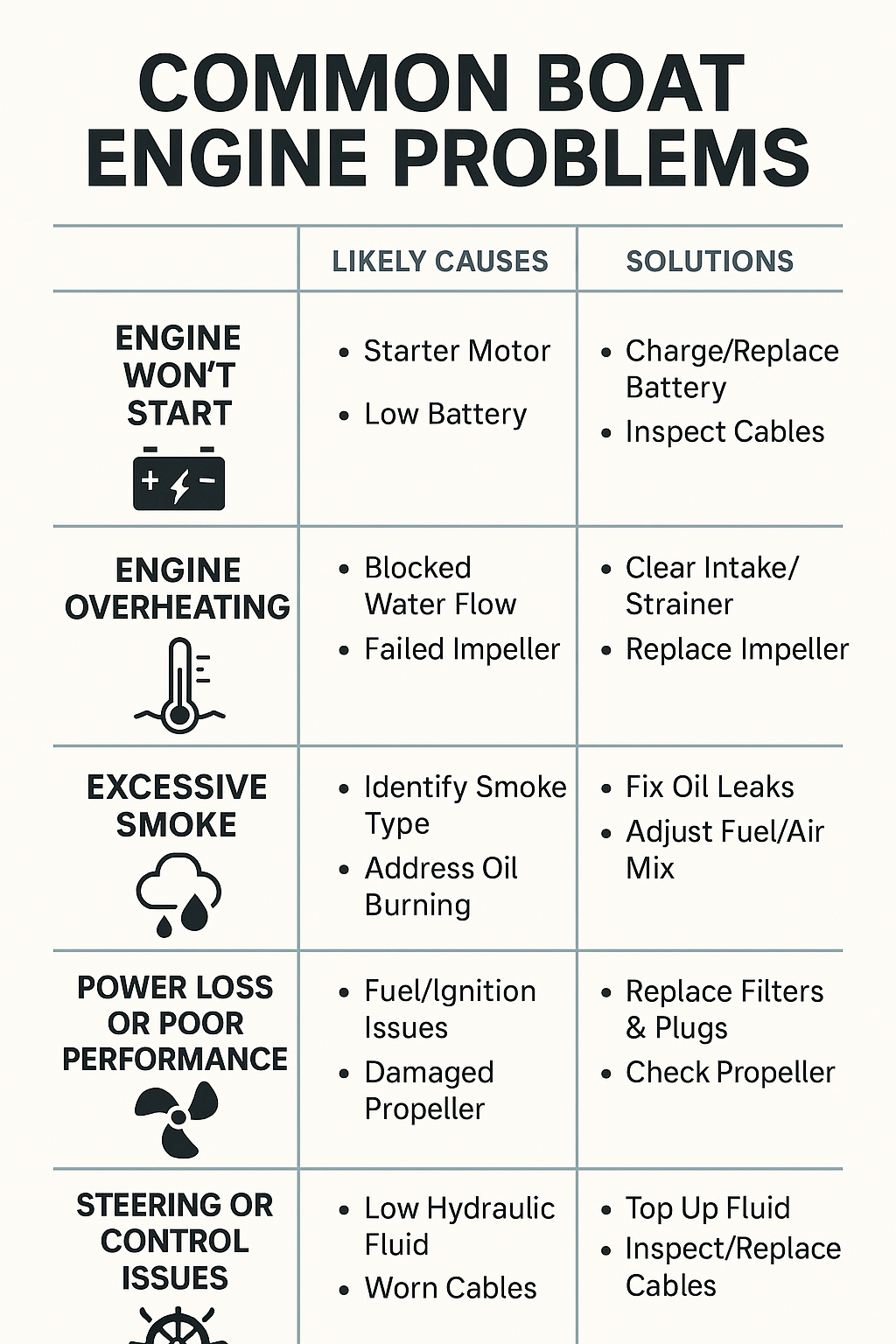
Symptom: Engine won't start
- Common causes: dead battery, old fuel, bad spark, or flooded engine.
Symptom: Engine starts but runs rough
- Common causes: clogged fuel filter, fouled spark plugs, or air in the fuel line.
Symptom: Overheating
- Common causes: blocked water intake, worn impeller, or thermostat problems.
Symptom: Loss of power or poor acceleration
- Common causes: propeller damage, fuel delivery issues, or compression loss.
Symptom: Excessive vibration
- Common causes: damaged prop, loose mounting, or misaligned drive shaft.
Symptom: Charging or electrical faults
- Common causes: bad stator, loose connections, or corroded terminals.
This Yamaha Outboard Troubleshooting Guide covers these signs with checks you can do on the dock.
Step-by-step troubleshooting checklist
Use this checklist to narrow down a problem methodically. Work top to bottom and log findings.
- Safety first
- Turn off the engine and remove keys. Wear gloves and eye protection. Use a kill switch or lanyard when testing.
- Visual inspection
- Check for fuel leaks, loose wires, corrosion, and damaged hoses. Look for water in the engine compartment.
- Battery and power
- Test battery voltage at rest and while cranking. Clean terminals and tighten connections.
- Fuel system
- Smell the fuel. Drain stale fuel. Replace the inline filter and check primer bulb and lines for cracks.
- Ignition and spark
- Remove a spark plug and check condition. Test spark with an inline tester. Replace plugs if fouled.
- Air and cooling
- Inspect the water intake, thermostat, and impeller. Run the engine with a hose on the water intake for safe checks.
- Compression test
- Use a gauge to check cylinder compression. Low compression indicates ring, valve, or head issues.
- Scan codes and error lights
- Read any diagnostic codes if your model supports it. Note them for repair manuals or dealer help.
Follow this Yamaha Outboard Troubleshooting Guide checklist to find the fault faster.

Fuel system troubleshooting
Fuel problems are the top cause of field failures. Clean fuel and correct pressure make engines happy.
Signs of fuel trouble
- Hard starts, rough idle, stall at idle, or poor acceleration.
Checks and fixes
- Replace old fuel. Ethanol-blended fuel attracts water. If fuel sits over a month, drain it.
- Replace the fuel filter and water separator. Change them often.
- Inspect primer bulb and fuel lines for air leaks. Squeeze the bulb to test fuel flow.
- Clean or replace the fuel pump if flow is weak.
- Use fresh fuel stabilizer for seasonal storage.
Practical tip from experience
- I once fixed a boat that would die at idle by replacing a soft, collapsed fuel hose. Small parts matter.

Electrical and ignition troubleshooting
Electrical faults mimic many problems. A steady method helps you isolate wiring, charging, and ignition issues.
Common signs
- No crank, weak crank, misfire, or battery draining quickly.
Simple checks
- Verify battery state of charge and load test if possible.
- Clean and tighten ground connections. Corrosion on grounds causes odd errors.
- Check fuses and circuit breakers. Replace blown fuses with the correct rating.
- Test spark coils and stator using basic tools or a multimeter.
When to use a multimeter
- Measure battery voltage, charging voltage, and coil resistance. Note readings and compare to specs.
Experience tip
- Once, a persistent misfire was solved by a loose ground strap under the engine bracket. Tightening it fixed everything.
Cooling and overheating issues
Overheating can cause major engine damage. Quick checks prevent costly repairs.
Symptoms and causes
- High temperature gauge, steam, or loss of power. Causes include blocked intake screens, worn impeller, or thermostat failure.
Checks to run
- Inspect water intake screens and clean marine growth.
- Check water flow by running the engine on a hose; look for a steady telltale stream.
- Replace the impeller every 2–3 years or when you see low flow.
- Verify thermostat operation and replace if stuck.
Safety tip
- Never run an outboard without water flow for long. Overheat damage happens quickly.

Starting and no-start problems
No-start issues are often simple if you follow a clear plan.
Quick checklist
- Confirm battery health and connections.
- Confirm fuel flow to the engine. Squeeze primer bulb and look for pressure.
- Check spark at each plug. Use the correct plug gap and heat range.
- Listen for fuel pump operation. No pump noise may indicate an electrical fault.
Advanced steps
- Use a compression gauge to rule out mechanical failure.
- For EFI models, check fuel pressure at the rail and read error codes.
Personal note
- I learned to always check for an open kill switch first. It saved me hours on one cold morning.

Performance, vibration, and propeller issues
Performance problems may hide simple causes. Start with the propeller.
Prop tips
- Inspect the prop for dings, bent blades, and fishing line. Replace or re-pitch as needed.
- Confirm prop nut torque and cotter pin installation.
Vibration and driveline
- Check engine mounts and transom bolts for tightness.
- Spin the prop shaft by hand to feel for rough bearings or play.
Tuning for best fuel economy
- Keep the engine tuned, use correct spark plugs, and maintain proper gear oil. Small adjustments help MPG and top speed.

Routine maintenance and preventive tips
Preventive work keeps most issues from happening. Set a schedule and stick to it.
Maintenance checklist
- Change gear oil yearly or per hours.
- Replace lower unit seals and inspect for water intrusion.
- Service the water pump impeller every 2–3 years.
- Replace spark plugs, fuel filters, and engine oil on schedule.
- Flush the engine after saltwater use.
Storage tips
- Use fuel stabilizer before long storage.
- Fog the engine cylinders with fogging oil to protect internal surfaces.
- Store with fuel tank low and in a dry place.
Personal practice
- I keep a small logbook on my boats. Noting date and hours saved me repeated guesswork.
Tools and parts to carry on the boat
A small kit can get you home or to the dock. Pack these items for routine fixes.
Essentials to carry
- Basic hand tools: pliers, screwdrivers, socket set, and adjustable wrench.
- Multimeter and spark tester.
- Spare fuses, spark plugs, and an inline fuel filter.
- Small hose clamps, spare fuel hose, and a primer bulb.
- Prop nut wrench, cotter pins, and a small tube of marine grease.
Bonus items
- Small pump or bilge hand pump, flashlight, and spare engine oil.
When to call a professional or Yamaha dealer
Some problems need factory tools or warranty service. Know when to stop and call help.
Call a pro if
- You see internal engine damage, metal flakes in oil, or very low compression.
- Diagnostic codes point to complex EFI or ECM faults beyond basic checks.
- You need warranty repair or parts replacement requiring dealer tools.
What a dealer offers
- Factory software, parts cross-reference, and service bulletins. They can perform torque checks, valve adjustments, and major engine repairs.
Frequently Asked Questions of Yamaha Outboard Troubleshooting Guide
How often should I service my Yamaha outboard?
Service frequency depends on hours and use, but basic checks every 50 hours and major service at 100 hours is a common rule. Follow your owner manual for exact intervals.
What causes a Yamaha outboard to overheat suddenly?
Sudden overheating is often blocked water intake, a failed impeller, or a stuck thermostat. Check water flow and the telltale stream immediately.
Can I run a Yamaha outboard on ethanol fuel?
Ethanol fuel can absorb water and cause fuel system problems if stored long. Use fresh fuel and stabilizer, and replace fuel lines and filters more often.
Why does my Yamaha outboard stall at idle but run fine at speed?
Stalling at idle usually points to fuel delivery, idle circuit issues, or air leaks. Inspect the idle jet, fuel filter, and primer bulb for consistent flow.
Is it safe to troubleshoot electrical issues myself?
Yes, basic electrical checks are safe with precautions like disconnecting batteries and using a multimeter. For complex charging or ECM faults, consult a dealer.
When should I replace the impeller on my Yamaha outboard?
Replace the impeller every 2–3 years or sooner if you see low water flow or age-related wear. Regular replacement is inexpensive compared with repair costs from overheating.
Conclusion
This Yamaha Outboard Troubleshooting Guide gives clear steps, practical checks, and smart preventive habits. Use the symptom guides to narrow problems, carry the right tools, and do regular maintenance to avoid breakdowns. Start with the simple checks, log your findings, and call a dealer when the issue goes beyond basic repairs. Try the steps on your next trip, subscribe for more tips, or leave a comment with your boat story.

