

Volleyball player positions are specific court roles like setter, libero, outside, middle, and opposite.
I’ve coached and played volleyball for years, and I write from direct experience. This guide explains what volleyball player positions mean, why they matter, and how each role shapes team strategy. Read on for clear roles, drills, and tips to help you pick and master the right volleyball player positions for your game.

36% off Today’s Exclusive Deals
Limited-time Exclusive Deals. Check current discount on Amazon.
Check Price on Amazon As an Amazon Associate I earn from qualifying purchases.
Overview of volleyball player positions
Volleyball player positions assign clear duties on the court. Teams use roles to organize offense, defense, serve receive, and blocking. Knowing each role helps players train the right skills and helps coaches build balanced lineups. This article breaks down each position and explains how they work together.

The six standard volleyball player positions
Below are the core volleyball player positions used in indoor volleyball. Each position has a key focus and distinct skill set.
Setter
The setter runs the offense and delivers accurate second-touch passes. A setter reads the defense and decides which attacker to set. Good setters have strong hands, quick decisions, and court vision. Volleyball player positions rely on the setter to coordinate attacks.
Outside Hitter (Left-side)
The outside hitter attacks from the left side and often handles serve receive. They must be versatile: strong at hitting, consistent at passing, and reliable defensively. Many teams ask their best all-around athlete to play outside hitter. Volleyball player positions often depend on outside hitters for steady scoring and defense.
Opposite Hitter (Right-side)
The opposite is a primary attacker who hits from the right side and blocks the opponent’s left-side attacks. Opposites need power hitting and strong blocking skills. They usually do less passing and more attacking. Opposite play gives teams a go-to scorer in tough rotations.
Middle Blocker (Middle Hitter)
The middle blocker focuses on fast attacks and central blocking. Quick moves and timing are essential for middles. They read setters and close blocks with outside hitters and opposites. A strong middle speeds up offense and improves net defense.
Libero
The libero is a defensive specialist who can replace back-row players without counting as a substitution. Liberos wear a different jersey and cannot attack above the net height. Their job is to pass, dig, and organize back-court defense. Many teams build their reception around a steady libero.
Defensive Specialist / Serving Specialist
These players substitute for weaker passers or to strengthen serve receive and defense. A defensive specialist often enters in the back row for better court coverage. Serving specialists focus on delivering tough serves in key moments. Using these roles smartly sharpens team defense and rotation flexibility.
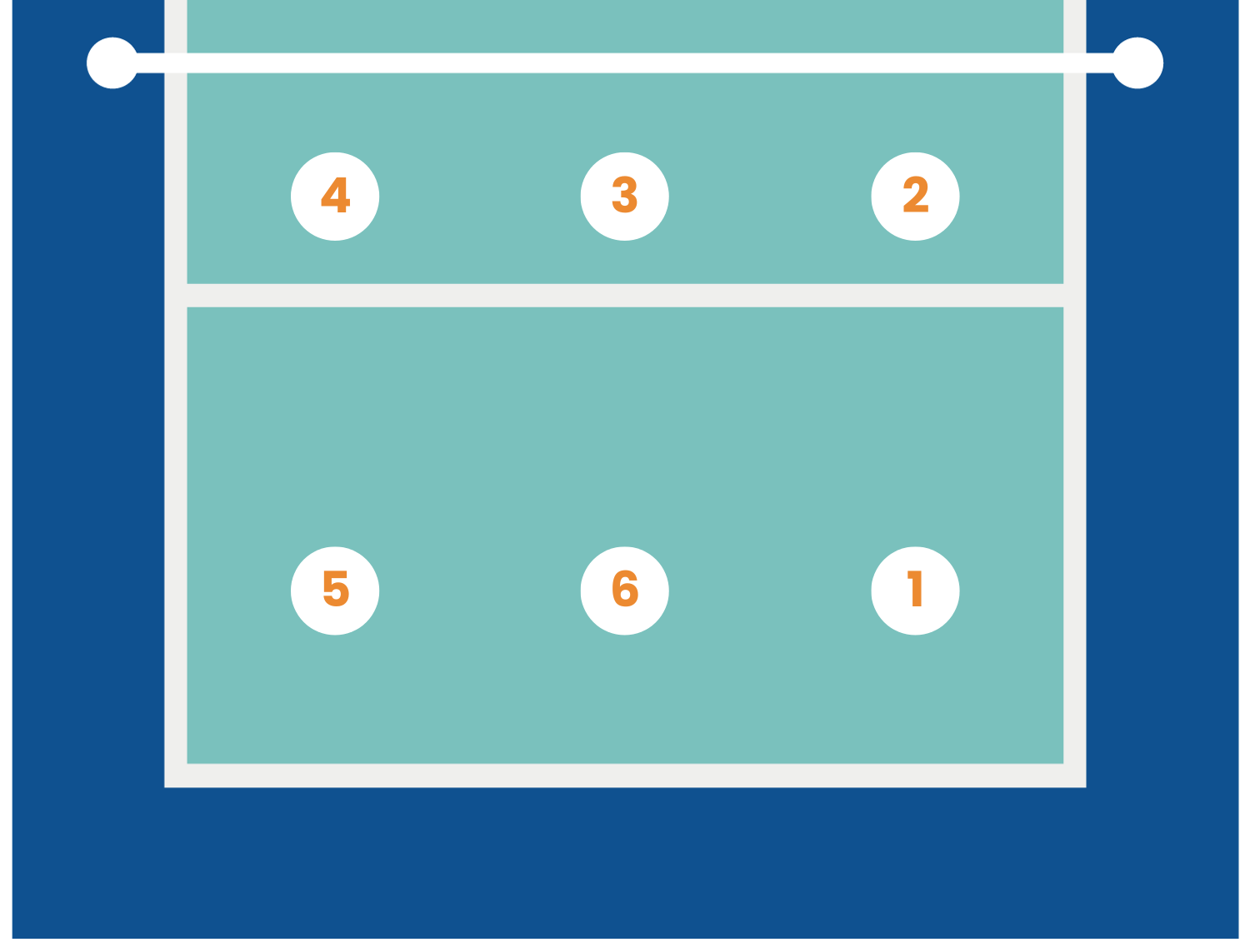
Roles and responsibilities in offense and defense
Each volleyball player position carries offense and defense tasks that fit team strategy.
Offense responsibilities:
- Setter: place the ball for hitters and vary tempo.
- Hitters: score points through attacks and tip variations.
- Middle: run quicks and slide sets to disrupt the block.
Defense responsibilities:
- Libero and defensive specialists: control digs and passes.
- Blockers: seal the net and redirect opponents’ attacks.
- Back-row hitters: cover tips and late attacks.
How many volleyball player positions are there? Most teams use six primary positions on the court at a time, but roles like libero and serving specialist expand how teams use their roster. What does the setter do differently than a libero? The setter runs offense and touches the ball second, while the libero anchors back-row defense and cannot attack above net height.
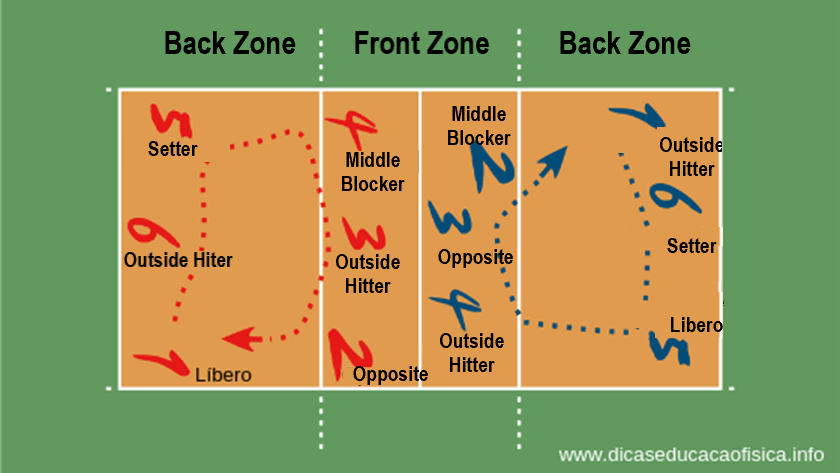
Rotation, substitutions, and position rules
Rotation in volleyball moves all six players clockwise after a side-out. Players rotate through serving and front/back row positions. Once the ball is served, players may switch roles within allowed rules to place hitters in optimal attacking spots.
Key rules to remember:
- Libero substitutions are free but limited by position rules and uniform.
- A player can only attack above net height from the front row.
- Specialized substitutions allow defensive specialists and servers to enter strategically.
Understanding rotation helps players maintain zone coverage and maximize the strengths of their volleyball player positions.
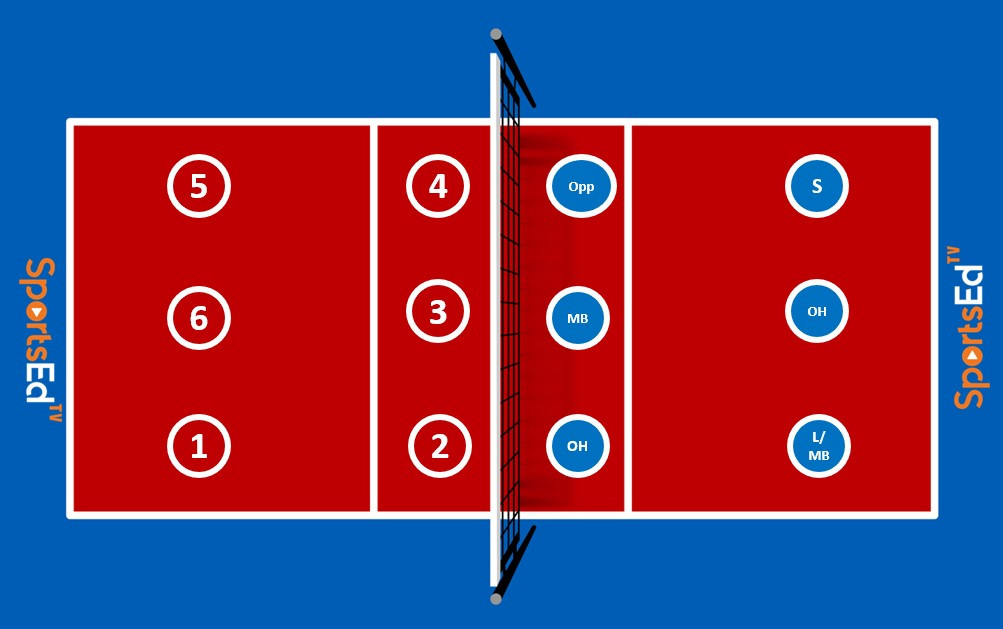
Skills training and drills for each position
Drills tailored to each volleyball player position speed up development. Keep sessions short and focused.
Setter drills:
- Two-touch target setting with a partner for accuracy.
- Quick-set drills to middles and outside hitters to improve timing.
Outside hitter drills:
- Approach timing with a setter for cross-court and line shots.
- Serve-receive reps and defensive transition drills.
Opposite drills:
- Right-side hitting against single and double blocks.
- Blocking footwork and counterattack drills.
Middle blocker drills:
- Read-and-react blocking practice.
- Quick-attack timing with half-speed sets.
Libero and defensive specialist drills:
- Short-area digging and floor movement drills.
- High-volume serve receive and passing to target.
Serving specialist drills:
- Target serving under pressure.
- Serve and immediate defensive transition exercises.
Work on core athletic skills too: footwork, explosiveness, and hand placement. Consistent practice builds confidence in any of the volleyball player positions.
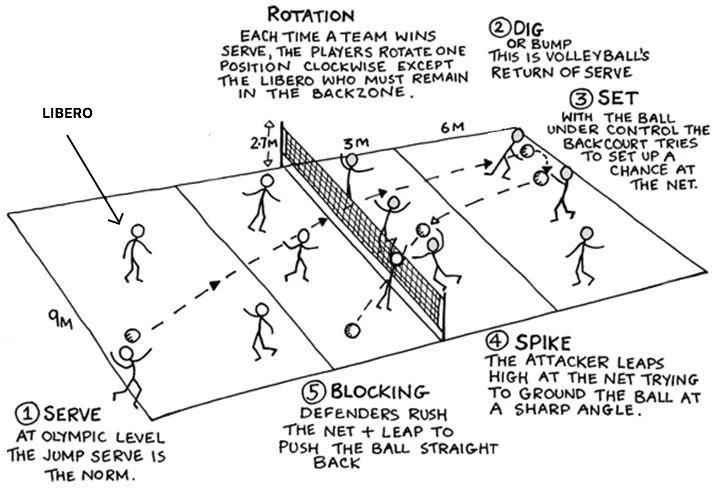
How to choose your position
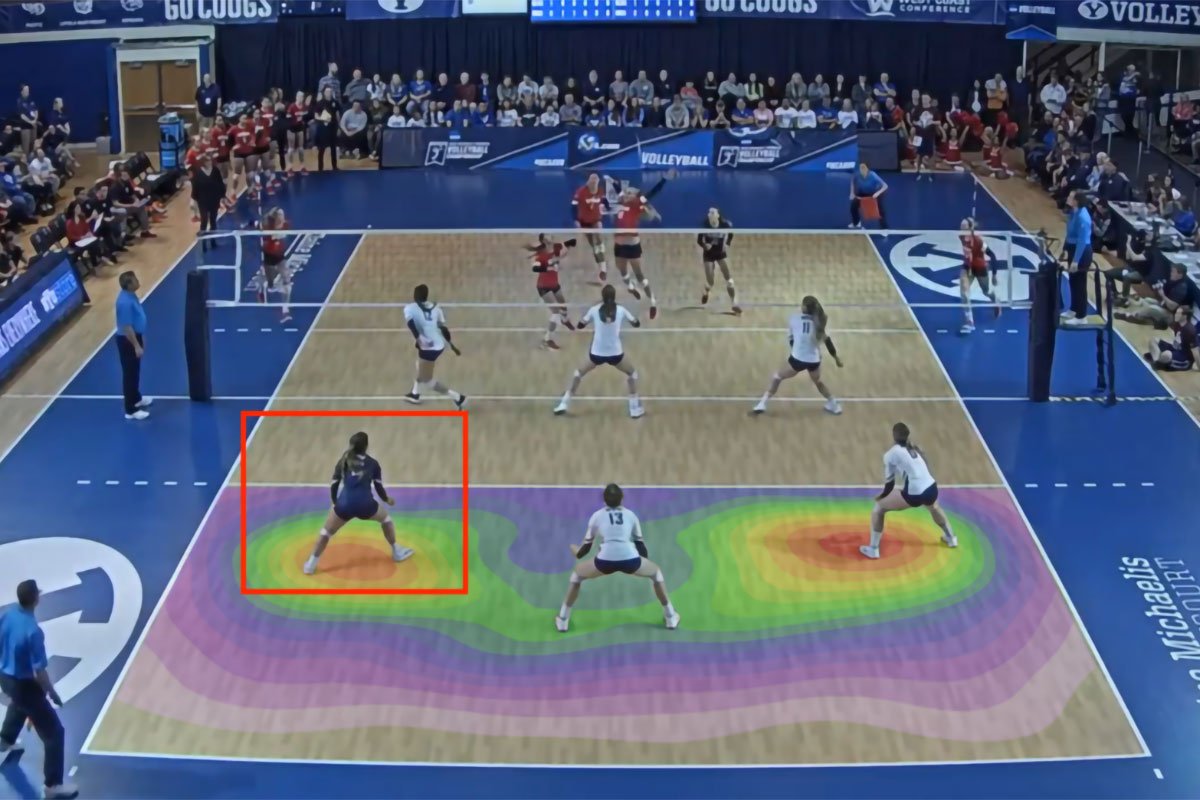
Choosing a position starts with self-assessment and coach feedback. Try different positions in practice and notice which feel natural and which you enjoy.
Ask yourself:
- Do I prefer hitting or setting?
- Am I faster and better at defense or at net play?
- How strong is my serve and passing?
My experience: I started as an outside hitter in high school and moved to setter in college after coaches saw my decision making. That shift extended my playing career and taught me the value of adaptability. Be honest about skills, and be willing to train the weak areas required by your chosen volleyball player positions.
Common mistakes and how to avoid them
Avoidable errors slow development and hurt team play. Watch for these common mistakes.
Common mistakes:
- Trying to play every position instead of specializing early.
- Poor communication at the net during rotations.
- Neglecting fundamental skills like passing and footwork.
- Over-reliance on power instead of placement and timing.
How to avoid them:
- Get feedback from coaches and peers.
- Drill basics daily—passing, setting, and footwork.
- Play to your strengths while improving weaknesses.

Frequently Asked Questions of What are volleyball player positions?
What are the main volleyball player positions on a team?
The main positions are setter, outside hitter, opposite hitter, middle blocker, libero, and defensive specialist. Each has distinct duties for offense and defense.
How many players are on the court for each team?
Each team has six players on the court in indoor volleyball. Those six rotate through positions and roles during play.
Can a libero play as a hitter?
A libero cannot attack the ball above the net height from the front row. Liberos focus on passing and defense and wear a different jersey.
What skills are most important for a setter?
Setters need precise hands, quick decision-making, and strong court vision. Communication and consistent footwork are also essential.
How do rotations affect where players play?
Rotations move players clockwise after a side-out, changing who serves and who is in front or back row. Teams often adjust positions after the serve to place attackers in the best spots.
When should I switch positions as a player?
Switch positions when coaches suggest it, when your physical skills match another role, or if it improves team balance. Be patient and practice the new skills consistently.
Conclusion
Understanding volleyball player positions gives you a roadmap to improve individually and help your team. Each position has clear duties, skill needs, and training paths that lead to better performance. Pick a role that fits your strengths, practice the core drills, and stay open to feedback. Try one new position in practice this week, track your progress, and ask a coach for a focused drill plan. If this guide helped, share your experience, subscribe for more drills, or leave a comment with your position questions.

