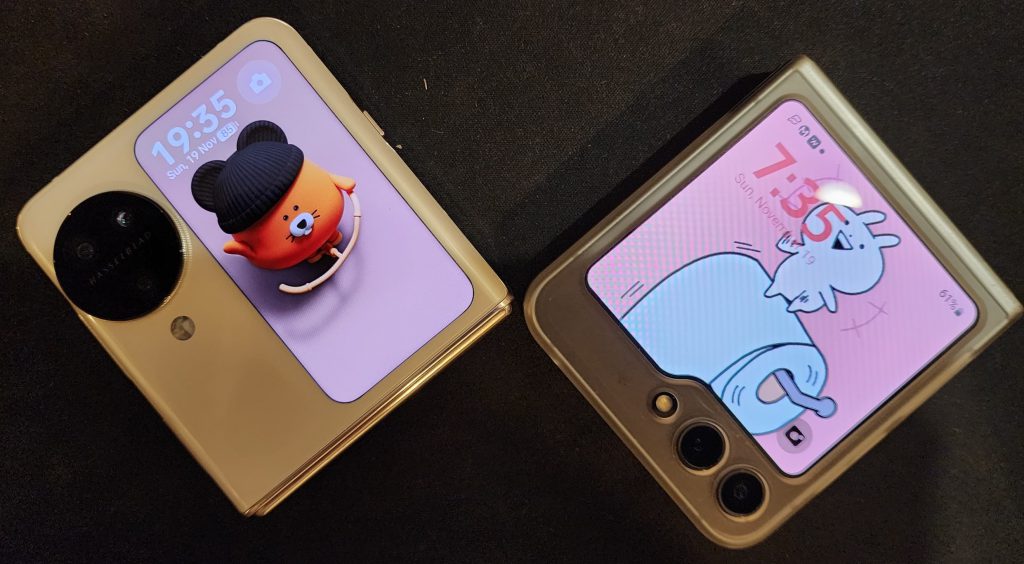
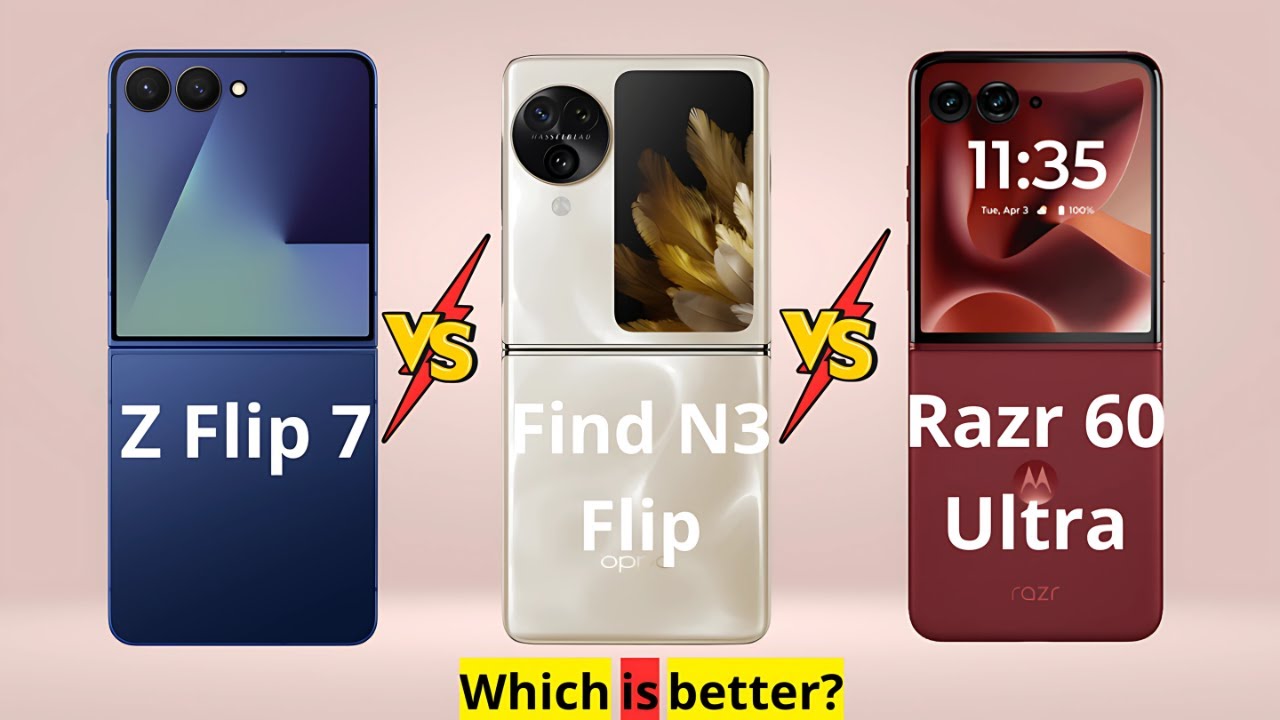
The world of foldable smartphones is evolving fast, with brands pushing the limits of design and technology. Two of the most exciting devices are the Galaxy Z Flip 7 and the Oppo Find N3 Flip. While both offer a unique flip-style experience, many buyers are curious about their camera performance. In this article, we dive deep into a head-to-head camera comparison, covering seven key aspects: main sensor quality, ultra-wide lens, telephoto capabilities, front camera, video recording, software features, and low-light performance. If you want clear answers on which flip phone captures better photos, you’re in the right place.
Main Camera Sensor Quality
The main sensor is the heart of any smartphone camera. Both the Galaxy Z Flip 7 and Oppo Find N3 Flip come packed with impressive hardware, but there are important differences.

36% off Today’s Exclusive Deals
Limited-time Exclusive Deals. Check current discount on Amazon.
Check Price on Amazon As an Amazon Associate I earn from qualifying purchases.The Galaxy Z Flip 7 features a 50-megapixel main sensor with a large aperture (f/1.8), promising bright, crisp photos. The sensor size is 1/1.56″, which allows for better light capture, especially in challenging situations. Samsung’s latest image processing algorithm adds dynamic range and detail, making photos look vibrant and lifelike.
On the other hand, the Oppo Find N3 Flip uses a 50-megapixel Sony IMX890 sensor, also with f/1.8 aperture. Its sensor size is similar at 1/1.56″, but Oppo’s color tuning is noticeably different. Images from the Find N3 Flip often appear warmer and slightly more saturated, which some users prefer for skin tones and nature shots.
In direct comparison:
- Galaxy Z Flip 7 produces photos with more natural colors and slightly higher detail in shadows.
- Oppo Find N3 Flip delivers images that are punchy and bright, but sometimes over-processes highlights.
When shooting landscapes, both phones handle contrast well, but the Galaxy Z Flip 7 keeps textures sharper, especially in complex scenes like cityscapes. For portraits, Oppo’s sensor renders softer backgrounds, giving photos a more artistic look.
A non-obvious insight: Beginners often miss how sensor size affects depth-of-field. Both phones have similar sensor sizes, but Samsung’s software uses the hardware to create more realistic blur, while Oppo relies more on digital effects.
Ultra-wide Lens Performance
The ultra-wide lens is important for group shots, architecture, and travel photography. Both phones offer strong hardware, but their results differ.
The Galaxy Z Flip 7 uses a 12-megapixel ultra-wide sensor with a 123-degree field of view. Photos have minimal distortion at the edges, thanks to Samsung’s correction algorithms. The lens aperture is f/2.2, which is decent for low-light, but not class-leading.
The Oppo Find N3 Flip has an 8-megapixel ultra-wide sensor with a 120-degree angle. While the resolution is lower, Oppo compensates with smart software sharpening. This lens is f/2.2, matching the Galaxy Z Flip 7.
Here’s how they stack up:
| Feature | Galaxy Z Flip 7 | Oppo Find N3 Flip |
|---|---|---|
| Resolution | 12 MP | 8 MP |
| Field of View | 123° | 120° |
| Edge Distortion | Low | Moderate |
| Color Accuracy | Neutral | Warm |
Galaxy Z Flip 7’s ultra-wide lens produces more consistent color with less distortion. Oppo’s lens, while good for casual shots, sometimes shows blurring at the corners, especially in low-light.
A practical tip: For group photos, the Galaxy Z Flip 7 captures more people in frame with less stretching. The Oppo Find N3 Flip may need cropping to fix edge blur.
Telephoto And Zoom Capabilities
Zooming without losing quality is a challenge for compact foldable phones. Here, the two models show clear differences.
The Galaxy Z Flip 7 relies on digital zoom, with no dedicated telephoto lens. Its software uses the main sensor’s high resolution to simulate up to 10x zoom. Results are decent up to 3x, but beyond that, image detail suffers.
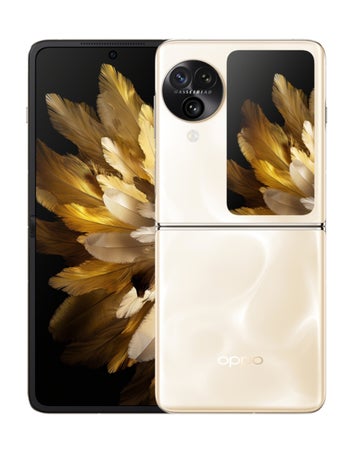
The Oppo Find N3 Flip offers a dedicated 32-megapixel telephoto lens (f/2.4), supporting 2x optical zoom and up to 20x hybrid zoom. This means the Oppo can zoom further with less loss of detail.
Detailed comparison:
- Galaxy Z Flip 7’s digital zoom is smooth, but images get noisy after 5x magnification.
- Oppo Find N3 Flip’s optical zoom produces sharp, clear photos at 2x and 3x. Beyond 10x, hybrid zoom introduces artifacts, but results are still better than Samsung’s digital zoom.
A non-obvious insight: Most people forget that optical zoom keeps image quality intact, while digital zoom crops the sensor. If you often capture distant subjects, the Oppo Find N3 Flip has a big advantage.
Front Camera For Selfies
Selfies matter to many buyers, especially on flip phones where the cover display can be used as a viewfinder. Both devices have strong front cameras, but their approach differs.
The Galaxy Z Flip 7 features a 10-megapixel front camera, using an f/2.2 aperture. It supports Night Mode, AI beautification, and can record 4K video. Samsung’s selfie camera is tuned for natural skin tones and balanced exposure.
The Oppo Find N3 Flip packs a 32-megapixel front camera with f/2.4 aperture. This sensor is larger, giving higher detail and better low-light performance. Oppo’s selfie algorithms enhance skin, brighten eyes, and smooth blemishes, sometimes making faces look more polished than real.
In real-world use:
- Galaxy Z Flip 7 selfies are realistic and sharp, showing true colors.
- Oppo Find N3 Flip selfies are detailed and brighter, with beauty filters often enabled by default.
A practical example: For quick social media posts, Oppo’s front camera makes faces pop. For more natural portraits, Samsung’s approach is preferred.
Beginners often miss that higher megapixels do not always mean better selfies. It’s the combination of sensor quality and processing that counts.
Video Recording Features
Video quality is a dealbreaker for many users. Both phones offer advanced recording features, but there are clear distinctions.
The Galaxy Z Flip 7 records up to 4K at 60fps on both main and front cameras. It supports HDR10+, Super Steady mode, and live focus video. Audio is captured in stereo, with wind noise reduction.
The Oppo Find N3 Flip also supports 4K video, but only at 30fps. It offers AI stabilization, cinematic filters, and portrait video mode. Audio is mono, but Oppo’s noise cancellation is strong.
Here’s a comparison:
| Feature | Galaxy Z Flip 7 | Oppo Find N3 Flip |
|---|---|---|
| Max Resolution | 4K 60fps | 4K 30fps |
| Stabilization | Super Steady | AI Stabilization |
| HDR Support | HDR10+ | Standard HDR |
| Audio | Stereo | Mono |
Galaxy Z Flip 7 is clearly ahead for vlogging, action shots, and professional video work. Its stabilization is less jittery, and HDR10+ makes colors pop.
A non-obvious insight: Many buyers focus only on resolution. But frame rate and stabilization make a bigger difference for smooth, clear video.
Camera Software And Ai Features
Software matters as much as hardware in modern smartphone cameras. Here, both brands have invested heavily in AI and smart features.
The Galaxy Z Flip 7 uses Samsung’s latest Camera AI, which includes:
- Scene optimizer for auto color adjustment
- Single Take mode for capturing multiple formats at once
- Pro mode for manual settings
- Night Mode with advanced noise reduction
Samsung’s interface is simple, with quick access to filters, portrait effects, and AR stickers.
The Oppo Find N3 Flip comes with Oppo’s ColorOS camera app, offering:
- AI Beauty mode with customizable sliders
- Portrait mode with adjustable bokeh
- Night Mode with multi-frame fusion
- Pro mode for manual ISO, shutter speed, and focus
Oppo’s app is more customizable, letting users tweak effects and filters easily. Beginners often appreciate the automatic adjustments, but advanced users may prefer Samsung’s manual controls.
A practical tip: For creative shots, Galaxy Z Flip 7’s Single Take mode is unique. For fast, beautiful selfies, Oppo’s AI Beauty is unmatched.
A non-obvious insight: Software updates often improve camera features over time. Check for regular updates before making a final decision.
Low-light And Night Photography
Night photography is a true test of any smartphone camera. Both the Galaxy Z Flip 7 and Oppo Find N3 Flip claim strong low-light performance, but real-world results show differences.
The Galaxy Z Flip 7 uses advanced Night Mode, combining multiple frames to reduce noise. Its main sensor’s large aperture helps capture more light, and Samsung’s AI balances exposure without over-brightening.
The Oppo Find N3 Flip also offers Night Mode, but relies more on software processing. Its telephoto lens performs surprisingly well in dim settings, while the ultra-wide lens struggles with noise.
Comparison in low-light:
- Galaxy Z Flip 7 produces cleaner images with less grain, even in very dark scenes.
- Oppo Find N3 Flip makes night photos brighter, but sometimes loses detail due to aggressive smoothing.
Real-world example: In a dimly lit restaurant, Galaxy Z Flip 7 captured accurate colors and sharp faces. Oppo Find N3 Flip made the scene brighter but blurred fine details.
A practical tip: For night landscapes, use Galaxy Z Flip 7’s main lens. For night portraits, Oppo’s telephoto lens can add interesting depth.
Beginners often miss that too much brightness is not always better. Preserving detail and avoiding noise is key for great night shots.
Battery Impact On Camera Usage
Battery life affects how much you can use the camera, especially on long trips or events. Foldable phones often have smaller batteries due to their compact design.
The Galaxy Z Flip 7 has a 3700 mAh battery, optimized for camera use. Samsung’s One UI software manages power efficiently, so you can shoot up to 5 hours of video or take hundreds of photos before needing a recharge.
The Oppo Find N3 Flip comes with a 4300 mAh battery, which is larger. Oppo’s ColorOS also manages power well, but heavy camera use drains the battery faster, especially when using AI modes or telephoto zoom.
In practice:
- Galaxy Z Flip 7 lasts longer for video recording, thanks to efficient software.
- Oppo Find N3 Flip is better for all-day photo sessions, but video drains the battery faster.
A non-obvious insight: Using Night Mode and high-resolution video eats battery quickly. If you record lots of video, carry a portable charger.
Real-world Comparison And Sample Scenarios
To give you a clearer idea, let’s look at practical scenarios where each phone’s camera shines.
- Travel Photography: Galaxy Z Flip 7’s ultra-wide lens and natural color balance make it ideal for landscapes and architecture. Oppo Find N3 Flip is great for capturing distant subjects with its telephoto lens.
- Social Media: Oppo Find N3 Flip’s selfie camera and beauty modes are perfect for Instagram and TikTok. Galaxy Z Flip 7’s Single Take mode is useful for creating multiple content types from one shot.
- Night Events: Galaxy Z Flip 7 excels in low-light, producing clean, sharp images at concerts or parties. Oppo Find N3 Flip creates bright, eye-catching photos but may lose detail.
- Family Portraits: Both phones handle portraits well, but Oppo’s telephoto lens creates stronger bokeh for artistic shots. Galaxy Z Flip 7 offers more realistic skin tones.
- Vlogging and Video Calls: Galaxy Z Flip 7’s 4K 60fps video and stereo audio are best for professional content. Oppo Find N3 Flip is suitable for casual recording but lacks advanced stabilization.
These examples highlight how each phone’s camera strengths fit different needs. The right choice depends on your priorities—optical zoom, selfie quality, or low-light performance.
Summary Table Of Camera Specs
Here’s a quick summary of the key camera specifications:
| Camera Feature | Galaxy Z Flip 7 | Oppo Find N3 Flip |
|---|---|---|
| Main Sensor | 50 MP, f/1.8 | 50 MP Sony IMX890, f/1.8 |
| Ultra-Wide | 12 MP, 123° | 8 MP, 120° |
| Telephoto | Digital Zoom (up to 10x) | 32 MP, 2x optical, up to 20x hybrid |
| Front Camera | 10 MP, f/2.2 | 32 MP, f/2.4 |
| Video | 4K 60fps, HDR10+ | 4K 30fps, Standard HDR |
| Battery | 3700 mAh | 4300 mAh |
Frequently Asked Questions
Which Phone Is Better For Low-light Photography?
The Galaxy Z Flip 7 is better for low-light and night photography. Its main sensor and advanced Night Mode produce cleaner, sharper images with less noise. The Oppo Find N3 Flip makes night scenes brighter but sometimes loses detail.
Does The Oppo Find N3 Flip’s Telephoto Lens Really Make A Difference?
Yes. The Oppo Find N3 Flip‘s telephoto lens offers optical zoom up to 2x and hybrid zoom up to 20x, allowing for clearer photos of distant subjects. This is a big advantage over the Galaxy Z Flip 7, which relies on digital zoom.
Are Selfies Better On The Oppo Find N3 Flip Or Galaxy Z Flip 7?
Selfies on the Oppo Find N3 Flip are brighter and more detailed, thanks to its 32-megapixel sensor and beauty features. The Galaxy Z Flip 7 produces more natural skin tones. For social media, Oppo’s selfies stand out.
Which Phone Is Better For Video Recording?
The Galaxy Z Flip 7 is better for video. It records 4K at 60fps, supports HDR10+, and has superior stabilization and stereo audio. The Oppo Find N3 Flip records 4K at 30fps with good stabilization, but the quality and features are not as advanced.
How Do Software Updates Affect Camera Performance?
Software updates can improve camera features and image quality over time. Both Samsung and Oppo release updates that add new modes, fix bugs, and enhance AI features. Always check for updates before judging camera performance.
Final Thoughts
Both the Galaxy Z Flip 7 and Oppo Find N3 Flip offer impressive cameras for a foldable phone. The Galaxy Z Flip 7 stands out for its realistic photo quality, ultra-wide lens, video recording, and low-light performance. The Oppo Find N3 Flip shines with its telephoto lens, high-resolution selfies, and creative AI features.
Your choice depends on what matters most. If you want sharp, natural photos and professional video, Samsung’s Galaxy Z Flip 7 is a strong pick. If you prefer powerful zoom, detailed selfies, and vibrant colors, the Oppo Find N3 Flip will make you happy.
For more technical details and official specs, check out the Samsung Galaxy Official Site.
Whatever you choose, both phones show how far foldable camera technology has come. The best camera is the one that fits your needs—so match your style, and enjoy capturing memories with your flip phone.