

Use a multiple point anchor system with heavy anchors and shock absorbing lines for stable flotation.
I’ve installed and tested water trampolines for years, on lakes and calm bays. This guide shows how to anchor a water trampoline safely, step by step, with clear choices, hardware tips, and real-world lessons I’ve learned. Read on to get practical instructions that hold up to wind, waves, and active use.

36% off Today’s Exclusive Deals
Limited-time Exclusive Deals. Check current discount on Amazon.
Check Price on Amazon As an Amazon Associate I earn from qualifying purchases.
Why proper anchoring matters
Anchoring keeps your water trampoline safe and usable. A well-anchored trampoline stays in place when people jump. It reduces spinning, drifting, and sudden loads on seams and D-rings.
Poor anchoring leads to damage, injuries, and loss of the trampoline. Boats, wakes, and storms can quickly move an unsecured unit. Learning how to anchor a water trampoline is the first safety step before any fun begins.

Types of anchors and their pros and cons
Concrete block anchor
Concrete blocks are cheap and effective in deep water. They sink and hold well on soft bottoms. They can be heavy to move and may require a lift device.
Mushroom anchor
Mushroom anchors dig into soft mud and sand. They work well in silty lake bottoms. On rocky or weedy bottoms they perform poorly.
Screw (auger) anchor
Screw anchors provide high holding power in soft bottoms. They install by rotating into the bottom. They are harder to install in deep water and on hard bottoms.
Deadweight bags or sandbags
Deadweight sacks are portable and adjustable. Fill on site and tie to lines. They can shift if not heavy enough or if bottom is uneven.
Pile or permanent anchors
Piles or driven anchors are permanent and very secure. Use them for long-term moorings. Installation is invasive and usually requires a contractor.
Chain and stainless hardware
Use galvanized or stainless steel shackles and chain near the anchor to resist corrosion. Chain adds catenary and abrasion resistance.
Each type has pros and cons. The best choice depends on water depth, bottom type, expected weather, and how permanent the setup will be.

How to anchor a water trampoline — step-by-step
Plan the site
Choose a spot away from boat traffic and shallow hazards. Check local rules and water depth. Make sure the bottom type suits your anchors.
Gather gear
You will need anchors, shackles, chain or rope, thimbles, swivel connectors, and floatation for lines. Use marine-grade stainless or galvanized hardware.
Decide anchor layout
Use three or four anchor points for stability. For round trampolines, four anchors spaced evenly prevent spinning. For long shapes, use three anchored points plus a center tie for stability.
Attach bridle lines
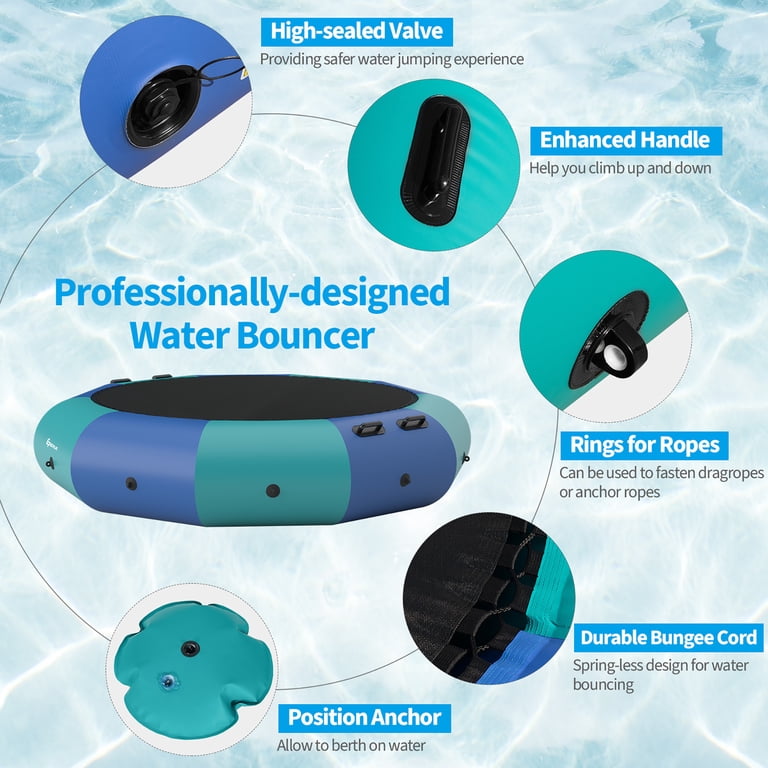
Connect from the trampoline’s D-rings to a central bridle or ring. A bridle spreads load evenly and prevents one anchor from taking all the force.
Set anchor weight and scope
Use heavy anchors sized for conditions. As a rule, follow manufacturer guidance, and use at least moderate weights: small units 100–200 lb anchors, medium 200–400 lb, large 400+ lb where conditions demand. Increase weight for strong winds. Use some chain to aid holding and reduce chafe.
Install anchors
Drop anchors straight down over the intended spot. For screw anchors, twist them into place and confirm holding. For blocks, settle them on the bottom and allow lines to take load slowly.
Adjust tension and shock absorption
Add stretch or elastic elements between lines and trampoline. Nylon lines offer stretch. Consider dedicated shock absorbing tethers or small bungee sections to reduce abrupt jerks.
Test the system
Before full use, apply load slowly. Have two people jump gently while you watch for drifting or slippage. Tighten and rebalance as needed.
Record settings
Note anchor types, weights, and line lengths. This speeds re-installation and helps evaluate performance after storms.

Choosing anchor size, rope, and hardware
Factors to consider
Water depth and current
Bottom composition
Size and weight of the trampoline
Typical wind and wave exposure
Number of users and activity level
Anchor sizing tips
Use manufacturer guidelines first. If none exist, err on the side of heavier anchors. Multiple smaller anchors can be better than one large one to distribute load.
Rope and chain choices
Use marine-grade rope or three-strand nylon for shock absorption. Add chain near the anchor to prevent abrasion. Avoid cheap polypropylene alone; it stretches too much and degrades in sunlight.
Hardware recommendations
Use stainless steel shackles, swivels, and thimbles. Corrosion-resistant hardware lasts longer and is safer. Inspect galvanic compatibility if mixing metals.

Installation tips, safety checks, and practical advice
Use a bridle to distribute force. It prevents one D-ring from failing.
Keep lines clear of jump paths. Tangled lines cause trips and injuries.
Mark lines with floats. Surface markers help boaters and swimmers avoid them.
Check fittings weekly. Look for rust, worn rope, frayed splices, and bent shackles.
Test anchors after storms. Re-secure or replace any that shifted.
My experience: I once used three too-small anchors on a lively lake. The trampoline slid after a windy afternoon. After switching to four heavier anchors and adding chain, it held steady. Learn from small failures. Fix before a big one happens.

Maintenance and seasonal removal
Inspect annually or before each season.
Check for corrosion on metal parts. Replace damaged rope and hardware.
Clean and dry lines before storage.
Salt and mildew shorten life. Rinse with fresh water after salt exposure.
Store anchors appropriately.
Concrete and metal anchors can be stored onshore. Screw anchors should be cleaned and oiled.
Consider removal for winter.
In freeze-prone areas remove the trampoline and anchors to avoid ice damage. If leaving in place, use ice-safe mooring practices.
Troubleshooting common issues
Anchor dragging
If an anchor drags, increase weight or choose a different anchor type better suited to the bottom.
Trampoline spinning
Add extra anchors and adjust angles. A four-point layout reduces rotation.
Line chafing
Add sleeves, thimbles, or chain to protect rope. Replace frayed sections promptly.
Hardware failure
Replace corroded shackles and bolts with marine-grade stainless steel. Inspect after heavy use.
Uneven lift or tilt
Rebalance by adjusting anchor lengths or moving anchors slightly until the trampoline floats level.
Frequently Asked Questions of How do you anchor a water trampoline?
How many anchors do I need for a water trampoline?
Most setups use three or four anchors. Four anchors give the best stability and reduce spinning.
What anchor weight should I use for a water trampoline?
Follow manufacturer guidance when available. As a rule, small units often use 100–200 lb anchors, while larger or exposed setups need heavier anchors or multiple units.
Can I use shore-mounted anchors for a floating trampoline?
Yes, shore-mounted anchors or threaded anchors can work if lines are correctly routed and remain free of abrasion. Ensure lines are long enough and use a bridle to distribute force.
Is chain necessary between the anchor and rope?
Chain near the anchor helps prevent chafe and adds catenary to absorb shock. It is recommended for most installations in rocky or abrasive bottoms.
How do I stop my trampoline from spinning?
Use at least three anchors and a proper bridle. Adjust anchor angles so they pull evenly from multiple directions.
Do I need to remove the trampoline in winter?
In freeze-prone waters, removal reduces ice damage risk. If left in place, use specialized ice moorings and extra inspection.
What rope is best for anchoring a water trampoline?
Marine-grade nylon or low-stretch rope with a section of chain near the anchor is a good choice. Avoid untreated polypropylene for long-term use.
Conclusion
Anchoring a water trampoline well keeps people safe and gear intact. Use multiple anchor points, choose anchors suited to your bottom and conditions, and use marine-grade hardware and shock-absorbing lines. Inspect and test the system regularly and adjust after storms or heavy use. Take action now: review your trampoline’s anchor plan, upgrade weak links, or consult a local marine service to install a secure anchor system. Share your experience below or subscribe for more hands-on boating and lake gear guides.

