

Growing beautiful roses is a rewarding experience that attracts both beginners and seasoned gardeners. Roses are famous for their vibrant colors, lovely fragrances, and strong symbolism. But many people believe roses are difficult to grow. The truth is, with the right care and understanding, anyone can enjoy healthy rose bushes.
This guide will show you how to grow roses successfully, from choosing varieties to solving common problems. You’ll learn practical techniques, expert tips, and mistakes to avoid—so your garden can bloom with confidence.

36% off Today’s Exclusive Deals
Limited-time Exclusive Deals. Check current discount on Amazon.
Check Price on Amazon As an Amazon Associate I earn from qualifying purchases.Choosing The Right Rose Varieties
Picking the right type of rose is the first step. Not all roses are the same. Some grow tall, others stay small. Some bloom once a year, others flower many times. Think about your climate, garden space, and how much time you want to spend caring for your roses.
Common Types Of Roses
1. Hybrid Tea Roses
These are classic roses with large, single blooms on long stems. They are popular for cutting but need more care.
2. Floribunda Roses
These produce clusters of flowers and bloom often. They are easier to maintain and great for borders.
3. Climbing Roses
Perfect for fences and walls. They need support and pruning but create beautiful vertical displays.
4. Shrub Roses
These are tough and often bloom repeatedly. Ideal for beginners or low-maintenance gardens.
5. Miniature Roses
Small but charming, these are good for pots or small spaces.
Matching Roses To Your Climate
Roses grow best in areas with moderate temperatures. If you live in a hot region, choose heat-tolerant varieties like ‘Knock Out’. For cold climates, look for hardy roses such as ‘Canadian Explorer’ types. This simple step prevents future problems and reduces maintenance.
Checking Disease Resistance
Some roses get sick easily; others stay healthy. Look for disease-resistant varieties if you don’t want to spray chemicals. Roses like ‘Home Run’ or ‘Drift’ resist common issues like black spot and powdery mildew.
Comparing Rose Types For Beginners
Here’s a quick look at which rose types suit different needs:
| Rose Type | Care Level | Bloom Frequency | Best For |
|---|---|---|---|
| Hybrid Tea | High | Single | Cut flowers |
| Floribunda | Medium | Repeat | Borders |
| Shrub | Low | Repeat | Easy care |
| Miniature | Low | Repeat | Pots |
| Climbing | Medium | Repeat | Vertical spaces |
Preparing Your Garden
Good preparation is the foundation for healthy roses. It’s not just about digging a hole—it’s about creating the right environment.
Picking The Best Location
Roses need at least 6 hours of sunlight daily. Morning sun is best because it dries leaves early, reducing disease. Avoid planting in deep shade or where water pools after rain.
Soil Requirements
Roses thrive in well-drained, loamy soil. Sandy soil dries too fast; clay soil holds too much water. The ideal soil pH is 6.0 to 6.5. You can test soil pH with a simple home kit.
If your soil is not perfect, improve it:
- Add compost for nutrients and structure.
- Mix in sand if the soil is heavy clay.
- Use peat moss for sandy soils.
Spacing
Don’t crowd your roses. Most bushes need 2 to 3 feet between plants for airflow. Climbing roses need space to spread—plan for 6 to 10 feet between them.
Preparing The Planting Hole
Dig a hole twice as wide as the root ball and as deep. This gives roots room to grow. Mix some compost into the soil at the bottom for a nutrient boost.
Planting Roses Step By Step
Planting roses the right way helps them establish quickly. Here’s a step-by-step guide:
1. Soak The Roots
If you’re planting bare-root roses, soak them in water for 4-24 hours before planting.
2. Remove Damaged Roots And Branches
Cut away any broken roots or stems. This reduces stress and helps the plant focus on healthy growth.
3. Position The Plant
Place the rose in the hole. For grafted roses, the bud union (swollen area) should be 1-2 inches below the soil in cold climates, and above the soil in warmer regions.
4. Backfill Carefully
Fill the hole halfway, press gently, then water. Fill the rest and water again. This removes air pockets.
5. Mulch
Apply 2-3 inches of mulch around the base. Mulch keeps soil moist and prevents weeds.
Planting Container Roses
If you buy roses in pots, the process is easier:
- Water the plant well before removing it.
- Gently loosen the roots if they are tight.
- Plant at the same depth as in the pot.
Planting Time
The best time to plant roses is early spring or late fall. Avoid planting during hot summer days or freezing weather.
Watering Roses
Water is essential, but too much or too little can cause problems.
How Much Water?
Roses need 1-2 inches of water per week. During hot weather, increase this amount. Water at the base, not on the leaves, to prevent disease.
Best Watering Practices
- Water early in the morning.
- Use a soaker hose or drip irrigation.
- Avoid overhead sprinklers.
Signs Of Water Stress
- Wilting means not enough water.
- Yellow leaves can mean too much water.
A common beginner mistake is watering daily with small amounts. Instead, water deeply but less often. This encourages deep roots.
Fertilizing Roses
Roses are heavy feeders. They need regular nutrients for strong growth and lots of flowers.
Best Fertilizers
Use balanced fertilizers (like 10-10-10 NPK) or special rose food. Organic options include compost, well-rotted manure, and fish emulsion.
When And How To Fertilize
- Start in early spring when leaves appear.
- Repeat every 4-6 weeks until late summer.
- Don’t fertilize after August in cold climates.
Spread fertilizer evenly around the base, then water it in.
Comparing Organic Vs. Chemical Fertilizers
Here’s a quick comparison:
| Type | Pros | Cons |
|---|---|---|
| Organic | Improves soil, safer for environment | Slow results, can be expensive |
| Chemical | Fast results, easy to use | Risk of over-fertilizing, can harm soil |
Non-obvious Tip
Don’t fertilize stressed roses (after transplanting, during drought, or when sick). Wait until they recover, or fertilizer can harm them.
Pruning Roses
Pruning keeps roses healthy and encourages more blooms. It sounds scary, but it’s easy with practice.
Why Prune?
- Removes dead or diseased stems
- Shapes the plant
- Promotes new growth
When To Prune
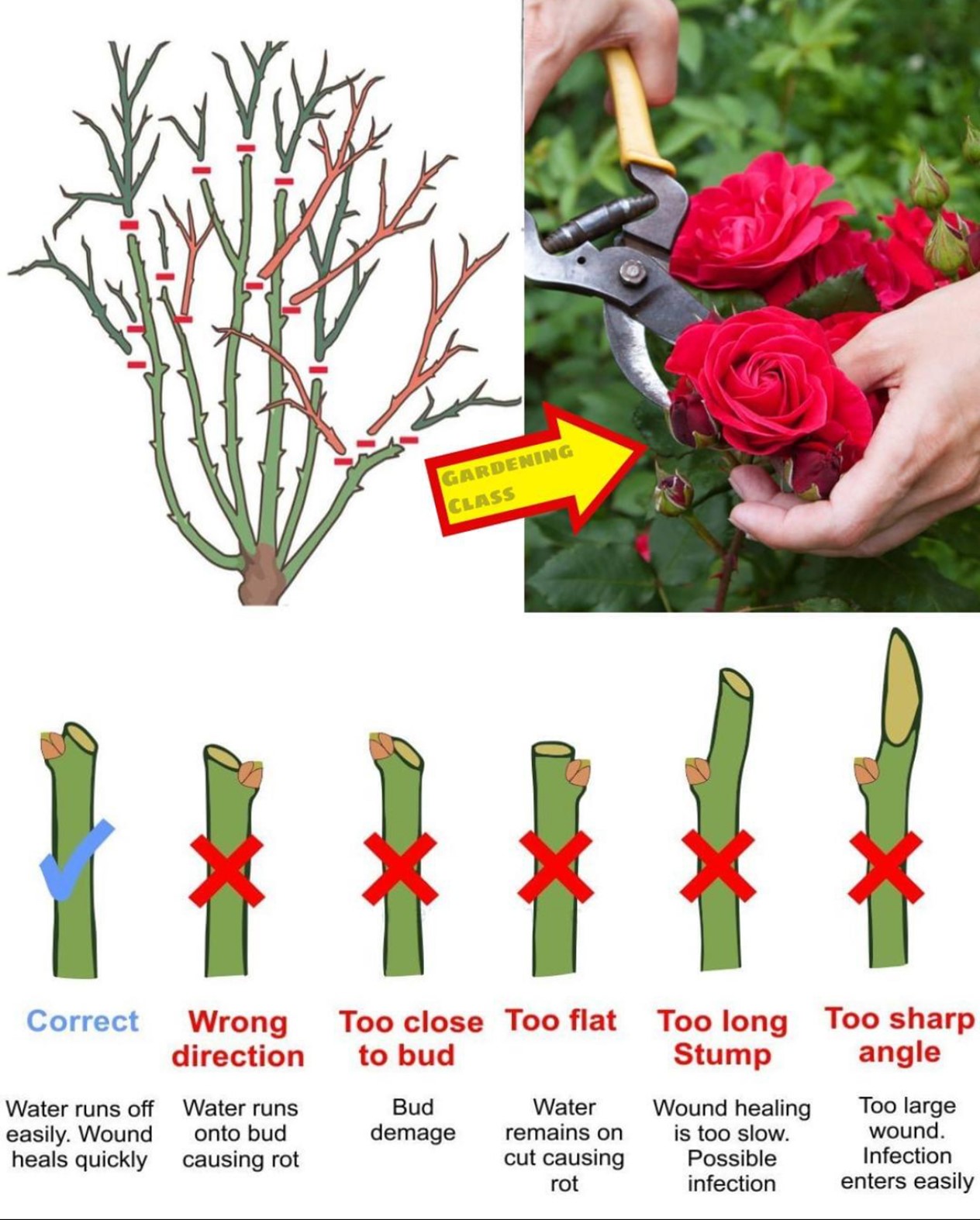
Most roses are pruned in late winter or early spring before new leaves appear.
How To Prune
1. Sterilize Pruning Tools
This prevents the spread of disease.
2. Remove Dead Wood
Cut out brown, dry stems.
3. Shape The Plant
Cut back weak branches. Leave strong, healthy stems.
4. Cut Above Outward-facing Buds
This encourages growth away from the center, improving airflow.
Common Mistakes
- Pruning too early: New growth can be killed by frost.
- Leaving stubs: Always make clean cuts just above a bud.
Example
If you prune a hybrid tea rose, leave 3-5 healthy stems about 12 inches tall. Remove all thin, weak growth.
:max_bytes(150000):strip_icc()/how-to-plant-roses-1403055-1247cb901e7e431da47d4ce023b953a9.png)
Controlling Pests And Diseases
Roses attract bugs and can get sick. Early detection and prevention are key.
Common Pests
- Aphids: Small green bugs on new growth. They suck sap and stunt growth.
- Spider Mites: Tiny, red or yellow, cause leaves to turn yellow and drop.
- Japanese Beetles: Metallic green, eat leaves and flowers.
Common Diseases
- Black Spot: Dark spots on leaves, causes yellowing and dropping.
- Powdery Mildew: White powder on leaves, distorts growth.
- Rust: Orange spots on the underside of leaves.
How To Prevent Problems
- Choose disease-resistant roses
- Plant with good airflow
- Water at the base
- Remove fallen leaves
Treatment Options
- Hand-pick insects
- Spray with insecticidal soap
- Use neem oil for both bugs and fungi
- Remove and destroy infected leaves
Comparing Chemical And Organic Controls
| Method | Effectiveness | Safety |
|---|---|---|
| Chemical Sprays | Fast, reliable | Can harm bees, pets |
| Organic Sprays | Good for mild issues | Safe for environment |
| Manual Removal | Works for small infestations | Very safe |
Non-obvious Insight
Don’t spray chemicals during flowering. This can kill pollinators like bees.
Mulching And Winter Protection
Mulch is more than just decoration. It protects roots, keeps moisture, and prevents weeds.
Best Mulch Types
- Wood chips
- Compost
- Straw
Apply 2-3 inches around the base, keeping mulch away from stems to prevent rot.
Winter Care
Roses can suffer in cold winters. Protect them:
- Pile extra mulch (up to 12 inches) around the base in late fall.
- Cover with burlap or rose cones for extra protection.
Remove winter coverings in early spring when danger of frost is past.
Non-obvious Tip
If your area has warm winters, don’t over-mulch. Too much insulation can cause rot or attract pests.
Growing Roses In Containers
If you don’t have garden space, you can grow roses in pots.
Selecting A Container
Pick a pot at least 16 inches wide and 14 inches deep. Make sure it has drainage holes.
Soil Mix
Use quality potting mix with added compost. Avoid regular garden soil—it’s too heavy.
Watering And Feeding
Container roses dry out faster. Water when the top 2 inches of soil feel dry. Feed with slow-release fertilizer every 2 months.
Sun And Placement
Put your pot where it gets 6 hours of sun. If it’s too hot, move the container to afternoon shade.
Practical Example
Miniature roses are perfect for containers. For larger roses, use a rolling stand so you can move the pot easily.
Rose Blooming Tips
Getting lots of flowers is the goal for every gardener. Here’s how to boost blooms:
- Prune correctly in spring.
- Fertilize regularly.
- Water deeply, not often.
- Remove old flowers (deadheading) to encourage new blooms.
- Protect from pests early.
Deadheading Roses
Cut faded blooms just above the first set of 5 leaves. This signals the plant to produce new flowers.
Advanced Rose Care Insights
Many beginners miss these advanced tips:
1. Use Epsom Salt
Sprinkle 1 tablespoon around each rose bush in spring. Epsom salt contains magnesium, which helps produce lush leaves and more flowers.
2. Companion Planting
Planting garlic or marigolds near roses can reduce pest attacks naturally.
3. Monitor Microclimates
Even in one garden, some spots will be warmer, cooler, wetter, or drier. Adjust rose care based on these microclimates for best results.
Common Mistakes And How To Avoid Them
Many gardeners repeat mistakes that cost time and flowers.
- Planting roses in deep shade: They won’t bloom.
- Watering leaves instead of soil: Increases disease.
- Using too much fertilizer: Causes leaf burn.
- Neglecting pruning: Leads to weak, tangled growth.
- Ignoring pest signs: Early action prevents damage.
Remember, roses are tough. If you make a mistake, adjust your care and most roses will recover.

Frequently Asked Questions
What Is The Easiest Rose For Beginners?
Shrub roses and Knock Out roses are best for beginners. They resist disease, bloom often, and need less care than hybrid teas.
How Long Does It Take For Roses To Bloom After Planting?
Most roses bloom 1–2 months after planting. Newly planted roses may take longer as they establish roots.
Can I Grow Roses Indoors?
You can grow miniature roses indoors if they get bright sunlight. Regular roses need more sun and space, so they’re best outdoors.
How Do I Revive A Dying Rose Bush?
Check for water stress, remove dead wood, and fertilize lightly. If pests or disease are present, treat quickly. Sometimes moving the plant to a sunnier spot helps.
What Is The Best Way To Prevent Black Spot?
Plant roses where air circulates well, water at the base, and remove affected leaves. Use disease-resistant varieties for extra protection. For more on rose diseases, visit Wikipedia.
Growing roses may seem challenging at first, but with the right steps, it becomes simple and enjoyable. Focus on healthy soil, sunlight, watering, and choosing the right varieties. Don’t be afraid to prune or experiment with fertilizers. Even if you make mistakes, roses are forgiving.
With patience and care, your garden will fill with beautiful, fragrant blooms—a reward that lasts for years.

