

Choosing the right charger for your iPhone is more important than many people think. Today, with the rise of fast charging, USB-C, and new iPhone models, the charger you pick can make a big difference in speed, safety, and convenience. Many iPhone users wonder: Is the Anker USB-C iPhone charger better than Apple’s original charger? This is not just about price or brand loyalty. The answer can affect how quickly your phone charges, how long your battery lasts, and even your daily routine. In this article, we’ll dive deep into both chargers—comparing their speed, build, safety, price, and real-world performance. By the end, you’ll have the knowledge to make the best choice for your needs.
Understanding The Basics: Apple’s Original Charger Vs. Anker Usb-c Charger
Before we compare, let’s clarify what we mean by Apple’s original charger and the Anker USB-C iPhone charger. Apple’s “original” charger for iPhones has changed over the years. Early iPhones used a slow 5W USB-A charger. Newer models, especially since the iPhone 8 and up, support fast charging with Apple’s 20W USB-C power adapter.

36% off Today’s Exclusive Deals
Limited-time Exclusive Deals. Check current discount on Amazon.
Check Price on Amazon As an Amazon Associate I earn from qualifying purchases.Anker is a trusted brand known for third-party charging accessories. Their USB-C iPhone chargers often offer similar or higher wattage than Apple, support fast charging, and sometimes add extra features like multiple ports or compact design.
Both chargers work with the latest iPhones. Both use USB-C to Lightning (or USB-C to USB-C for iPhone 15 and later) cables. But the real differences go deeper—into speed, safety, build quality, price, and daily use.
Fast Charging Explained: What Really Matters
Many people buy a new charger to get fast charging. So, how does it work? Fast charging uses higher wattage (measured in “W” for watts) to push more power into your iPhone’s battery quickly.
- Standard charging: Around 5W, takes 2-3 hours for a full charge.
- Fast charging: 18W or higher, charges up to 50% in about 30 minutes.
Both Apple’s 20W USB-C charger and Anker’s popular USB-C chargers (18W, 20W, 30W, and higher) support fast charging for newer iPhones.
Real-world Speed Test
In real-world tests, there is little difference in charging speed between Apple’s and Anker’s 20W chargers. For example, charging an iPhone 14 from 0% to 50% takes roughly:
- Apple 20W charger: 28-30 minutes
- Anker 20W charger: 28-31 minutes
If you use a higher-wattage Anker charger (like 30W), the phone may not charge much faster. IPhones limit the maximum wattage they accept (about 20W for most models). So, going above 20W often brings no extra speed—unless you charge an iPad or MacBook, too.
Insight: Many beginners think more watts always mean faster charging. But after a certain point, your iPhone will not accept extra power. Buying a much higher wattage charger will not make your phone charge faster.
Build Quality And Design: Durability Matters
Apple’s original chargers are known for their clean, simple design. The 20W USB-C adapter is compact, lightweight, and uses a single USB-C port. It feels solid, but some users complain that Apple’s cables fray easily over time.
Anker chargers often come with extra features:
- Smaller size: Anker’s Nano series is especially tiny, easy to carry.
- Foldable prongs: Makes travel easier.
- Multiple ports: Some Anker models let you charge two devices at once.
- Durable materials: Many Anker chargers use reinforced plastic or even metal, and their cables are usually stronger than Apple’s.
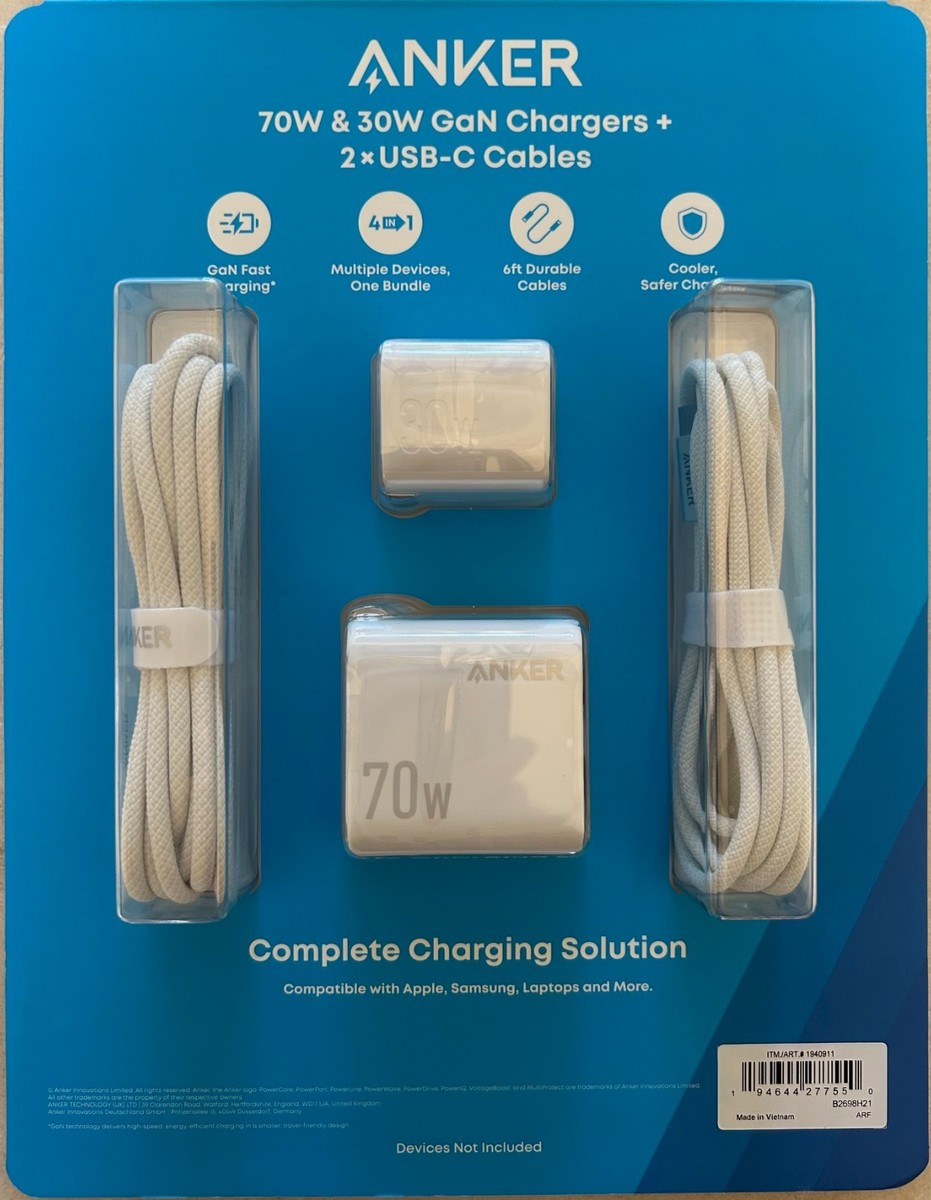
A good example is the Anker Nano II 30W. It’s much smaller than Apple’s 20W charger, with foldable prongs, and works for phones, tablets, and even small laptops.
Build Quality Comparison Table
Here’s a look at key differences in design and build:
| Feature | Apple 20W USB-C | Anker Nano II 20W/30W |
|---|---|---|
| Size | Compact | Ultra-compact (smaller) |
| Prongs | Fixed | Foldable (on some models) |
| Material | Plastic | Reinforced plastic/metal |
| Ports | 1 USB-C | 1 or 2 USB-C/USB-A |
| Weight | About 2.2 oz (62g) | Less than 2 oz (varies by model) |
Insight: If you travel often or need a charger for your bag or pocket, Anker’s compact models offer real advantages. Foldable prongs and size make a difference many people only notice after daily use.
Safety And Certification: Protecting Your Iphone
Safety should never be ignored when picking a charger. Poor-quality chargers can overheat, damage your phone, or even start fires.
Apple’s chargers are certified by Apple and meet all UL safety standards. They include built-in protections against overcurrent, overvoltage, and overheating. Apple’s chargers are also covered under warranty.
Anker chargers are known for safety, too. They often have multiple safety certifications (like UL, CE, FCC). Anker uses MultiProtect technology, which combines several layers of safety: surge protection, temperature control, and short-circuit prevention.
Both companies test their chargers carefully. However, you should always buy from trusted sellers. Avoid counterfeit chargers, especially ones that look like Apple or Anker but are much cheaper.
Are Third-party Chargers Safe For Iphones?
Yes—if they are certified. Apple’s “MFi” (Made for iPhone) program certifies cables and chargers to work safely with iPhones. Anker’s iPhone chargers and cables are MFi certified.
Warning: Many cheap third-party chargers are not certified and can damage your phone or become fire hazards. Do not buy from unknown brands.
Insight: Some users worry that using a non-Apple charger voids the iPhone warranty. This is not true if you use a reputable, MFi-certified charger. Apple’s warranty only excludes damage caused by faulty accessories, not certified ones.
Price And Value: What Do You Get For Your Money?
Price is a big reason many users pick Anker or other third-party brands. Let’s break down the typical costs:
- Apple 20W USB-C charger: $19 (charger only, cable not included)
- Apple USB-C to Lightning cable: $19 (1m)
- Anker Nano II 20W/30W charger: $15–$25 (some models include cable)
- Anker USB-C to Lightning cable: $10–$20
Buying both Apple’s charger and cable costs around $38. Anker often bundles charger and cable for less, or you can buy them separately and still save.
Cost Comparison Table
Here is a price comparison for a typical fast charging setup:
| Product | Apple | Anker |
|---|---|---|
| Charger (20W) | $19 | $15–$20 |
| USB-C to Lightning Cable (1m) | $19 | $10–$15 |
| Total | $38 | $25–$35 |
Insight: Many beginners forget to factor in the price of the cable. If you buy Apple’s charger and cable separately, it quickly adds up. Anker’s bundles are more budget-friendly and sometimes even include a longer cable.
Compatibility: Will It Work With My Devices?
With the switch to USB-C (especially on the iPhone 15 series), compatibility has become more confusing. Here’s what you need to know:
- Older iPhones (iPhone 8 to iPhone 14): Use USB-C to Lightning cables for fast charging. Both Apple and Anker make these cables.
- IPhone 15 and later: Use USB-C to USB-C cables. Both brands offer these.
- IPads and MacBooks: Anker’s higher-wattage chargers (30W or more) can also charge many iPads and some MacBooks.
Both Apple and Anker chargers will work with any iPhone model that supports fast charging. The cable is more important—using a cheap, uncertified cable can limit charging speed.
Extra Tip: If you have multiple Apple devices (iPhone, iPad, AirPods), Anker’s multi-port chargers let you charge several at once. Apple’s charger only has one port.
Real-world Use: What Do Users Say?
Looking at technical specs is important, but real-life experience matters too. Here’s what users and reviewers often say:
- Apple’s charger: Reliable, simple, works as promised. The build quality is good, but the cable can wear out. Some users wish it was smaller or had more ports.
- Anker’s charger: Fast, tiny, and durable. Many people love the compact size and strong cables. Extra features like foldable prongs and multi-port options are a plus. Some users say Anker’s chargers run warmer than Apple’s, but this is normal for compact fast chargers and does not affect safety.
User Ratings
On major retail sites:
- Apple 20W charger: 4.8/5 stars (thousands of reviews)
- Anker Nano II 20W/30W: 4.7–4.9/5 stars (thousands of reviews)
Insight: Many users switch to Anker after losing or breaking their original Apple charger—and most do not look back. The combination of price, size, and durability wins them over.
Environmental Impact: Which Is Greener?
Apple has made big promises about reducing its environmental footprint. They even stopped including chargers in the box with new iPhones, saying most users already have one.
Apple chargers are made with some recycled materials and are easy to recycle through Apple’s programs.
Anker also uses recycled materials in some products and tries to reduce packaging waste. However, the biggest environmental impact comes from using fewer chargers overall.
Practical Advice: If you already have a working charger, keep using it. The greenest option is not to buy a new charger unless you really need it.
Side-by-side Feature Comparison
Let’s look at the main features side by side:
| Feature | Apple 20W USB-C | Anker Nano II 20W/30W |
|---|---|---|
| Wattage | 20W | 20W/30W |
| Fast Charging | Yes | Yes |
| Size | Compact | Ultra-compact |
| Prongs | Fixed | Foldable (some models) |
| Number of Ports | 1 | 1 or 2 |
| Cable Included | No | Sometimes (check model) |
| Price | $$ | $ |
| MFi Certified | Yes | Yes |
| Warranty | 1 year | 18 months (some models) |
Common Mistakes When Choosing A Charger
- Assuming more watts = faster charging. Most iPhones cap at around 20W. Higher wattage chargers don’t speed up iPhone charging.
- Ignoring certification. Using non-certified chargers or cables can damage your phone or limit charging speed.
- Forgetting about cable quality. A cheap cable can slow down charging or break quickly.
- Not checking port type. Make sure your charger has USB-C output and that your cable fits your phone.
- Overpaying for “brand”. Apple’s charger is good, but you can get similar or better performance for less with trusted brands like Anker.

When Should You Choose Apple’s Charger?
- You value having all-Apple accessories.
- You want the official warranty and support.
- You do not mind paying a bit more for brand confidence.
- You rarely travel and do not care about charger size or multiple ports.
When Is Anker The Better Choice?
- You want a smaller, lighter charger for travel or daily carry.
- You need to charge multiple devices at once (multi-port models).
- You want to save money, especially if you need several chargers.
- You want stronger, longer, or bundled cables.
- You like extra features, like foldable prongs or higher wattage for other devices.
The Bottom Line: Is The Anker Usb-c Iphone Charger Better Than Apple’s Original?
For most people, Anker’s USB-C iPhone charger is equal to or better than Apple’s original charger in practical use. Both are safe, fast, and reliable. Anker’s models often cost less, offer more features, and come in smaller sizes. For travelers or people with many devices, Anker’s flexibility is hard to beat.
However, if you prefer to stick with official Apple accessories or have a specific need for Apple’s warranty, the original charger is still an excellent choice.
The most important thing is to avoid cheap, uncertified chargers. Whether you pick Apple or Anker, you’ll get a high-quality product—but Anker gives you more for your money.
For more technical details about USB-C charging standards, see the official USB-C Wikipedia page.
Frequently Asked Questions
Is It Safe To Use An Anker Charger With My Iphone?
Yes, Anker’s USB-C iPhone chargers are MFi certified and meet strict safety standards. They are as safe as Apple’s original charger when purchased from a reputable source.
Will Using A Third-party Charger Void My Iphone Warranty?
No, using a certified third-party charger like Anker will not void your warranty. Apple’s warranty only excludes damage caused by faulty or uncertified accessories.
Does A Higher Wattage Anker Charger Charge My Iphone Faster?
Not usually. Most iPhones accept a maximum of about 20W for fast charging. Using a 30W or 45W charger will not make your iPhone charge faster, but it can help with iPads or other devices.
Are Anker Cables As Good As Apple’s?
In many cases, Anker cables are more durable than Apple’s. They are MFi certified, often reinforced, and come in different lengths. Many users prefer them for daily use.
Can I Use The Same Charger For My Ipad Or Macbook?
Yes, if you buy a higher-wattage Anker charger (30W or more), you can charge iPads and some MacBooks. Apple’s 20W charger is only recommended for phones and smaller devices.
Choosing between Apple’s original charger and the Anker USB-C iPhone charger comes down to your needs and preferences. Both are safe and fast, but Anker offers more options and better value for most users. Make sure you buy certified products, and your devices will thank you with fast, reliable charging for years to come.


