

Rugby Union and Rugby League mainly differ in rules, team size, and how play is restarted.
I have coached and watched both codes for years. I write from hands-on experience and research to explain clearly what separates them. This article answers What is the difference between Rugby Union and Rugby League? step by step, so you can understand rules, tactics, culture, and which game might suit you to watch or play.

36% off Today’s Exclusive Deals
Limited-time Exclusive Deals. Check current discount on Amazon.
Check Price on Amazon As an Amazon Associate I earn from qualifying purchases.
Main rule and gameplay differences
Rugby Union and Rugby League share a common origin but evolved different rules. The biggest split is how possession is contested after a tackle. Union focuses on rucks and mauls where either team can win the ball. League uses a set of six tackles that favor a quicker restart and structured attack.
What is the difference between Rugby Union and Rugby League? One is continuity-focused with contested breakdowns, the other uses a fixed tackle count and limited contest at the tackle. Both are physical and strategic, but the flow changes how teams plan offense and defense.
Scoring, set pieces, and restarts
Scoring values differ between the codes. In Rugby Union, a try is typically worth 5 points and conversions 2 points. In Rugby League, a try is usually worth 4 points with conversions worth 2 points.
Set pieces also vary. Union has scrums and lineouts as major contests for possession. League uses scrums less competitively and has no lineouts. Restarts after tackles in League follow the play-the-ball rule, while Union restarts use rucks and formation contests. This affects how teams earn territory and manage phases.

Players, positions, and substitutions
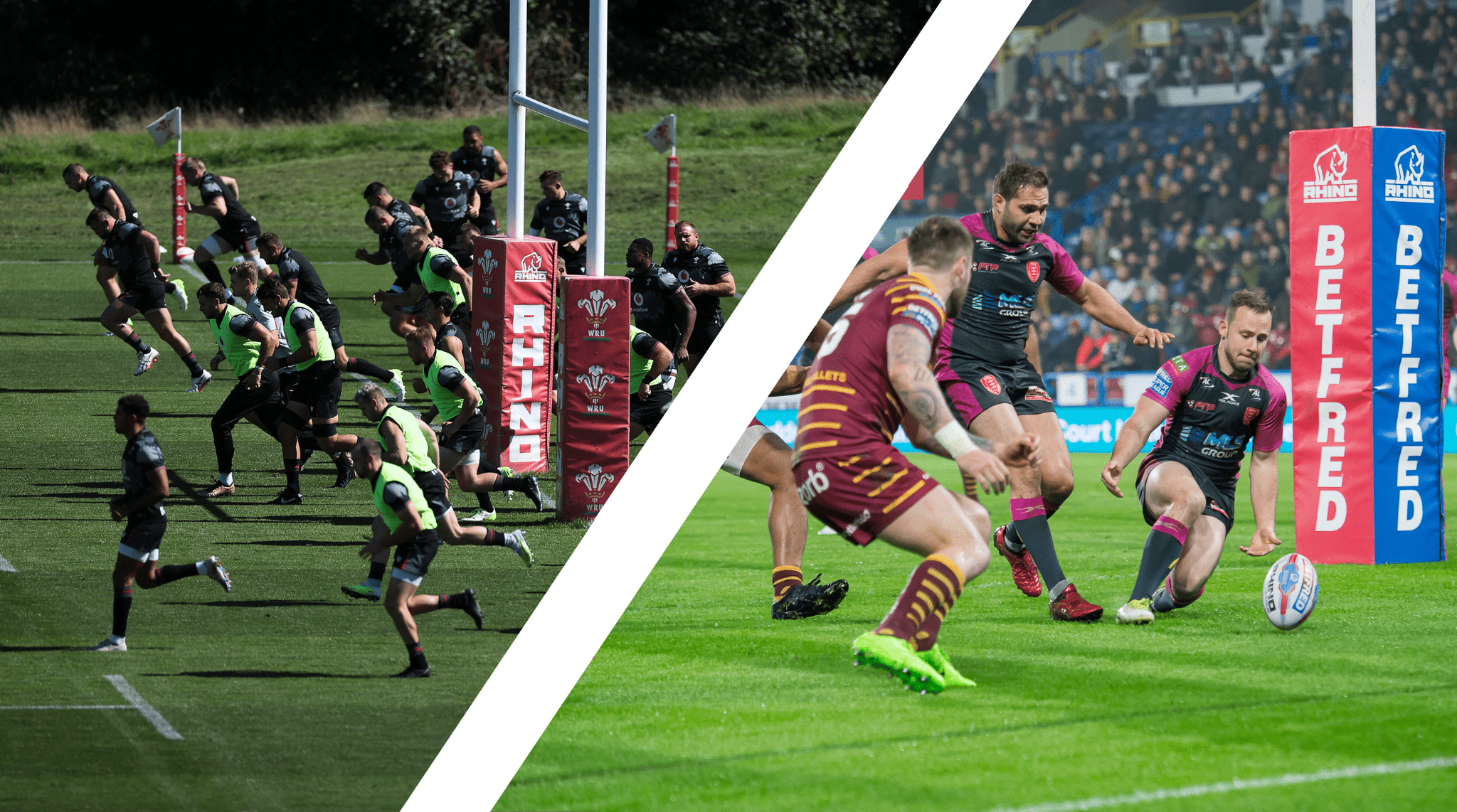
Team size is a clear visual difference. Rugby Union fields 15 players per side. Rugby League plays with 13 players per side.
Position names can sound similar but roles differ. Union forwards contest scrums and lineouts more. League forwards often focus on gaining meters and quick play-the-balls. Substitution rules also differ; League tends to allow rolling interchanges up to a set number, while Union has fixed substitutes and tactical replacements for injuries or fatigue. What is the difference between Rugby Union and Rugby League? Team makeup and role focus is one key part of that answer.
Field, equipment, and match length
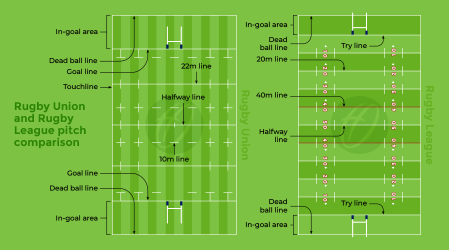
The playing field dimensions are similar but used differently in each code. Both use roughly the same grass pitch size, but Union marks and structures for lineouts and rucks create distinct game zones. Ball shape and gear are the same basic rugby ball and protective kit.
Match length is similar: both play 80 minutes in professional matches. How the time feels is different. League often has faster restarts and fewer stoppages, so play time can seem more continuous. What is the difference between Rugby Union and Rugby League? Time use and stoppage patterns shape viewer experience.

Pace, tactics, and spectator appeal
Rugby League often looks faster and more continuous. The six-tackle rule encourages direct, structured attacks and more predictable sets. Union rewards patience, multi-phase build-up, and tactical kicking to gain field position.
Tactics differ because the rules force different trade-offs. Union teams may sacrifice immediate territory to win a turnover at the breakdown. League teams chase repeat line breaks and meter gains. What is the difference between Rugby Union and Rugby League? The style and pacing are central to that difference, shaping who enjoys which code.

Professional leagues, culture, and geography
Each code has strongholds around the world. Union has a large global footprint, with strong nations across Europe, the Southern Hemisphere, and parts of Asia. League is very popular in certain countries and regions, especially where local clubs and community ties built a culture around it.
Professional competitions and money flows differ by country. This affects player pathways and fan culture. What is the difference between Rugby Union and Rugby League? Cultural reach and professional structure are major separating factors to consider when following the sport.

How to choose which code to watch or play
Decide by what you value most in sport. If you like continuous, fast plays and structured sets, you may prefer League. If you enjoy tactical contests, intricate set pieces, and contested breakdowns, Union might appeal more.
Try both if you can. Attend a match, or join a local club session. What is the difference between Rugby Union and Rugby League? Seeing each in person often makes the differences click.

Personal experience and practical tips
As a coach I learned to adapt drills for each code. For League, focus on quick plays, line-speed defense, and repetitive set work. For Union, put practice time into ruck technique, lineout timing, and strategic kicking.
A mistake I made early on was treating both codes the same in training. That slowed player progress. Tip: tailor conditioning and skills to the code you play. What is the difference between Rugby Union and Rugby League? Training and mindset are where that difference matters most to players.
Quick common questions people ask (PAA-style)
What is the difference between Rugby Union and Rugby League?
Union has 15 players, contested breakdowns, and lineouts; League has 13 players, six tackles, and play-the-ball restarts.
Which game is faster to watch, Union or League?
League tends to be faster and more continuous due to fewer contested stoppages and the tackle count.
Are the balls and kits the same for both codes?
Yes. Both use similar oval balls and protective gear, with small variations for grip and comfort.
Frequently Asked Questions of What is the difference between Rugby Union and Rugby League?
What is the difference between Rugby Union and Rugby League in scoring?
Union awards 5 points for a try and encourages multi-phase play; League awards 4 points for a try with quicker scoring chances.
How many players are on a Rugby Union team versus a Rugby League team?
Rugby Union uses 15 players per side. Rugby League uses 13 players per side.
Do both codes use scrums and lineouts?
Both use scrums, but Union scrums are more competitive. Lineouts exist only in Union.
Can players switch between Rugby Union and Rugby League?
Yes. Many players switch codes, though they must adapt skills, fitness, and tactical understanding to the other code.
Which code is better for beginners?
For beginners, League can teach fast decision-making and basic tackling shapes. Union teaches complex set pieces and is great for learning varied roles.
Is professional pay different between the codes?
It varies by country and competition. Top Union competitions often have higher earnings in some regions, while League pays more in other markets.
Which code is more popular globally?
Rugby Union has broader global reach, while Rugby League is concentrated in specific countries and regions.
Conclusion
Rugby Union and Rugby League share DNA but offer distinct experiences. The clearest differences are team size, tackle rules, breakdown contests, and set piece prominence. These differences shape training, tactics, and fan appeal.
Try both games to see which fits your taste. Watch a match, join a local club, or practice a skill set from one code and then the other. Share your experience in the comments or subscribe for more practical guides on rugby rules and coaching tips.

