

Poor chilling, low mix solids, or machine problems usually stop ice cream from thickening.
I’ve spent years testing recipes and machines to answer questions like Why is my ice cream not thickening in the machine, and I’ll walk you through simple science, clear fixes, and real troubleshooting steps. Read on to learn how ice cream thickens, the most common causes for failure, and the practical fixes I use when a batch refuses to firm up.

36% off Today’s Exclusive Deals
Limited-time Exclusive Deals. Check current discount on Amazon.
Check Price on Amazon As an Amazon Associate I earn from qualifying purchases.
How ice cream thickens: the simple science you need to know
Ice cream firms when water in the mix freezes into many tiny ice crystals and when air and fat form a stable foam. Proteins, fat, and stabilizers help trap air and hold water so the texture becomes creamy rather than icy. If any of those parts are off, you will ask, Why is my ice cream not thickening in the machine, because the mix cannot form the right structure.
Key points:
- Ice crystals: small crystals give a smooth texture.
- Fat and air: fat stabilizes air cells; air (overrun) lightens the mix.
- Solids and stabilizers: milk solids and stabilizers bind water and slow melting.
- Temperature and churn speed: fast, cold churning produces small crystals and helps thickening.
Common causes of “Why is my ice cream not thickening in the machine”
If your ice cream won’t thicken, check these likely issues. I list causes in order of how often I’ve seen them.
- Underchilled mix before churning: A warm mix delays freezing and interrupts crystal formation.
- Low total solids: Too little fat, protein, or nonfat milk solids makes a weak structure.
- Too much sugar or alcohol: Both lower the freezing point and reduce firmness.
- Weak stabilizer or no stabilizer: No guar, xanthan, gelatin, or milk powder can lead to a runny finish.
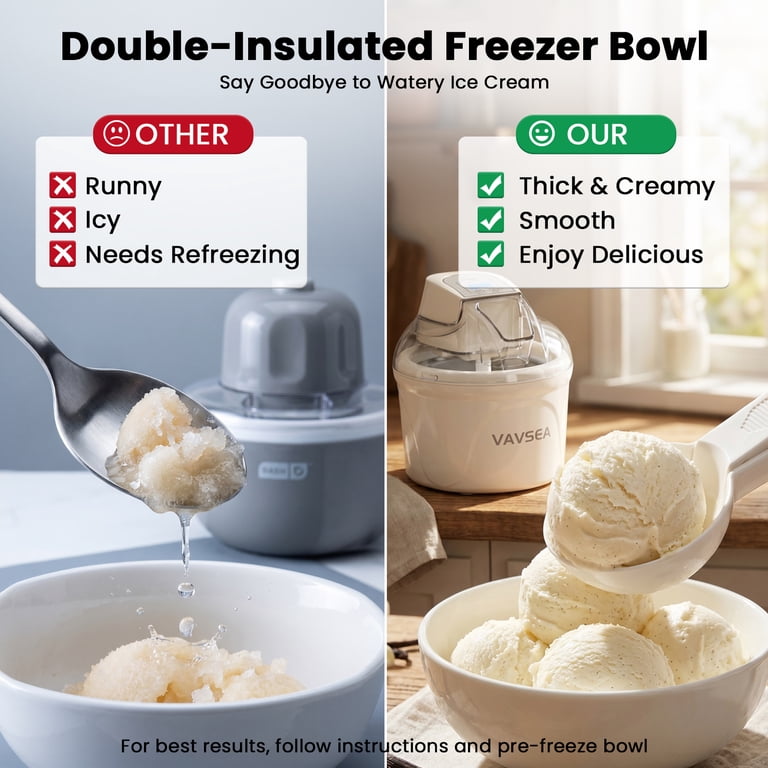
- Machine bowl not cold enough: Freezer-bowl machines fail if the bowl hasn’t been frozen long enough.
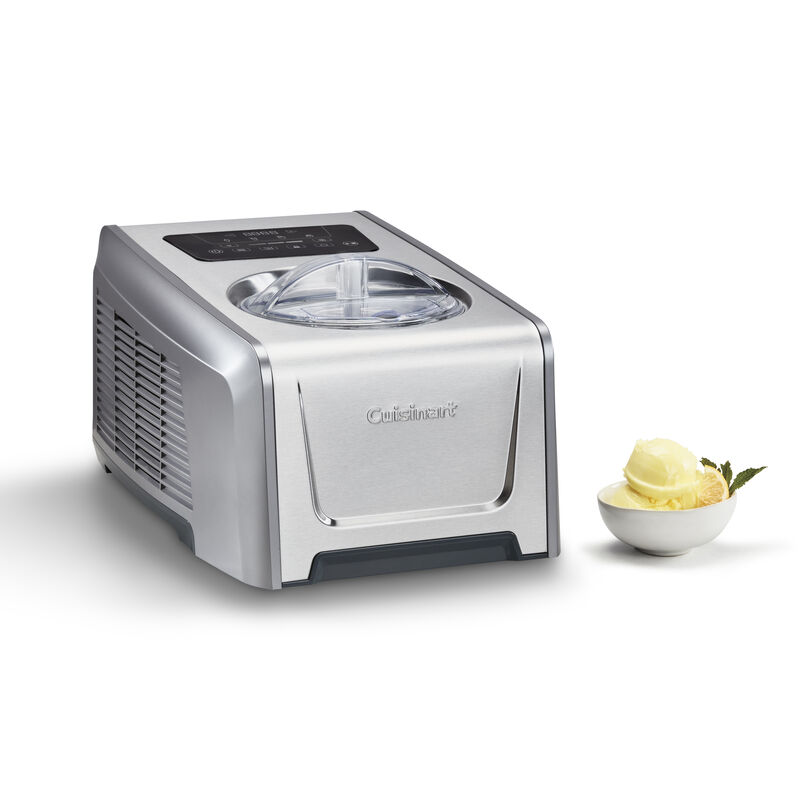
- Compressor or motor issues: Compressor machines with poor cooling or slow paddles can’t build structure.
- Short churning time: Stopping churn too early leaves the mix soft and loose.
- Overfilling the machine: Too much mix prevents proper air incorporation and cooling.
- High mix temperature entering the machine: The colder the mix, the faster it firms.

Machine-specific problems and practical fixes
Different machines have different failure modes. Match the fix to the machine.
Freezer-bowl machines:
- Freeze the bowl for at least 24 hours or according to maker’s directions.
- Keep the freezer at a steady temperature and avoid opening the lid while churning.
Compressor machines:
- Ensure the compressor is maintained and vents free of dust.
- If the paddle stalls or runs slow, service or replace the belt/motor.
Old salt-and-ice churns:
- Use the correct salt-to-ice ratio for the coldest freeze.
- Replenish crushed ice as it melts to maintain a cold bath.
General tips:
- Pre-chill your mix in the fridge for 4–24 hours.
- Don’t overfill; leave space for expansion and air.

Recipe and technique fixes to get a firmer batch
Small recipe tweaks solve many thickening problems.
Adjust solids and fat:
- Increase cream or add a bit of milk powder to raise nonfat solids.
- Aim for roughly 10–16% milkfat in richer styles, lower for lighter styles.
Control sugar and alcohol:
- Reduce sugar by 5–10% if your ice cream is too soft.
- Avoid adding alcohol over 3% by weight without compensating with more solids.
Use stabilizers and proper cooking:
- Add 0.2–0.6% guar or 0.1–0.5% xanthan to thin batches (by weight of mix).
- For custard bases, cook eggs and milk to 175–185°F for proper protein structure, then cool and age.
Aging and churning:
- Age mix overnight to let stabilizers hydrate and fat crystallize.
- Churn until the mix reaches soft-serve consistency, then harden in the freezer.
Troubleshooting checklist: step-by-step when your ice cream won’t thicken
Work through this list in order. Each step takes 5–30 minutes but saves wasted batches.
- Check mix temperature. If warmer than 40°F, chill it for several hours.
- Verify bowl or compressor temperature. For freezer bowls, ensure they’ve been frozen long enough.
- Review the recipe: was sugar, alcohol, or fat changed? Adjust solids or sugar.
- Inspect the machine: is the paddle turning at normal speed? Is the compressor noisy or slow?
- Add a stabilizer or a tablespoon of milk powder per quart to raise solids.
- Finish churning and harden the finished pint in the freezer for 4–6 hours before judging final texture.
Use this checklist any time you face the query Why is my ice cream not thickening in the machine to diagnose and fix the root cause.

Personal experience: mistakes I made and what I learned
Years ago I ruined a whole batch by not pre-chilling the mix. I thought the machine could do all the work. It could not. After adding milk powder and letting the mix age overnight, my next batch thickened beautifully. I now always:
- Pre-chill the mix for at least 6 hours.
- Measure sugar and alcohol carefully.
- Maintain the machine and test bowl temperature before each batch.
Those small habits prevent most “Why is my ice cream not thickening in the machine” problems I used to face.

Frequently Asked Questions of Why is my ice cream not thickening in the machine
Why is my ice cream not thickening after churning?
Often the mix was too warm entering the machine or the total solids are too low. Chill the mix, check recipe balance, and churn longer at the correct bowl temperature.
Can too much sugar stop ice cream from setting?
Yes. Too much sugar lowers the freezing point and gives a softer texture. Reduce sugar slightly or add milk powder to raise solids.
Will adding more cream help my ice cream thicken?
Adding more cream increases fat and often improves mouthfeel and structure, but balance sugar and solids to avoid an overly soft result. Consider milk powder too for better body.
How long should I pre-chill my mix before churning?
Chill at least 4–6 hours, and ideally overnight. Aging the mix helps stabilizers hydrate and gives a firmer churn.
My freezer bowl is frozen but ice cream still stays liquid. What else could be wrong?
Check the mix temperature, recipe solids, and machine paddle speed. A weak compressor or overloaded machine can also cause poor thickening.
Is a custard base better for thickening than a no-cook mix?
Custard bases with cooked eggs add protein and a silkier texture, which can help structure and firmness. No-cook mixes can still work if solids and stabilizers are right.
Conclusion
Troubleshooting Why is my ice cream not thickening in the machine becomes easy when you know the key factors: mix temperature, total solids, stabilizers, and machine performance. Start by pre-chilling the mix, check your recipe balance, and verify the machine is cold and running correctly. Try small fixes like adding milk powder, using stabilizers, or aging the mix overnight to see quick improvements.
Take action today: review your recipe, run the checklist above on your next batch, and leave a note below about your results or questions. Want more tips? Subscribe or comment and I’ll share tested recipes and troubleshooting steps tailored to your machine.

