The world of foldable smartphones is changing fast. Every year, new models arrive, with better screens, faster chips, and smarter features. Two brands stand out in 2024: Motorola Razr+ and Vivo X Fold 3. These devices show how foldables are moving from novelty to mainstream. But which one is better for you? The answer depends on what you want in a phone—style, performance, camera, battery, or price.
If you’re shopping for a foldable, it’s easy to get lost in specs and marketing terms. This guide compares the Motorola Razr+ and Vivo X Fold 3 in plain English. You’ll see their features, design, camera, battery, software, and real-life usability.

36% off Today’s Exclusive Deals
Limited-time Exclusive Deals. Check current discount on Amazon.
Check Price on Amazon As an Amazon Associate I earn from qualifying purchases.Whether you care about a compact design or a big display, this article will help you decide.
Design And Build Quality
Foldable phones are all about the form factor. They offer a unique style, but also need to be tough enough for daily use. Let’s look at how each device feels and survives in real life.
Motorola Razr+ Design
The Motorola Razr+ continues the classic clamshell look. It folds vertically, much like the old Razr flip phones. When closed, it fits easily in your pocket or bag. The front has a large cover screen for quick actions—checking notifications, messages, or weather.
- Materials: Gorilla Glass Victus on the front and back, aluminum frame.
- Dimensions: Closed: 74 x 88 x 21 mm; Open: 74 x 171 x 7 mm.
- Weight: Around 189 grams.
- Hinge: Durable, with minimal gap. Motorola claims over 400,000 folds before wear.
The Razr+ feels premium and light. It’s easy to open with one hand, and the hinge feels solid. The phone is IP52 rated, meaning it’s protected against dust and light water splashes. But it’s not fully waterproof.
Vivo X Fold 3 Design
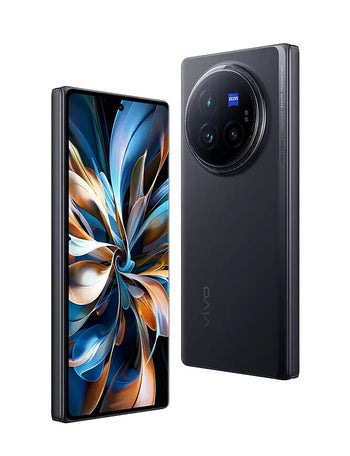
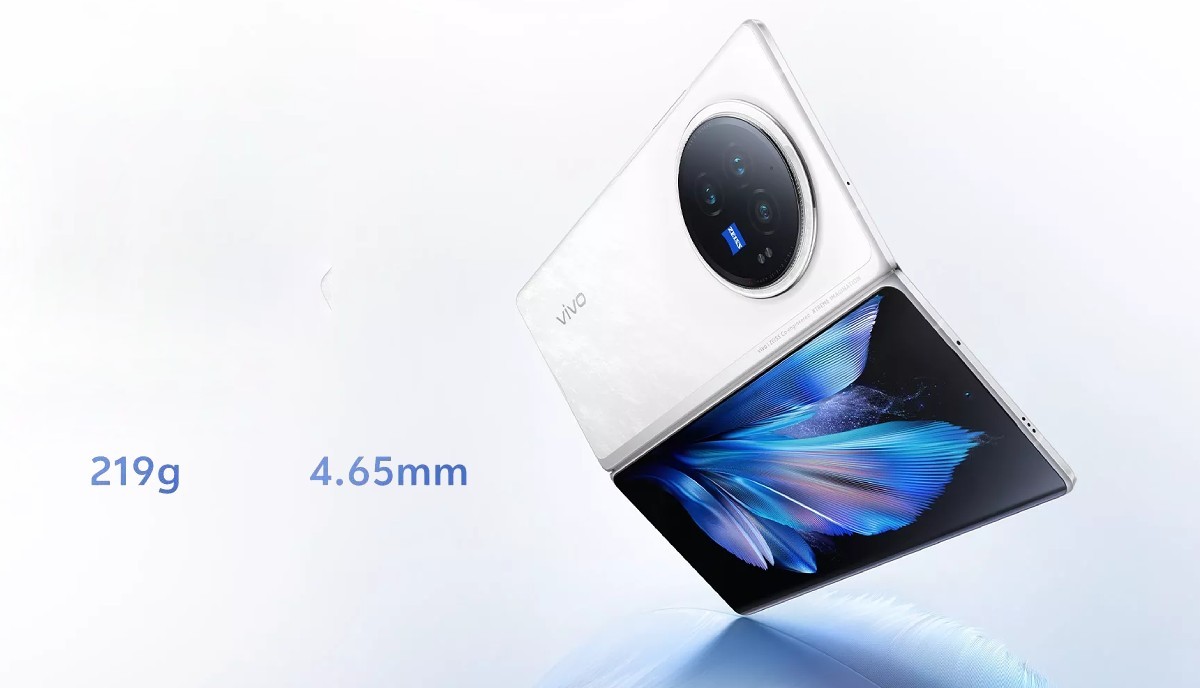
The Vivo X Fold 3 is a book-style foldable. It opens horizontally, giving you a tablet-sized display inside. Closed, it looks like a thick phone. The outer screen is full-size, so you can use it like any normal smartphone.
- Materials: Ultra-thin glass, carbon fiber hinge, aluminum frame.
- Dimensions: Closed: 73 x 159 x 11.2 mm; Open: 141 x 159 x 5.2 mm.
- Weight: About 215 grams.
- Hinge: Strong and smooth. Vivo claims up to 500,000 folds.
This phone feels solid and heavy, but it’s thinner than most foldables. The carbon fiber hinge is lighter and more durable than steel. The X Fold 3 is IPX8 rated, so it can survive immersion in water (for a short time).
Build Comparison
Here’s a quick look at their physical differences:
| Feature | Motorola Razr+ | Vivo X Fold 3 |
|---|---|---|
| Fold Type | Vertical (clamshell) | Horizontal (book-style) |
| Cover Screen | 3.6-inch OLED | 6.53-inch AMOLED |
| Main Screen | 6.9-inch OLED | 8.03-inch AMOLED |
| Weight | 189g | 215g |
| Water Resistance | IP52 | IPX8 |
Key insight: The Razr+ is more pocket-friendly. The X Fold 3 offers a bigger display, but is heavier. If you need something easy to carry, Razr+ wins. If you want a tablet in your pocket, X Fold 3 is better.
Display Technology And Experience
The display is the heart of any foldable. You want it to be bright, sharp, and smooth—without visible creases or color distortion.
Motorola Razr+ Screens
- Cover Display: 3.6-inch OLED, 1066 x 1056 pixels, 144Hz refresh rate.
- Main Display: 6.9-inch OLED, 2640 x 1080 pixels, 165Hz refresh rate.
Both screens are vibrant and responsive. The cover display lets you reply to messages, use widgets, and even run some apps. The main screen is tall and narrow—great for scrolling social media or reading.
Maximum brightness is about 1400 nits—good for sunny days. The crease is visible, but only if you look closely.
Vivo X Fold 3 Screens
- Cover Display: 6.53-inch AMOLED, 120Hz refresh rate, 2560 x 1080 pixels.
- Main Display: 8.03-inch AMOLED, 120Hz refresh rate, 2160 x 1916 pixels.
The cover display feels like a regular phone. The main screen opens wide—ideal for multitasking, watching movies, or reading documents. The crease is less noticeable, thanks to improved hinge design.
Brightness reaches 1800 nits. Colors are richer, and HDR is supported.
Display Comparison
Let’s see how their displays compare:
| Feature | Motorola Razr+ | Vivo X Fold 3 |
|---|---|---|
| Cover Display Size | 3.6″ | 6.53″ |
| Main Display Size | 6.9″ | 8.03″ |
| Refresh Rate | 165Hz main, 144Hz cover | 120Hz both |
| Brightness | 1400 nits | 1800 nits |
| HDR Support | Yes | Yes |
Non-obvious tip: While Razr+ has a higher refresh rate, most users won’t notice the difference above 120Hz. The X Fold 3’s larger screen makes split-screen use easier.
Performance And Hardware
A foldable needs to be fast and smooth. Apps, games, and multitasking should work without lag. Let’s break down their hardware.
Motorola Razr+ Performance
- Processor: Snapdragon 8+ Gen 1 (4nm)
- RAM: 8GB or 12GB LPDDR5
- Storage: 256GB or 512GB UFS 3.1
- GPU: Adreno 730
The Razr+ handles most tasks with ease. You can play games, edit photos, and switch between apps smoothly. It does get warm after long gaming sessions.
Vivo X Fold 3 Performance
- Processor: Snapdragon 8 Gen 2 (4nm)
- RAM: 12GB or 16GB LPDDR5X
- Storage: 256GB, 512GB, or 1TB UFS 4.0
- GPU: Adreno 740
X Fold 3 uses newer hardware. Snapdragon 8 Gen 2 is about 15% faster than the 8+ Gen 1. Storage is also faster (UFS 4. 0). If you multitask or use heavy apps, you’ll feel the difference.
Hardware Comparison
| Component | Motorola Razr+ | Vivo X Fold 3 |
|---|---|---|
| CPU | Snapdragon 8+ Gen 1 | Snapdragon 8 Gen 2 |
| RAM | 8/12GB | 12/16GB |
| Storage | 256/512GB | 256/512/1TB |
| GPU | Adreno 730 | Adreno 740 |
Practical insight: The extra RAM and storage in Vivo X Fold 3 make it better for power users. If you use many apps or store lots of photos, it’s the smarter choice. But for everyday use, both phones are fast.
Camera Systems
Foldable phones face a challenge: fitting great cameras into a thin body. Let’s see how Razr+ and X Fold 3 compare.
Motorola Razr+ Cameras
- Main Camera: 50MP, f/1.8, OIS
- Ultra-wide: 13MP, f/2.2
- Front Camera: 32MP, f/2.4
Photos are sharp, with good color. Night shots are improved, but not as good as flagship phones. The ultra-wide is useful for landscapes. The front camera (on the main screen) is high resolution, but selfie quality depends on lighting.
- Video: 4K at 30fps, 1080p at 60fps
Vivo X Fold 3 Cameras
- Main Camera: 50MP, f/1.8, OIS
- Ultra-wide: 50MP, f/2.0
- Periscope Telephoto: 64MP, f/2.6, 3x optical zoom
- Front Cameras: 16MP (cover), 16MP (main)
Vivo packs more lenses. The ultra-wide is sharper, and the telephoto lets you zoom without losing quality. Night mode is excellent, thanks to better sensors. Both front cameras are good for selfies and video calls.
- Video: 8K at 30fps, 4K at 60fps, 1080p at 120fps
Camera Comparison
Razr+ strengths: Simpler interface, fast shooting, good colors.
X Fold 3 strengths: More lenses, zoom, better night shots, higher video quality.
Non-obvious insight: Most foldable users take selfies with the cover screen. The Razr+ makes this easier, but the X Fold 3’s main camera gives better results for group selfies.
Battery Life And Charging
Foldables need strong batteries, but space is limited. You want a phone that lasts all day and charges quickly.
Motorola Razr+ Battery
- Capacity: 3800mAh
- Charging: 33W wired, 5W wireless
You get about 14 hours of mixed use—messages, video, web, and calls. Heavy gaming drains it faster. Charging from 0% to 100% takes about 75 minutes. Wireless charging is slow, but handy if you have a pad.
Vivo X Fold 3 Battery
- Capacity: 5200mAh
- Charging: 80W wired, 50W wireless
The X Fold 3 lasts longer—up to 18 hours of use. Even with the big screen, battery drain is well managed. Fast charging fills the battery in 35 minutes. Wireless charging is much faster.
Practical tip: If you travel or use your phone heavily, the X Fold 3 is better. The Razr+ is fine for regular use, but you’ll need to charge more often.
Software And User Experience
A foldable isn’t just about hardware. Software must support unique features—split screens, app continuity, and cover display functions.
Motorola Razr+ Software
- OS: Android 14, with Motorola custom skin
- Cover Screen Features: Widgets, quick replies, basic apps (calendar, maps, music)
- Main Screen Features: Split-screen, floating windows
Motorola keeps things simple. The cover screen is customizable, but only runs selected apps. The main screen is smooth, with standard Android features.
Updates are promised for 3 years. Motorola’s software is clean, with little bloat.
Vivo X Fold 3 Software
- OS: OriginOS based on Android 14
- Cover Screen Features: Full app support, multitasking, notifications
- Main Screen Features: Advanced split-screen, drag-and-drop, desktop mode
Vivo’s software is rich, but can be complex. The cover screen runs all apps, so you rarely need to open the main screen. The big display is good for multitasking—two or three apps at once. Desktop mode turns the phone into a mini laptop (with keyboard and mouse support).
Vivo promises 4 years of updates. Some features are only available in China, but global versions are catching up.
Non-obvious insight: The Razr+ is easier for beginners. Vivo X Fold 3 offers more power, but the learning curve is higher.
Connectivity And Extra Features
Modern phones must connect fast and offer extras like biometrics, speakers, and 5G.
Motorola Razr+ Connectivity
- 5G: Yes, sub-6 and mmWave
- Wi-Fi: 6E
- Bluetooth: 5.3
- USB: Type-C, USB 3.1
- Biometrics: Fingerprint sensor (side-mounted)
- Speakers: Stereo, Dolby Atmos
Vivo X Fold 3 Connectivity
- 5G: Yes, global bands
- Wi-Fi: 7
- Bluetooth: 5.3
- USB: Type-C, USB 3.2 Gen 2
- Biometrics: In-display fingerprint (both screens), face unlock
- Speakers: Stereo, Hi-Fi, Dolby Atmos
Extra features: Vivo’s in-display fingerprint sensors are more advanced. You can unlock from either screen. Audio quality is richer. Wi-Fi 7 is future-proof, but only matters if your router supports it.
Price And Availability
Foldables are expensive, but prices vary by region and specs.
Motorola Razr+ Pricing
- US: Starts at $999 (8GB/256GB)
- Europe: €1099
- Asia: Varies, around $970
Available in most regions, including North America, Europe, and Asia. Motorola offers trade-ins and bundles.
Vivo X Fold 3 Pricing
- China: Starts at ¥8999 ($1250) for 12GB/256GB
- Global: Around $1350–$1500 (import or limited release)
Vivo is less available outside China. Importing adds cost. If you live in the US, Razr+ is easier to buy.
Non-obvious tip: Razr+ is cheaper and easier to find in most countries. X Fold 3 is more expensive, but offers better specs.
Real-world Usability
Specs Are Important, But How Do These Phones Feel Day-to-day?
Pocket And Portability
Razr+ slips into small pockets and bags. It’s good for people who want a compact phone. X Fold 3 is bulkier; carrying it requires bigger pockets or a bag.
One-handed Use
Razr+ is easy to use with one hand, especially when closed. X Fold 3 is best used with two hands when open.
App Compatibility
Both phones run Android, but some apps don’t scale well on foldables. X Fold 3 handles multitasking better. Razr+ is simpler for basic tasks.
Durability
Foldables are tougher now, but still more fragile than regular phones. Both hinges are rated for hundreds of thousands of folds. Dropping either phone can damage the screen or hinge.
Experience-based tip: If you’re new to foldables, start with Razr+. It’s easier to use and less risky. If you’re a tech enthusiast, X Fold 3’s features are more exciting.
Which Phone Should You Choose?
Choosing between these foldables depends on your needs:
- Motorola Razr+ is for people who want style, portability, and simplicity. It’s good for first-time foldable users. The cover screen is handy, and the price is lower.
- Vivo X Fold 3 is for power users. It offers more RAM, storage, a bigger screen, better cameras, and longer battery life. It’s ideal for multitasking, media, and productivity.
If budget is tight or you live outside China, Razr+ is smarter. If you want the best hardware and can pay more, X Fold 3 is ahead.
User Reviews And Feedback
Motorola Razr+ Owners
Most users love the compact size and cover screen. Battery life is average, but the phone is easy to carry. Some report hinge issues after a year. Camera is good for social media, but not for pro photos.
Vivo X Fold 3 Owners
Users praise the big screen and multitasking. Battery life is strong, and cameras are great for travel and events. The phone is heavy, and learning the software takes time. Some apps don’t use the big screen well.
Real-world tip: Read user reviews before buying. Foldables evolve fast, and early models have quirks.
Sustainability And Repairability
Foldables are harder to repair than regular phones. Screen replacement is expensive. Battery replacement is possible, but not easy.
Motorola offers repair centers in many countries. Vivo’s support is mostly in China, so global buyers face challenges.
If sustainability matters, choose a brand with local support. Avoid dropping or bending the phone too much—foldable screens are sensitive.
Future Trends In Foldable Phones
Experts predict that foldables will get thinner, lighter, and cheaper. New models will have better hinges, tougher screens, and longer battery life.
Samsung, Huawei, and Xiaomi also make foldables. Competition means prices will drop, and features will improve.
To learn more about the future of foldables, see Wikipedia’s foldable smartphone page.
Frequently Asked Questions
Is The Motorola Razr+ Waterproof?
The Razr+ is IP52 rated. It can handle dust and light splashes, but is not fully waterproof. Avoid submerging it in water.
Can You Run All Apps On The Vivo X Fold 3 Cover Screen?
Yes, the cover screen supports all apps. You can browse, chat, and play games without opening the phone.
Which Phone Is Better For Photography?
The Vivo X Fold 3 has more advanced cameras, including telephoto and ultra-wide lenses. It’s better for night shots and zoom.
How Many Years Of Software Updates Will These Phones Get?
Motorola promises 3 years of updates for Razr+. Vivo promises 4 years for X Fold 3, but some features may be region-specific.
Is It Worth Buying A Foldable Phone Now?
Foldables are improving fast. If you want unique design and new features, now is a good time. But prices are high, and repair costs are more than regular phones.
—
Both the Motorola Razr+ and Vivo X Fold 3 are impressive, but they serve different users. Razr+ is stylish, compact, and affordable, while X Fold 3 is powerful, big, and feature-rich. Think about how you use your phone, your budget, and where you live. Foldables are no longer just for tech fans—they’re ready for everyday use. With this guide, you can make a smart choice.